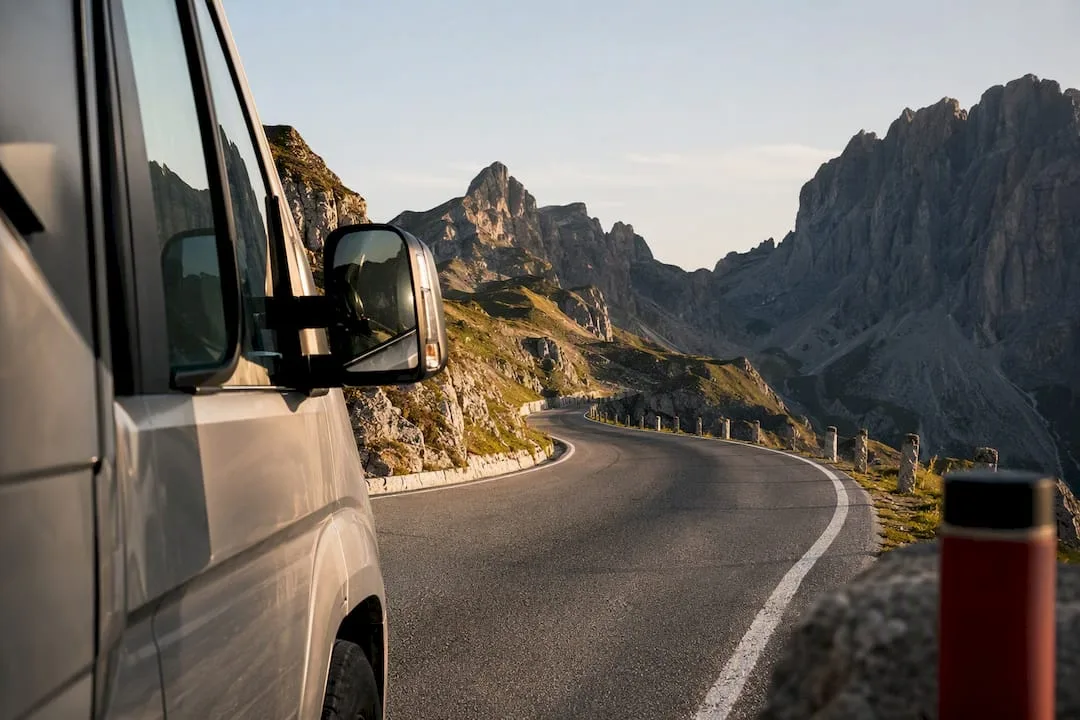
Yes, the Alps are an excellent destination for a campervan trip, but they require careful preparation. Roads can be narrow, mountain passes demanding, and campsites quickly fill up in summer. Anyone who carries out a technical inspection of the vehicle before departure, books key overnight stops and monitors weather conditions on mountain passes can relax and enjoy the journey. For those who do not yet have their own campervan, a local solution such as
Campervan is a practical way to set off directly from Ljubljana in a properly equipped vehicle.
In brief:
- A campervan is well suited to the Alps if the vehicle is in good technical condition and drivers use lower gears on descents.
- When planning your trip, consider whether 7, 10 or 14 days is the right timeframe based on your desired distance and available time.
- It is advisable to book campsites in advance or use official campervan stopovers, as seasonal capacity is limited and campsite ratings are not always reliable.
- Before departure, carry out a detailed technical inspection of the vehicle, including the brakes, tyres and gas system, and check road restrictions along your route.
- When driving over mountain passes, use lower gears on descents and regularly check the weather forecast to avoid unnecessary risks.
Campervan
Start Your Alpine Adventure from Ljubljana
Campervan offers campervan and motorhome rental in Ljubljana for trips around Slovenia and the Alps.
Check Availability
Table of Contents
Short Alpine campervan itineraries: 7, 10 or 14 days
The ideal trip length depends mainly on how much time you have and how many kilometres you want to cover each day. A campervan is not designed for motorway marathons. Driving more than 250 kilometres a day on mountain roads means less time for enjoying viewpoints, cooking or taking a walk beside a lake.
7 days: a quick loop through the Dolomites and Tyrol
A short week is ideal for travellers who want to experience the Alps without taking on too much logistics. The route leads from Ljubljana through the Karawanks to Austrian Carinthia, onwards to the Dolomites and back through Tyrol.
- Days 1–2: Ljubljana, drive to Nassfeld or Lienz and the first overnight stop at the foot of the mountains.
- Days 3–4: the Dolomites, Tre Cime di Lavaredo and Val Gardena.
- Days 5–6: continue to Tyrol, Innsbruck or the Ötztal Valley.
- Day 7: return home through the Karawanks.
The total distance stays below 900 kilometres, allowing a relaxed pace with enough time for walks and sightseeing.
10 days: the Dolomites, the Austrian Alps and Bled as an intermediate stop
Ten days allow for a wider loop. You can extend the trip towards northern Italy, for example Lake Garda or Cortina d’Ampezzo, or spend more time on the Austrian side of the Alps, such as in the Zillertal Valley.
- Ljubljana, with Bled as an introductory stop before the longer journey.
- Cross into Austria, visiting Nassfeld or the Grossglockner area.
- The Dolomites, with three to four days of exploration.
- Northern Italy, Lake Garda or Trento.
- Return through the Carnic Alps.
14 days: across the French Alps to Provence or a Swiss loop via the Furka and Grimsel passes
Two weeks open up the possibility of a proper Alpine road trip. One option takes you through Switzerland, where Furka and Grimsel offer some of the most spectacular mountain scenery in the Alps. Another route heads further west through the French Alps towards Provence, where mountain air gives way to the scent of lavender and olive trees. A travel report describing a
15-day journey through France covers approximately 3,200 kilometres and visits Alpe d’Huez, Tignes and Mont Ventoux, providing a useful reference for how much daily driving can realistically be included in a similar itinerary.
If you prefer a shorter route without long transfers, you can also use the idea behind this
weekend campervan trip through Slovenia as a useful test run before a longer Alpine adventure.
Example of a 12-day Alpine campervan trip, day by day
A concrete day-by-day plan is often more useful than a general description of different regions. The example below combines the Dolomites, the Austrian Alps and a short trip into Switzerland, with realistic driving estimates and alternatives for poor weather.
- Day 1, Ljubljana to Nassfeld (approximately 120 km). An easy opening drive through the Ljubelj Pass or the Karawanks. The Ljubelj Pass is paved and not particularly demanding, but dense fog requires slower driving. Overnight at a campsite near the foot of Nassfeld.
- Day 2, Nassfeld to Lienz (80 km). A short stage intended for relaxation and perhaps cycling through the Gail Valley. Afternoon time for grocery shopping in Lienz.
- Day 3, Lienz to Cortina d’Ampezzo (100 km). Drive over Passo di Monte Croce Comelico, moderately demanding and narrow in some sections. Cortina is an excellent base for hiking in the Dolomites.
- Day 4, Cortina, rest day. No driving. Take a trip to Tre Cime di Lavaredo or cycle through the valley.
- Day 5, Cortina to Val Gardena (60 km). A short but scenic drive over Passo Falzarego. The hairpin bends are narrow, so an early morning departure is recommended to avoid buses.
- Day 6, Val Gardena to Bolzano (50 km). An easier day with an opportunity to refuel and stock up before continuing north.
- Day 7, Bolzano to Innsbruck (150 km). Drive through the Brenner Pass, which is motorway-accessible and technically straightforward, but can be congested during the summer season. If traffic is heavy, the old Brenner road is a slower but more relaxed alternative.
- Day 8, Innsbruck to the Ötztal Valley (70 km). A short stage with the option of visiting the Stubai Glacier. A good day for doing laundry and refilling fresh water.
- Day 9, Ötztal to Zermatt or the Matterhorn area (120 km, partly by train). Campervans cannot drive into Zermatt, so you need to leave the vehicle at the parking facilities in Täsch and continue by train. This is an important detail that many travellers overlook when planning.
- Day 10, Täsch to the Furka Pass (110 km). Furka is one of the most scenic Alpine roads, narrow and winding, with a succession of hairpin bends where using lower gears for engine braking is preferable to continuously relying on the brake pedal.
- Day 11, Furka to Grimsel Pass and onwards towards Interlaken (90 km). Combining two mountain passes in one day is possible, but tiring for the driver. For a more relaxed day, move Grimsel to the following morning.
- Day 12, Interlaken, a rest day beside Lake Brienz, followed by the beginning of the journey home.
The rule for every stage is simple: if thunderstorms or snow are forecast on a mountain pass, use a lower-altitude alternative route, even if it is longer. In the Dolomites, this may mean using valley roads instead of mountain hairpins; in Switzerland, tunnels can be an alternative to mountain passes when weather conditions deteriorate.
Technical campervan preparation before an Alpine trip
Before heading into the mountains, a technical inspection of the vehicle is essential, not optional. Alpine roads expose weaknesses that might barely be noticeable on flat roads.
What to check before collecting the vehicle
- The registration documents and the approved number of travelling seats, which is not always the same as the number of sleeping berths.
- Tyre condition, including tread depth and the correct tyre pressure for a fully loaded vehicle.
- Operation of the gas system, water connections and chemical toilet drainage.
- The total weight of the vehicle after loading, because an overloaded campervan is harder to control and stop on descents.
- The operation of the brakes and transmission, especially on vehicles with automatic transmissions that have a dedicated mode for long descents.
Vehicle homologation is another detail that is often overlooked. A vehicle may have four or five sleeping berths, while the registration documents allow fewer passengers to travel. This difference needs to be checked before departure, not discovered on the road.
Driving over mountain passes
On long descents such as the Grossglockner or Stelvio, experienced drivers use a lower gear for engine braking instead of constantly applying the brakes. Overheated brakes on a campervan weighing three tonnes or more are one of the factors that can create dangerous situations in the Alps. It is also worth checking the weather forecast before heading into a series of hairpin bends, as fog at elevations above 1,500 metres can develop within minutes.
Professional tip: Before collecting the vehicle, take five minutes to check that all lights work, that the spare wheel is properly inflated and that the vehicle contains a warning triangle and reflective vest for every passenger. Small issues such as a blown bulb can ruin the first day of a holiday more easily than bad weather.
A detailed vehicle collection procedure covering all these steps is also described in our guide to
safe campervan collection, which takes between 20 and 45 minutes and eliminates many potential problems before the first kilometre.
Where to stay in the Alps: campsites, campervan stopovers and bookings
Overnight accommodation is an area where many travellers rely too heavily on a single app, which can be risky.
Park4Night is a useful tool for finding overnight stops, but listings are not always up to date. A location that was open and free two years ago may now be closed or charge a fee.
How to use Park4Night correctly
- Check the date of the latest comment for every location, not just its overall rating.
- Combine the information with at least one additional source, such as a local tourism website or specialist portal.
- Always keep a backup location saved on your device in case your first choice is unavailable.
For campsite bookings, Avtokampi.si is a useful source for checking availability, prices and facilities before setting off. Campsite ratings on such portals should also be read critically. A 4.5-star rating based on only five reviews tells you less than a 4.2-star rating based on three hundred reviews.
When to book in advance and when to stay flexible
During the main summer season, particularly in July and August, it is sensible to reserve at least the first and last nights of your trip, when visitor numbers are highest. The nights in between can remain more flexible, especially if you travel outside weekends. Campervan stopovers are a cheaper alternative to campsites, but they less frequently offer electricity and sanitary facilities. It is therefore useful to combine them with a full-service campsite every third or fourth night so that you can refill fresh water and empty the chemical toilet.
If you are looking for specific locations in Slovenia for an overnight stop before or after an Alpine trip, you can also check our list of
campervan stopovers in Slovenia.
How to travel through the Alps by campervan with children
A campervan can actually be less stressful for families with children than a traditional holiday by car and hotel, because you always have a kitchen, beds and a toilet close at hand. That does not mean preparation is unnecessary; it simply needs to be approached differently.
Organising the interior of the vehicle
- Keep medication and first-aid supplies in one easily accessible drawer rather than scattered around the vehicle.
- Keep the evening routine as similar to home as possible, because travelling already changes children’s sleeping schedules.
- For longer drives, prepare a box of toys or books that is separate from your camping luggage.
Activities and bad weather
Children tend to enjoy short, clearly defined activities in the Alps: a cable car ride, a short walk to a lake or a stroll through a village with breakfast at a bakery. For rainy days, it is useful to have at least one indoor alternative nearby, such as a thermal centre or museum. When planning your route, check these options in advance for each region.
Seasonal adjustments
Spring and autumn offer fewer crowds, but some high mountain passes may remain closed until early June or close again towards the end of September. Summer is the most reliable season for access to the major passes, but it also means busy campsites. Winter equipment such as winter tyres or snow chains is necessary if your route includes high mountain roads outside the main season; it is not normally required for a typical summer trip.
A conventional car navigation system often does not take the height or weight of the vehicle into account. In the Alps, this can result in being directed onto a road that is unsuitable, restricted or dangerous for a campervan.
Komoot for route planning
Komoot allows you to plan a route and export a GPX file, which can then be imported into a navigation device or smartphone. A concrete route example on the platform shows how precisely you can define the route profile in advance, including elevation gain and altitude, which can be considerably more useful for Alpine travel than conventional car navigation.
GPS settings based on your vehicle
If your navigation system or app supports it, always enter the actual height, width and weight of your vehicle. This helps you avoid low tunnels or narrow village streets where a campervan may physically be unable to pass.
Combining different sources
No single source is perfect. Park4Night is useful for finding specific overnight stops, Komoot for understanding the route profile, and local portals for checking current road closures or seasonal mountain-pass closures. Experienced travellers save the coordinates of at least two or three verified campsites for each section of the journey rather than relying on just one.
Why these campervan tips are practical
This guide combines real travel reports with local knowledge of the terrain. The travel report covering a 15-day journey through the French Alps is a good example of how to structure a daily itinerary, because it provides a realistic insight into driving times and stop selection rather than simply listing attractions.
Campervan.si regularly publishes similar information about stopovers and updates on its
news page, where practical advice from everyday rental operations and customer support in Ljubljana is collected. As a family-run business based in Ljubljana, a natural starting point for the Alps, the Balkans and neighbouring countries, the company has direct insight into the questions customers actually ask before departure, from documentation to route selection.
The value of this type of guide does not come from a single source, but from combining established portals such as Avtokampi.si for overnight accommodation with concrete travel reports for structuring a daily itinerary. Combining local practical experience with the experiences of other travellers can provide more useful planning information than relying on a single blog or a generic guide without concrete day-by-day examples.
Campervan rules in Alpine countries you should not overlook
Each Alpine country has its own rules, and being unfamiliar with them can result in a fine or an overnight stop in an unsuitable location. In Austria and Switzerland, motorways require a vignette, while in France and Italy road tolls are generally paid along the route. This is worth considering when planning your travel budget.
Vehicle weight is important on mountain passes not only from a technical perspective but also legally. Some smaller mountain crossings have weight or vehicle-length restrictions, which should be checked before driving, especially on less-travelled Alpine side roads.
Wild camping, meaning overnight stays outside organised campsites or designated campervan stopovers, is prohibited or strictly restricted in many Alpine countries, particularly in Switzerland and Italy, where enforcement can be stricter during the summer season. Some municipalities in Austria and France may allow short rest stops in designated parking areas, but often only for one night and without setting up tables or chairs outside the vehicle. Tunnels such as Mont Blanc and Gotthard may also apply additional tolls to campervans depending on vehicle height and weight, so check the applicable charges in advance, as heavier vehicles can fall into different toll categories than passenger cars.
What to pack for an Alpine campervan road trip
Packing for the Alps is different from packing for a seaside holiday. Temperatures fluctuate more, evenings can be cold even in summer, and hiking equipment is useful even for short walks.
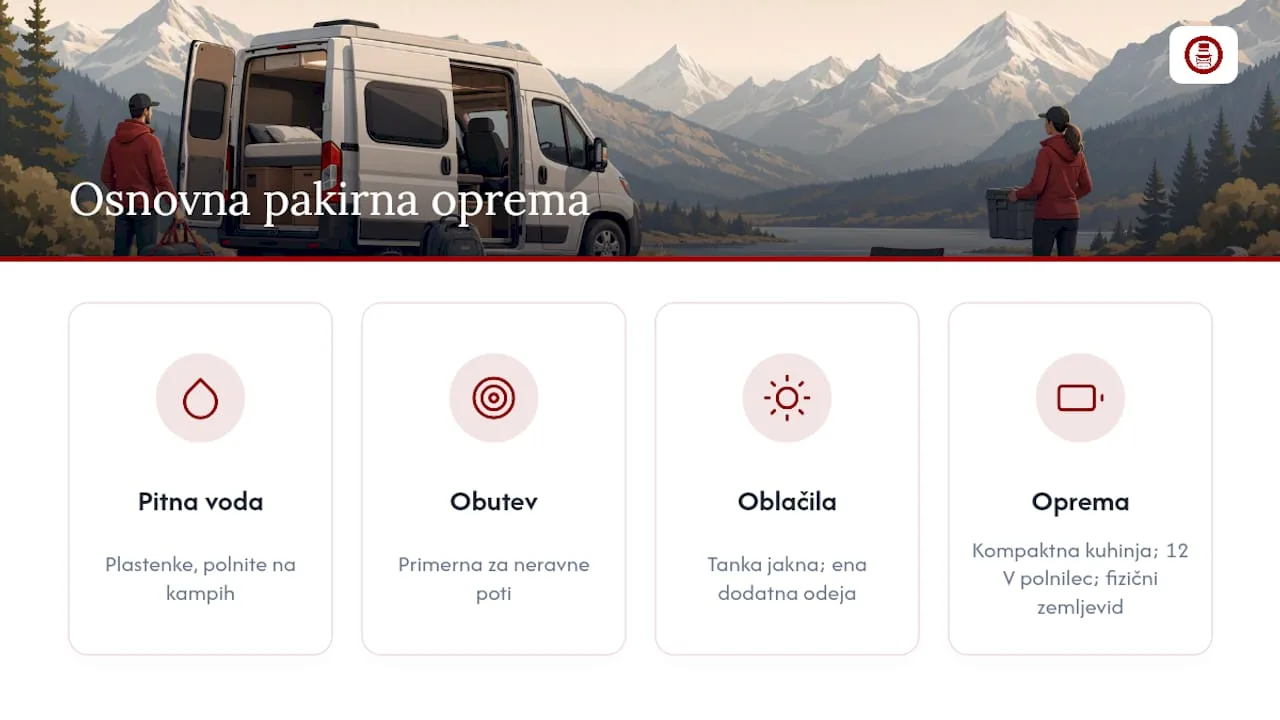
A basic packing list includes drinking-water bottles that can be refilled at campsites, suitable footwear for uneven paths, a light jacket for evenings and at least one extra blanket compared with what you would take to the coast. Kitchen equipment should be compact because campervan storage space is limited; folding cookware and one larger chopping knife are practical choices. For longer mountain crossings, it is also useful to have a 12-volt phone charger, as mobile reception can disappear for extended periods, and a physical map of the region as a backup in case your electronics fail.
A detailed equipment list, including less obvious items such as a universal campsite electricity adapter or an extra rubbish bag, is available in our
campervan packing checklist. If you need additional equipment for camping outside the vehicle, such as chairs, a table or an awning, our guide to
camping equipment is also useful.
How altitude affects the vehicle and passengers
Altitude above 1,500 metres affects both the engine and passengers, although usually not dramatically. Diesel engines can lose some power at higher elevations because of the thinner air, which is particularly noticeable on long climbs with a fully loaded campervan.
Brakes are more heavily loaded on descents from high elevations than during climbs, which is why using a lower gear on long descents is more important than trying to compensate for any loss of engine power uphill. When rapidly ascending above 2,000 metres, for example on the Stelvio or Grossglockner, some passengers may experience mild dizziness or a headache. Children and older passengers can be more sensitive, so it is sensible to take a short break at the top of a pass rather than immediately beginning the descent.
It is also advisable to check tyre pressures after reaching higher elevations, as lower temperatures can affect tyre pressure and, on a heavier vehicle, influence grip in corners.
Lesser-known Alpine destinations worth visiting
Beyond classic destinations such as the Dolomites, Bled or Innsbruck, the Alps also hide quieter corners. Valle Maira in Italy’s Piedmont region offers mountain villages away from the largest tourist crowds and excellent cycling roads. Nassfeld on the Austrian side is quieter in summer than some of the better-known ski resorts and has well-developed cycling routes in the Alps.
On the Slovenian side, destinations such as the Logar Valley or Jezersko offer an excellent introduction to the Alpine atmosphere before crossing the border and can also work well as the first or last stop when travelling from Ljubljana. In France, the Queyras Valley is less well known than the more famous Chamonix region, but offers impressive scenery with considerably less traffic on the roads. These alternatives are particularly suitable for travellers who have already visited the main attractions and are looking for a slower pace.
Campervan maintenance during an Alpine trip
A daily vehicle check during a longer journey can prevent most problems. Every morning before departure, it is worth checking tyre pressure, fluid levels and any signs of leakage underneath the vehicle. The process takes less than five minutes.
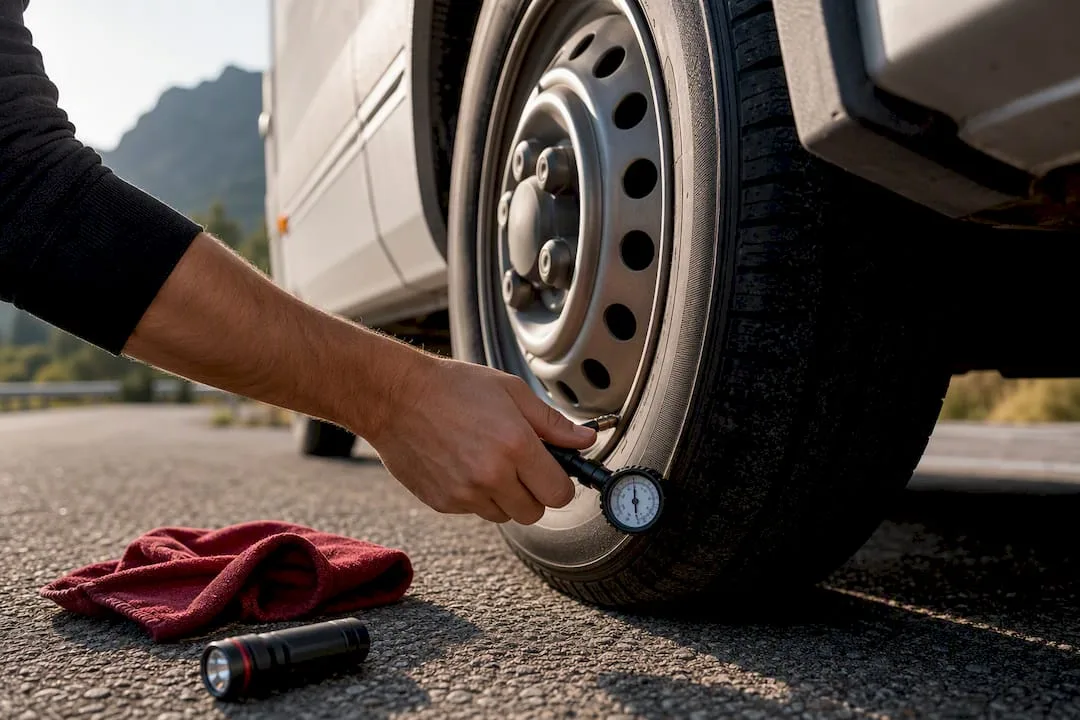
The chemical toilet and grey-water tank should be emptied regularly rather than waiting until they are completely full, as additional weight can matter on steep climbs. Gas cylinders used for cooking and heating should also be checked every few days, particularly during longer stays at higher elevations where overnight heating consumption can increase. If the vehicle develops an unusual smell or sound while driving over a mountain pass, it is better to stop at the nearest safe location than continue and hope the problem disappears.
How to save fuel on an Alpine campervan trip
Fuel consumption in a campervan on mountain roads can be up to
30% higher than on flat roads. Maintaining a steady speed and avoiding sudden acceleration is therefore one of the most effective ways to reduce consumption.
Using a lower gear on descents instead of relying on the brakes not only protects the braking system but can also reduce fuel consumption, as the engine provides braking without additional fuel being burned. Unnecessary weight in the vehicle, such as a full fresh-water tank when it is not needed or equipment that you have not used for a week, directly affects fuel consumption on climbs. Planning your route to avoid travelling through tunnels or border crossings during peak traffic also reduces time spent idling, which consumes fuel without moving you forward.
What really matters when planning an Alpine campervan trip
The biggest mistake I see when planning Alpine campervan trips is not a lack of ideas but an overly optimistic schedule. People create an itinerary that would be manageable by car on a motorway and then try to transfer it to a vehicle that needs considerably more time and demands more from the driver on mountain roads.
Conventional advice focuses too much on destinations and not enough on the logistics between them. More important than a list of attractions is a realistic assessment of how many kilometres you can comfortably drive each day, where the next full-service water stop is and what you will do if your chosen campsite is full. Families understand this particularly quickly: once they accept a slower pace as part of the experience rather than an obstacle, the entire journey becomes easier to manage.
If I had to choose one priority, it would be preparing the vehicle before booking overnight accommodation. A poorly prepared vehicle on the Furka or Stelvio is a serious problem, whereas a full campsite is simply an inconvenience that can be solved with one phone call or an alternative location.
— Rok
Airport transfer for campervan rental and a smooth journey to Ljubljana
If you do not own a campervan but want the full experience without purchasing a vehicle, you can rent one from a local provider in Ljubljana and receive advice on the trip itself. Campervan is an alternative to large international rental chains. Instead of an anonymous airport collection, you get a personal approach from a family-run business familiar with Alpine road conditions through its own experience with customers.
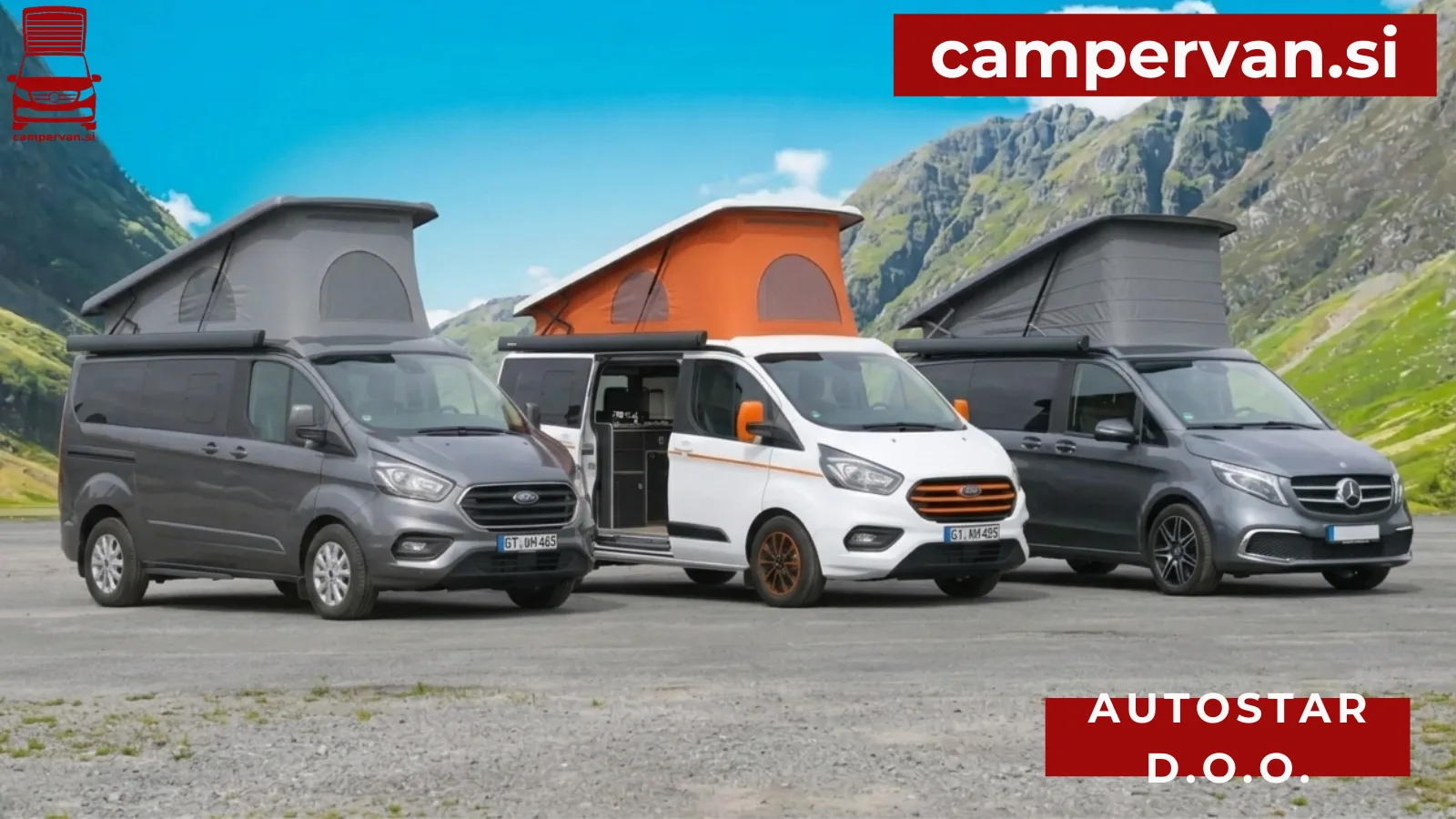
The fleet includes the
Mercedes V Marco Polo and
Ford Nugget Plus, both equipped with a kitchen, fixed toilet and sleeping berths for several people, making overnight stays at the campsites and campervan stopovers described in this guide easier. Daily rental for both models starts at €125 per night, while weekly rental starts at €110 per night. Final vehicle cleaning costs an additional €80. Before departure, it is advisable to review the safe campervan collection procedure, which takes between 20 and 45 minutes and includes checking all key systems, from tyres to the gas installation.
If you are considering a trip through the Dolomites, Switzerland or the French Alps, check availability and ask Campervan directly for route-planning advice before accommodation sells out during the high season.
Sources
For additional trip preparation, it is worth reviewing several established sources. The travel report
Campervan through France provides a detailed day-by-day description of a 15-day journey through the French Alps and Provence. Avtokampi.si is useful for finding and checking campsites, while a route example on Komoot demonstrates what a specifically planned GPX route looks like when imported into a navigation system.
Frequently Asked Questions
Is a campervan suitable for driving over Alpine passes?
Yes, a campervan is suitable for Alpine passes if it has been technically inspected and the driver uses lower gears on descents instead of continuously applying the brakes. Some narrow passes, such as Furka, require extra care because of hairpin bends and seasonal traffic.
How many days do I need for a basic Alpine campervan loop?
Seven days are enough for a short loop through the Dolomites and Tyrol, ten days allow for a wider route including the Austrian side, while fourteen days can accommodate a trip to Provence or a Swiss loop including the Furka and Grimsel passes. The ideal duration depends mainly on how many kilometres you want to cover each day.
Where is the best place to find overnight stops along the route?
Park4Night is useful for finding overnight stops, but its listings are not always up to date, so it is sensible to combine it with Avtokampi.si when checking campsite availability. It is also recommended to have a backup location saved in advance.
Do I need a special permit to drive a campervan in the Alps?
No special permit is normally required, but you should check the vehicle registration documents regarding the permitted number of passengers, which can differ from the number of sleeping berths. You should also take Austrian and Swiss motorway vignettes into account, together with any weight restrictions on specific mountain passes.
How much does Campervan rental for an Alpine trip cost?
Daily rental of the Mercedes V Marco Polo and Ford Nugget Plus starts at €125 per night, while weekly rental starts at €110 per night, plus €80 for final cleaning at the end of the rental.
Are the Alps suitable for travelling with children in a campervan?
Yes. A campervan can often be less stressful for families with children than a traditional holiday because you always have a kitchen and toilet close at hand. It is recommended to maintain the children’s normal evening sleeping routine and have an alternative for rainy days, such as a thermal centre or museum nearby.
CCampervan
Let’s Talk About Your Trip
Contact us with questions about campervan or motorhome rental in Ljubljana and planning your trip around Slovenia.