In brief
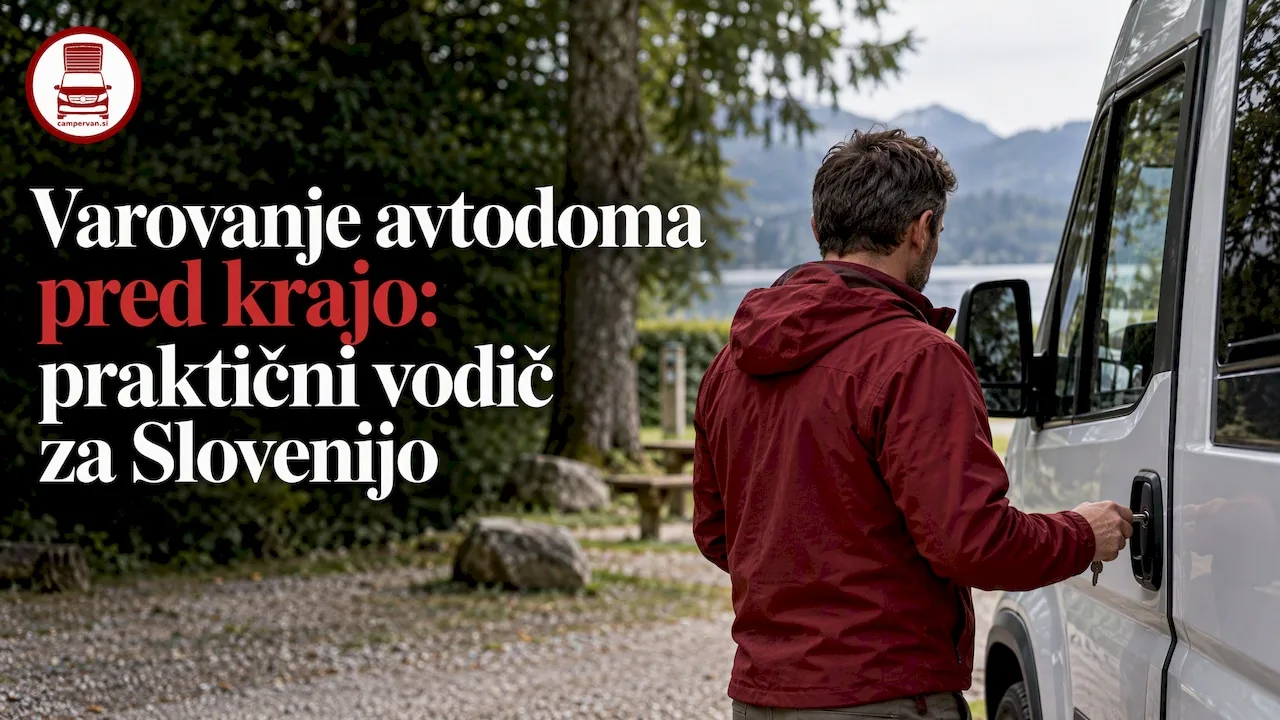
- Most thefts are made possible by human error: an unlocked door during a “quick” trip to a shop or toilet. Always lock the vehicle, even if you are only a few metres away.
- Stay overnight at campsites or designated motorhome stopovers. Wild camping is prohibited in Slovenia, and a well-lit, busy location is also safer.
- Be particularly careful at motorway service areas: police have reported more thefts involving tyres, cargo and items taken from vehicles.
- Combine visible mechanical protection, such as a steering-wheel or pedal lock, with electronic security, such as an alarm or tracker. A thief will choose an easier target.
- No security measure is foolproof, so insurance is part of your protection, not an optional extra. Before travelling, check what it covers for both the vehicle and your personal belongings.
Table of contents
- How safe is Slovenia for campervan travel?
- Where and when thieves most often strike
- Choosing where to stay is the first security measure
- Mechanical security: a visible deterrent
- Electronic security: alarms, immobilisers and tracking
- Habits that make the biggest difference
- How to pack without attracting thieves
- Security measures at a glance
- Insurance: the final safety net
- What to do if your vehicle is broken into or stolen
- Our approach to security
- Campervan rental in Ljubljana
- Frequently asked questions
- Sources
How safe is Slovenia for campervan travel?
Let’s start with some reassurance. The Slovenian police state that Slovenia is one of the safest countries in Europe, with crime mainly targeting property rather than involving physical attacks: around 90 per cent of all criminal offences are property-related. For campervan travellers, this means two things. You do not need to worry about your personal safety any more than you would at home, but your belongings and vehicle are precisely what thieves may be interested in. A campervan can be an attractive target for several reasons. It often contains everything a travelling family needs: documents, wallets, phones, laptops, cameras, bicycles on a rack and sometimes cash for tolls and markets. The vehicle is also recognisable as a tourist vehicle, especially if it has foreign number plates or a rental-company sticker. Thieves know that tourists often leave their belongings inside while sightseeing. The good news is that most thefts are opportunistic. A thief is not necessarily looking for the most expensive vehicle, but for the easiest opportunity. Any measure that makes your vehicle a more difficult, visible or time-consuming target helps move you out of the easy-target category.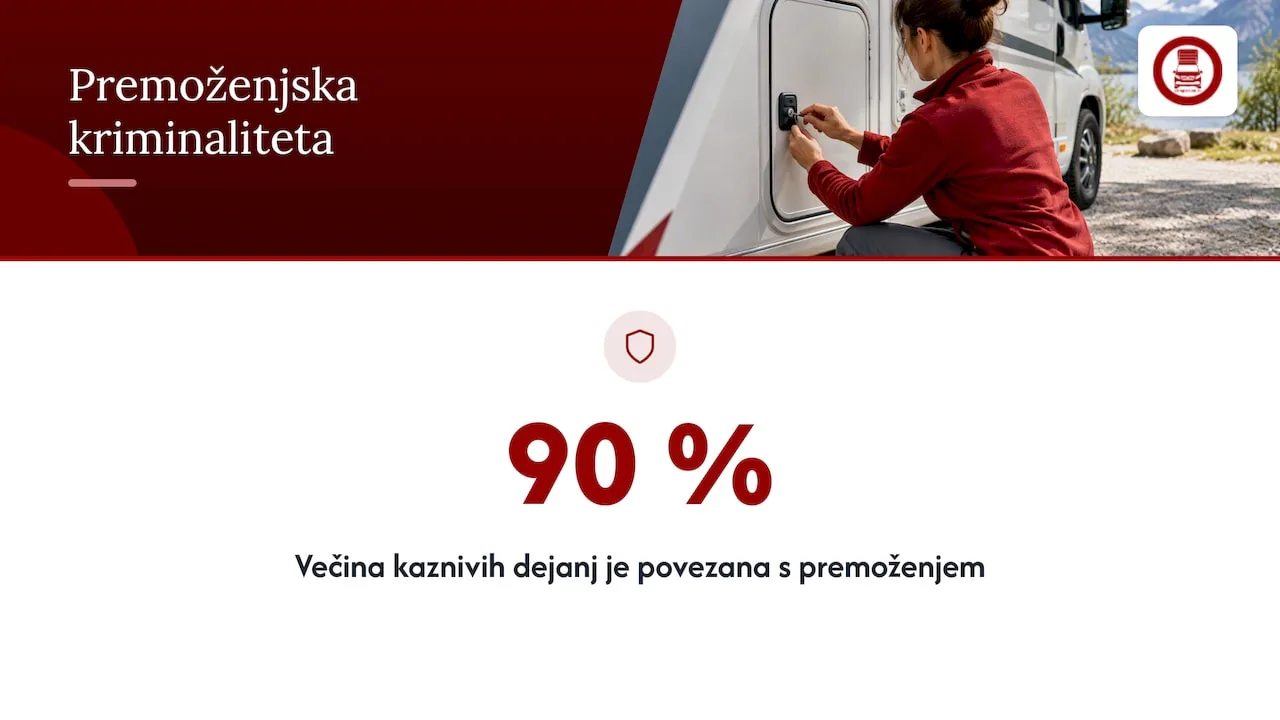
Where and when thieves most often strike
Motorway service areas
The police warn that in recent years, the number of thefts and robberies at motorway service areas has increased, ranging from stolen tyres and cargo to items taken from vehicles. Service areas appeal to thieves because they are anonymous, while travellers are often tired and distracted. If you need to spend the night at a service area, choose one with plenty of traffic and good lighting. Park closer to buildings and cameras rather than at the far edge of the car park.Short stops
In its advice on travelling by motorhome, the police emphasise a simple but often overlooked rule: lock your vehicle even if you are only popping into a shop for a few minutes. Thieves watch for precisely these moments. At a petrol station, a roadside bakery or a viewpoint by a mountain pass, it takes only a minute for someone to open a sliding door and take a bag from a seat.Hiking trailheads and car parks near attractions
When you head out for a full-day hike or sightseeing trip, your campervan may be left unattended for hours, often in a place where it is obvious you will not be back soon. The golden rule here is simple: leave nothing visible inside the vehicle. Make the interior look empty and uninteresting.Unlit streets
The police advise against parking on unlit streets and in unlit car parks, recommending designated parking areas, garages and multi-storey car parks instead. Multi-storey car parks are often inaccessible to campervans because of height restrictions, so a designated motorhome stopover or campsite is a sensible alternative.Choosing where to stay is the first security measure
Where you sleep is probably the most important security decision of your entire trip. Slovenian law is also clear about wild camping: it is prohibited. You should stay at registered campsites or designated motorhome stopovers. According to the British Foreign Office, violations can result in fines of €40 to €500, and enforcement is particularly strict in Triglav National Park. In this case, legality and safety go hand in hand. A campsite has a barrier, reception, lighting and neighbours who may notice a stranger near your vehicle. A motorhome stopover (PZA) is usually less supervised than a campsite, but it is designated, signposted and used by other travellers. We explain the differences between the two and their costs in our guide to what a motorhome stopover is and how it differs from a traditional campsite. Before arriving at an overnight stop, ask yourself a few questions:- Is the area lit at night?
- Are there other campervans or motorhomes? A group of vehicles creates a natural neighbourhood watch.
- Is there a reception, restaurant or occupied house nearby?
- Can you park with a view of your vehicle and a clear exit in case you need to leave quickly?
Mechanical security: a visible deterrent
Mechanical devices cannot make a vehicle impossible to steal, but they can make theft slower and more noticeable. That is precisely the point. Among its technical security recommendations, the police advise using a quality vehicle security device, steering-wheel locks, alarms and immobilisers. Here are some of the most effective options for motorhomes and campervans:- Steering-wheel lock. Visible through the windscreen, it immediately tells a thief that the job will take longer.
- Pedal or gear-lever lock. Less visible, but difficult to remove in a hurry.
- Additional door locks. Sliding and rear doors are common break-in points on vans. An extra lock or an internal security bolt is especially useful at night when you are inside the vehicle.
- Lock for bicycles on the rack. Bicycles are often worth more than anything else visible on the vehicle and can be an obvious target.
Electronic security: alarms, immobilisers and tracking
Modern campervans have a factory-fitted immobiliser that prevents the engine from starting without the correct key. This is the baseline, but it does not prevent someone from breaking into the living area. That is where additional systems come in. Alarm. The Lower Saxony State Criminal Police Office explains that alarm systems can act as a deterrent by providing audible and visual warnings. It recommends systems that can also be activated while you are inside the vehicle. This is crucial for a campervan: an alarm that protects the doors and windows while you sleep is more useful than one that works only when the vehicle is unoccupied. GPS tracker. It does not prevent theft, but it can help locate a stolen vehicle. A concealed tracker with phone notifications can alert you if the vehicle moves when it should be stationary. Camera and sensors. An interior camera or motion sensor that sends alerts to your phone can be useful when the vehicle is left unattended for several hours at a hiking trailhead. If you are travelling in a rental vehicle, do not install electronic devices that interfere with its electrical system. A portable tracker kept in a compartment or a portable door alarm is a safer option. Discuss any other equipment with the rental company in advance.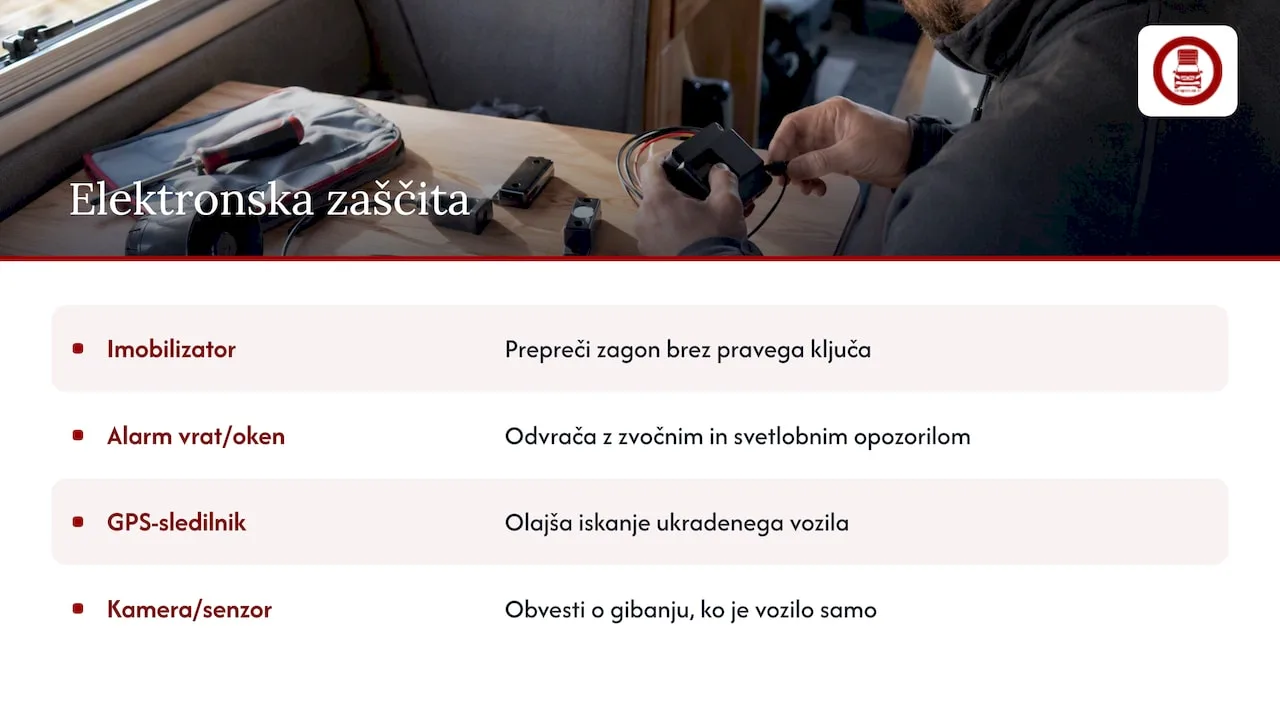
Habits that make the biggest difference
Technology helps, but consistent habits make the biggest difference. Here is the routine we recommend to every renter:- Always lock the vehicle. At a petrol station, while filling up, even if you are standing right next to the vehicle, and even if you are only going to the toilet.
- Close the windows and roof vent. An open roof vent on a campervan is an invitation. Close everything before leaving.
- Keep the interior clear. Bags, chargers, phone holders and navigation devices: put away anything that suggests valuables may be inside, either in a cupboard or by taking it with you.
- Put things away before arriving, not after. If you hide your belongings only once you reach the car park, someone may be watching. Put them away while driving or at your previous stop.
- Do not share your live location. A photo of your campervan by a lake with the caption “we’ll be in the mountains all day” gives useful information to anyone watching.
- Keep your keys with you. Do not leave them inside the vehicle or in a visible place at the campsite, even if you think they are hidden under a doormat.
When you sleep in the vehicle
At night, lock all the doors from inside and close any windows that can be reached from the ground. Keep your keys, phone and wallet together near your bed, rather than on the front dashboard by the windscreen. If something wakes you at night and you feel unsafe, the best decision is often a simple one: get behind the wheel and move to another location.How to pack without attracting thieves
Packing is part of staying safe, and the Slovenian police explicitly emphasise this. They warn that motorhome drivers can sometimes overload their vehicles with luggage and equipment, affecting handling, stability and braking distance. An accident caused by an overloaded vehicle can be just as serious a threat to your holiday as theft. When it comes to valuables:- Documents and money should be stored in a secure place, not on a seat or in the dashboard compartment where a thief is likely to look first.
- Keep cash and cards separate. Carry some with you and keep the rest in a concealed place in the vehicle.
- Photograph your documents and save copies to the cloud. If you lose your passport, the process will be much quicker.
- Record serial numbers for expensive equipment, such as cameras, laptops and bicycles. These details can help the police and your insurer.
Security measures at a glance
| Measure | What it helps prevent | Effort or cost | When it matters most |
|---|---|---|---|
| Consistently locking the vehicle | Opportunistic theft from the vehicle | No cost | Always, especially during short stops |
| Staying at a campsite or motorhome stopover | Night-time break-ins and fines for wild camping | Cost of the overnight stay | Every night |
| Keeping the interior clear | Broken windows caused by visible bags | No cost | At hiking trailheads and in towns |
| Steering-wheel or pedal lock | The vehicle being driven or towed away | One-off purchase | Long stops without supervision |
| Alarm with night mode | Break-ins while you sleep | Purchase and installation | At stopovers and service areas |
| GPS tracker | Losing track of a stolen vehicle | Device, sometimes a subscription | For motorhome owners |
| Insurance | Financial loss | Premium and excess | Always |
Insurance: the final safety net
The Slovenian police are clear on this point: no security measure offers complete protection. They therefore recommend complementing technical measures with suitable insurance that covers property and financial loss. Insurance does not mean you distrust your locks; it means recognising that even the most careful traveller can become a victim. It is important to distinguish between two things:- The vehicle. If you own a motorhome, check whether your policy covers theft of the entire vehicle, break-ins, damage caused by attempted break-ins, and which countries are covered. If you are renting, check what the rental company’s basic insurance includes and how much of the loss you would be responsible for in the event of theft.
- Personal belongings. Vehicle insurance generally does not cover your luggage, laptop or camera. Before travelling, check with your insurer whether your travel or home contents insurance covers them and under what conditions. Insurers often require the vehicle to have been locked and the belongings not to have been visible.
What to do if your vehicle is broken into or stolen
If the worst happens despite your precautions, stay calm and follow these steps:- Make sure you are safe. If the perpetrator is still nearby, do not approach them.
- Call the police. The police advise you to contact them immediately after a break-in and avoid moving or cleaning anything before they arrive, so that evidence is not destroyed. In Slovenia, the police emergency number is 113.
- Block your cards and phones. Keep your bank’s emergency contact numbers separate from your wallet.
- Photograph the damage and make a list of stolen items with their approximate values.
- Contact the rental company or insurer. If you are using a rental vehicle, call the assistance service as soon as possible. They will guide you through the next steps and help you continue your journey.
- Keep the police report. Your insurer will almost certainly ask for it.
Our approach to security
As a family-run business based in Ljubljana, we hand over keys to travellers from Slovenia, across Europe and from other continents. When they return, they tell us about mountain passes, lakes and the coast. That is why we believe security on the road is not about being afraid, but about adopting a few good habits that soon become second nature. When you collect your vehicle, we take the time to show you how to lock all the doors, the roof vent and the cupboards, where to store your documents safely, and how to stay secure at stopovers. Our vehicles, the Mercedes V Marco Polo and Ford Transit Nugget Plus, are modern, high-quality campervans with basic insurance and 24/7 roadside assistance included, so you are not on your own if something unexpected happens. We are also happy to advise you on planning a trip through Slovenia, the Alps and the Balkans, including where you can stay overnight comfortably and legally. But the most important advice we give every renter is the simplest: lock the vehicle, even if you are only popping out to buy bread.— Rok
Campervan rental in Ljubljana
If you are planning a trip and want a vehicle backed by a team that can help you along the way, we offer two tried-and-tested models from Ljubljana. You can rent the Mercedes V Marco Polo and the Ford Nugget Plus from €125 per night for a daily rental or from €110 per night for a weekly rental. Final cleaning costs €80 per rental. Both vehicles have a kitchen, sleeping space for several people, basic insurance and 24/7 assistance. Check availability and book your campervan.Frequently asked questions
Is it safe to sleep in a motorhome in Slovenia?
Yes, if you stay at campsites or designated motorhome stopovers. Slovenia is considered one of the safest countries in Europe, and crime mainly targets property. At night, lock the doors, close any windows that can be reached from outside, and keep valuables close to you.Can I park my motorhome anywhere overnight?
No. Wild camping is prohibited in Slovenia. You should stay at campsites or designated motorhome stopovers. Violations can result in fines, and enforcement is particularly strict in Triglav National Park.What is the most effective way to protect a motorhome from theft?
Always lock the vehicle and keep the interior clear, as most thefts are opportunistic. Add a visible mechanical lock and an alarm that can also be activated while you sleep. Insurance covers losses that locks cannot prevent.Does rental motorhome insurance cover my personal belongings?
Vehicle insurance covers the vehicle, while personal belongings usually require separate cover. Before travelling, check with your insurer whether your travel or home contents insurance covers luggage kept in a vehicle and under what conditions.What should I do if my rental campervan is broken into during my trip?
Call the police on 113 and do not move anything before they arrive. Then contact the rental company through its assistance service, block your cards and keep the police report for your insurer.Sources
- Police: Crime prevention
- Police: Thefts at motorway service areas
- Police: Motorhoming is fun — make sure it is safe too
- Police: Theft and taking of motor vehicles
- Police: Technical protection of the car
- Police: Security of property
- GOV.UK: Slovenia travel advice — safety and security
- Avon and Somerset Police: Caravans and motorhomes
- Lower Saxony State Criminal Police Office: Staying safe with a caravan or motorhome