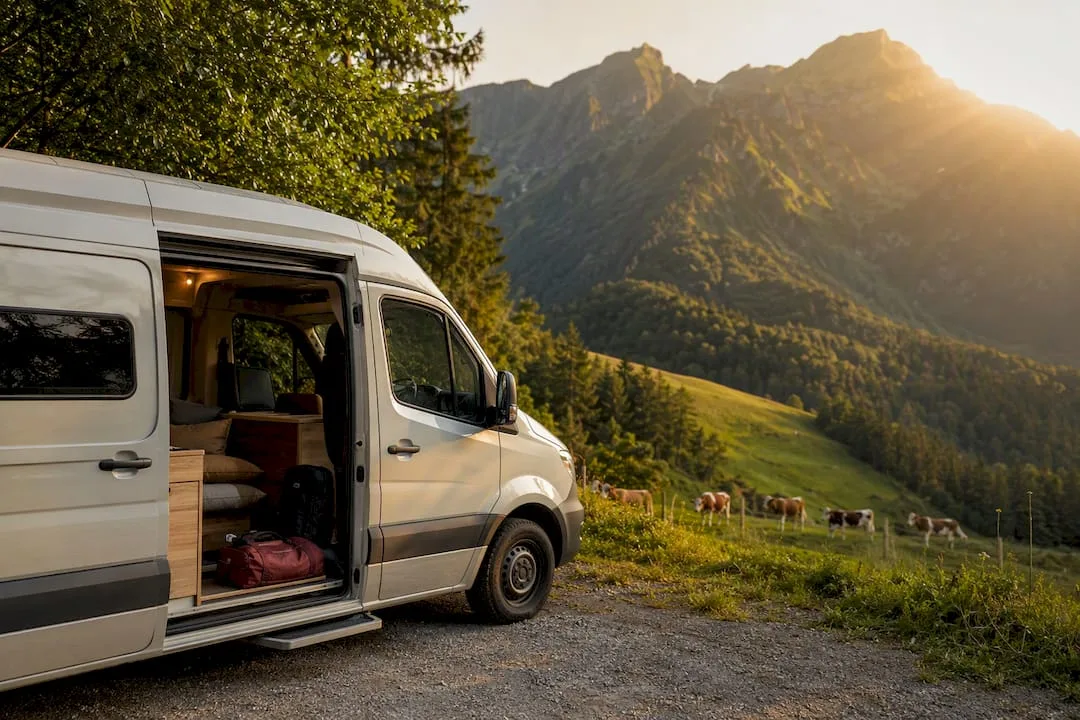
If you are planning a motorhome trip around Slovenia, choose a compact vehicle, book overnight stays at a campsite or motorhome stopover, and enter the vehicle dimensions into your navigation system. This covers most of the risks that can surprise travelers on the road.
The rest of the preparation is logistics: how many kilometers to drive each day, where you can legally spend the night, and how much money to budget for fuel, campsites, and tolls.
- Choose a smaller motorhome and check the vehicle’s height, length, and weight.
- Book a campsite or motorhome stopover in advance, as wild camping in Slovenia is generally restricted.
- Enter the exact vehicle dimensions into your navigation system and plan for 3 to 4 hours of driving per day.
- Prepare a basic budget covering the rental, fuel, campsites, tolls, and insurance.
Expert tip: Add at least half an hour of buffer time to your schedule every day. A traffic jam at the Karawanks Tunnel or a full wastewater disposal station can quickly disrupt a tightly planned itinerary.
Key Takeaways
Good motorhome trip planning in Slovenia means choosing the right vehicle, booking accommodation, setting up your navigation correctly, and maintaining a realistic daily driving schedule.
| Point |
Details |
| Choose the right vehicle |
A compact motorhome is easier to drive on Slovenia’s narrow roads and through town centers. |
| Stay overnight legally |
Book a campsite or motorhome stopover, as wild camping is generally restricted. |
| Drive a realistic distance |
Plan for 3 to 4 hours of driving or 200 to 300 kilometers per day, with some extra time in reserve. |
| Set up your navigation correctly |
Enter the vehicle’s height, width, and weight into the app to avoid low underpasses. |
| Match your rental to your route |
Campervan.si offers Mercedes V Marco Polo and Ford Nugget Plus models with pickup in Ljubljana. |
For finding motorhome stopovers and campsites, check
Avtokampi and the international
Park4Night app. AMZS provides safety advice and recommendations for beginners, while local stories and information about motorhome stopovers are available from
Slovenia. For navigation setup, refer to the instructions provided by your device manufacturer and adapted for motorhomes.
Table of Contents
Choosing a Motorhome and Preparing Before Departure
For Slovenia’s roads, narrow mountain hairpin bends, and town centers with low underpasses, a smaller motorhome is a better choice than a large integrated model.
AMZS recommends this approach for beginners, as smaller vehicles are easier to drive on narrow roads and park in historic town centers such as Piran or Škofja Loka.
Before pickup, write down four figures: the vehicle’s height, length, width, and gross weight. You will need these details for navigation and for many parking garages with height restrictions.
At pickup, check what is included in the insurance, what roadside assistance is provided in case of a breakdown, and which equipment is already in the vehicle (cooking utensils, bedding, gas cylinder). Ask the staff to show you the electrical and water connections rather than simply signing the handover document.
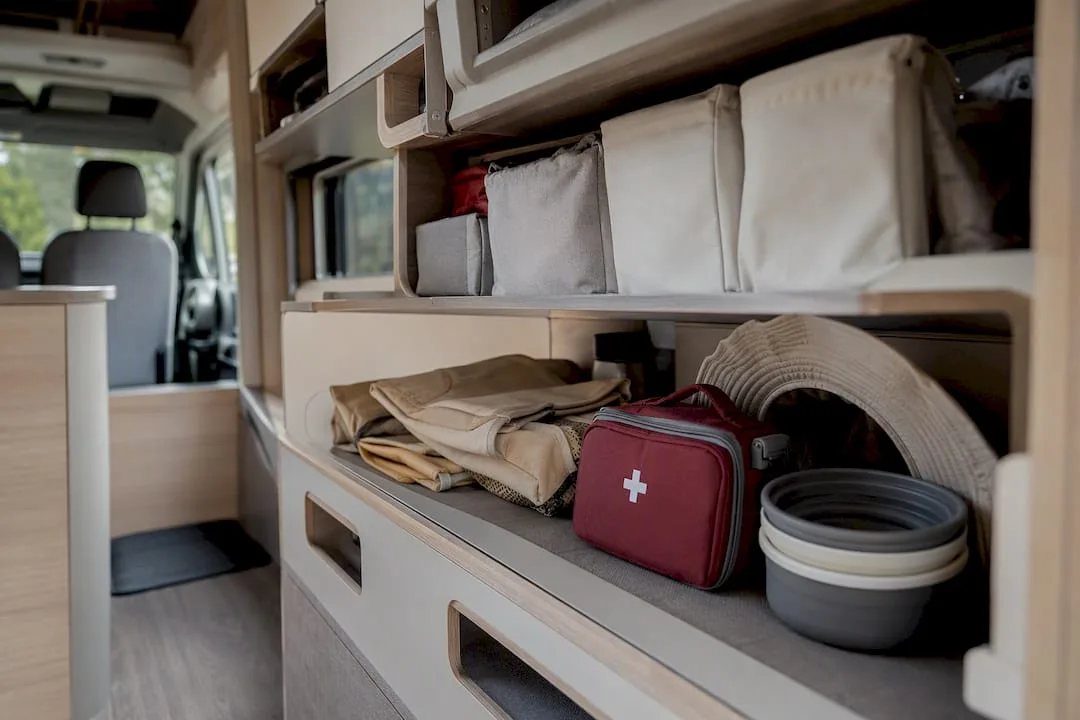
When packing, remember that less is more: essential equipment (first-aid kit, cables, adapters, sun protection) and foldable storage containers. Too many suitcases in a small space can quickly become a source of stress.
How to Build a Route-Friendly Daily Schedule
A realistic daily distance for a relaxed journey is 200 to 300 kilometers, or 3 to 4 hours of driving. Anything more means less time for stops, cooking, and exploring the destination that motivated you to take the trip in the first place.
- Determine your starting point and route type. Ljubljana is a practical starting point, as it offers good connections to the Alps, the coast, and the Balkans.
- Spread your stops across the days so that each day includes one main attraction and one or two smaller ones.
- Include one backup day in your schedule for every five to seven days of driving in case of bad weather or a breakdown.
- Check each leg for water supplies, wastewater disposal, and fuel stations so you do not run out of any of the three at the wrong time.
Experience shows that the gap between planned and actual travel time is often 20 to 40 percent greater than expected because stops, taking photos, and finding parking take more time than you think. Therefore, plan fewer destinations per day than you might initially want.
Where to Stay Overnight: Campsites, Motorhome Stopovers and Reservations in Slovenia
Slovenia has three main types of overnight locations for motorhomes: organized campsites with full infrastructure, motorhome stopovers (PZA) with basic services, and temporary parking areas without any equipment. Wild camping outside these designated locations is
restricted or prohibited in most cases, so it is worth sticking to legal options.
Slovenia has an
extensive network of more than 150 motorhome stopovers, meaning that even away from the main tourist routes, you can almost always find an organized place to spend the night.
- For an overview of locations and capacity, check Avtokampi, Park4Night, or Campercontact.
- A detailed regional overview is also available on Campervan.
- In summer, book your campsite at least a few days in advance, as increased demand can quickly fill popular locations.
- Before arrival, check whether electricity and wastewater disposal are available and whether the location is lit and accessible at night.
When choosing a parking area for the night, avoid remote places without lighting. It is better to drive an additional ten minutes to an organized stopover than to take a risk on an isolated roadside location.
Which Tools to Use for Motorhome Navigation?
Standard Google Maps is useful for general orientation, but it is not designed specifically for motorhomes. It does not know your vehicle’s height, weight, or width, so it may take you under a bridge that is too low or onto a road where heavy vehicles are prohibited.
- Install a dedicated motorhome app such as Park4Night or Campercontact to find overnight locations and read reviews from other travelers.
- Use a device or app such as TomTom or Garmin that allows dedicated motorhome route planning based on your vehicle’s dimensions.
- When picking up the vehicle, enter its exact height, width, and weight into the navigation system rather than approximate values.
- Download offline maps for areas with weak signal, such as some parts of the Julian Alps or Kozjansko.
Entering the correct dimensions reduces the risk of the system taking you through an underpass that is too low or a street that is too narrow in a historic town center. Before every longer leg, also quickly check for possible road restrictions, such as roadworks or a closed mountain pass.
Safety on the Road and During Your Motorhome Stay
A motorhome behaves differently from a passenger car, especially when overtaking and reversing. If you are traveling alone, ask a passenger to help when parking in a tight space, as blind spots on larger vehicles can hide more than you might expect.
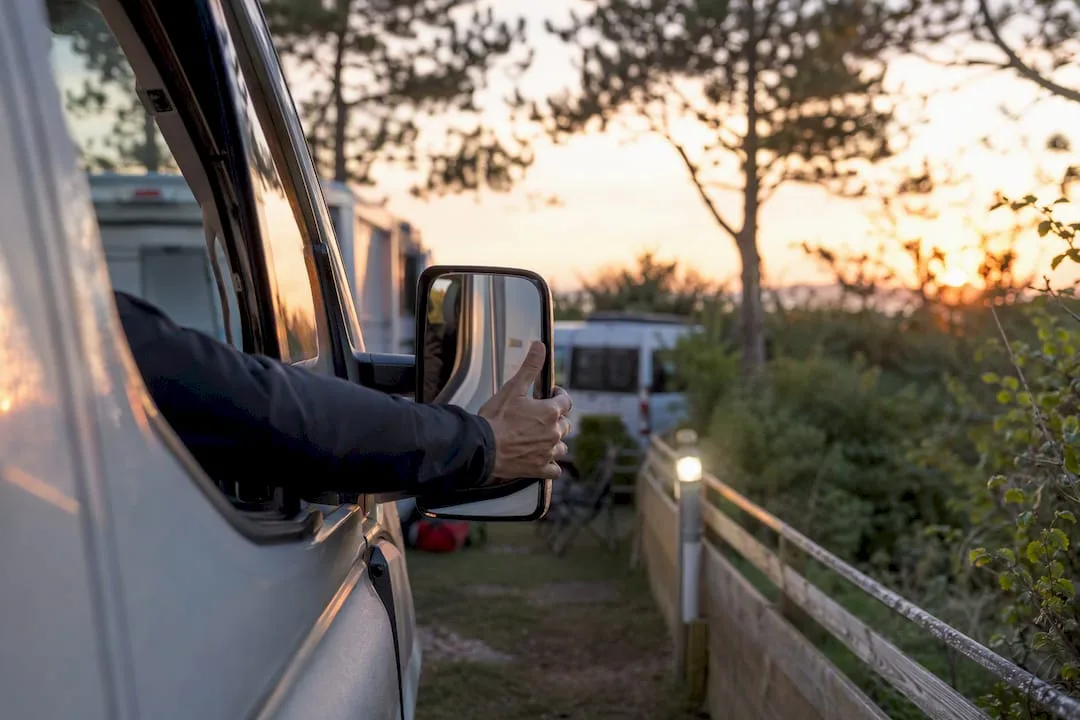
The vehicle should always contain a fire extinguisher, first-aid kit, warning triangle, and reflective vests for all passengers. Many rental vehicles already include this equipment, but check it at pickup anyway.
Waste disposal has clear rules: dispose of toilet waste and wastewater only at designated facilities in campsites or motorhome stopovers, never in nature or in a parking area. Solar panels and leisure batteries can provide greater independence from external electricity, but they do not replace access to proper wastewater disposal facilities.
Expert tip: Save the rental company’s 24/7 roadside assistance number among your key contacts on your phone, rather than keeping it only in the reservation confirmation email. If you break down on the road without a signal, you will be grateful to have the number saved instead of having to search through your inbox.
In the event of a breakdown or traffic accident, first ensure the safety of all passengers, place the warning triangle, and call the rental company’s roadside assistance, followed by emergency services or the police if necessary.
How Much Does a Week in a Motorhome Around Slovenia Actually Cost?
The budget for a motorhome trip consists of five main expenses: vehicle rental, fuel, overnight stays, tolls or the vignette, and the security deposit at pickup. Many people also forget about the cleaning fee upon return, which some rental companies charge separately.
- Rental is the largest expense and varies depending on the model, season, and rental duration.
- Fuel for a week of moderate driving around Slovenia can cost several hundred euros, depending on the route and vehicle consumption.
- A campsite or motorhome stopover costs less than a hotel room, although prices increase in popular destinations during summer.
- A vignette is required for motorways, while some tunnels charge an additional toll.
Traveling outside the peak season and choosing a longer rental with a lower daily rate are the most reliable ways to reduce the overall cost. Before signing the rental agreement, check how many kilometers are included, as additional-kilometer charges can come as an unpleasant surprise when returning the vehicle. An overview of current prices and models can be found on the
summer motorhome rental page.
Practical Route Examples and Experiences from Campervan.si Rentals
Three combinations are the most common among Campervan.si renters. The first combines the coast and inland Slovenia: Ljubljana, Postojna, Piran, the Karst region, and back, making it suitable for a week of moderate driving. The second is an Alpine route from Ljubljana toward Bled, Bohinj, and Vršič, where it is advisable to check seasonal pass closures before departure. The
detailed guide to Alpine routes can help with more precise planning of this itinerary. The third is a circular route through inland Slovenia: Ljubljana, Celje, Maribor, Ptuj, and Dolenjska, suitable for those who prefer to avoid mountain roads.
When picking up the vehicle in Ljubljana, go through the basics with the rental company’s team: where the main electrical switch is, how to connect the water correctly, and where the safety equipment is located. This takes ten minutes and can save hours of uncertainty later on the road.
Ask for a demonstration of the electricity and gas connections and an explanation of how to properly empty the toilet cassette. This step saves time and prevents many unpleasant situations during your trip.
Practical tips from everyday rentals: check the tire pressure before a longer leg, fill the fresh-water tank when you pick up the vehicle, and ask for a short demonstration of the kitchen equipment if you have not used it before. Small details, such as the location of the fuses, can save a lot of frustration on your first evening on the road.
Why Good Planning Improves the Motorhome Travel Experience
A good plan does not mean a rigid hour-by-hour schedule, but rather a framework within which you can spontaneously change the details. When you know approximately where you will spend the night and how many kilometers you have ahead of you, it is easier to say yes to an unexpected stop at a vineyard or viewpoint.
For families with children or for a first motorhome trip, I recommend shorter daily stages and more backup days than experienced travelers might choose. A group of four people needs more time for stops than a couple, and this should be factored into the basic plan rather than only considered once you are already on the road and running out of time.
From renters’ experiences, one thing is clear: those who took the time to prepare a basic route spent less time worrying and more time enjoying the scenery during their trip.
Campervan.si: Rental and Advice for the Trip You Will Actually Take
Campervan.si is an alternative to spending hours searching through different online motorhome rental listings in Ljubljana. Instead of comparing ten different providers yourself, you get one point of contact who knows Slovenia’s roads, border crossings, and motorhome stopovers mentioned in this article.
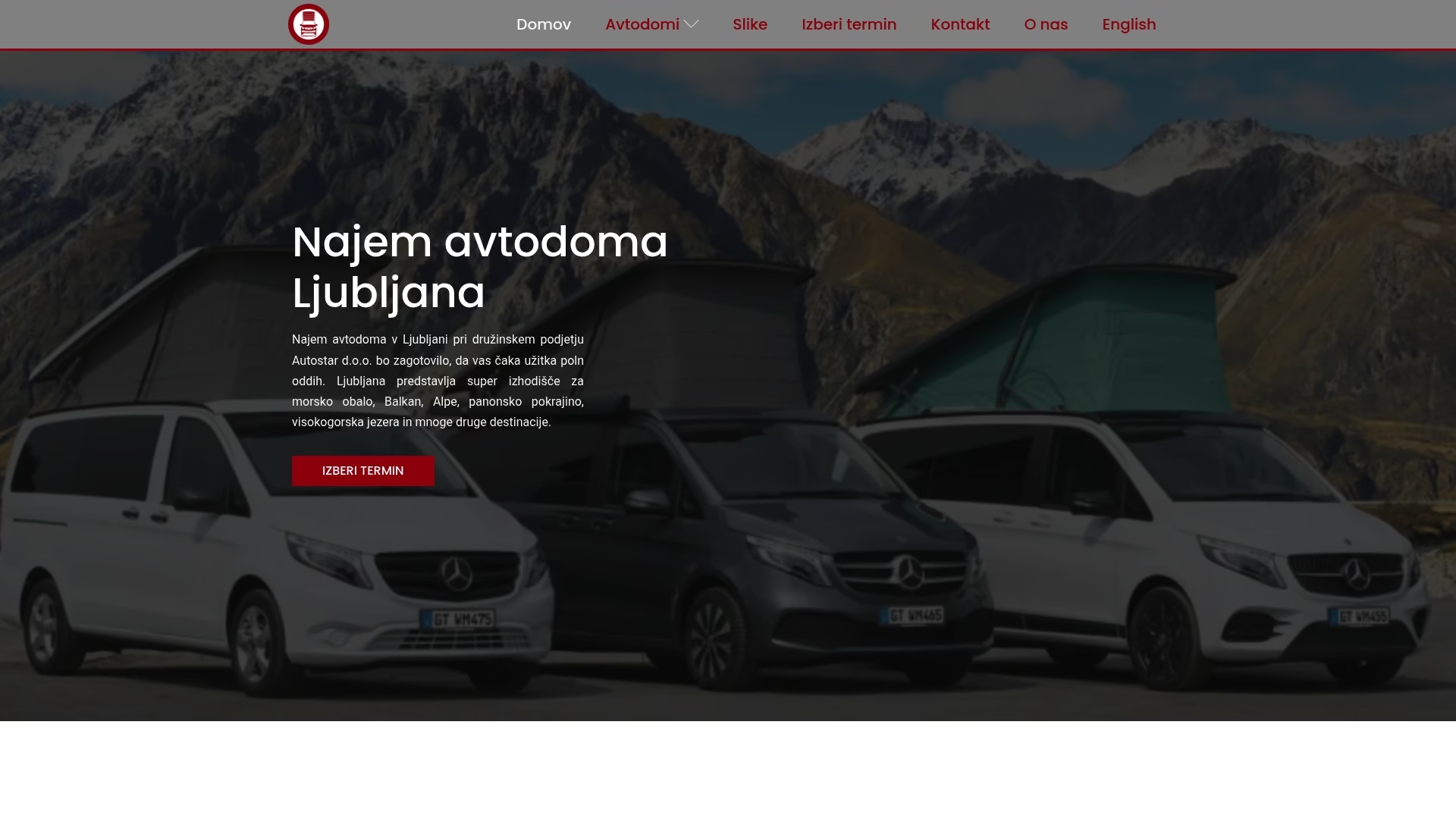
Our fleet includes the
Mercedes V Marco Polo and
Ford Transit Nugget Plus, both with basic insurance, 24-hour roadside assistance, and equipment for cooking and sleeping for several people. Pickup and return take place in Ljubljana, where we show you the connections, safety equipment, and wastewater disposal system when handing over the vehicle, exactly as described above.
Before booking, prepare your preferred dates, approximate number of passengers, and general route so that we can recommend a model suited to your trip. Check availability and book through
Campervan.
Sources
Recommended