Montenegro by campervan is absolutely worth considering, even if you only have a few days. The country offers a rare combination: a stunning coastline, dramatic canyons, mountain lakes and campsites that welcome campervans and motorhomes — all within an area smaller than Slovenia. The only real limitation is the size of your vehicle. The famous switchback roads above Kotor can be challenging for very long or wide motorhomes, which is why a compact campervan is often the smarter choice.
Three quick route options:
7-day coastal route (Herceg Novi → Ulcinj): a fast getaway focused on the sea, beaches and historic towns, ideal for a shorter holiday.
9-day mixed route (coast + Durmitor/Žabljak): a combination of seaside landscapes and mountains, perfect for travellers who want both.
14-day circular route (slow exploration of the entire country): Lake Skadar, Lovćen, Perast and extra days for relaxing and enjoying the journey.
Logistics in three points:
The border crossing from Slovenia is usually via Croatia and Bosnia or Croatia and Serbia; a green card insurance certificate and rental confirmation are required.
Montenegro uses the euro despite not being an EU member, which makes payments much easier for European travellers.
During the summer season, popular coastal campsites are often fully booked, so early reservations are strongly recommended.
Top tip before departure: Make sure your campervan rental agreement allows border crossings into Montenegro and carry physical copies of all important documents.
Which Montenegro campervan itinerary is right for you?
Below you will find three practical itineraries. Distances are approximate, and driving times take into account mountain roads and winding routes — not only motorway speeds.
Infographic: three Montenegro campervan travel route suggestions and practical tips for a stress-free journey
7-day coastal route
Day
Stop
Distance / driving time
Overnight stay
1
Ljubljana → Herceg Novi
~600 km, 7–8 hours
Camping Zloković (Herceg Novi)
2
Herceg Novi → Kotor
~70 km, 1.5 hours
Campsite by the Bay of Kotor
3
Kotor (sightseeing, rest day)
—
Same campsite
4
Kotor → Budva
~160 km, 3 hours
Camping Buljarica or Avala
5
Budva → Bar
—
Campsite near Bar
6
Bar → Ulcinj
—
Camping Ada Bojana
7
Ulcinj → Ljubljana
~600 km, 7–8 hours
Return journey
The second day is the most important one: the winding roads above Kotor are narrow and demanding. Travellers often report that passing buses or larger vehicles requires careful manoeuvring. We recommend starting early in the morning when traffic is lighter.
9-day mixed route (coast + mountains)
The first five days follow the coastal route until Budva. Then:
Day 6: Budva → Lake Skadar (~70 km, 1.5 hours). Overnight near the lake, with bird watching in the evening.
Day 7: Lake Skadar → Žabljak/Durmitor (~160 km, 3 hours). Mountain roads are narrow; we recommend arriving before 16:00.
Day 8: Žabljak (hiking, Black Lake, Tara Canyon). Overnight at a campsite near Žabljak.
Day 9: Žabljak → Ljubljana (~600 km, 7–8 hours).
Alternative if mountain roads are closed: During winter and early spring, some routes in Durmitor may be inaccessible. In that case, return from Lake Skadar directly towards Podgorica and Herceg Novi.
14-day circular route
For travellers who prefer to take their time. The foundation is the 9-day route above, extended with:
Days 9–10: Plužine and Lake Piva (north of Durmitor, less crowded and more peaceful).
Day 11: Kolašin and surrounding areas (fresh mountain air and smaller campsites).
Day 12: Lovćen (spectacular views over the Bay of Kotor from the summit) → Perast (coastal sightseeing, campervan parking is limited).
Day 13: A free day of your choice. We recommend Sveti Stefan (view it from the outside) or hidden bays that locals describe as a quieter alternative to busy Budva.
Day 14: Return to Ljubljana.
Expert tip:For a 14-day itinerary, include at least one no-driving day every 3–4 days. Mountain distances may look short on the map, but in reality winding mountain roads take significantly longer than navigation apps suggest.
Where to stay overnight: campsites, parking areas and wild camping rules
Montenegro has campsites along the entire coastline as well as in the mountainous interior. However, expectations regarding facilities can vary significantly between regions.
Coastal campsites (Herceg Novi, Budva, Ulcinj) usually offer electricity connections, water supply and wastewater disposal, often with free Wi-Fi as well. Camping Zloković near Herceg Novi and Camping Ada Bojana near Ulcinj are among the campsites open throughout the year. Camping Buljarica and Camping Avala near Budva are popular during the high season, so advance booking is recommended.
Mountain campsites (Žabljak, Durmitor) generally have more basic facilities. Electricity is often available, but wastewater disposal facilities are not always provided. Camping Razvršje near Žabljak is one of the established options. Check whether larger vehicles can be accommodated before arrival, as some parking areas have limited space.
For campsite reservations and regional campsite information, Avtokampi.si is a reliable source with a Slovenian-language interface.
Wild camping is officially prohibited in protected areas in Montenegro (including Durmitor and Lake Skadar). Outside these areas, tolerance can be higher, but the following rules should always be respected:
Never camp on private land without permission from the owner.
Only make fires in designated areas; during summer months fire restrictions are common.
Take all rubbish with you; waste bins can be limited in rural areas.
Dispose of grey and black water only at campsites with suitable facilities.
Expert tip:Before choosing a wild camping location, check that your campervan has sufficient wastewater capacity. Poor sealing or a full wastewater tank are common causes of problems; checking the wastewater system is part of the recommended vehicle inspection before departure.
What you need to arrange before entering Montenegro with a campervan
Documents and insurance
Document
Notes
ID card or passport
Valid for all passengers
Vehicle registration document
Original document, not a copy
Green Card (international insurance certificate)
Make sure it covers Montenegro (MNE)
Rental confirmation
Required for rental vehicles; includes permission for border crossings
Physical copies of all documents
Recommended; digital copies are not always accepted
As a local campervan rental company, we recommend: check before departure that your rental agreement includes international border crossings without additional fees and that Montenegro is listed in your insurance coverage.
Currency and payments
Montenegro uses the euro, meaning Slovenian and many European travellers can avoid currency exchange costs. In tourist destinations such as Kotor, Budva and Herceg Novi, card payments usually work without problems. In smaller villages and mountain campsites, cash is often the only option. We recommend carrying at least €50–80 in cash at all times.
Traffic regulations and parking
Speed limits: 50 km/h in towns, 80 km/h outside towns and 100 km/h on express roads.
Required equipment: reflective vests, warning triangle, first aid kit and fire extinguisher.
Historic towns (Kotor, Budva) are practically inaccessible for large motorhomes. Park outside the old town walls and continue on foot.
For larger motorhomes, the switchback roads above the Bay of Kotor can be a serious challenge. The Bay of Kotor is a submerged river canyon, which explains why the roads are narrow and why suitable parking areas for larger vehicles are limited.
Healthcare and safety: Medical centres are available in every larger town (Herceg Novi, Kotor, Budva, Podgorica and Žabljak). For emergency assistance call 124. Pharmacies in tourist areas are often open until late evening. During winter, roads in Durmitor are frequently covered with snow; winter equipment is mandatory from November to March. Fuel stations are available in all larger towns, but they are less frequent in mountainous areas, so fill your tank before heading into the mountains.
Which places are worth visiting by campervan?
Montenegro is an incredibly diverse destination: coastline, dramatic canyons and mountain lakes are all accessible within a single week without taking a flight.
Kotor: The old town is a UNESCO World Heritage Site. Park outside the city walls (for example at the parking area north of the entrance) and explore on foot. The best time to visit is early morning, before cruise ships arrive.
Perast: A charming coastal village with two island churches in the middle of the bay. Access by campervan is possible, but parking is limited; visiting in the morning is recommended.
Budva: A lively coastal town that can become crowded in summer. Park near the old town and continue on foot. Suitable for larger campervans, although parking spaces fill quickly during peak season.
Sveti Stefan: Best viewed from the road or one of the viewpoints. Access to the island is paid and the location is not suitable for campervans.
Lake Skadar: Peaceful and less crowded than the coast. Campervan access is good, with smaller parking areas available near the lake. Early morning bird watching is highly recommended.
Durmitor and Žabljak: Perfect for hiking, Black Lake and exploring Tara Canyon. Rafting trips on the Tara River are organised by local agencies in Žabljak; booking one day in advance is usually sufficient. Some routes are closed during winter.
Tara Canyon: The deepest canyon in Europe. Viewpoints are accessible by campervan, while rafting trips usually last 2–4 hours.
May, June and September are the best months for exploring the coast: temperatures are pleasant and crowds are smaller. For hiking in the interior, late spring and early autumn are also ideal, while summer temperatures in the mountains can still be high.
Which campervan should you choose and what to check at pickup?
Vehicle size
The narrow switchbacks above Kotor and historic town centres create clear limitations. A compact campervan (up to 6 metres long and up to 2.2 metres wide) is the ideal choice for Montenegro. Larger motorhomes are possible, but they require an experienced driver, someone to assist during manoeuvring and a willingness to skip certain locations.
For a comparison of campervan models, dimensions and equipment, see our Ford Nugget vs. VW California comparison, which explains the differences between compact campervans and larger vehicles.
Campervan pickup checklist
Tyres: Check tyre pressure and tread depth; mountain roads can be demanding.
Headlights and lights: Check that all lights work correctly, including rear lights.
Door and window seals: Look for signs of moisture, leaks or damaged seals.
Wastewater system: Test the drainage system before departure; a full or leaking tank is a common cause of problems at campsites.
Heating and air conditioning: Confirm that both systems work properly, especially if you plan mountain overnight stays.
First aid kit: Check the contents and expiry dates.
Tools and connections: Make sure you have EU electrical adapters, an extension cable and basic repair tools.
Fire extinguisher: Required equipment according to Montenegro traffic regulations.
Expert tip:Request a physical copy of the rental agreement showing the permitted driving area and 24/7 assistance contact details. For longer Balkan road trips, additional international travel insurance is a smart investment that reduces the risk of unexpected repair costs abroad.
Packing and safety
Keep the weight low and evenly distributed: full water tanks should remain at the bottom, with food and clothing stored above them. On winding mountain roads, every kilogram in the wrong place can affect vehicle stability. For safe overnight stays outside campsites, we recommend locking all side entrances and using blackout curtains on all windows.
Key takeaways
Travelling through Montenegro by campervan is at its best when you allow enough time, choose a compact vehicle, prepare your documents and reserve campsites during the busy season.
Point
Details
Recommended duration
A few days minimum; shorter trips work for the coast, while longer trips are better for combining mountains and sea.
Vehicle size
A compact campervan (up to 6 m) is the optimal choice for the winding roads above Kotor.
Documents and insurance
Green Card covering MNE, rental confirmation and physical copies are required.
Currency and payments
The euro is used everywhere; cash is essential in villages and mountain campsites.
Campervan rental
Campervan rental from Ljubljana with Mercedes V Marco Polo and Ford Nugget Plus models, including 24/7 assistance and route planning advice.
Why Montenegro by campervan is not as simple as it looks on the map
Most Montenegro travel itineraries are written for cars. The distances are short, the border is nearby and prices are relatively affordable. On paper, it looks like an easy one-week road trip. Travelling by campervan is a different story — and that is not necessarily a bad thing. It simply requires a different approach.
The Bay of Kotor is narrow and surrounded by steep mountains. Roads that were originally built for horses and donkeys now carry buses, tourist vans and occasionally campervans that find themselves on the wrong side of a tight switchback. Experienced travellers know the reality: it is not a question of whether you will need to manoeuvre carefully, but when. A smaller vehicle makes this much easier, while a larger motorhome requires patience and often an extra person to help guide manoeuvres.
At the same time, this unpredictability is part of Montenegro’s charm. Mountain campsites near Žabljak are quiet and cool when the coast is experiencing a heatwave. Lake Skadar in the early morning, before other visitors arrive, is one of those experiences you rarely find in a traditional hotel itinerary. Travellers who take their time and choose the right vehicle discover a side of Montenegro that many tourists never see.
The recommendation is simple: choose a compact campervan, reserve coastal campsites in advance for July and August, and avoid planning more than 150–200 km per day in the mountainous interior. Everything else can be discovered along the way.
A campervan helps you reach Montenegro without worries
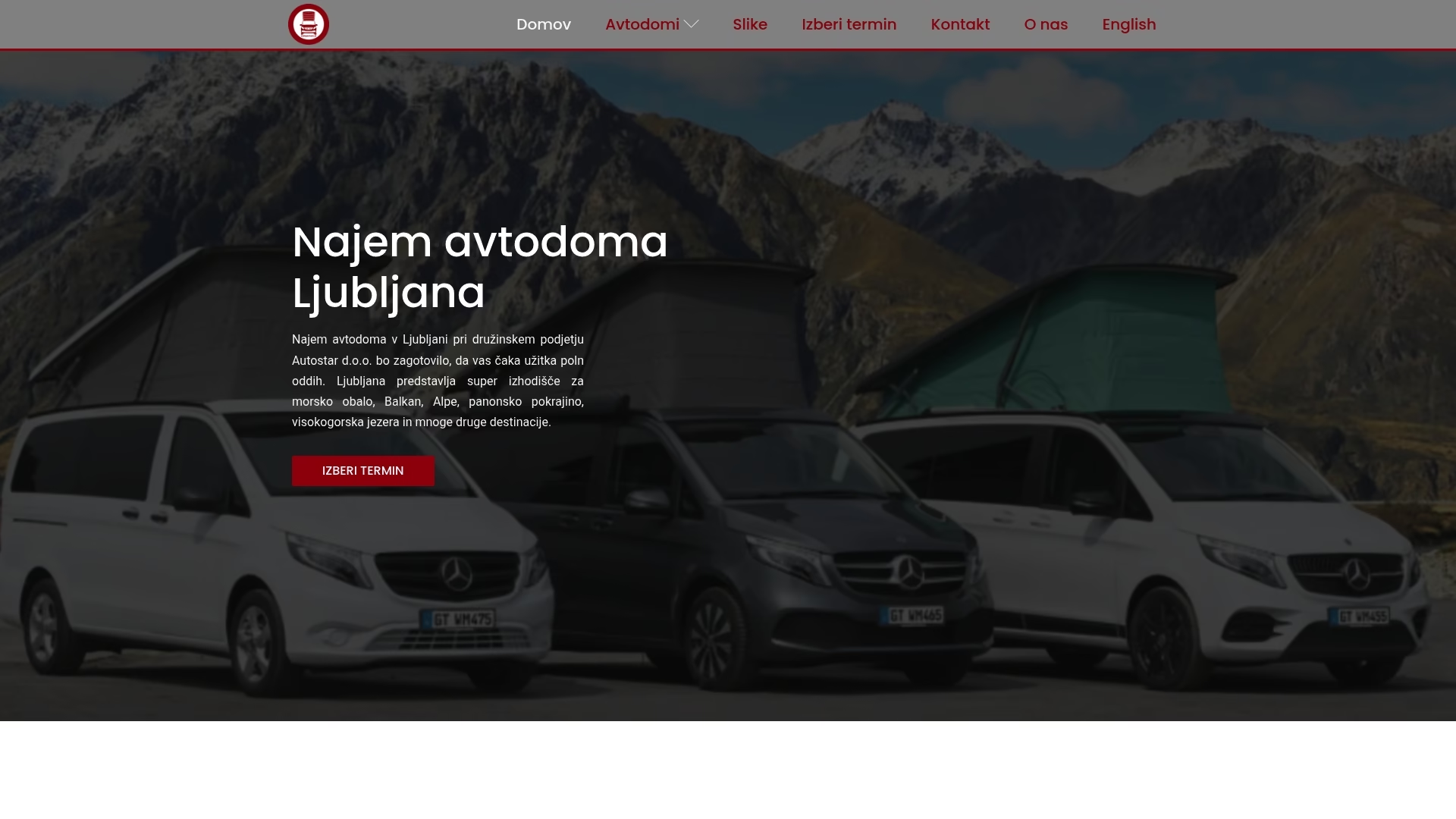
If you are looking for a campervan for one of the routes described above, Campervan offers pickup in Ljubljana with two models that are especially suitable for Montenegro: Mercedes V Marco Polo and Ford Nugget Plus. Both are compact, equipped with a kitchen, sleeping areas and a fixed toilet, and include basic insurance coverage and 24/7 assistance.
Every rental includes route planning advice and a check that your rental agreement covers international border crossings into Montenegro. Summer availability fills up quickly, so check availability and book your campervan rental early to secure the model and travel dates that suit you.
Useful resources for planning your route
For updated information before departure and during your journey, we recommend the following resources:
Avtokampi.si: Montenegro camping information, including regional campsite overviews, reviews and contact details.
Avtokampi.si: year-round campsites in Montenegro for checking campsites open outside the main season.
European Commission: euro usage outside the euro area for official confirmation of Montenegro’s currency status.
Vogue Adria: Montenegro travel guide with recommendations for lesser-known locations and hidden bays.
Active Beauty: Montenegro travel tips covering activities and seasonal travel considerations.
Source
When to use it
Avtokampi.si
Before departure for campsite reservations and checking availability
European Commission (euro)
For confirming currency and payment options
Vogue Adria
For inspiration about less crowded destinations
Active Beauty
For planning activities and checking seasonal information
Campervan.si
For campervan rental, route advice and latest news
For traffic conditions and weather forecasts during your trip, we recommend using local apps or the official websites of Montenegro’s meteorological services. Campsite opening hours can vary between high season and off-season; always call or check directly with the campsite before travelling.
This article provides general travel planning information and does not replace checking current traffic regulations, insurance conditions and border requirements with the relevant authorities.
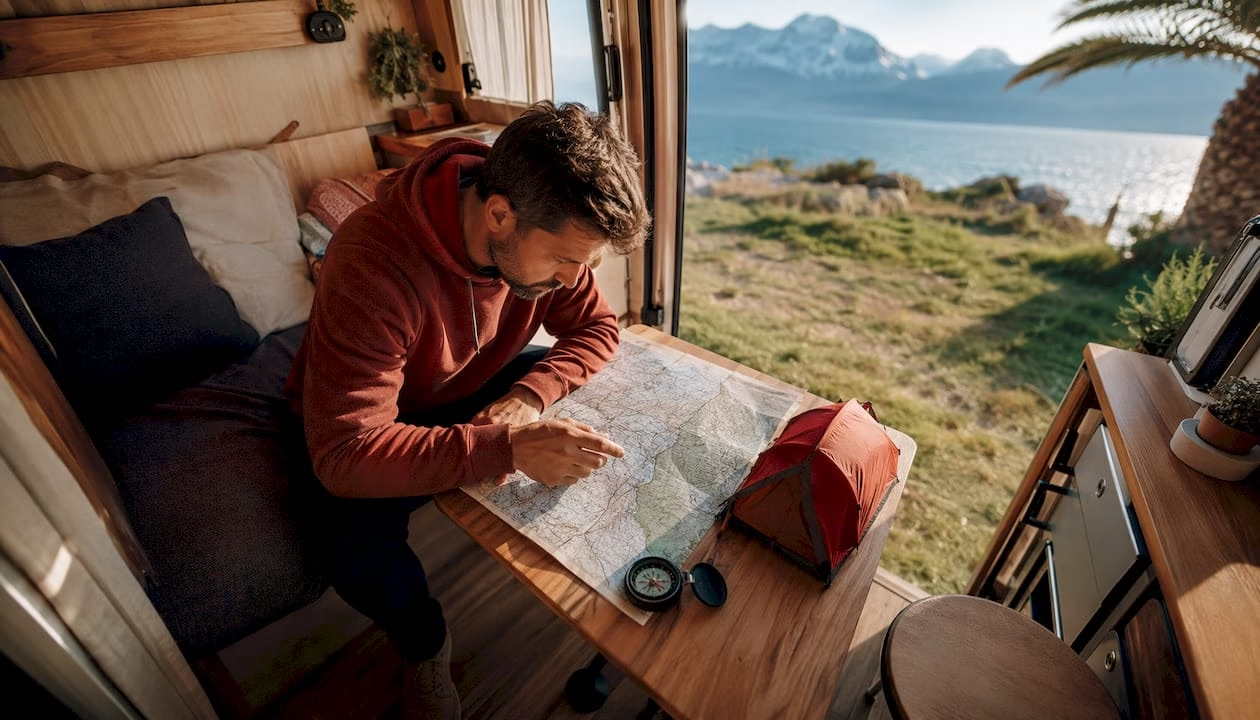

 The second day is the most important one: the winding roads above Kotor are narrow and demanding. Travellers often report that passing buses or larger vehicles requires careful manoeuvring. We recommend starting early in the morning when traffic is lighter.
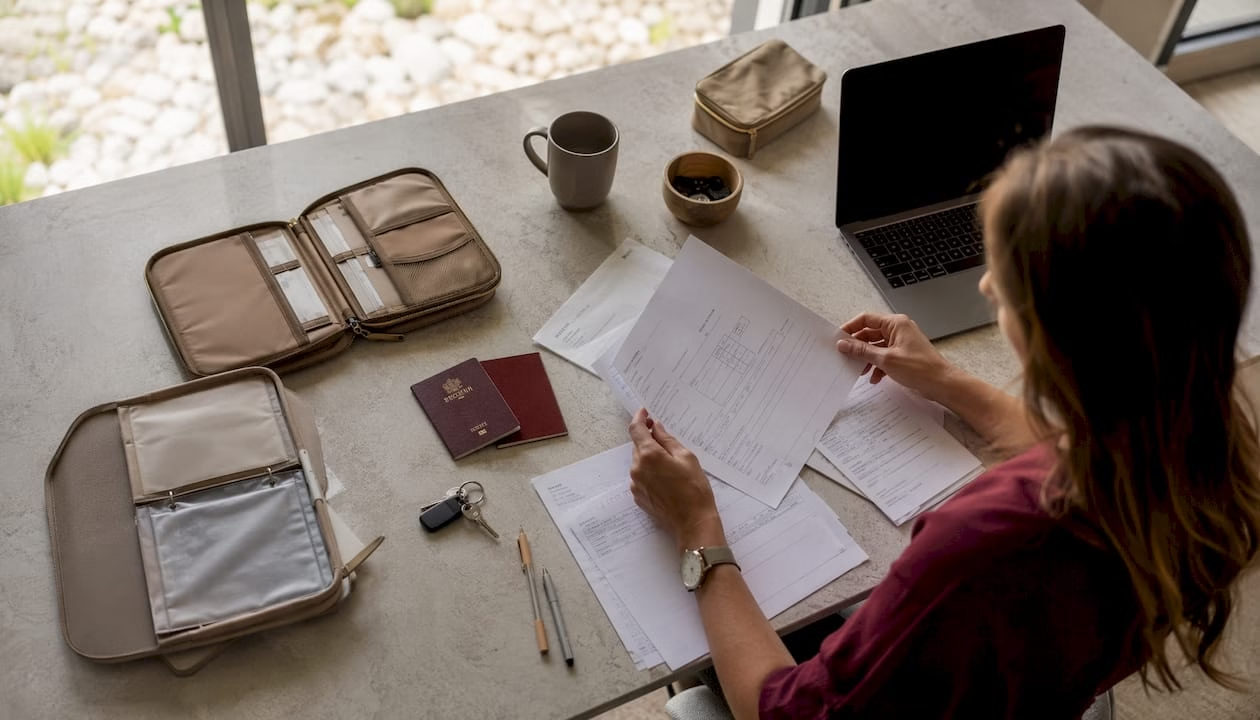
 Every rental includes route planning advice and a check that your rental agreement covers international border crossings into Montenegro. Summer availability fills up quickly, so check availability and book your campervan rental early to secure the model and travel dates that suit you.