If you want to experience authentic local cuisine while travelling around Slovenia, combine visits to local markets or pre-booked tourist farms with stops in gastronomic regions. Use the
Our Super Food map and verified quality schemes such as “Selected Quality”. When preparing food on the road, follow the “cook it, peel it or leave it” rule to avoid unpleasant surprises.
In brief:
- Markets and farms are a great way to quickly discover seasonal produce and authentic products that provide high-quality local food.
- Wine shops and wine cellars are ideal for shorter stops with tastings of wine, cheese and cured meats that complement regional dishes.
- Travelling by motorhome allows you to prepare freshly purchased ingredients immediately in your own kitchen, improving both flavour and food safety.
- When planning culinary stops, it is advisable to book in advance, check what is in season and focus on less touristy but more authentic locations.
- Slovenia is best explored by its distinct gastronomic regions, allowing you to adapt your choice of dishes and wines to your available time and preferences for a more authentic experience.
Campervan
Experience Slovenia your way
A campervan from Ljubljana gives you the flexibility to explore local markets, farms and gastronomic regions at your own pace.
Table of contents
Where to find authentic flavours: markets, farms, wine shops and festivals
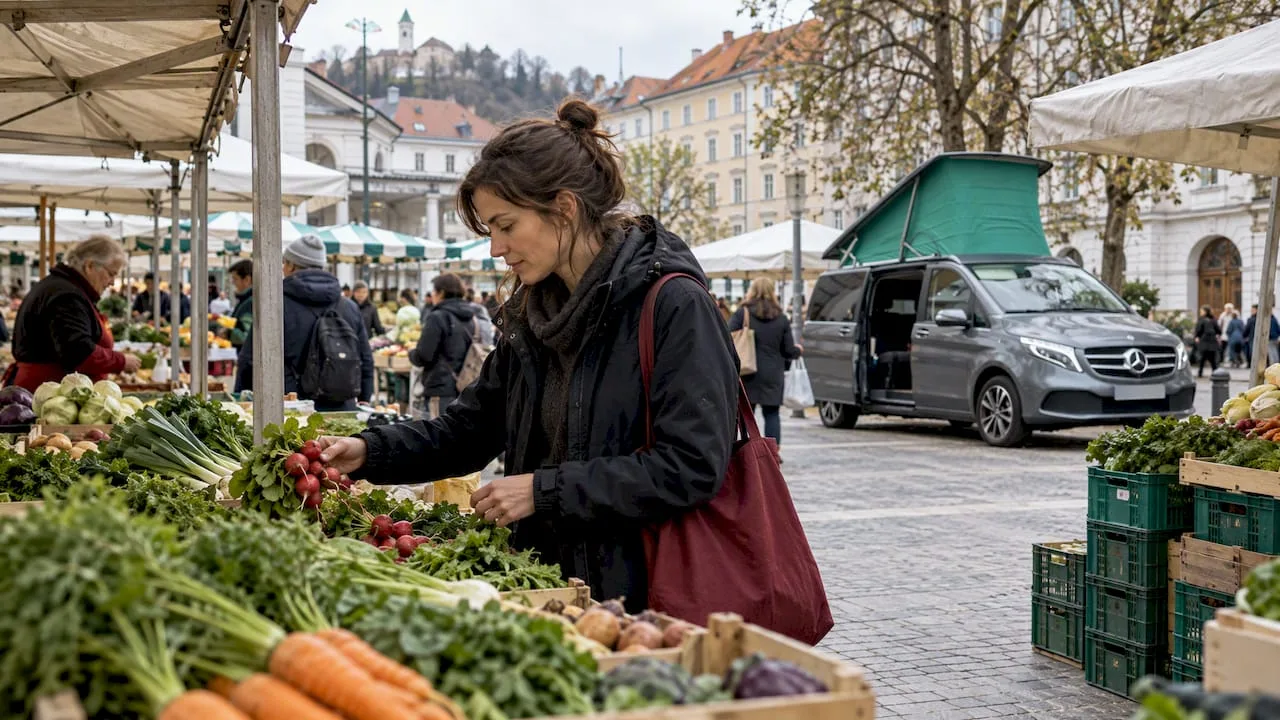
A local market is often the first and quickest way to connect with the region you are travelling through. At Ljubljana Central Market, where the Učilna okusov project is also active, you can quickly get a feel for which products are currently in season and which vendors come from nearby villages. The same applies to smaller town markets throughout Slovenia, where producers present their products personally, making it easier to ask about the origin of the food.
Tourist farms are another important stop on a culinary journey. They generally operate in three basic forms: excursion farms, where you stop only for a meal; farms with accommodation, where you can stay overnight and enjoy home cooking for breakfast and dinner; and farms with wine shops, where wine tasting accompanies homemade dishes. The
Catalogue of Tourist Farms in Slovenia includes more than 140 providers across the country’s regions, with the highest number of accommodation farms in the Savinja, Upper Carniola and Gorizia regions.
Slovenia’s wine-growing regions (Podravje, Posavje and Primorska) offer a third option: visiting a wine shop or wine cellar, where tastings often include local cheeses, cured meats or bread from a traditional oven. Such a stop usually takes an hour or two and fits well between two longer drives.
For a more organised experience, look for festivals or themed campaigns such as Unique Experiences of Slovenia, which brings together boutique and sustainable culinary providers from across the country. Before setting off, also check where restaurants with a good reputation among locals are located; looking for places where locals eat often reveals higher-quality and fresher food than tourist-oriented restaurants along the main roads.
When planning your stops, our guide to planning a motorhome trip can also help you combine driving with visits to culinary destinations.
For a quick overview of what to look for along the way, remember the following:
- Markets: fresh ingredients, conversations with producers and quick stops.
- Tourist farms: homemade dishes, often available only with advance booking.
- Wine shops: wine tastings with local specialities, ideal for an afternoon stop.
- Festivals and themed campaigns: organised and often more boutique experiences.
Gastronomic regions and typical dishes you will encounter along the way
Slovenia is divided into
24 gastronomic regions and 3 wine-growing regions, providing a useful framework for planning your journey. Instead of trying to see the whole country in one trip, choose two or three regions and take the time to experience them properly.
The Alpine area (Upper Carniola and parts of Carinthia) offers dairy products, curd cheese, sour milk and dishes featuring buckwheat. Primorska and the Karst are known for cured meats such as Karst prosciutto, as well as olive oil and wines such as Refošk and Teran. Panonian Slovenia, including Prekmurje and Prlekija, offers hearty dishes such as Prekmurska gibanica and bujta repa, often featuring pork and flavours characteristic of this lowland region. Dolenjska and Bela Krajina are known for buckwheat žganci and traditional flatbreads, while Styria contributes apple products and bottled wines.
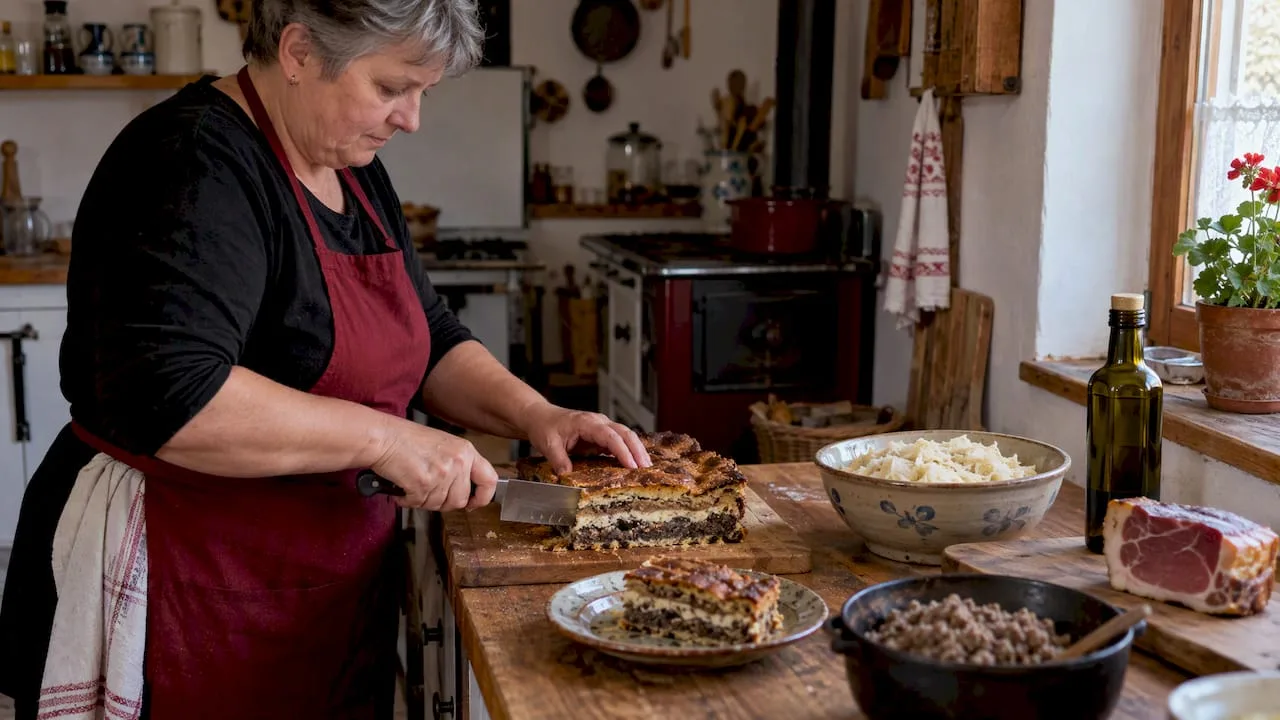
Slovenia currently has 27 protected dishes and products carrying designations such as Protected Designation of Origin, Protected Geographical Indication and Traditional Speciality Guaranteed. These labels are a useful guide when you are unsure whether a product you are buying is genuinely local and authentic.
For a quick overview of regions based on the type of stop:
- Karst region: suitable for half a day; a visit to a wine shop and a tasting of prosciutto are enough.
- Prekmurje: deserves at least two days, as its dishes are slow-cooked and best enjoyed at a relaxed pace.
- Upper Carniola: a good choice for a day stop while travelling towards the Alps.
- Bela Krajina: less well known but worth exploring over several days for its traditional cuisine and buckwheat dishes.
The publication Tasting Slovenia describes these regions in detail and offers additional examples of traditional dishes if you want to plan your journey even more precisely.
How to find and book the right stop for a culinary tasting
A few concrete steps when preparing your route can save time and reduce the risk of ending up at a tourist-oriented restaurant without an authentic local flavour.
- Open the Our Super Food map, which shows more than 800 local food providers throughout Slovenia, and filter it by the region you will be travelling through.
- Check the catalogue of tourist farms and note down two or three options along your route, as availability can change quickly depending on the season.
- Call or write in advance, especially for farms offering a “surprise dinner”, where reservations are often mandatory because the food is prepared to order using their own produce.
- Ask what is currently in season, as the selection at farms changes according to the time of year and ingredient availability.
- Check opening hours, as many farms and wine shops are open only at weekends or during the summer season.
Expert tip: Always call the day before, even if the website says the farm is open, because smaller providers often depend on the weather and current bookings.
For motorhome travellers, there are a few additional considerations. Check whether the provider allows larger vehicles to park nearby, as smaller farms often have narrow access roads. An electrical hook-up is not essential for a short stop, but it can be useful if you plan to store freshly purchased products in the motorhome fridge. The kitchen in your vehicle allows you to prepare ingredients bought at the market the same evening, which is often more practical than looking for a restaurant late at night.
How to safely store and prepare food while travelling
The basic rule for food while travelling is: cook it, peel it or leave it. This means eating only food that has been thoroughly cooked, that you peel yourself or that has been prepared under controlled conditions, for example on a farm operating under HACCP standards.
Temperature is crucial for food safety in a car or motorhome, especially in summer. Keep hot food above 63 degrees Celsius and cold food below 4 degrees. In a motorhome, this means storing fresh meat or dairy products in the fridge immediately after purchase and never leaving them in the vehicle in direct sunlight.
When buying food at a market or farm, avoid:
- unpasteurised dairy products if you are not going to consume them immediately,
- raw meat left at room temperature for more than an hour,
- food with no visible origin or labelling when buying prepared dishes.
The Ministry of Agriculture noted in 2026 that choosing seasonal and local produce is not only safer but also more flavourful, as ingredients are fresher and the distance from producer to plate is shorter.
Culinary tours and experiences: how to choose the right experience
Guided culinary tours range from city walks with tastings to wine degustations, bread- or pasta-making workshops and dinners on farms where hosts serve dishes made from their own produce. Each format offers a different pace: a city tour is quick and suitable for an afternoon, while a farm workshop requires more time and advance registration.
When choosing a provider, it is worth considering several criteria:
- group size, as smaller groups provide a more personal experience and better interaction with the host,
- the origin of the ingredients, meaning whether the provider actually uses local produce or simply advertises “homemade” cuisine,
- a sustainable approach, such as using seasonal products and reducing packaging.
Guidelines associated with the Unique Experiences of Slovenia initiative specifically emphasise a boutique and sustainable approach as a condition for inclusion in its collection of experiences, making this a useful quality indicator when choosing a provider.
When checking the reliability of a provider, see whether the offer, price and duration are clearly described on the website and whether it is easy to ask questions before booking. Prices for workshops and tastings vary considerably between regions, so it is worth comparing at least two or three options before making a decision. International experience shows that
local cuisine is an important part of tourism throughout Europe, not just in Slovenia, confirming that this is a trend that extends beyond a single country.
How a motorhome makes it easier to discover local cuisine on the road
When travelling by motorhome, access to a kitchen in the vehicle often determines how relaxed you can be when exploring food along the way. When you buy fresh ingredients at a market, you can prepare them in your own kitchen that same day instead of looking for a restaurant late at night.
Stops at tourist farms have proven particularly worthwhile when the vehicle can be parked nearby and there is no need to find additional accommodation. The fridge in the vehicle allows you to store dairy products and meat purchased along the way, which is especially useful in summer when temperature control is essential for food safety.
A kitchen on wheels turns every stop at a local producer into an opportunity for an immediate meal, not just a purchase.
When renting a motorhome in Ljubljana, you get basic cooking and refrigeration equipment, making this style of travel easier. We recommend checking availability in advance, especially during the summer season when demand is highest.
Why local cuisine is more than just a meal on the road
Food tells you a great deal about the region you are travelling through: its land, climate and the people who have shaped its recipes over generations. When you choose a local farm instead of a chain restaurant, the money stays within the community that produced it.
The sustainability aspect is equally important. Buying at a market means less packaging and shorter food miles, which
reduces waste and the environmental footprint of your trip. Respecting local customs, such as asking before photographing food at a farm or respecting the hosts’ working hours, is part of being a responsible visitor.
— Rok
A motorhome as a practical choice for a culinary trip
When the main purpose of a trip is to explore regional flavours, a motorhome saves the time you would otherwise spend looking for accommodation near each new farm or market. At
Campervan, rentals include the Mercedes V Marco Polo and Ford Nugget Plus, both equipped with a kitchen, fixed toilet and sleeping berths for several people, allowing you to prepare and store freshly purchased ingredients on the same day.
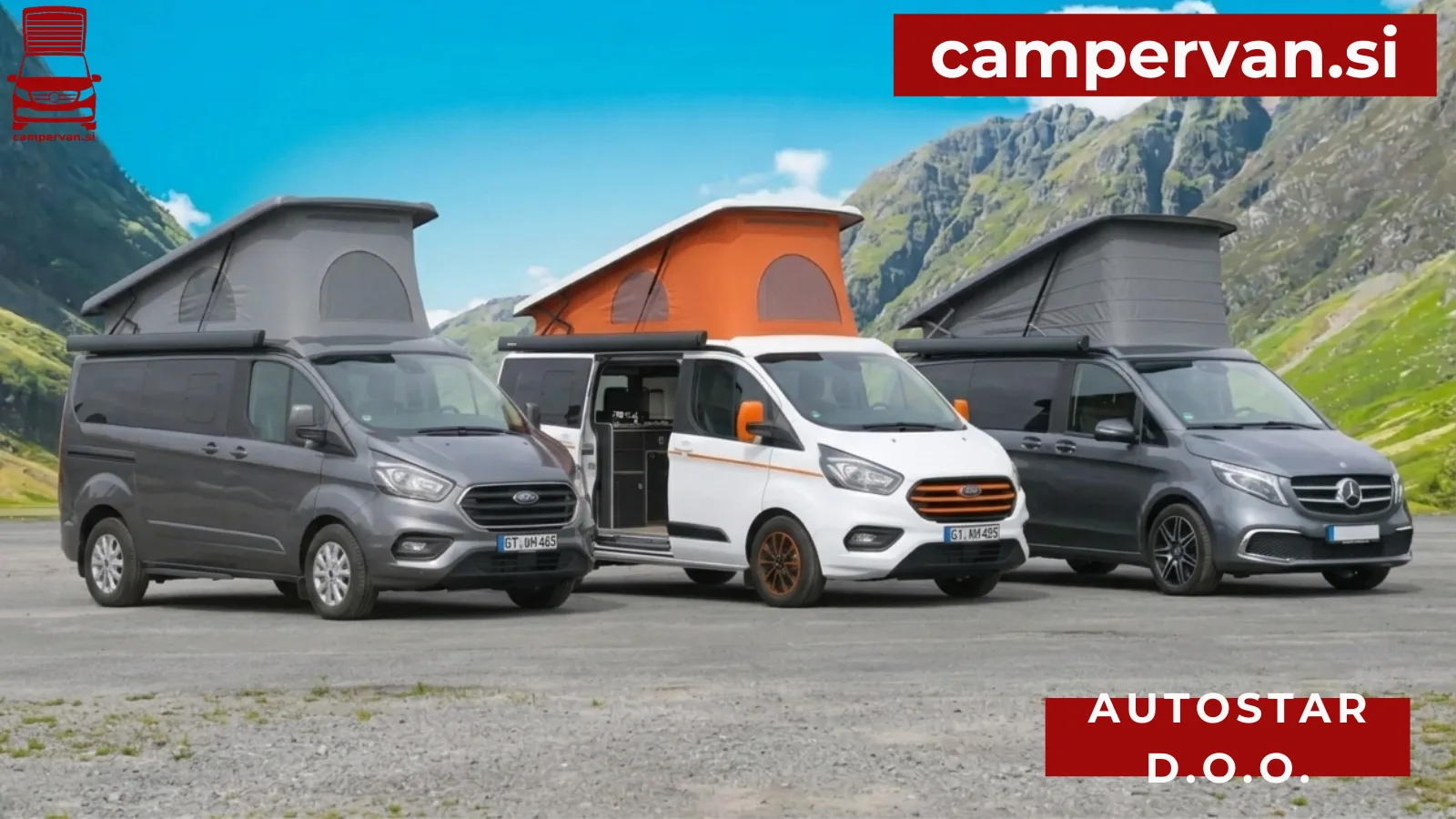
Renting a motorhome makes particular sense when you plan to visit several regions during one trip and do not want to search for new accommodation near culinary destinations every day. Basic insurance and 24-hour assistance also help you focus on the journey rather than logistics.
For an exact overview of prices and availability, visit the rental page for the Mercedes V Marco Polo or the
Ford Nugget Plus rental page and book a date that fits your culinary itinerary.
Frequently asked questions
How can I easily find authentic local food while travelling around Slovenia?
The quickest way is to use the Our Super Food map, which shows more than 800 providers throughout the country. You can also check the catalogue of tourist farms to book a meal or accommodation.
What does the Selected Quality label mean for food?
It is a collective quality label that helps consumers identify products with verified Slovenian origin and controlled quality. In Slovenia, in addition to this label, 27 dishes and products are protected under designations of origin or traditional speciality.
What rules apply to safe eating while travelling?
The basic rule is cook it, peel it or leave it, meaning that you should eat only food that has been thoroughly cooked or peeled. Keep hot food above 63 degrees Celsius and cold food below 4 degrees to reduce the risk of foodborne illness.
Is renting a motorhome worthwhile for a culinary trip around Slovenia?
Yes. A kitchen and fridge in the vehicle allow you to prepare and store freshly purchased ingredients on the same day. Campervan offers Mercedes V Marco Polo and Ford Nugget Plus models with basic cooking and refrigeration equipment.
Which region in Slovenia is best for culinary exploration?
The answer depends on how much time you have: the Karst is suitable for a shorter stop with a tasting of prosciutto and wine, while Prekmurje deserves at least two days because of its slow-cooked, hearty cuisine. Slovenia has a total of 24 gastronomic regions and 3 wine-growing regions, so it makes sense to choose two or three for one trip.
Sources
CCampervan
Plan your culinary journey
Contact us with questions about renting a campervan or motorhome in Ljubljana to explore the flavours of Slovenia.
Recommended