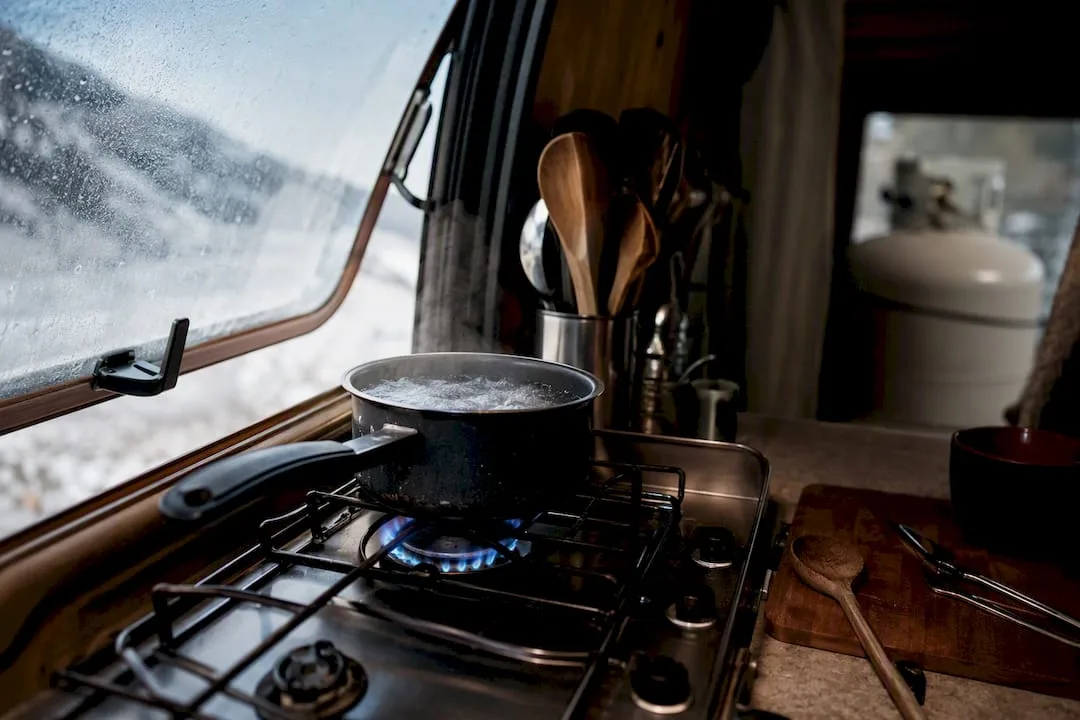
Cooking with gas in a campervan is safe when you get three things right: using the correct type of gas for the season, keeping the valves closed while driving, and having a working gas detector. For travelling in Slovenia, propane is usually the best choice because it remains usable down to −42 °C, while butane becomes ineffective in cold weather. Everything else comes down to good habits rather than complicated technology. Campervan.si prepares its rental vehicles so that these safety routines are already part of the setup before you even receive the keys.
In brief:
- For winter campervan travel, propane is recommended because it remains gaseous at temperatures down to −42 °C, while butane stops vaporising effectively at low temperatures.
- Before cooking, always check that the valves are closed correctly, the gas locker is undamaged and the burner seals are not cracked. These simple checks reduce the risk of gas leaks.
- For safe driving and cooking, the gas system should be regularly maintained and safety-checked, including inspection of the gas installation, testing of detectors and periodic servicing by qualified technicians.
- When choosing a gas cylinder, make sure the valve and regulator system are compatible and check whether the cylinder can be refilled or exchanged in Slovenia at suitable locations.
- Campervan.si prepares its rental vehicles with essential safety equipment, including a built-in gas detector and pressure gauge, making cooking on the road safer and easier.
Table of Contents
What do you need before cooking in a campervan?
Before lighting the burner, check the basic equipment. The list is short, but every item has a specific safety function rather than simply being another box on a checklist.
- Gas cylinder of the appropriate size and type for the season (propane in winter, with butane suitable as a summer alternative).
- Gas pressure regulator compatible with the cylinder type. The wrong regulator can cause an unstable flame or prevent the burner from lighting properly.
- Gas locker ventilated to the outside and separated from the living area.
- Shut-off valves on the cylinder and before the cooker, accessible without having to dismantle the gas locker.
- Combined gas and carbon monoxide detector, installed low in the vehicle because LPG gas is heavier than air and can accumulate near the floor.
- Soapy water for a quick check of gas connections and potential leaks.
- Pressure gauge or gas level indicator, if the cylinder does not have its own filling-level indicator.
Before driving, make sure all gas valves are closed and check that the gas locker has not been damaged since the previous use. Before cooking, briefly check around the cooker and make sure the rubber seals around the burner are not cracked. These two checks take less than a minute but can eliminate many common risks.
Propane or butane: which gas should you use in Slovenia?
The answer depends on the season, not personal preference. Propane remains gaseous at
temperatures down to −42 °C, making it the only
practical choice for winter conditions, for example when travelling in the Alps or going winter camping in the Pohorje region. Butane becomes increasingly difficult to vaporise at temperatures around 0 °C and below, causing the cooker flame to weaken or go out even when the cylinder is still partly full.
Expert tip: If you are heading out on a winter campervan trip, check the label on your gas cylinder before leaving. Many people simply take a cylinder left over from summer without checking whether it contains butane or propane.
For summer trips around Slovenia or the Balkans, butane is perfectly suitable and is often cheaper. When choosing the cylinder size, you are balancing fuel autonomy against storage space:
- 3.5 kg cylinders are lightweight and suitable for shorter trips or as a backup, but they can run out quickly if you cook frequently.
- 11 kg propane is a common choice for longer trips and year-round use.
- 12.5 kg butane offers similar capacity but is less suitable for cold weather.
- Fixed LPG tank is permanently installed and refilled at dedicated LPG stations. It eliminates the need to exchange cylinders but is more expensive to install and cannot be swapped as easily during a trip as a conventional cylinder.
For an average family trip around Slovenia, one 11 kg propane cylinder plus a smaller backup cylinder is generally sufficient for around one week to ten days of moderate use.
How to choose a gas stove for a small campervan kitchen
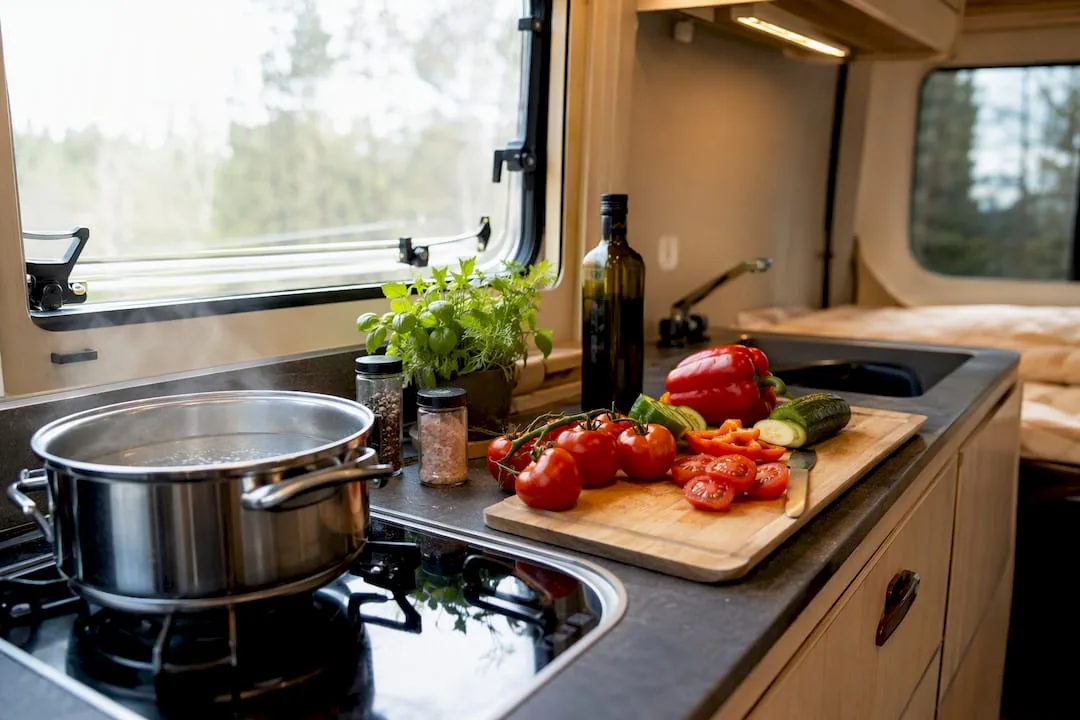
Space inside a campervan is limited, which is why one solution has become particularly popular: a built-in cooker combined with a sink. The cooking surface and sink share one worktop, while the tempered-glass lid turns the entire area into additional counter space when the cooker is not being used. This can make the difference between a campervan kitchen where you can actually prepare vegetables and one where there is nowhere to put a chopping board.
When choosing cooking equipment for a campervan, pay attention to the following:
- Brand and compatibility – units from Dometic are among the most common in Slovenian campervans because they are designed for intensive use during rentals and long-distance travel.
- Electronic ignition is preferable to a manual lighter, which can be difficult to use in windy or humid conditions.
- Number of burners – two or three burners are sufficient for most meals you will prepare on the road.
- Built-in cut-out dimensions must match the existing worktop if you are replacing an existing cooking unit.
- Regulator connection must be compatible with the gas cylinder system; otherwise, you may need an additional adapter.
When installing or replacing a gas cooker, always use a qualified technician who can test the system and check the gas pressure and connections properly. This is not an area for DIY improvisation, as it involves an open flame close to a sleeping and living area.
Campervan gas system safety and maintenance step by step
The gas system in a campervan is not something you set up once and forget. It requires regular inspection and a few simple routines that should become automatic every time you get behind the wheel or light the cooker.
- Close the main cylinder valve before every journey. Vibration and pressure fluctuations while driving can contribute to leaks at older connections. Safety guidance therefore recommends keeping the valves closed, unless the vehicle has an approved crash sensor system that automatically shuts off the gas supply in the event of an impact.
- Check the valves by feel, not just by sight. Make sure the valve is fully closed rather than merely appearing to be approximately closed.
- Install a gas and CO detector low in the kitchen area, because leaking LPG is heavier than air and can accumulate near the floor.
- Test the detector monthly and replace its batteries at the beginning of each season.
- Have the gas installation inspected by a qualified technician every five years, in accordance with the technical reference ITC-ICG 07 used for the regular maintenance of gas systems in vehicles.
- Replace flexible gas hoses according to their marked expiry date, typically after five years, even if they still appear to be in good condition.
- Carry out a visual inspection before every season: look for cracks in hoses, corrosion on the regulator and damaged seals.
If you smell gas, follow a clear sequence: open all windows and doors, close the main cylinder valve, switch off electrical equipment where it is safe to do so, leave the vehicle and move to a safe distance. If the smell does not disappear or you suspect a serious fault, contact a qualified technician or call
112. Never use a lighter or open flame to search for a gas leak. Soapy water is the appropriate simple method for checking suspected connections.
Where to refill or exchange a gas cylinder in Slovenia
Managing your gas supply during a road trip is a logistical issue that is best solved before departure rather than halfway through your journey. In Slovenia, two basic options are available: exchanging an empty cylinder for a full one through authorised sellers such as Butan Plin, or refilling your own cylinder at an approved filling point where permitted.
- Cylinder exchange is the quickest option but requires you to have a cylinder compatible with the supplier’s exchange system, as different systems are not always interchangeable.
- Refilling your own cylinder can be more economical in the long term but requires access to an appropriate filling station, which is not available everywhere.
- Fixed LPG tanks are refilled at dedicated LPG filling stations. These are generally less widespread than conventional gas-cylinder exchange points.
- When buying a new gas cylinder, always choose the same valve system as your existing equipment, otherwise the regulator may not fit.
For longer trips, mark potential refill or exchange locations in advance, especially if you are travelling towards less populated parts of the Balkans or high into the Alps. Automatic changeover systems such as DuoControl can also eliminate the worry of running out of gas while cooking by automatically switching to a second cylinder when the first one is empty.
Practical tips for cooking in a small campervan kitchen
A small kitchen does not mean limited flavour; it simply requires a different approach to meal preparation. One-pot recipes, where all ingredients are cooked in a single pot or pan, are particularly useful in a campervan because they
reduce both the amount of washing-up and gas consumption.
- Prepare vegetables and meat at home or during a stop before lighting the burner to reduce cooking time.
- Use lids consistently. Water boils considerably faster and you use less gas for the same meal.
- Set the burner to the lowest heat that maintains a simmer rather than using maximum power, which can quickly empty your gas cylinder.
- Keep one window slightly open while cooking for ventilation rather than completely sealing the living area.
- Rinse and wipe cookware immediately after cooking so it does not occupy your only useful work surface until the next meal.
Expert tip: Buy one deep pot with a lid instead of a five-piece cookware set. In an L-shaped kitchen such as the one in the Ford Nugget Plus, one good pot can be more useful than an entire kitchen cupboard at home.
How Campervan.si prepares its vehicles for safe gas cooking
Before every rental, Campervan.si checks the gas locker, valves and gas detector before handing over the keys. This is not simply a formality but part of our standard vehicle preparation procedure, which is carried out before every pickup.
Every rental vehicle is also equipped with basic safety equipment, including a pressure gauge for monitoring the gas supply and soapy water for a quick connection check if you ever want to inspect a connection yourself during your trip. The
Ford Nugget Plus has seating for five, sleeping capacity for five, a fixed toilet and a spacious L-shaped kitchen designed for real cooking rather than simply reheating food. There is enough preparation space for a pot, chopping board and seasonings at the same time, something that is often difficult to achieve in smaller campervan kitchens.
If you notice anything unusual during your rental, such as a smell of gas or an unstable flame, follow the renter instructions: immediately close the gas valve and contact the emergency or support number provided in the vehicle.
What really matters when cooking with gas in a campervan
The biggest mistake I see among new campervan travellers is not a lack of technical knowledge but having the wrong priorities. People spend time researching which cooker has the best design and then forget in their garage which type of gas is actually inside the cylinder they bought last summer. Gas physics is unforgiving: butane simply becomes ineffective in cold weather, regardless of how expensive the regulator is.
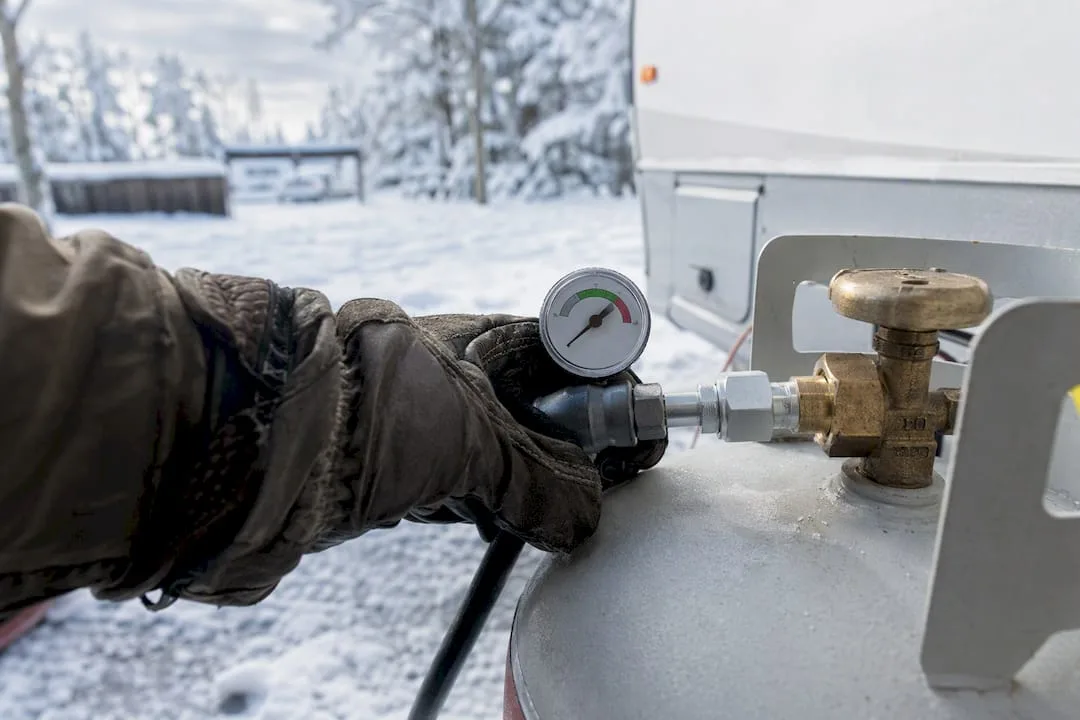
Another thing that general advice tends to underestimate is the routine of closing the gas valves. It is not enough to do it once at the beginning of the season. It should become automatic, just like locking your vehicle. A five-year gas system inspection according to ITC-ICG 07 is a sensible legal and practical minimum, while a visual inspection of the hoses before every season takes five minutes and can identify cracks before they become a problem.
If I had to give a reader just one priority, it would be this: choose the right gas for the season, check that the detector is working, and only then start thinking about recipes.
— Rok
Book a campervan ready for safe gas cooking
Renting a campervan from Ljubljana means you do not have to research, inspect and maintain a gas system yourself from scratch. Our vehicles are prepared for rental with a checked gas locker, tested gas detector and essential safety equipment for cooking on the road.
For families or groups of up to five people, the Ford Nugget Plus with its fixed toilet and spacious L-shaped kitchen is a practical choice because cooking on the road does not have to mean compromising on space or convenience. Before pickup, also check our
campervan camping equipment guide for additional kitchen and camping accessories. Check available dates and
book your campervan with Campervan.si before the most popular summer and winter travel dates are taken.
Sources
Recommended