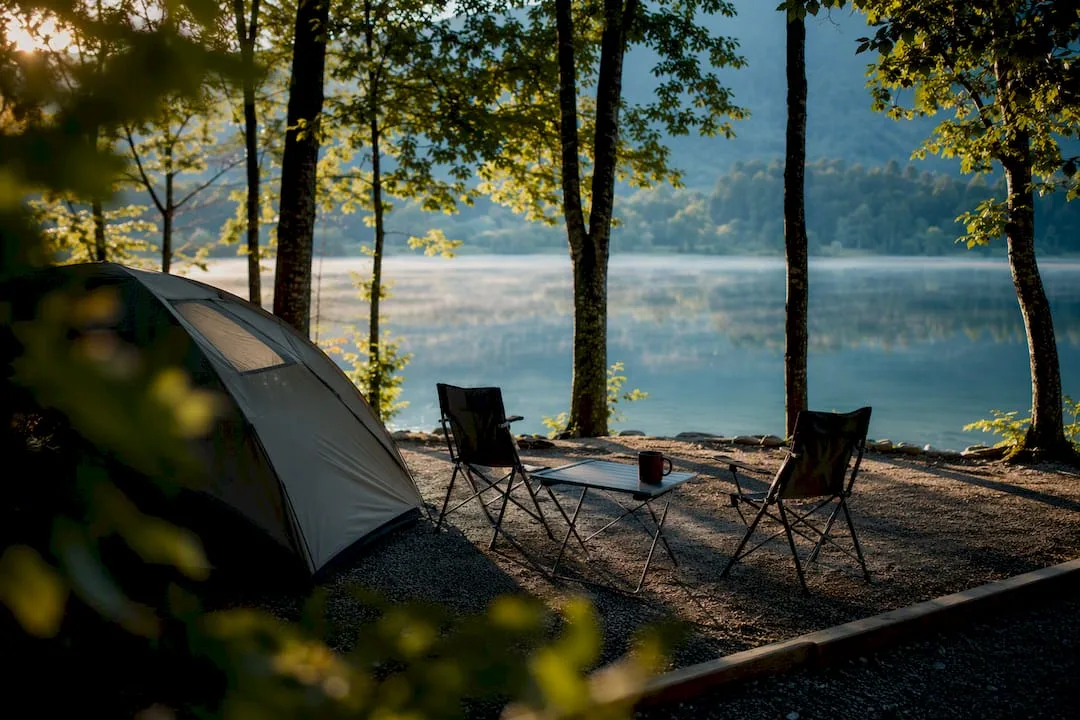
For a family getaway, choose a well-equipped campsite with children’s activities, such as those near Terme Čatež or Dobec. Adventure seekers should head to the Soča Valley or the Julian Alps, while campervan owners should look for campsites with spacious pitches and proper service connections. Campsites by lakes and along the coast are often fully booked by spring for the summer season, so book early or have an alternative ready. Wild camping remains outside the legal framework except at a small number of permitted locations, so when planning your 2026 trip, it is best to rely on officially registered and categorized campsites.
In brief:
- Campervan camping is easiest to secure if you book at least two to three months in advance for the 2026 season, as available pitches fill up quickly.
- Wild camping in Slovenia remains largely prohibited, except at a small number of permitted locations, so choosing an officially registered campsite is recommended.
- For families, campsites with playgrounds and swimming pools are particularly suitable, while active outdoor enthusiasts should consider campsites in the mountains or near lakes.
- Coastal campsites in the Slovenian Littoral offer a longer season and convenient access to the sea and local restaurants.
- When planning a campervan trip, check the available facilities, access conditions and safety requirements, and book popular dates well in advance.
Campervan
Choose a campervan for exploring Slovenia
A campervan from Ljubljana gives you the freedom to combine Slovenian campsites and day trips into one flexible journey.
Table of Contents
Which campsites in Slovenia are best for your type of holiday
Choosing the right campsite depends primarily on what you expect from your holiday.
User rankings are a useful starting point, but not the final decision — it is worth checking the conditions at each campsite directly, as facilities and services can change from year to year.
For
families, campsites with organized entertainment, water parks and shallow swimming areas are particularly convenient. Camping Šobec near Lesce and Terme Čatež are among the established favorites because they combine a natural setting with child-friendly facilities, as also reflected in the
Naj kamp Adria 2025 selection.
For those looking for the
sea, Adria Ankaran and campsites around Lucija and Belvedere near Izola are good options thanks to their proximity to swimming areas and restaurants. The season in the Slovenian Littoral is longer than in inland Slovenia, giving you more flexibility when choosing travel dates.
Lakes and mountains bring you to Bled, Bohinj and Trenta, where the campsite is mainly a base for hiking, cycling or canyoning.
Campsites around Bled are among the most sought-after in the country, so booking several months in advance makes sense.
If you are looking for
peace and relaxation, consider smaller family-run campsites away from the main routes. These locations usually offer less crowding and often provide a more personal experience, sometimes combined with locally focused food and hospitality.
- Family campsite: Šobec, Terme Čatež
- Coastal campsite: Adria Ankaran, Belvedere/Lucija
- Lakeside or mountain campsite: Bled, Bohinj, Trenta
- Glamping or small campsite: smaller locations in the Soča Valley and Dolenjska
For a broader selection of specific campsites by category, see our
guide to the best campsites in Slovenia for 2026.
Which region offers which activities for camping
Slovenia is a small country, which means that you can visit mountains, a lake and a city from a single campsite in the same day.
Short travel distances are one of the main advantages of camping in Slovenia, so the region you choose as your base has a major influence on what your days will look like.
Upper Carniola is synonymous with lakes and mountains. Bled, Bohinj and the Vrata Valley are relatively close to one another, allowing you to stay at one campsite for a week while exploring a different destination each day.
The Slovenian Littoral offers the coast, a longer camping season and the opportunity to combine the sea with short trips into the Karst region. Summers are hot and long here, making it particularly suitable for classic beach holidays.
Styria is Slovenia’s thermal spa region. Campsites near Terme Čatež, Terme Ptuj and Terme Zreče are popular with families who want to combine camping with thermal pools throughout the year.
Dolenjska and Bela krajina offer rivers, forests and significantly fewer crowds. This is a good corner of Slovenia for travellers who want to escape busy tourist areas and enjoy a slower pace.
The Soča Valley and Julian Alps are destinations for adventure seekers. The Soča River, rafting, kayaking and high-mountain hiking attract younger and active travellers, while campsites here are often smaller and more focused on nature.
- Upper Carniola: lakes, mountains and short distances between attractions
- Slovenian Littoral: coast, longer season and trips into the Karst
- Styria: thermal spas and family-friendly facilities
- Dolenjska and Bela krajina: rivers, peace and relaxed camping
- Soča Valley: water sports, adventure and high mountains
How to choose a campsite and when to book for 2026
The classic criteria remain the same: the condition of the sanitary facilities, access to electricity, pitch size and facilities for children. If you are travelling by campervan or motorhome, also check the width of the access road, facilities for filling fresh water and emptying wastewater, and the distance to the nearest service point.
Summer dates around lakes and on the coast can sell out during the spring months, so it is sensible to have a backup location ready. When planning your trip, consider an alternative for every overnight stay, as pitches near the water are often among the first to fill up.
- Check the campsite’s official classification and when the sanitary facilities were last renovated.
- Read recent guest reviews rather than relying only on the overall rating.
- Call or email the campsite directly if your campervan has non-standard dimensions.
- Book summer dates near lakes and the coast at least two to three months in advance.
- For autumn and spring trips, check whether the campsite operates year-round.
Professional tip: When booking, always ask for the exact pitch number rather than simply booking the campsite in general — differences in shade, terrain slope and proximity to the sanitary facilities can be significant between individual pitches.
Camping rules and wild camping in Slovenia in 2026
SPOT defines a campsite as a spatially and functionally integrated area that must meet minimum requirements, including a reception, sanitary facilities, access to water, electricity and appropriate safety arrangements. Since 2025, new classifications under the Standard Classification of Activities have also applied, meaning that official campsites must meet specific requirements concerning their facilities and operation.
Wild camping outside organized campsites is generally not permitted in Slovenia, particularly in protected natural areas, near rivers and lakes and in forests. Municipalities may also have additional local regulations, so before staying overnight outside a campsite, always check the rules applying to the specific area.
- Check whether the area is part of protected nature, such as a national park or nature reserve.
- Never light an open fire outside designated areas.
- Always take your waste with you.
- If in doubt, choose a nearby official campsite or designated motorhome stopover.
Organized campsites remain a major reason why visitors choose established camping locations. The Naj kamp Adria 2025 selection recorded significant growth in overnight stays at Slovenian campsites, indicating the continued popularity of organized camping among international visitors as well.
Campervan.si tips for travelling through Slovenia by campervan
When planning a campervan trip, it pays to think in realistic stages rather than ideal ones. Slovenia is small, but winding mountain roads and summer traffic congestion along the coast can add hours to your day.
- Plan daily distances with a time buffer and always have an alternative overnight location ready.
- Before booking, check that the campsite has a pitch large enough for your campervan, as well as an electricity connection and wastewater disposal facilities.
- For winter rentals, check that the vehicle has suitable winter equipment and heating for overnight stays in low temperatures.
- Pickup in Ljubljana is a convenient starting point because most Slovenian regions can be reached from the capital within one to two hours.
Professional tip: If you plan to visit several regions in one week, choose a campsite close to a motorway as your base for the first few days, then move towards more remote destinations once you are familiar with how the vehicle handles different roads and terrain.
How Slovenian tourism trends and the I Feel Slovenia campaign affect camping
The Slovenian Tourist Board’s I Feel Slovenia campaign for 2025/26 puts active outdoor holidays, health, culture and gastronomy in the spotlight. The Slovenian Tourist Board highlights these segments as important elements of Slovenia’s tourism identity, which is also reflected in the services and experiences offered by campsites.
Campsites are increasingly adding activities related to hiking, cycling and water sports instead of relying exclusively on traditional children’s entertainment. This reflects demand from guests looking for an active yet relaxed holiday.
The campaign also explicitly emphasizes sustainability as one of the pillars of Slovenia’s tourism promotion. In practice, this means more campsites offering locally produced food, on-site bicycle rental and encouragement to use public transport to nearby attractions.
For international visitors and domestic travellers alike, this means that in 2026 a campsite is no longer simply a place to pitch a tent or park a motorhome. It is increasingly becoming a base for experiences that Slovenia offers nearby, from local wine tastings to short guided hikes. Anyone looking for an example of practical family trip organization can also read this
practical family travel planning guide, which offers similar ideas for managing logistics on the road.
Which campsites are introducing new features for the 2026 season
Every year, Slovenian campsites introduce a range of changes, including renovated sanitary buildings, new motorhome pitches and extended operating seasons. Individual campsites, such as
Kamp Resnik, regularly publish exact opening and closing dates, which are worth checking shortly before your trip rather than relying on information from previous years.
The trend in recent seasons shows that more campsites are extending their operating periods into autumn and early spring, particularly in locations where demand for thermal bathing or cycling remains strong outside the summer season. This is especially noticeable at campsites near thermal spas in Styria, which offer additional benefits to guests outside the peak season.
Some campsites near lakes and in the Soča Valley are investing in new pitches with better access for motorhomes and campervans, as demand for this type of holiday continues to grow. You can also expect wider Wi-Fi coverage and additional electric vehicle charging stations, which are increasingly becoming standard features at renovated campsites.
Before booking, it is worth checking the official website of your chosen campsite for the latest information about opening dates, prices and any restrictions. Seasonal changes can happen quickly, so general guides from previous years do not always reflect the latest situation.
How much does camping in Slovenia cost in 2026
Prices at Slovenian campsites vary depending on location, season and the level of facilities provided. Campsites on the coast and around popular lakes are generally more expensive than those in inland Slovenia, particularly during July and August.
A basic pitch for a tent or motorhome usually includes access to electricity, sanitary facilities and water. Additional services, such as air-conditioned cabins or glamping tents, can significantly increase the price. Family campsites with pools and organized activities generally charge a higher daily rate than smaller, more basic rural campsites.
If you choose to travel with a campervan instead of staying in conventional accommodation, your main additional cost is the vehicle rental. At Campervan.si, daily rental of the
Mercedes V Marco Polo starts at €125 per night, while weekly rental starts at €110 per night. The same applies to the
Ford Nugget Plus, with daily rental from €125 and weekly rental from €110 per night. Final cleaning costs an additional €80.
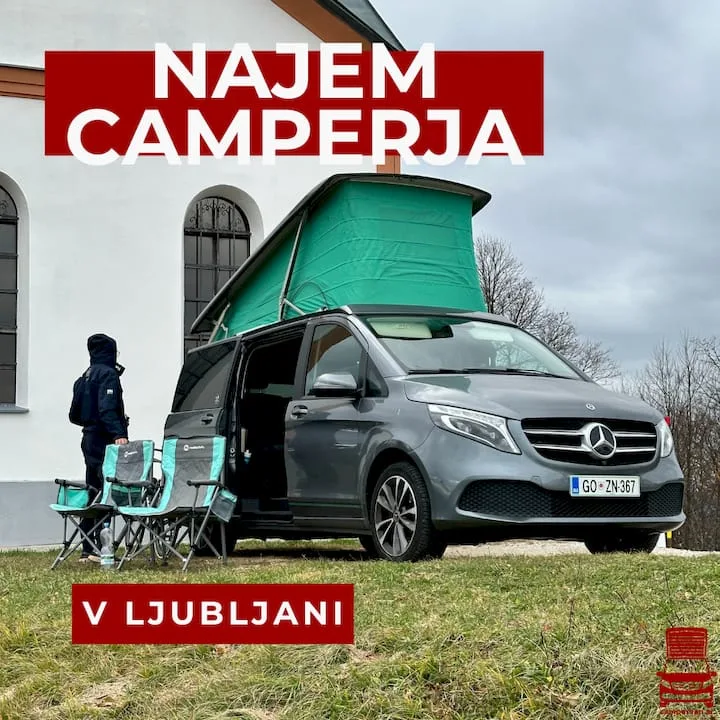
Combining a campervan with campsite stays can actually reduce the overall cost of a trip because you avoid paying for accommodation in cities while always having a kitchen available. For the exact price of an individual campsite, it is best to check the official rate directly with the campsite, as prices can change between seasons.
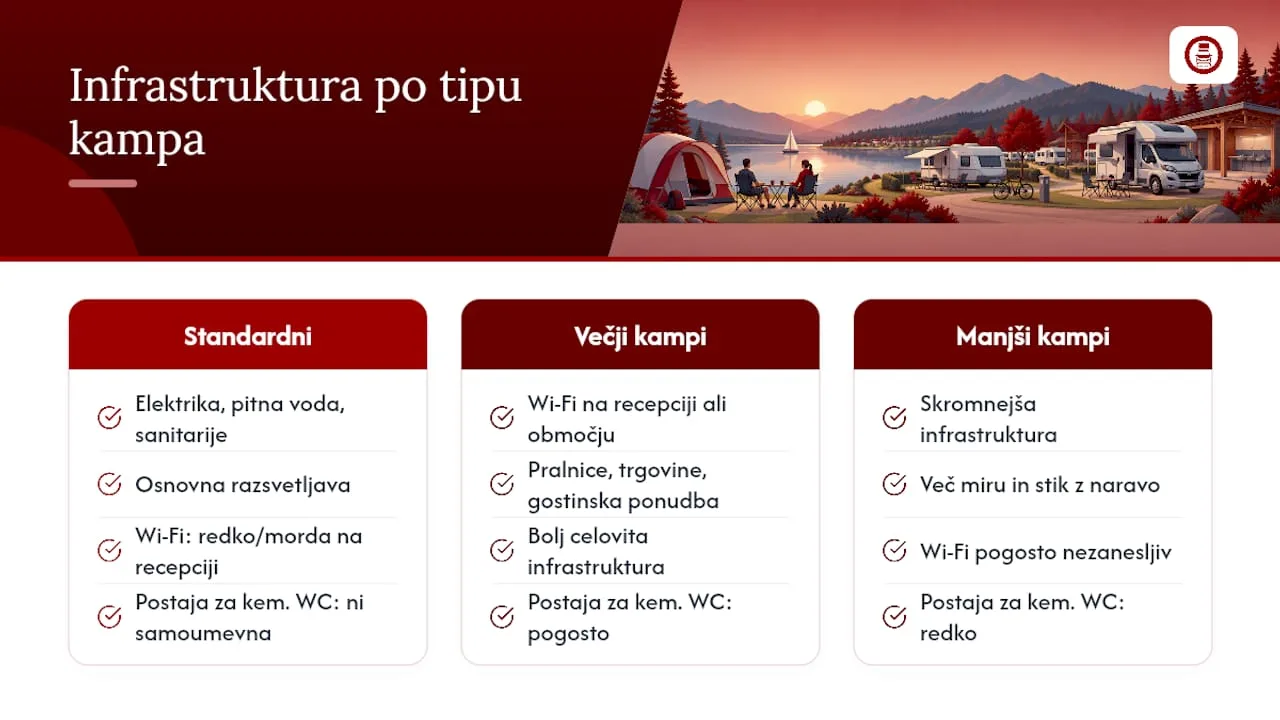
What infrastructure and services are available at Slovenian campsites
Standard facilities at an officially registered campsite include electrical connections on pitches, access to drinking water, sanitary facilities with showers and toilets, and basic lighting. SPOT lists these elements among the minimum requirements for campsite operations, so they should be available at officially categorized campsites in Slovenia.
Larger campsites, particularly those on the coast and around popular lakes, may also offer Wi-Fi across the reception area or entire campsite, laundry facilities, small grocery shops and on-site restaurants. Smaller, nature-focused campsites often have more basic infrastructure but compensate with greater peace and closer contact with nature.
Campervan and motorhome travellers should check whether the campsite has a chemical toilet disposal point and facilities for filling fresh water, as these services are not necessarily available everywhere. For travellers looking beyond traditional campsites,
motorhome stopovers across Slovenia are a useful alternative, providing basic services in locations where there is no conventional campsite.
Wi-Fi quality can vary considerably between campsites. In more remote locations, such as the Soča Valley or high-mountain valleys, mobile and internet signals may be unreliable, so it is worth checking connectivity in advance if internet access is important to you.
How to camp more sustainably in Slovenia in 2026
Sustainability is no longer just a buzzword in tourism campaigns, but a practical part of the everyday camping experience. Reducing your environmental footprint starts with choosing a campsite that encourages waste separation, uses locally produced food and limits water consumption.
When travelling by campervan or motorhome, sustainability can be as simple as driving at a moderate speed to reduce fuel consumption or choosing a campsite or stopover close to public transport to avoid unnecessary extra kilometres. Cycling to nearby attractions instead of driving is another simple step that also supports Slovenia’s current focus on active holidays.
Smaller, locally managed campsites can often provide a more authentic experience with a lower environmental impact than large holiday complexes. Choosing such a campsite, combined with respecting basic rules such as taking your waste with you, avoiding open fires outside designated areas and limiting water consumption, allows you to enjoy Slovenia’s natural beauty while minimizing your impact.
My approach to finding a good campsite: a base and day trips
A simple approach works best: choose one campsite as your base for three to four nights and explore a different destination each day. Slovenia’s short distances make this possible without spending hours on the road. Before booking, I always check the official classification and the latest guest reviews, and I prefer campsites that offer local food and cycling routes nearby.
— Rok
How Campervan.si makes camping across Slovenia easier
A campervan is an alternative to moving from campsite to campsite while searching for accommodation, because the campervan serves as both your transport and your home on wheels. Instead of packing up a tent every day and looking for a new pitch, you can simply move on with everything you need travelling with you.
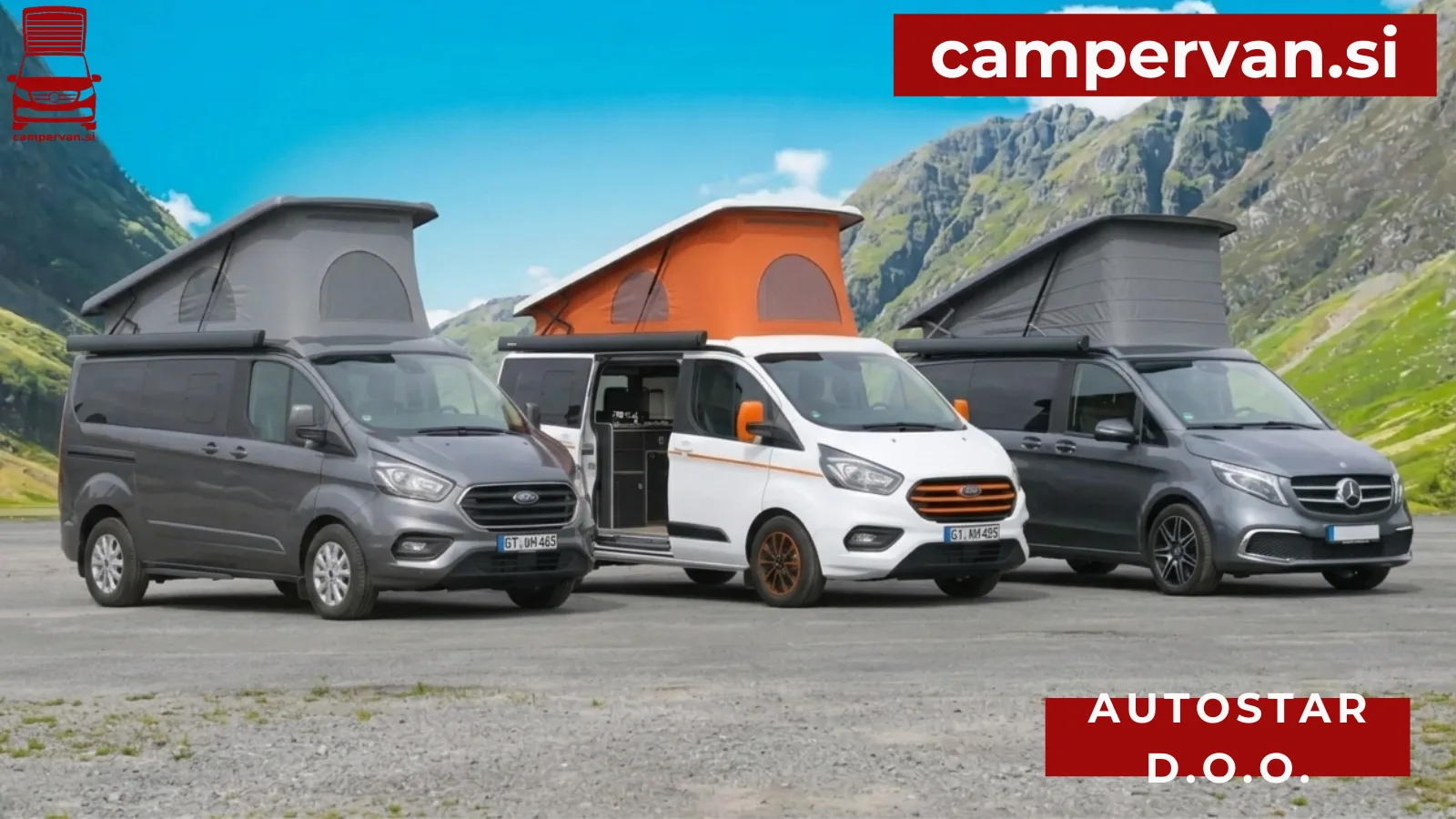
The fleet includes the Mercedes V Marco Polo and Ford Nugget Plus, both available for daily or weekly rental with pickup in Ljubljana. This means you can spend one day at Lake Bled and the next on the Slovenian coast without being tied to one location or having to book separate accommodation for every stop. A campervan is particularly convenient when combining different types of campsites, such as a family-friendly coastal campsite with a smaller, peaceful campsite in the Soča Valley.
If you are considering travelling outside the main summer season, also check the
conditions for winter campervan rental, where you can find specific requirements regarding equipment and heating. To book your 2026 dates, visit the Mercedes V Marco Polo rental page and check availability for your preferred week.
Sources
Frequently Asked Questions
Which campsite in Slovenia is best for families?
Camping Šobec near Lesce and Terme Čatež are among the popular choices for families because they combine a natural setting with children’s activities and water attractions. Both campsites were among the recognized campsites in the Naj kamp Adria 2025 selection.
Is wild camping allowed in Slovenia in 2026?
Wild camping outside officially registered campsites is generally not permitted in Slovenia, particularly in protected natural areas. Official campsites must meet the minimum requirements set by SPOT, making an established campsite a safer and lawful choice.
When is the best time to book a campsite for summer 2026?
Summer dates around lakes and along the coast should ideally be booked at least two to three months in advance, as popular pitches fill up quickly. It is always sensible to have an alternative location ready in case your first choice is already fully booked.
How much does campervan rental cost at Campervan.si?
Daily rental of the Mercedes V Marco Polo and Ford Nugget Plus at Campervan.si starts at €125 per night, while weekly rental starts at €110 per night. Final cleaning costs an additional €80.
What infrastructure is required at an official campsite in Slovenia?
An officially registered campsite must have a reception, sanitary facilities, access to drinking water and electricity, as well as appropriate safety arrangements. These minimum requirements are defined by SPOT for campsites operating under the official classification of activities.
CCampervan
Plan your camping trip around Slovenia
Contact us with questions about campervan or motorhome rental in Ljubljana for your trip around Slovenia.