Campervan toilet: instructions for use, emptying, and maintenance
October 1, 2026
Yes, a toilet in a campervan can be used safely and without unpleasant odours if you use the right sanitary chemicals, empty the cassette only at designated disposal points and maintain the seals regularly. Use toilet paper specifically designed for chemical toilets, add waste-degrading and odour-control fluid, and empty the cassette only at service stations or campsites with a designated disposal point. With the right routine, you can avoid both unpleasant smells and system problems.
In brief:
Regular maintenance, suitable toilet paper and preventing blockages are essential when using a chemical toilet in a campervan.
A cassette toilet system is particularly suitable for smaller vehicles and shorter trips, while larger permanent systems require different maintenance procedures.
In Slovenia, chemical toilets should only be emptied at designated facilities such as service stations or campsites with a waste disposal point. Disposal elsewhere is prohibited.
Always empty the cassette carefully, wear protective gloves, use a designated disposal point and clean the equipment properly afterwards.
Regularly checking and replacing seals, cleaning the system and using reputable sanitary fluids extends the system’s lifespan and helps reduce unpleasant odours.
Campervan
Travel with a well-equipped campervan
Campervan.si offers campervan and motorhome rentals from Ljubljana for exploring Slovenia and travelling throughout Europe and beyond.
What a cassette toilet consists of and how it works
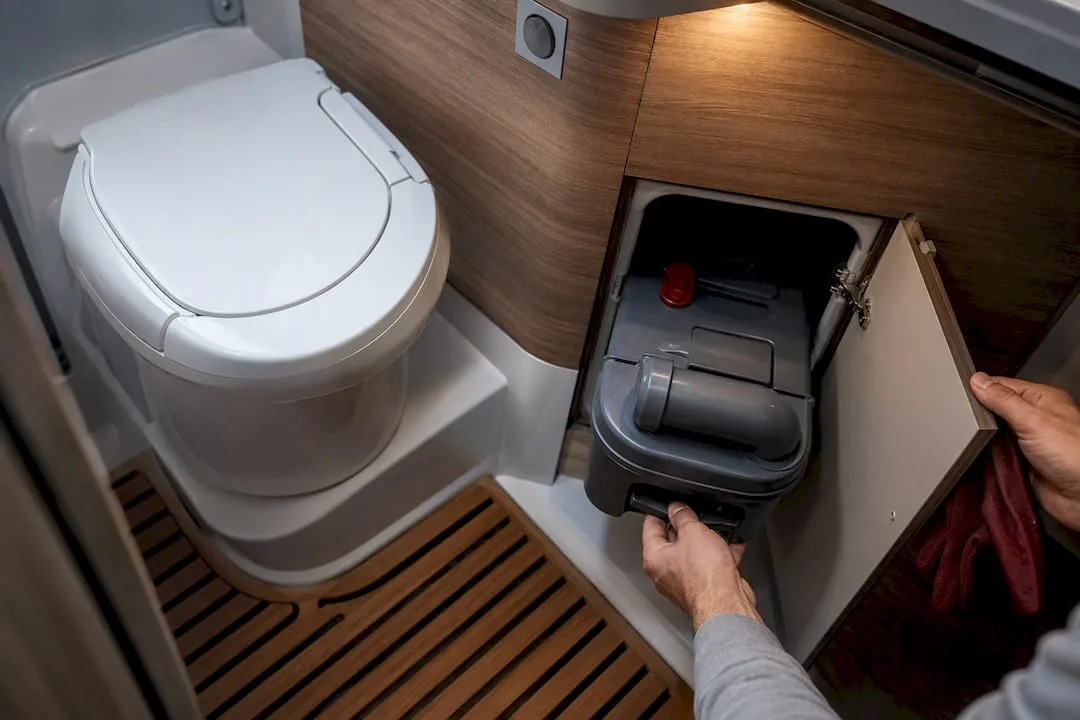
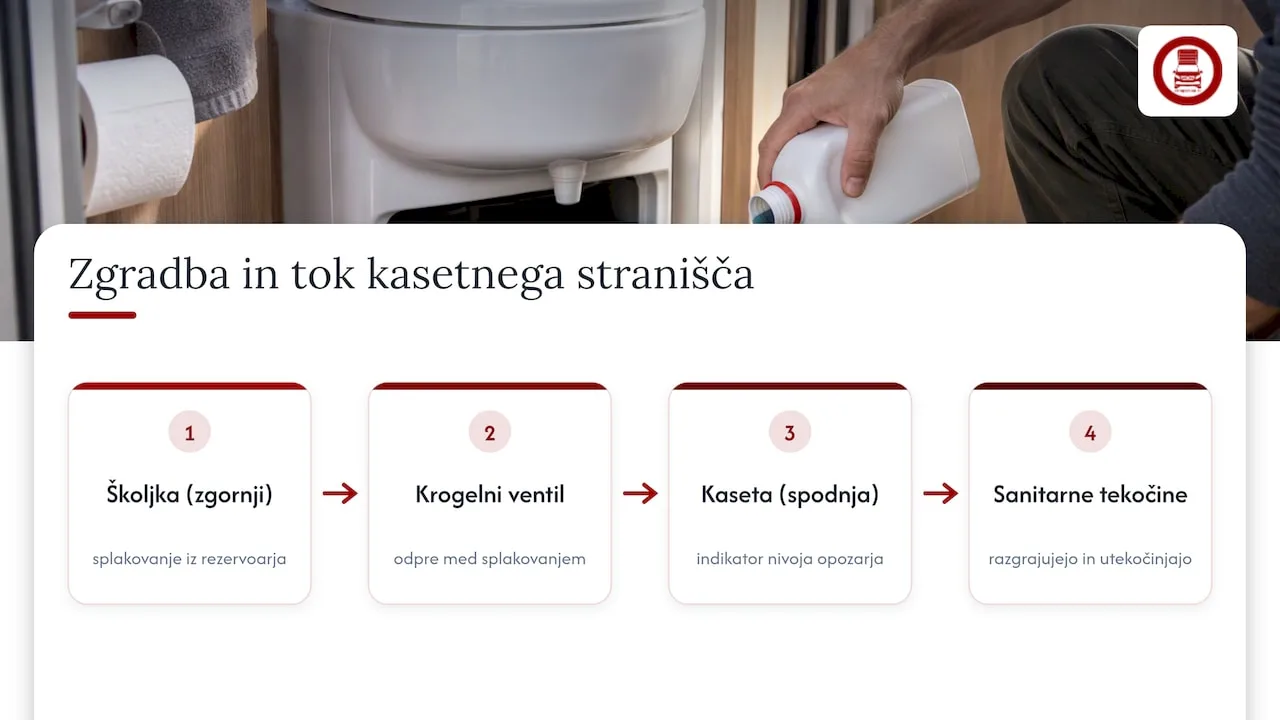
A cassette toilet in a campervan consists of two separate parts. The upper section is a conventional toilet bowl with a flush that uses a small amount of water from a dedicated tank. The lower section is a removable cassette that collects waste and can be emptied separately from the vehicle.
A sliding valve separates the two sections. When the toilet is used, the valve opens the passage into the cassette and then closes again to prevent odours from escaping back into the living area. Most cassettes also have a level indicator that shows when it is time to empty the tank before it becomes completely full.
Sanitary fluids added directly to the cassette play an important role. They break down solid waste, liquefy the contents to make emptying easier and reduce the formation of gases that cause unpleasant odours. Thetford states that its Aqua Kem product controls odours and liquefies waste, and recommends emptying the tank every 4 to 5 days depending on the product and intensity of use.
Types of toilets in campervans and when to choose each one
The choice between different toilet types mainly depends on the size of the vehicle and the length of the trip, as this specialist guide to chemical toilets points out that cassette systems are particularly common in smaller campervans because they are easy to empty.
Cassette toilet: compact and popular in smaller campervans; the cassette can simply be removed and emptied at a designated disposal point.
Portable toilet: suitable for short trips, camping without a permanent bathroom or as a backup option because it can easily be stored in the luggage compartment.
Composting toilet: an environmentally oriented option that does not require chemical additives, but it requires a different maintenance routine and separation of solid and liquid waste.
Permanent toilet system: common in larger motorhomes and campervans where there is enough space for a fixed installation with a larger tank.
For families or longer trips, a cassette system is generally the most practical option because it allows quick and regular emptying without requiring specialised infrastructure.
How to use a campervan toilet correctly every day
Daily use is straightforward if you follow a few basic rules. Use only toilet paper designed for chemical toilets, as it breaks down quickly and is less likely to block the valve. Wet wipes and regular household toilet paper can often cause blockages.
Flush the toilet thoroughly after each use to prevent residue from accumulating around the valve seal.
Add sanitary fluid immediately after emptying the cassette, using the amount recommended by the manufacturer on the packaging.
Check the level indicator regularly and empty the cassette before it becomes completely full.
Close the sliding valve firmly but without excessive force to avoid premature wear of the seal.
Expert tip:Always empty the cassette before setting off on a longer drive, as vehicle movement increases the risk of leakage when the cassette is full.
How to empty a cassette safely: step by step
Emptying the cassette is straightforward if you follow a clear sequence and take basic protective measures. Put on gloves before starting, choose a suitable service point and make sure the disposal opening is easily accessible.
Close the sliding valve to prevent spills while carrying the cassette.
Open the external service hatch and carefully remove the cassette from its holder.
Carry the cassette to the disposal point and remove the emptying cap.
During emptying, press the air-release button if your cassette has one. According to Thetford’s instructions, this helps prevent splashing and ensures a steady flow.
Gently tilt and rotate the cassette to empty any remaining contents.
Rinse the inside of the cassette with clean water through the flushing opening before returning it to the vehicle.
The average cassette capacity is around 17 to 19 litres, which is usually sufficient for two people for 4 to 5 days, depending on usage habits and additives.
If a spill occurs, rinse the affected area immediately with water and check whether the valve seal has been damaged, as small cuts can often cause slow leaks.
Where to empty a chemical toilet in Slovenia and what to avoid
In Slovenia, chemical toilets should only be emptied at designated disposal facilities. According to the guidance from Komunala Škofja Loka, the cassette should only be emptied at campervan service stations, campsites with designated disposal points or other marked locations.
Allowed: campervan service stations, campsites with designated disposal points and specifically marked municipal facilities.
Prohibited: storm drains, waterways, forests or meadows, public drains and small wastewater treatment plants serving fewer than 50 population equivalent units.
Practical tip: check the location of the nearest campsite or service station before your trip, as the summer months can put additional pressure on disposal facilities due to increased campsite occupancy.
For longer trips through Slovenia, the Alps or the Balkans, it makes sense to plan your route so that it includes at least one verified disposal point every day or two, depending on the cassette capacity.
Cleaning, seal maintenance and seasonal care
Regular cleaning extends the life of the toilet and helps prevent unpleasant surprises during your trip.
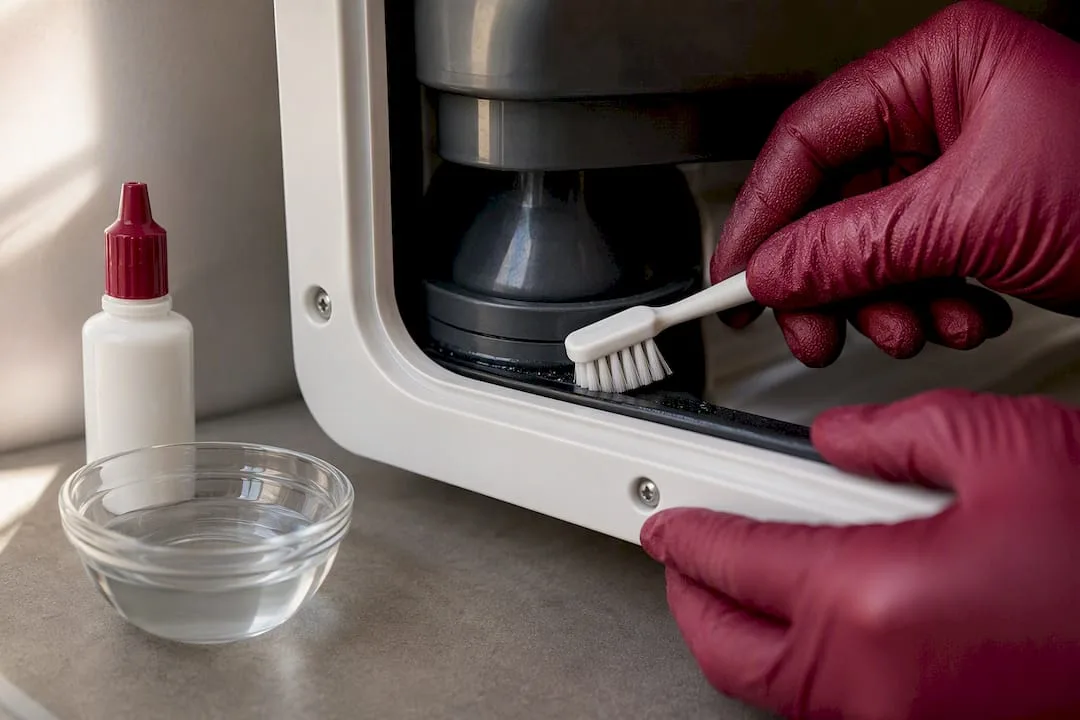
Rinse the cassette after every emptying. Deep cleaning with products such as Thetford Duo Tank Cleaner is recommended two to three times a year to remove limescale and deposits.
Inspect the rubber seals regularly and lubricate them with a suitable silicone lubricant when necessary to prevent them from drying out.
During longer periods of storage, leave the toilet flap open and loosen the waste outlet cap, as the manufacturer’s instructions recommend ventilating the cassette to prevent the seals from drying out.
Have the system inspected by a service technician before a longer trip, especially if the campervan has not been used for an extended period.
Expert tip:During winter storage, check the seals once a month, as cold and dry air can accelerate their contraction.
For a more detailed explanation of maintaining a permanent system, see our guide to permanent toilets in campervans.
Preventing odours and solving common problems
An unpleasant smell is almost always caused by too little sanitary fluid, a dirty seal or an overfilled cassette. First check the level of sanitary fluid and add a new dose if necessary. Then inspect the valve seal, as small particles can stick to it and allow odours to escape.
If the level indicator shows an incorrect reading, rinse it with clean water, as limescale deposits can interfere with the sensor. In the case of mechanical problems, such as a loose valve, additional seal lubricant may provide a temporary solution, but permanent repairs should be left to a qualified service technician.
For additional freshness inside the vehicle, you can also use natural approaches to removing odours from a vehicle, which can complement regular toilet maintenance.
Where to buy sanitary fluids, toilet paper and spare parts in Slovenia
Sanitary fluids, specialised toilet paper and spare parts are available in specialist campervan shops in Slovenia and from larger online retailers such as Mimovrste.
Look for packaging that states that the product is biodegradable and suitable for small wastewater treatment systems.
Always follow the manufacturer’s dosing instructions on the packaging, as recommended quantities vary between products.
Seals and spare parts for cassette toilet systems can be ordered from authorised service technicians or shops specialising in campervan equipment.
Before buying, it is also useful to check our campervan packing list, which includes essential sanitary supplies for your trip.
Campervan.si practical tips: what we check and what we recommend to renters
At Campervan.si, before every vehicle handover we check the condition of the seals, the operation of the sliding valve and the amount of sanitary fluid in the cassette, so that every renter receives a vehicle ready for immediate use. During handover, we give you a short demonstration of how the toilet works and show you where the external disposal hatch is located.
We recommend checking the location of the nearest service station along your route before your first trip, as this can save you time later. This practical approach comes from our everyday experience of renting and servicing our vehicles.
What really matters when it comes to a campervan toilet
Most problems with chemical toilets are not caused by poor equipment but by incorrect expectations. Many renters assume that a cassette toilet is complicated to use, but in reality it comes down to a few simple habits: use the right paper, add sanitary fluid regularly and empty the cassette at the correct location.
Concerns about unpleasant odours are also often overstated. Modern sanitary fluids largely solve this problem when used regularly and in the correct quantity, rather than only after an odour has already appeared. What is often underestimated, however, is seal maintenance, which people tend to forget about until the seals start leaking.
For travellers in Slovenia, I would recommend first getting into a good routine of emptying and cleaning the cassette before considering additional equipment or upgrades. Good habits are more valuable than any extra accessory.
— Rok
Renting a campervan with a built-in toilet
If maintaining your own campervan toilet sounds like an unnecessary hassle, Campervan.si offers vehicles with a permanent cassette toilet that is inspected and prepared for immediate use before every rental.
The Mercedes V Marco Polo includes a permanent toilet suitable for longer trips through Slovenia and neighbouring countries.
The Ford Nugget Plus offers similar equipment and is well suited to smaller groups or couples.
During vehicle handover, you receive a demonstration of how the toilet works as well as practical advice on emptying it during your trip.
What type of toilet paper is suitable for a campervan toilet?
Use only toilet paper specifically labelled as suitable for chemical toilets, as it breaks down quickly and is less likely to block the valve or cassette. Regular household toilet paper and wet wipes can cause blockages and damage the mechanism.
How often should a campervan toilet cassette be emptied?
With an average cassette capacity of around 17 to 19 litres, two people can usually use it for 4 to 5 days. The frequency also depends on the sanitary fluid used and how intensively the toilet is used.
Where can I empty a chemical toilet in Slovenia?
You should only empty the cassette at campervan service stations, campsites with designated disposal points or other specifically marked locations, as stated by Komunala Škofja Loka. Emptying it in nature, storm drains or small wastewater treatment plants is not permitted.
Do Campervan.si vehicles include a permanent toilet?
The Mercedes V Marco Polo and Ford Nugget Plus offered by Campervan.si both have a built-in permanent cassette toilet, which is inspected before every rental. You also receive a short demonstration of how it works during vehicle handover.
What should I do if my campervan toilet smells?
First check the level of sanitary fluid in the cassette and add a new dose if necessary, as insufficient fluid is one of the most common causes of unpleasant odours. If the smell persists, inspect the sliding valve seal, as residue can stick to it and allow unpleasant odours to escape.
CCampervan
Ask us about the equipment
Contact Campervan.si with questions about campervan or motorhome rental in Ljubljana and planning your trip through Slovenia.

 Sanitary fluids added directly to the cassette play an important role. They break down solid waste, liquefy the contents to make emptying easier and reduce the formation of gases that cause unpleasant odours. Thetford states that its Aqua Kem product controls odours and liquefies waste, and recommends emptying the tank every 4 to 5 days depending on the product and intensity of use.
 If the level indicator shows an incorrect reading, rinse it with clean water, as limescale deposits can interfere with the sensor. In the case of mechanical problems, such as a loose valve, additional seal lubricant may provide a temporary solution, but permanent repairs should be left to a qualified service technician.
For additional freshness inside the vehicle, you can also use natural approaches to removing odours from a vehicle, which can complement regular toilet maintenance.
If the level indicator shows an incorrect reading, rinse it with clean water, as limescale deposits can interfere with the sensor. In the case of mechanical problems, such as a loose valve, additional seal lubricant may provide a temporary solution, but permanent repairs should be left to a qualified service technician.
For additional freshness inside the vehicle, you can also use natural approaches to removing odours from a vehicle, which can complement regular toilet maintenance.