Yes, Slovenia is an excellent destination for campervan travel. Its short distances mean you can travel from the mountains to the coast and through the Karst region within a single day, while the country has a network of more than
150 designated campervan parking areas. Overnight parking rules are also relatively straightforward. Wild camping is prohibited, so you should stay overnight at designated campervan parking areas or campsites. If you are still looking for a vehicle, you can pick up a campervan in Ljubljana and get advice on choosing the best route for your trip.
In brief:
- In Slovenia, overnight stays should be limited to designated campervan parking areas or campsites, as wild camping is prohibited and can result in a fine.
- For a one-week trip, all major regions of Slovenia can be reached from Ljubljana within roughly two to three hours of driving, but it is better to spend less time on the road and more time enjoying each destination.
- There are three main levels of campervan infrastructure: basic parking for short stops, designated campervan areas with water and electricity, and more expensive campsites with additional facilities.
- Overnight prices range from free parking areas to around €40 during the high season, with coastal and mountain destinations generally being more expensive.
- Before departure, thoroughly check the vehicle’s technical condition and dimensions and plan where you can empty wastewater to avoid unnecessary problems during your trip.
Campervan
Start Your Slovenia Road Trip from Ljubljana
Rent a campervan in Ljubljana and get expert advice on planning the perfect route for your Slovenia road trip.
Explore Campervan.si
Table of Contents
Where to go in Slovenia: a quick regional overview
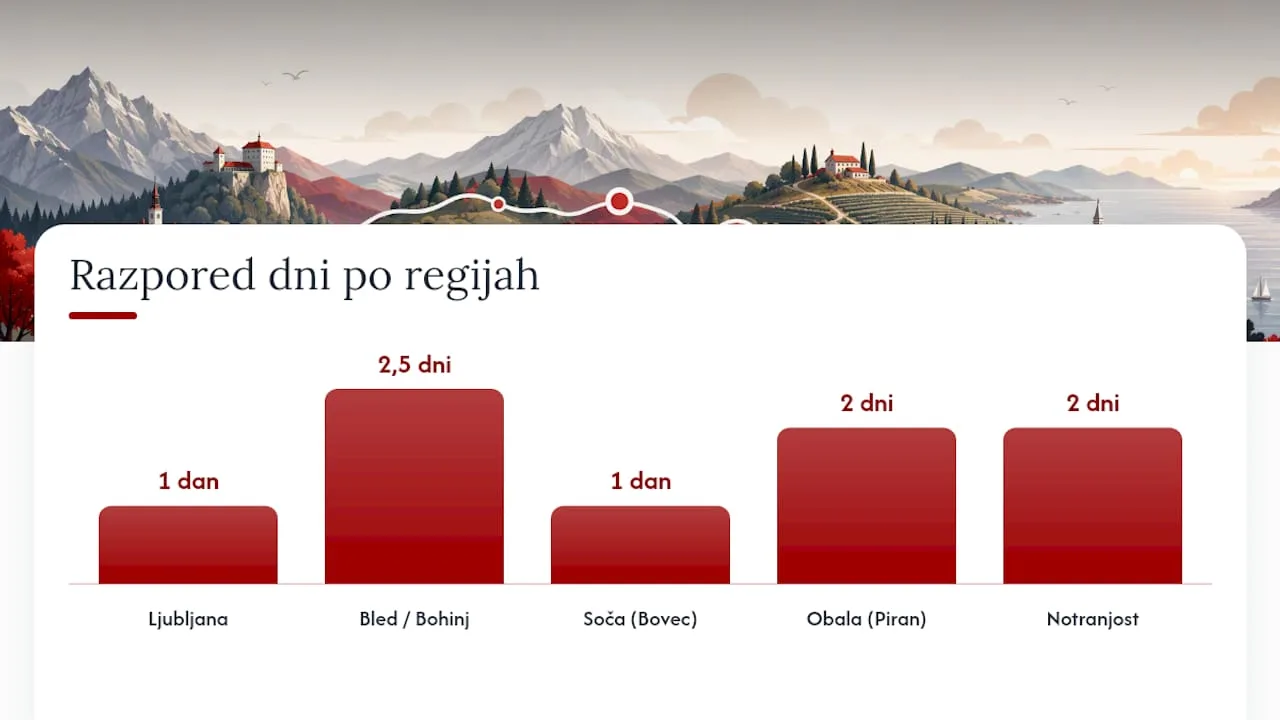
Slovenia is a small country, but its regions offer remarkably different experiences. During a single week, you can travel from the Alps to the Adriatic coast, with a stop for local wine in one of the country’s wine-growing regions along the way. Here is a quick overview of where to go and how many days to allow for each area.
- Julian Alps (Bled, Bohinj, Kranjska Gora): mountain lakes, hiking trails and spectacular views of Triglav. Allow 3 to 7 days depending on how many hikes and outdoor activities you want to include.
- Soča Valley and Bovec: rafting, canyoning and one of Slovenia’s most scenic mountain roads, Vršič Pass. Two to four days are enough for the main highlights, although you may want to stay longer if you are interested in adventure activities.
- Karst and Slovenian Istria (Piran, Portorož, Lucija): stone villages, cave systems and the Adriatic coast with excellent seafood restaurants. Allow around 3 to 5 days here, although accommodation prices can be considerably higher in summer than in inland Slovenia.
- Štajerska and Prekmurje: wine roads, thermal spas and a slower pace, ideal if you want to relax after a few more active days.
Slovenia’s short distances make it possible to combine several regions during one trip, but
it is recommended to include at least one slower day every few days of driving. This keeps your road trip from becoming a marathon of parking lots and quick stops.
Campervan parking and campsites: where can you stay overnight?
Slovenia has several clearly different types of campervan infrastructure, and understanding the difference can save you a lot of hassle during your trip.
- Temporary parking areas are intended for short daytime stops and generally do not provide water or electricity. They are suitable for visiting attractions, but not necessarily for overnight stays.
- Basic campervan parking areas (PZA) provide services such as fresh water, wastewater disposal and sometimes electricity. These are one of the most common options for overnight stays outside campsites.
- Premium PZA areas and campsites offer additional facilities such as electricity hookups, showers, laundry facilities and sometimes swimming pools or restaurants, but at a higher price.
Prices range from
free or low-cost parking areas to around €40 per night during the high season. Coastal parking areas in Lucija, Strunjan and Ankaran can reach the higher end of this range during summer, while parking in locations such as BTC or Tivoli in Ljubljana can be considerably cheaper.
Expert tip: In July and August, book popular coastal and mountain parking areas at least two days in advance. Otherwise, you may end up searching for a suitable place after dark.
Slovenia’s campervan parking network already includes more than 150 locations with different levels of facilities, ranging from simple parking areas to fully equipped campsites.
Wild camping is prohibited in Slovenia and can result in a fine, so staying at
designated campervan parking areas is the appropriate option for overnight stays outside campsites. Locations can easily be found through websites such as Avtokampi.si or tourist destination maps. For a more detailed explanation of the different types of campervan parking areas, see our
guide to campervan parking areas in Slovenia.
One-week campervan trip through Slovenia
If you have a full week, starting your journey in Ljubljana, where you can collect your campervan, is particularly convenient. From the capital, all of Slovenia’s main regions are within roughly two to three hours of driving.
- Day 1: collect your campervan in Ljubljana, spend some time exploring the city and drive towards Bled in the afternoon. Stay overnight at a designated parking area near the lake, where prices can be moderate to high.
- Days 2–3: explore Bled and Bohinj, go hiking and perhaps visit Vintgar Gorge. Spend the second night at a campsite with basic facilities, then continue towards the Logar Valley or further towards Bovec.
- Day 4: cross Vršič Pass and descend into the Soča Valley. Bovec has well-equipped campervan parking areas, making it a good base if you want to go rafting.
- Day 5: take the scenic route towards Piran or Portorož. Stay for two nights if possible, as the region offers plenty to explore, although summer accommodation prices are higher.
- Days 6–7: head back inland, perhaps travelling through the Karst region with a stop at Postojna Cave, and finish in Štajerska with a visit to one of the region’s thermal spas before returning to Ljubljana.
Expert tip: Do not try to change location every day. Moving every two or three days means less driving and more time to actually experience each destination.
For a more detailed breakdown of distances and alternative stops, see our
one-week Slovenia campervan itinerary, which can be adapted according to the weather and your travel companions’ interests.
Pre-departure and on-the-road checklist
Before setting off, check a few technical details that beginners most commonly overlook.
- Check the vehicle’s weight and dimensions. Vehicles over 3.5 tonnes are subject to a different road toll system through DarsGo, while some narrow mountain routes, such as Vršič Pass, have restrictions for wider or longer vehicles.
- Prepare the basic equipment: levelling blocks, an electrical hookup extension cable, a wastewater hose and suitable chemicals for the cassette toilet.
- Check your insurance and roadside assistance. When renting a campervan, ask what is included in the basic insurance and whether 24/7 roadside assistance is available.
- Plan wastewater disposal in advance. In more remote areas, designated disposal points are not always available, so check where the next suitable service point is before your wastewater tank becomes full.
Because overnight stays in Slovenia should take place at designated parking areas or campsites, planning your route in advance means less time searching for a parking space after dark and less risk of receiving a fine.
Park only in designated spaces, do not block entrances or agricultural roads, and dispose of waste in designated bins rather than in nature. This small gesture helps maintain good relations between campervan travellers and local communities.
What rental providers recommend and what renters often ask
One of the most common questions from renters is how many kilometres they should realistically drive in a day. The answer is simple: fewer than beginners often imagine. A short test drive before leaving Ljubljana can reveal important details about the vehicle’s size and manoeuvrability. It is much better to learn how the campervan handles in a safe parking area than on a narrow mountain road.
Beginners are generally advised to use the first day for relaxed driving and getting familiar with the equipment before increasing the pace of the trip. If you want to understand the dimensions of different vehicles before choosing your route, see our
campervan dimensions guide. For preparing your luggage, our
campervan packing list can also help.
— Rok
Where to rent a campervan for a Slovenia road trip
If you are wondering where to rent a vehicle for your Slovenia road trip, you can collect a campervan directly in Ljubljana, making the capital a convenient starting point for routes towards the Alps, the Adriatic coast and the Karst region.
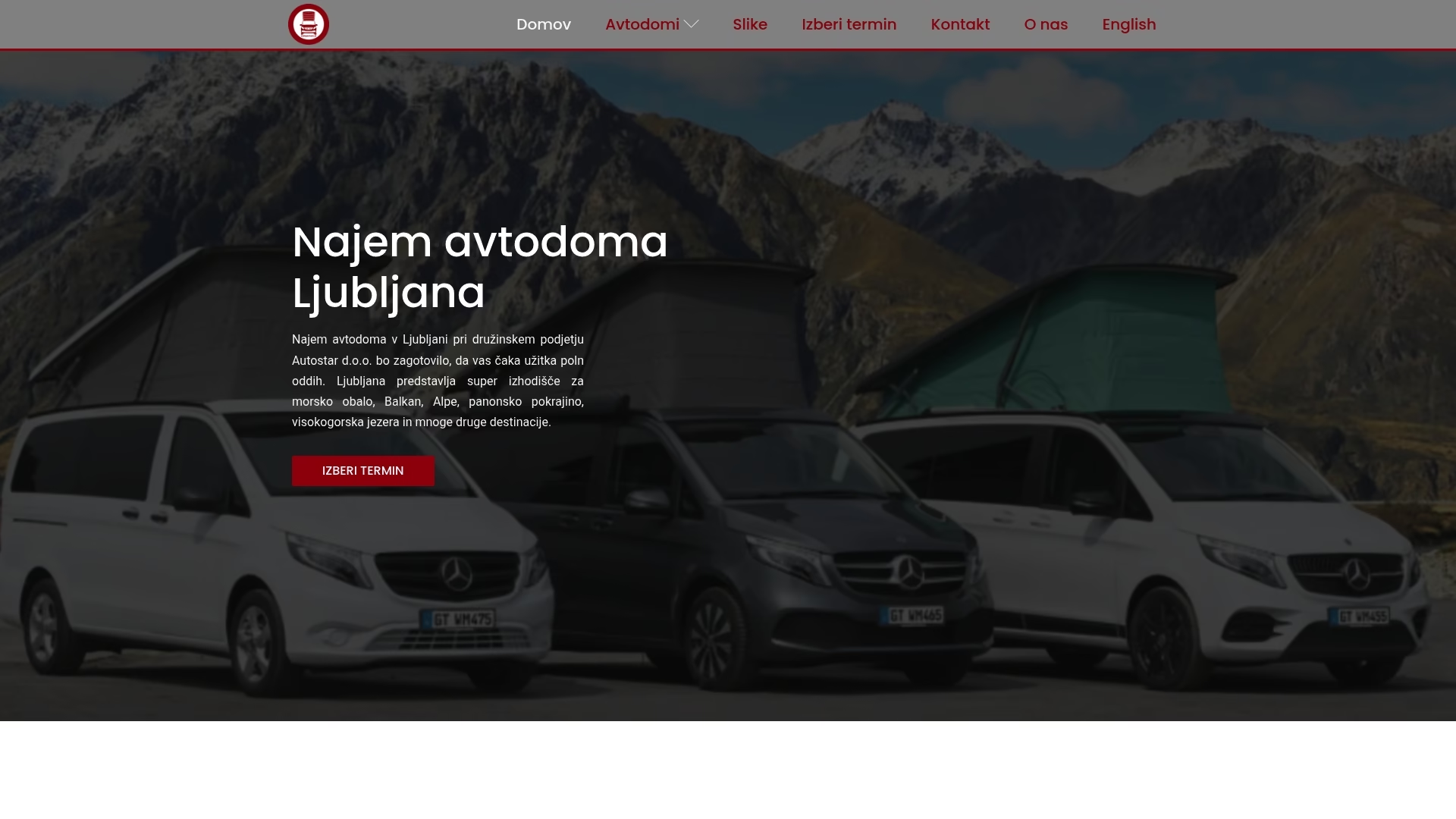
Two campervan models are available, equipped with essentials such as a kitchen, fixed toilet and sleeping areas for several people. This means you can comfortably use the designated parking areas mentioned above without having to improvise. Every rental includes basic insurance and 24/7 roadside assistance, which is particularly useful when travelling through longer mountain sections such as the route towards Bovec. Before booking, check which sleeping arrangements are best suited to your group on our page about
campervan sleeping arrangements, and consider additional
campervan camping equipment that can make stops outside the cities more comfortable. During the summer months, popular dates can fill up quickly, so check availability on
Campervan.si as early as possible and ask for advice if you need help planning your route.
Sources
Recommended