Campervan hook-up at the campsite: where and how to safely connect electricity and water
October 6, 2026
Yes, most campsites in Slovenia offer electrical hookups, usually via a standard 230 V CEE connection, and the service is generally charged separately. Bring a suitable cable and adapter, and reserve a pitch with an electrical hookup in advance, especially during summer. For your first night, choose an organized campsite where you can calmly check all the motorhome systems.
In brief:
Electrical hookups at campsites usually use a standard 230 V CEE connection, but you need to bring your own cable and adapter and reserve a pitch in advance.
The average cost of an electrical hookup is around €5 per day, although some campsites include electricity in the pitch price, depending on the season and individual provider.
For the hookup, you need a 25- to 50-meter 16A CEE cable, a Schuko-to-CEE adapter, and protective gloves for safely handling the chemical toilet and wastewater.
When connecting at your pitch, it is recommended to check the socket type, switch off all appliances before connecting, and turn devices on gradually to prevent overloads and circuit-breaker trips.
Wild camping is not permitted in Slovenia; for overnight stays, choose an organized campsite or a motorhome parking area with basic infrastructure.
Campervan
campervan.si
Ready for your motorhome adventure
From Ljubljana, you can rent a campervan to explore Slovenia and the surrounding region, with a choice of two different vehicles.
What campsites offer: hookup types, water and motorhome infrastructure
Slovenian campsites are generally well prepared for motorhome hookups. At your pitch, you will usually find an electrical hookup box with one or more CEE sockets, providing 230 V and specifically designed for caravanning and motorhomes rather than household appliances. Standard Schuko sockets, as used at home, are rarely used for connecting a vehicle at campsites, so it is important to know which type of connection is available at your pitch.
In addition to electricity, campsites offer access to drinking water, wastewater disposal points and chemical toilet emptying facilities, and often Wi-Fi and sometimes electric vehicle charging stations. The range of services varies considerably between campsites, so it is worth checking what is available when making your reservation.
Three campsites frequently mentioned by motorhome travelers provide a good overview of real-world examples:
Eco Camp Terme Snovik offers organized pitches with electrical hookups, access to drinking water and sanitary facilities adapted for motorhomes.
Slovenia Eco Resort has seasonally divided pitches, where electricity is already included in the price for certain periods.
Camp Triglav in Bohinj offers standard motorhome facilities, including a chemical toilet disposal point, and is a popular starting point for exploring the Julian Alps in July.
Camp Koren near the Soča River in Kobarid is a smaller but well-equipped campsite where an electrical hookup is available as an additional service.
The differences between campsites are not limited to price, but also include how easy it is to reach the electrical hookup. At some campsites, the hookup box is located some distance from the pitch, so the length of the cable you bring can determine whether you can connect without additional extensions or improvised solutions.
Costs and pricing: how much does electricity cost and how to read campsite prices
The cost of an electrical hookup at Slovenian campsites is not standardized, but a general pattern can be identified. Some campsites include it in the pitch price, while others charge separately based on actual consumption or as a fixed daily fee.
The average cost of an electrical hookup is around €5 per day, based on examples from campsites such as Camp Koren. This figure is best used as a general reference point, as the actual price varies between campsites and seasons.
When reading a price list, pay attention to the following items:
the pitch price per night, which may depend on the season,
the electrical hookup fee, which may be included or charged separately,
the tourist tax charged by each campsite,
any registration or check-in fee that may apply.
At Slovenia Eco Resort, the pricing breakdown is clear: for certain periods, the pitch listing specifically states that electricity is already included, meaning there are no surprises at checkout. Similarly, Eco Camp Terme Snovik lists the pitch and additional services separately, so it is worth checking the official price list before departure rather than making assumptions.
When electricity is included in the pitch price, it is generally more advantageous for longer stays. When it is charged separately, it is worth asking in advance whether this is a fixed daily fee or based on actual consumption, as the difference can have a noticeable impact on the total bill during a longer stay.
Preparation before departure: what to pack in your motorhome for an electrical hookup
The right equipment determines whether connecting at your pitch takes five minutes or half an hour of frustration with an extension cable that is too short. Before setting off, check this list:
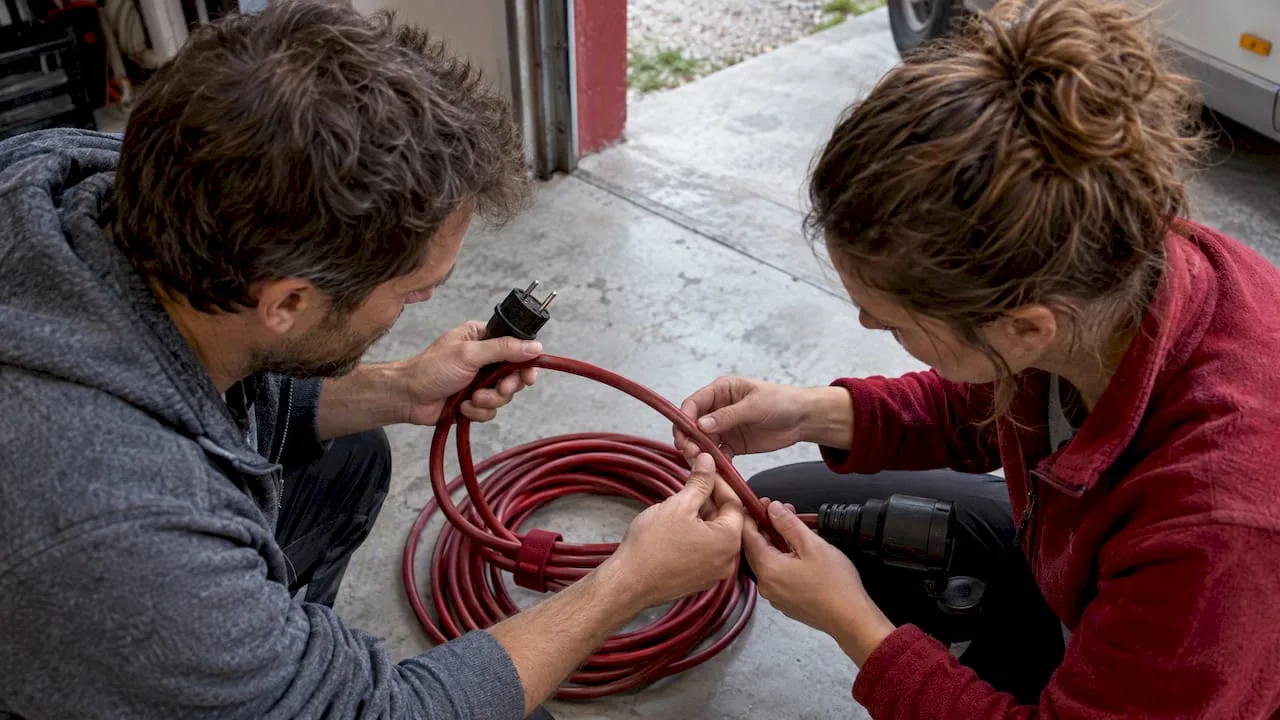
16A CEE cable 25 to 50 meters long, depending on how far the hookup box is from the usual position of the pitch.
Schuko-to-CEE adapter, because some smaller campsites or private pitches still use household sockets.
Leveling ramps for the vehicle, as pitches are often on a slight slope.
Protective gloves for emptying the chemical toilet and handling wastewater.
Test lamp or simple voltage tester to check that the connection is live before connecting the cable to the vehicle.
When choosing the cable length, it is better to have a few meters too much than too little, because improvised extensions increase the risk of poor contact and overheating. Camp Glavotok specifically recommends in its FAQ that guests bring their own extension cable of suitable length, as hookup boxes are not always located right next to the pitch.
Before departure, also check the condition of the cable, plugs and any damage to the insulation, because faulty equipment is easier to replace at home than in the middle of a campsite. For a detailed overview of what belongs in your basic camping equipment, you can use our guide to camping equipment for motorhomes.
Expert tip:Mark the end of the cable with colored electrical tape and test it at home using a standard socket before departure, so you know it works before you need it at the pitch.
Step by step: how to safely connect electricity at your pitch
When you arrive at your pitch, it is worth following a proven sequence of steps rather than simply plugging in and hoping for the best.
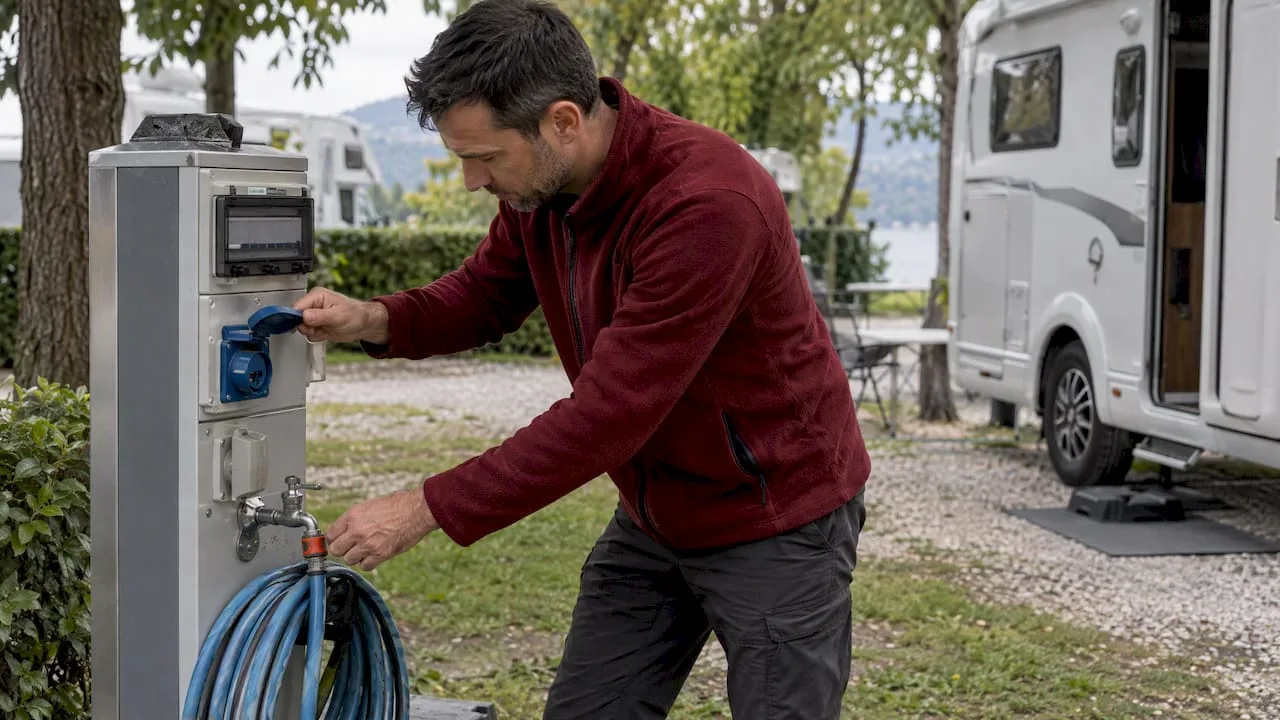
Inspect the hookup box at the pitch, check which type of socket is available, and make sure the switch or circuit breaker is in the off position.
Switch off all electrical appliances in the motorhome, from the refrigerator to device chargers, before connecting the cable.
Connect the cable to the campsite hookup box first, and only then to the vehicle socket, to avoid sparking on the side where you are standing.
Check the RCD or circuit breaker on the hookup box, as it provides protection against electrical faults.
Switch on the motorhome appliances gradually, one at a time, to prevent a sudden load that could trip the circuit breaker.
If the circuit breaker trips immediately, the cable starts overheating or the socket appears unstable during connection, disconnect the cable immediately. Never use a cable with damaged insulation or an improvised connection, and inform the campsite reception so the staff can inspect the problem.
Most hookup problems are caused by overloading, for example when the air conditioning, water heater and battery charger are all running at the same time. It is therefore recommended to check the maximum power available from your pitch connection and adjust your appliance usage accordingly.
Expert tip:When connecting to a new pitch for the first time, switch on only the refrigerator and lights, wait a few minutes and then add the other appliances. This lets you immediately see whether the connection is stable.
For a more detailed explanation of how electrical systems in a campervan work and what to watch out for when managing energy consumption during your trip, see our guide to electricity in a campervan.
Emptying wastewater and the chemical toilet: how and where
Organized campsites have designated areas for emptying wastewater and chemical toilets, separate from drinking water points and guest sanitary facilities. Such disposal stations are generally readily available in Slovenia, as motorhome camping has long been part of the country’s tourism offering.
A few basic rules apply when using these facilities:
empty wastewater and chemical toilet contents only at designated disposal points, never into nature or stormwater drains,
rinse the cassette with clean water at the designated facility after emptying it, not in a guest sink,
use protective gloves and wash your hands thoroughly after completing the task,
check whether the campsite requires the use of specific biodegradable toilet chemicals, as some campsites explicitly recommend them because of their wastewater treatment systems.
Disposing of wastewater outside designated areas is not only a hygiene issue but can also constitute an offense, as it pollutes the environment and can affect local water sources. Campsites regularly remind guests of these restrictions, so it is worth following them not only because of the rules but also out of respect for nature.
For your trip, it is worth preparing basic cassette-care products, gloves and, if possible, a small scraper or brush for cleaning the connection point, so the process is quick and involves minimal contact with wastewater.
Where to stay: campsite, motorhome parking area or wild camping
There are three basic options for staying overnight in a motorhome in Slovenia, but only two are legally organized and recommended.
Campsite is an organized area with a reception, pitches, sanitary facilities and usually electrical hookups, making it suitable for longer stays and relaxation.
PZA, a motorhome parking area, is a smaller organized area without full campsite infrastructure, often without a reception, but with basic electricity and water connections and a waste disposal point.
Wild camping, meaning staying overnight outside organized areas, is not permitted in Slovenia and may be subject to penalties, so it is not recommended even for a single night.
A PZA is a good choice for a short stop during a journey, for example between two destinations when you do not need the full infrastructure of a campsite. A campsite is more suitable when you plan a longer stay and want access to sanitary facilities and perhaps a swimming pool or other recreational amenities.
For your first night after collecting the motorhome, we recommend an organized campsite or PZA with electricity, where you can calmly check the refrigerator, lights and other systems before traveling farther from Ljubljana. A detailed overview of where PZAs are available in Slovenia and how they differ from traditional campsites can be found in our list of motorhome parking areas, while the legal framework for overnight stays is explained in our guide to legal motorhome overnight stays.
When to book: season, coast and popular destinations
When you book can often determine whether you will have a pitch with an electrical hookup or end up staying without electricity because all organized pitches are already occupied.
July and August are considered peak season, especially on the coast and around popular natural attractions such as Bled, Bohinj and the Soča Valley, so reserving a pitch with an electrical hookup is almost essential.
Outside the peak season, in spring and autumn, more pitches are available, prices are generally lower and staff have more time to advise you about hookups.
Camp Triglav in Bohinj explicitly recommends booking in advance during the summer months, as pitches with electricity are among the first to fill up.
For your first night, it makes sense to book a campsite with good reviews for the quality of its hookups, so you can immediately check that the electricity and water systems work before continuing your journey.
When traveling outside the summer months, you also have more flexibility regarding price or choosing a better pitch, as campsites are less likely to be fully booked. If you are considering a winter trip, also check the specific requirements described in our guide to winter motorhome rental.
Campervan.si perspective: what you can learn during motorhome handover
When renting a motorhome, we find that spending the first night at an organized campsite makes the biggest difference to the rest of the journey. Anyone who checks the electricity, water and sanitary disposal systems on the first evening close to home can travel worry-free over the following days, knowing that the systems will also work when they are far from Ljubljana.
That is why, during motorhome handover, we show guests the basics of connecting to electricity, how the water system works and how to use the chemical toilet correctly before they even leave the yard. Experience shows that questions about hookups are among the most common questions guests ask just before departure, so we treat this part of the handover as equally important as inspecting the vehicle itself.
The recommendation to spend the first night at a campsite with electricity is not merely theoretical advice, but a practical solution that reduces stress during the journey when assistance may be much farther away.
— Rok
Renting a motorhome with Campervan.si: support from handover to hookup
We also provide clear instructions on how to safely connect your motorhome to electricity and water at a campsite. During handover, we show you the basics of connecting the vehicle, how the interior systems work and what to do if you encounter an unusual hookup at your pitch.
We have designed our offering for travelers who want a comfortable journey without technical surprises:
Mercedes V Marco Polo, a compact design with all the equipment you need for traveling through Slovenia and neighboring countries, available for rent in Ljubljana.
Ford Nugget Plus, a practical choice for families or couples looking for a reliable vehicle for longer stays at campsites, rental details.
We also describe the complete handover process, including a demonstration of the hookup procedure, in our guide to safe motorhome handover, which takes between 20 and 45 minutes. Check availability and book your pickup through Campervan.
Frequently asked questions
Do all campsites in Slovenia offer electrical hookups?
Most organized campsites and motorhome parking areas in Slovenia offer electrical hookups, usually via a standard 230 V CEE socket. At smaller or more rustic campsites, however, it is worth checking before booking whether a hookup is available at every pitch.
How much does an electrical hookup cost at a campsite for a motorhome?
The price varies between campsites and averages around €5 per day. Some campsites, such as Slovenia Eco Resort, include it in the pitch price during certain periods. It is therefore advisable to check the individual campsite’s price list before arrival.
What cable and adapter do I need for a motorhome hookup?
A 16A CEE cable between 25 and 50 meters long is recommended, as the distance between the hookup box and the pitch can be considerable. A Schuko-to-CEE adapter is also useful, as some smaller campsites use the household socket standard.
What is the difference between a campsite and a PZA for motorhomes?
A campsite has full infrastructure with a reception, sanitary facilities and usually electrical hookups, and is intended for longer stays. A PZA is a smaller organized parking area, often without a reception, but still offering basic electricity and water connections, making it suitable for a short stop during a journey.
Is wild camping with a motorhome allowed in Slovenia?
Wild camping outside organized campsites and parking areas is not permitted in Slovenia and may be subject to penalties. For overnight stays, choose an organized campsite or PZA where you have access to hookups and sanitary facilities.
 Expert tip: Mark the end of the cable with colored electrical tape and test it at home using a standard socket before departure, so you know it works before you need it at the pitch.

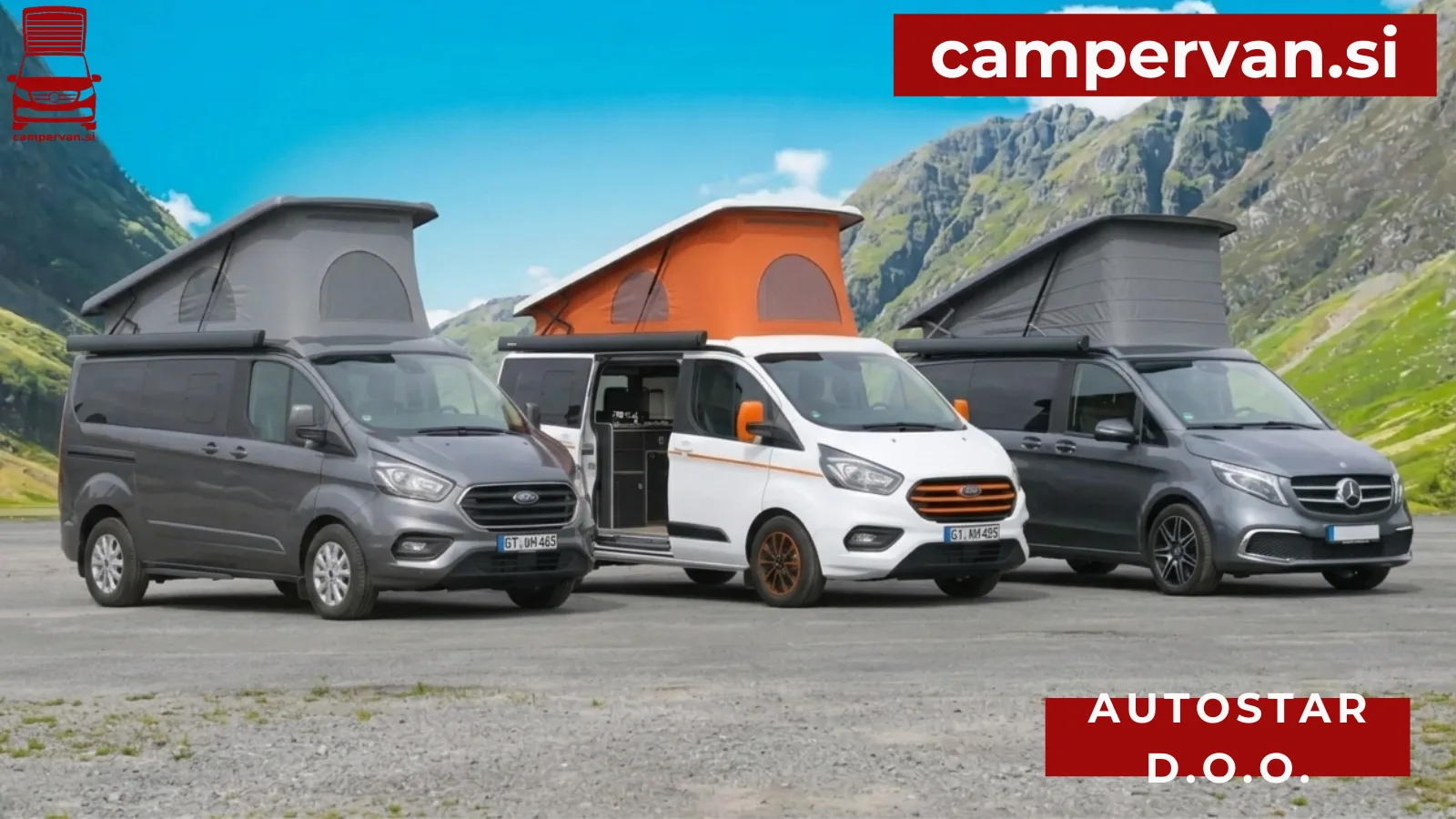 We have designed our offering for travelers who want a comfortable journey without technical surprises: