Campervan heating: what you actually need for a trip around Slovenia
October 6, 2026
For most trips around Slovenia, the most practical combination is a built-in gas or diesel heater, good vehicle insulation and a working carbon monoxide detector. Before departure, always check that the heater starts normally and that the carbon monoxide detector is working. Turn off the gas while driving and ensure minimal ventilation inside the cabin while sleeping, even when it is cold outside.
In short:
For effective heating in winter conditions, a diesel heater is best suited to longer stops and quickly heating the cabin.
Gas Combi units are useful for heating both air and water, but they need protection against freezing in cold weather because they do not protect the water system from freezing.
Electric heaters are suitable only at campsites with an electrical hookup. Using an inverter quickly drains the battery, so they are not suitable for prolonged use without an external power connection.
Good insulation reduces energy consumption and the need for heating systems to run continuously, so a well-sealed living area is also important.
Before travelling, check that the CO detector works, keep ventilation openings unobstructed and always turn off the gas while driving or inside tunnels.
Campervan
Travel in comfort even in cold weather
Check available campervans in Ljubljana and choose the right vehicle for your trip around Slovenia.
Overview of campervan heating systems: diesel, gas and electric
Every campervan approaches heating differently, with differences in energy consumption, heating speed and suitability for winter conditions.
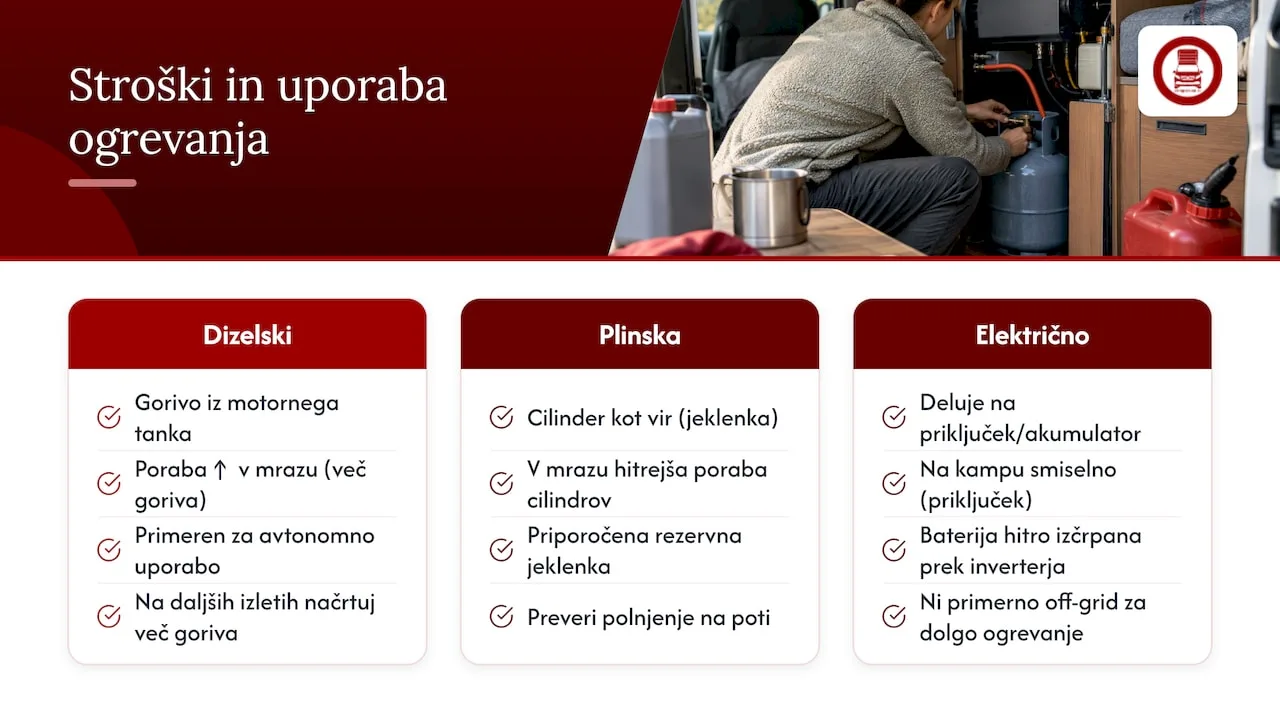
Diesel parking heaters operate independently of the vehicle engine while parked and use fuel from the main tank. They are effective during longer stops in cold weather because they quickly reach high output and place less demand on the battery than electric solutions.
Gas Combi units, such as those made by Truma, heat both the cabin air and water for washing. They run on liquefied petroleum gas (LPG), so you need a sufficiently full gas cylinder and proper ventilation. In severe frost, attention must be paid to the water system because the Truma manufacturer’s instructions clearly warn that the Combi unit itself does not protect the water from freezing and the system must be drained if there is a risk of freezing.
Electric heaters work only at campsites with an electrical hookup, and their output is limited by the available socket capacity. Using an inverter to heat the vehicle from the battery is inefficient and quickly drains the battery, so this solution is suitable only for short supplementary heating, never as the main heat source on a long trip. You can learn more about how the electrical system in a campervan works and where its limitations are in our guide to campervan electricity systems.
Insulation is another frequently overlooked factor. A well-insulated campervan with properly sealed windows and doors requires significantly less energy to maintain a comfortable temperature, directly reducing gas or diesel consumption.
A quick summary of when to choose each system:
Diesel heater: the best choice for long winter stops and quickly heating the cabin.
Gas Combi unit: practical for heating air and hot water during a trip.
Electric heater: a supplementary solution, useful only at campsites with an electrical hookup.
Insulation and airtightness: the foundation that reduces the need for all of the above systems.
Safety and standards: SIST/EN rules, CO detectors and manufacturer instructions
Heating in a recreational vehicle is not just about comfort but, above all, safety. Slovenia follows European standards governing the installation of gas and ventilation systems in campervans, including SIST EN 1949 and SIST EN 721, which together with other standards (EN 1645, EN 1648 and EN 722) define requirements for LPG equipment installation and ventilation of the living area.
A working CO detector is one of the most important safety elements in a campervan. Truma’s manufacturer instructions require the presence and regular testing of a carbon monoxide detector and explicitly prohibit using the heating unit in an enclosed or unventilated space.
Before setting off, follow these steps:
Check that the CO detector is active and responds to the test button.
Make sure all ventilation openings are clear and unobstructed.
Always turn off the gas when driving or entering a tunnel, garage or ferry.
Never use the heater with all windows and doors tightly closed and without ventilation.
If you suspect a gas leak, immediately close the cylinder valve, ventilate the space and avoid any open flames.
If the CO detector sounds an alarm, leave the vehicle immediately, ventilate the interior and do not switch the heater back on until the cause has been resolved. If in doubt, contact a service centre or the rental company rather than attempting to repair the gas system yourself.
Practical checklist for renters: before departure, while driving and in cold weather
A good checklist prevents awkward situations on the road and reduces the risk of breakdowns in the middle of your holiday.
Before collecting the vehicle, check the following:
The heater starts without delay and runs steadily for several minutes.
The gas cylinder or fuel level for the diesel heater is sufficient for the first day of the trip.
The CO detector works and has a valid battery or is connected to the power supply.
The exhaust outlets and external ventilation openings are not blocked by mud or leaves.
During the trip, follow a few simple rules. Ventilate the space regularly, even when it is cold outside, as this helps prevent moisture build-up and ensures fresh air for combustion. Set the thermostat moderately; 18–20°C is generally sufficient for sleeping, while higher temperatures mainly increase consumption without providing significantly more comfort.
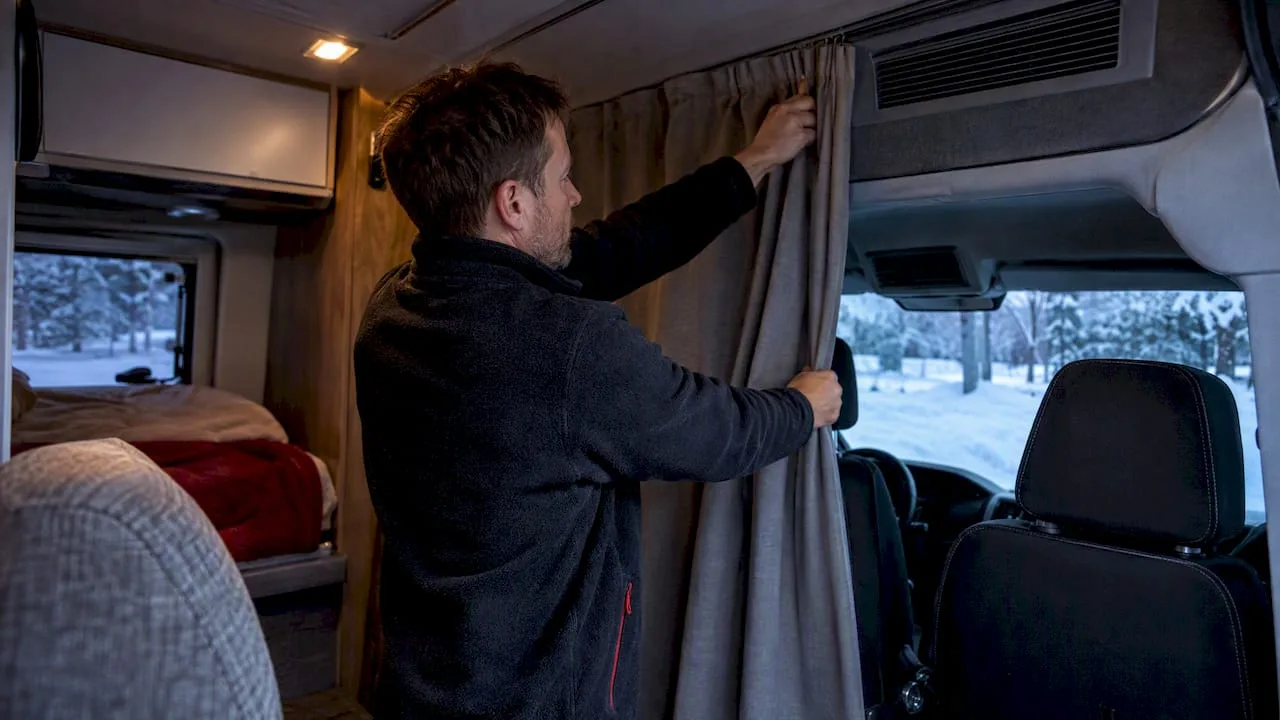
For winter conditions, use additional equipment. Insulating window curtains, extra blankets and protective insulation for water pipes all help reduce energy consumption and the risk of freezing. You can find more ideas for useful additional equipment in our guide to camping equipment.
Expert tip:Before going to sleep, leave a small window slightly open to prevent condensation on the windows and maintain a continuous flow of air for safe heater operation.
Quick tips for solving the most common heating problems
You can solve most minor issues yourself within a few minutes, but some problems should be left to a professional service centre immediately.
If the heater does not start, first check the fuses and battery power, as a low battery is one of the most common causes of failure.
If you smell gas, immediately close the cylinder valve, open the doors and windows and do not attempt to restart the heater.
If the heating stops while driving, check whether the switch for the Combi unit has accidentally been turned off, which can happen after an unintended press.
If the water pipes have frozen, move the vehicle to a warmer location and gradually warm the interior. Never use an open flame to thaw frozen pipes.
Repeated shutdowns, a strong combustion smell or visible smoke require an immediate visit to an authorised service centre, as they may indicate a fault in the combustion chamber.
Minor pipe freezing often resolves itself as the interior warms up, but more serious heating-system faults should be left to professionals, as repairing a gas system without the necessary expertise presents a genuine safety risk.
Comparison of heating system costs and fuel or energy consumption
Heating costs depend primarily on the outside temperature, length of the stop and system used, so there is no single figure that applies to every trip. A diesel heater uses fuel from the same tank as the engine, so it is sensible to allow for somewhat higher fuel consumption before a longer winter trip than you would expect in summer.
A gas Combi unit uses up the contents of the cylinder more quickly in cold weather because it has to heat both the air and water. During longer winter camping trips, it is therefore advisable to carry a spare cylinder or check where refilling is available along your route.
Electric heating makes sense only at established campsites with an electrical hookup, as socket capacity is limited and drawing power from the battery through an inverter quickly drains the battery. At a free-standing parking location without an external power connection, this method is practically unsuitable for prolonged heating.
The cheapest way to reduce heating costs is not to replace the system but to improve insulation. Properly sealed windows, curtains and extra blankets reduce the need for continuous heater operation, directly lowering daily gas or diesel consumption. The combination of a built-in heater and good insulation remains the most cost-effective solution for Slovenian conditions, regardless of the season.
Tips for optimising heating in a small campervan space
A small campervan space heats up quickly but also loses heat quickly, so the approach to heating is different from that of a house or apartment.
Heat should circulate rather than remain concentrated in one area. With Combi units using forced-air circulation, position the outlets so that warm air also reaches the sleeping area rather than only the living space.
Closing off unnecessary areas helps keep heat where you actually need it. If the vehicle allows you to separate the cab from the living area with a curtain or partition, use it at night so the heater does not waste energy heating an unused space.
Condensation is a common problem in small spaces. Regular ventilation, even for a short period, while parked or when appropriate during a stop, helps prevent moisture from building up on windows and cushions, indirectly preserving insulation efficiency. Damp cushions and curtains provide poorer insulation and increase the need for heating.
Adjust heater operation to your daily routine. Shorter periods of more intensive heating in the morning and evening, when demand is highest, are more efficient than keeping the heater running at a low level throughout the entire day.
Alternative and innovative heating methods in campervans
In addition to conventional gas and diesel systems, the market also offers supplementary heating solutions for recreational vehicles.
Solar panels mounted on the roof of a campervan can charge the battery, which can then power smaller electrical devices, including fans for circulating warm air from the main heater. Solar panels alone are not sufficient as a heating source in low temperatures, but they can extend battery autonomy for other systems.
Infrared panels are an interesting supplementary option because they heat objects and people directly rather than just the air, which can be effective over short distances in a small space. However, they require an electrical power source, so they are mainly practical at campsites with an electrical hookup, similar to conventional electric heaters.
Heated blankets and 12-volt heated mattress pads are simple and energy-efficient solutions for sleeping in cold weather without having the main heater running all night. For now, conventional gas and diesel systems remain the main and most reliable choice for serious winter travel in Slovenia, while alternative solutions work best as useful supplements rather than replacements.
Rok’s practical perspective and rental experience in Slovenia
During vehicle handovers in Ljubljana, we spend 20 to 45 minutes demonstrating the heater, CO detector and basic electrical systems because this is where guests most often have questions. The most common questions are whether it is safe to leave the heater running overnight and how to make sure the gas is properly turned off while driving.
During every handover, we show guests where the heater controls are, how the CO detector works and what to do if the alarm sounds during the night. The biggest mistake I see guests make is not a lack of technical knowledge, but assuming that the vehicle behaves like an apartment. A campervan is a small, enclosed space, so it requires a different approach to ventilation and heater monitoring than you would use at home.
— Rok
How Campervan.si provides a warm and safe rental
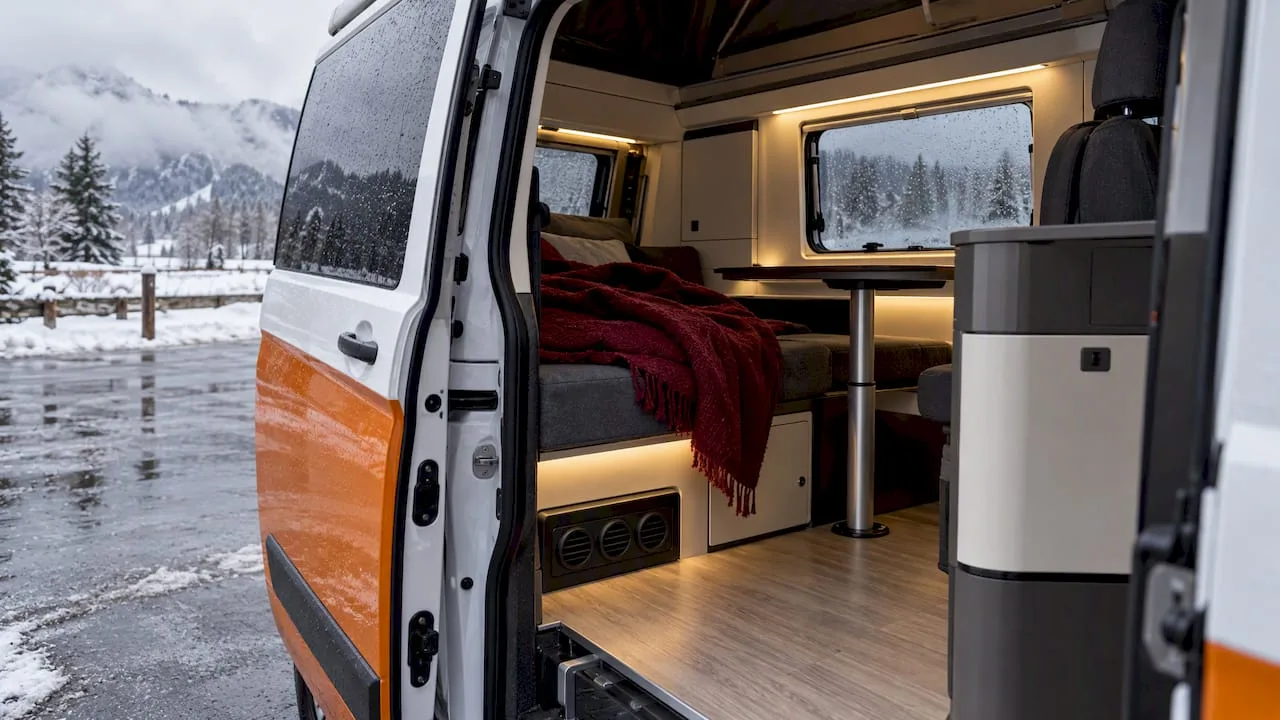
Renting a campervan in Ljubljana means having a vehicle prepared for the Slovenian climate, regardless of the season. Our vehicles are equipped with a built-in heating system, which we check before every handover and explain step by step.
At handover, you always receive:
A demonstration of the heater and its basic settings.
A check of the CO detector and an explanation of what to do if the alarm sounds.
Brief instructions for winter use and protection against freezing.
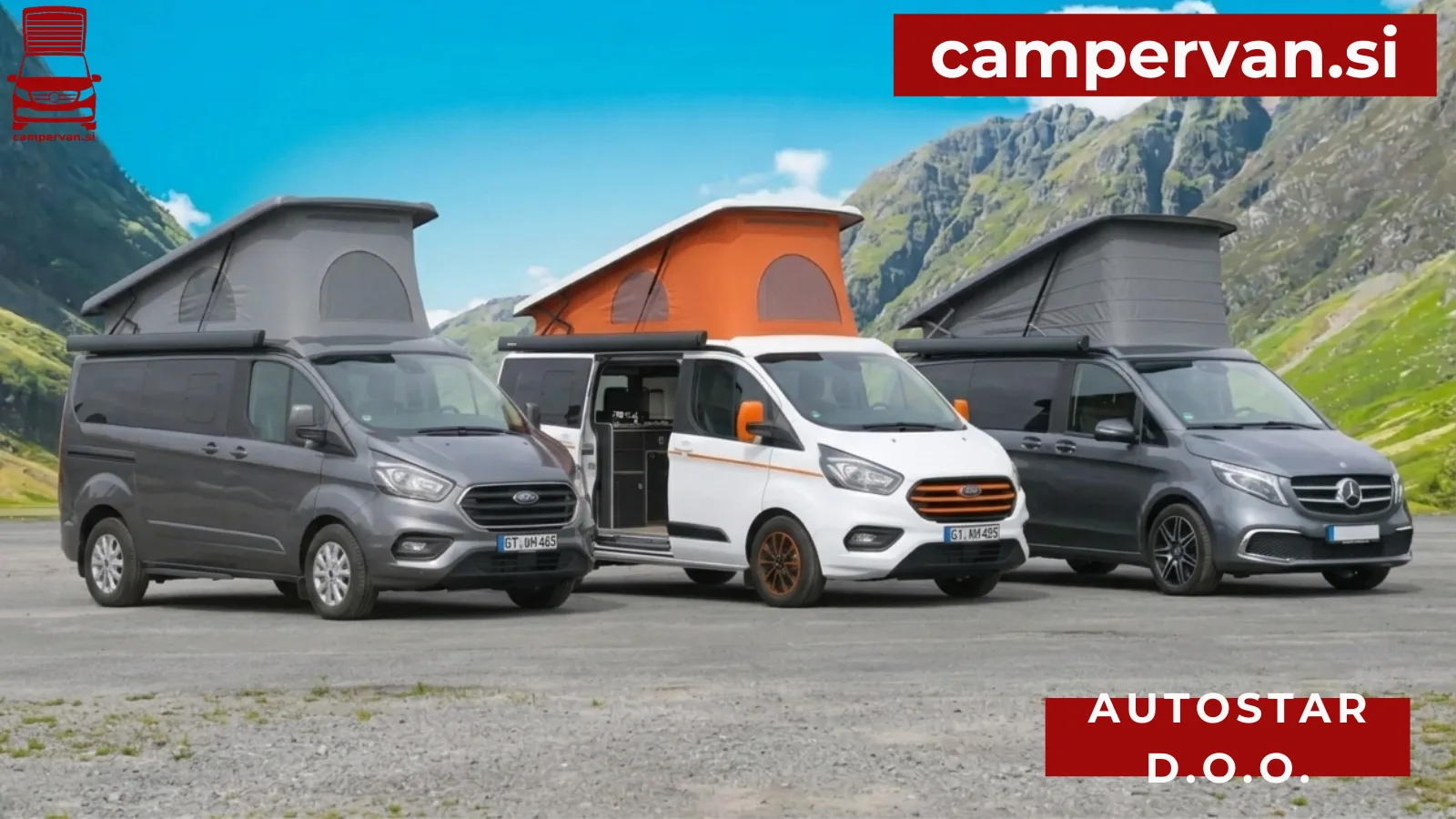
If you are looking for a vehicle that will keep you comfortable and confident on colder trips around Slovenia, take a look at Mercedes V Marco Polo rental or check availability on our main website.
Frequently asked questions
Which heating system is best for winter in Slovenia?
For winter conditions, the most reliable combination is a built-in diesel or gas heater together with good vehicle insulation. An electric heater makes sense only as a supplement at a campsite with an electrical hookup, rather than as the main heat source.
Do I have to turn off the gas while driving?
Yes, the gas system should be turned off while driving and before entering tunnels, garages or ferries. This is a standard safety recommendation in Truma’s manufacturer instructions.
How do I check that the CO detector in the campervan is working?
The detector must have a working battery or be connected to a power supply and should respond when the test button is pressed. Check it before every trip, as it is one of the most important safety elements in a recreational vehicle.
How much does it cost to rent a campervan with built-in heating from Campervan.si?
Daily rental of the Mercedes V Marco Polo or Ford Nugget Plus at Campervan.si starts from €125 per day, while weekly rental starts from €110 per day. Final cleaning is charged separately according to the rental provider’s current terms.
What should I do if I smell gas in the campervan?
Immediately close the cylinder valve, open the doors and windows and avoid any open flames or sources of ignition. Do not attempt to restart the heater until the cause of the smell has been resolved or checked by a qualified professional.

 Condensation is a common problem in small spaces. Regular ventilation, even for a short period, while parked or when appropriate during a stop, helps prevent moisture from building up on windows and cushions, indirectly preserving insulation efficiency. Damp cushions and curtains provide poorer insulation and increase the need for heating.
Adjust heater operation to your daily routine. Shorter periods of more intensive heating in the morning and evening, when demand is highest, are more efficient than keeping the heater running at a low level throughout the entire day.
Condensation is a common problem in small spaces. Regular ventilation, even for a short period, while parked or when appropriate during a stop, helps prevent moisture from building up on windows and cushions, indirectly preserving insulation efficiency. Damp cushions and curtains provide poorer insulation and increase the need for heating.
Adjust heater operation to your daily routine. Shorter periods of more intensive heating in the morning and evening, when demand is highest, are more efficient than keeping the heater running at a low level throughout the entire day.
 At handover, you always receive: