Basic campervan rental equipment almost always includes an electrical hookup cable, fresh water hose, toilet cassette with chemicals, and levelling blocks. A refrigerator and cooker are standard. Kitchen utensils, bedding and outdoor equipment, however, depend on the rental provider, so always request a written inventory list before signing the rental agreement.
Rarely included – better bring your own:
- Personal bedding and towels (unless explicitly included)
- Medication and a basic first-aid kit
- USB chargers and a campsite electrical hookup adapter
- Spices and food for the first day
Often available as paid extras from the rental provider:
- Bike rack
- Child seat
- Additional gas cylinder
- Awning or outdoor table and chairs
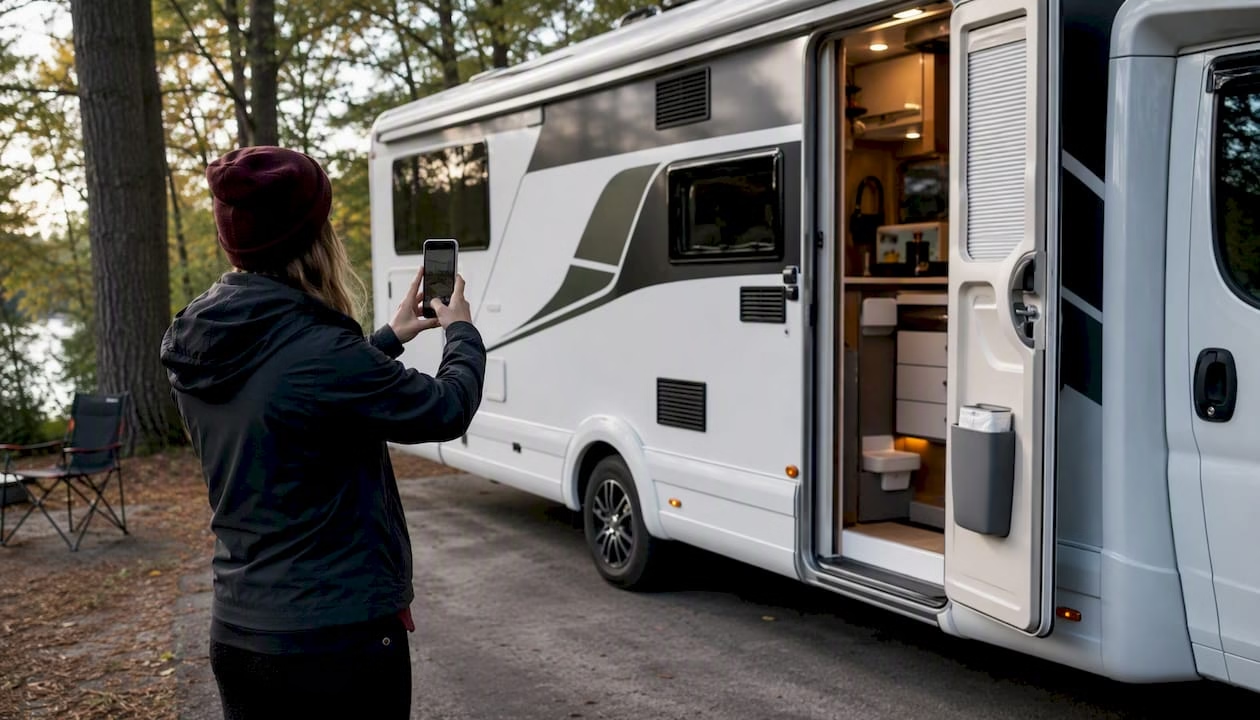
Expert tip: As soon as you collect the campervan, photograph the entire inventory and all visible vehicle damage. Send the photos to the rental provider by email so you have written confirmation.
Table of Contents
What is usually included in basic campervan equipment?
The Slovenian Consumers’ Association points out that the equipment included in a campervan rental can vary significantly between providers. What is standard with one rental company may be an additional charge with another.
Technical connections and safety equipment are included in the basic rental price by most providers:
- Electrical cable (230 V) and campsite hookup adapter
- Fresh water hose and wastewater connection
- Toilet cassette with basic chemicals
- Levelling ramps
- Fire extinguisher and basic safety equipment
- Basic tools (wheel wrench, jack)
A refrigerator and gas cooker are standard equipment in virtually all campervan models. Campervan offers the
Mercedes V Marco Polo and
Ford Transit Nugget Plus, both of which come with an integrated refrigerator and cooker.
Kitchen utensils, cookware, bedding and towels are often included in an “all-inclusive” package with higher-end campervans. With standard rentals, they should be checked against the inventory list. The Slovenian Consumers’ Association notes that additional charges for these items can quickly add up to a significant amount.
Most rental providers supply one gas cylinder, often a 5 kg cylinder. In colder weather or on longer trips, this may not be enough for both heating and cooking. Check whether the provider offers cylinder replacement or an additional cylinder.
| Equipment |
Often included |
Often available for an extra charge |
| Electrical cable, water hose |
Yes |
Rarely |
| Toilet cassette with chemicals |
Yes |
Rarely |
| Refrigerator, cooker |
Yes |
Rarely |
| Kitchen utensils, cookware |
Depends on provider |
Often |
| Bedding, towels |
Depends on provider |
Often |
| Outdoor table, chairs |
Rarely |
Often |
| Bike rack |
No |
Yes |
Expert tip: Before booking, email the provider and ask for the exact inventory list. A written response can protect you in the event of a dispute when the campervan is returned.
Which extras are worth renting from the provider?
Some items make more sense to rent from the provider than to transport from home. The reason is simple: size, weight and compatibility.
Typical rental extras include:
- Bike rack (approved for the vehicle, without the risk of incorrect installation)
- Child seat (compatible with the vehicle model and current legislation)
- Awning or canopy
- Additional bedding and towels
- Outdoor table and folding chairs
- Additional gas cylinder
- Generator or additional lithium battery
Daily extras are charged for each rental day, while one-time extras (such as toilet cassette cleaning or delivery) are usually charged as a fixed fee. The Slovenian Consumers’ Association warns that equipment surcharges can quickly add up to a significant amount, so it is worth checking in advance exactly what is included in the rental price.
Gas cylinders are a special case: connection systems differ between countries. If you are travelling to Italy, Croatia or Austria, using a cylinder supplied by the rental provider is generally more reliable than bringing your own.
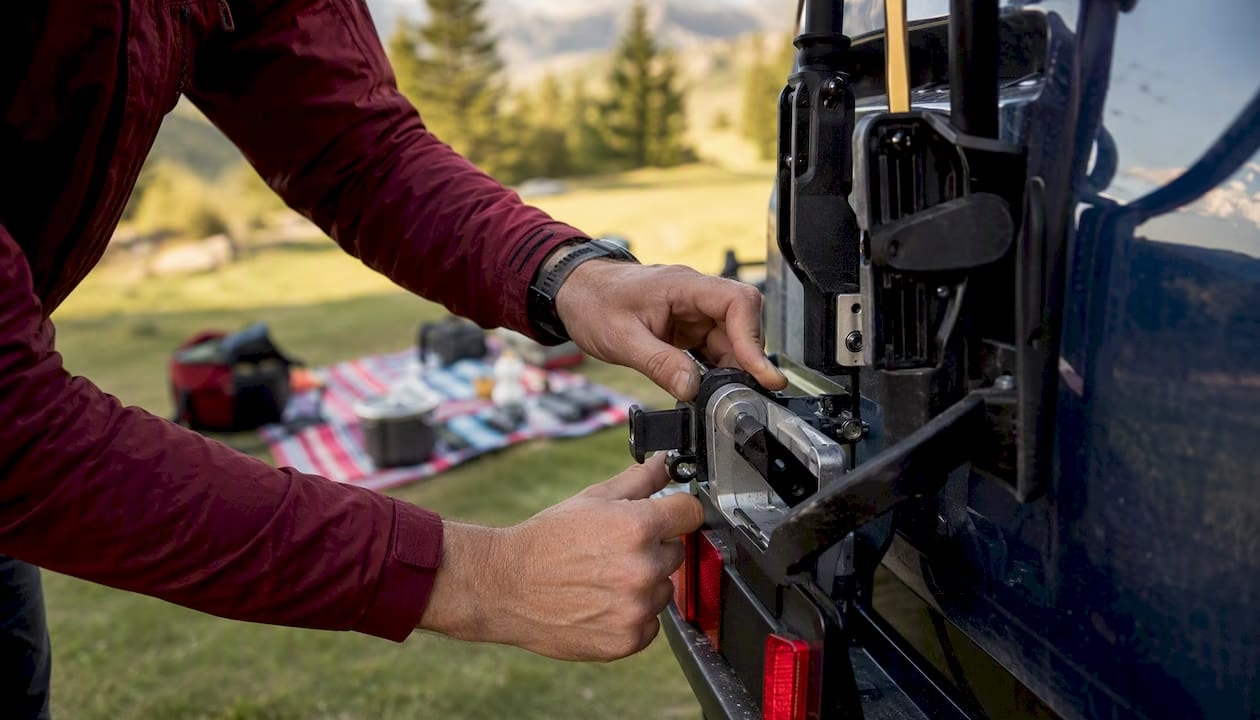 Expert tip: Before ordering a bike rack, check the vehicle’s total weight with all equipment and bicycles loaded. Every campervan has a maximum permitted weight (often 3,500 kg) that must be respected.
What should you bring: a practical campervan rental checklist
Some things are too personal or too inexpensive to make sense as rental extras. Here is a breakdown by priority.
Essential:
- A driving licence for the appropriate vehicle category (check the vehicle’s weight)
- ID card or passport
- Booking confirmation and insurance documentation
- Information about e-vignettes for Slovenia and neighbouring countries
- Prescription medication and a basic first-aid kit
Recommended:
- Personal bedding and towels if they are not included
- USB cables and chargers for phones and tablets
- Portable power bank for trips away from electrical hookups
- Food for the first day (bread, coffee, basic fruit)
- Spices in small airtight containers
- Flashlight with spare batteries
- Garbage bags and recycling bags
Optional:
- Outdoor mat for in front of the campervan
- Small toolkit (screwdriver, duct tape)
- Spare light bulbs
- Additional drinking water (2-litre bottles)
When packing a campervan, follow one simple rule: airtight containers and minimal packaging. Replace glass bottles with plastic ones and transfer spices into smaller containers. Space is limited, and every kilogram counts.
Expert tip: Prepare food for the first day at home and pack it in a cool bag. Campervan refrigerators need several hours to reach operating temperature.
How does campervan pickup work: step by step
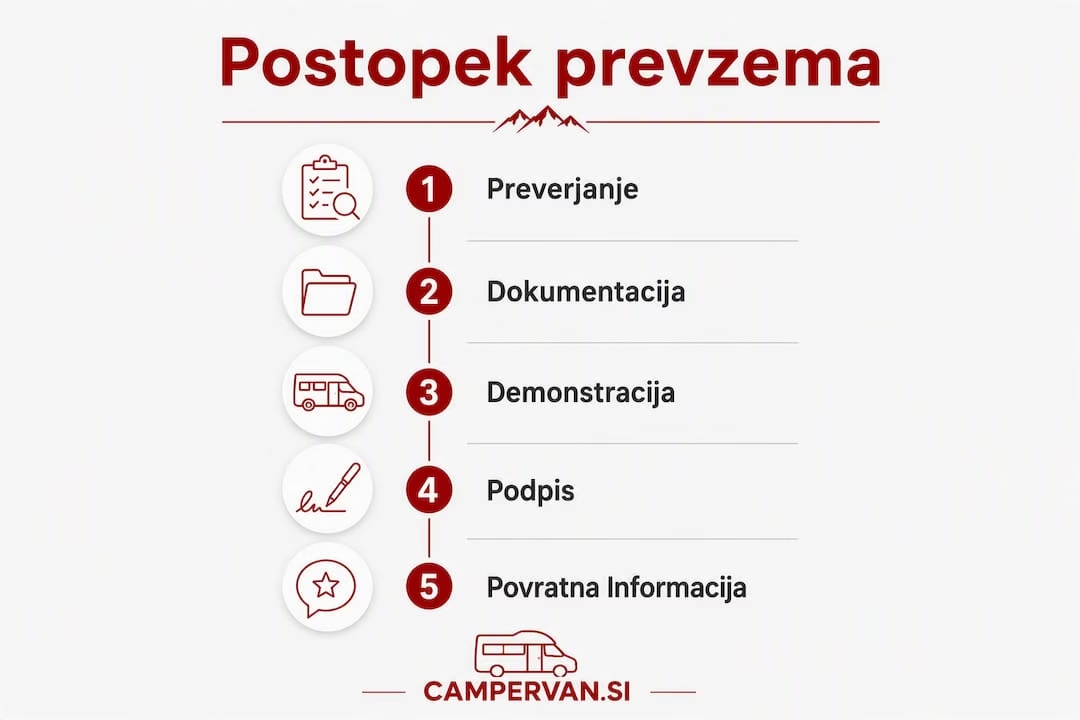
Avtokampi.si recommends allowing at least 60–90 minutes for campervan pickup. This is not a formality, but the time you need to learn how to operate the systems you will be using throughout your trip.
- Exterior inspection: Photograph all sides of the vehicle, the tyres, mirrors and roof. Record every scratch or dent, no matter how small. Check the fuel level and starting mileage.
- Interior inspection: Test the gas system (cooker, heating), refrigerator, electrical system (sockets, lighting), air conditioning and heating. Test the toilet cassette and emptying system.
- Equipment inventory: Check every item against the inventory list. Record any missing items immediately and request a written note or confirmation.
- Safety systems: Check the fire extinguisher and locate the spare wheel and jack. Ask what to do in the event of a breakdown and save the 24/7 assistance number.
- Signing the documents: Sign the inventory list only after you have checked every item. Send the photos to the rental provider immediately after pickup.
The handover is the only opportunity to document the vehicle’s condition together with the rental provider. Anything that is not recorded at pickup can become your responsibility when the vehicle is returned.
Expert tip: A short video showing the entire vehicle at pickup can be even better than photographs. It shows the condition in context and is harder to dispute later.
What are the typical costs and how long does pickup take?
A security deposit is standard when renting a campervan. The amount varies between providers, so check it before booking. The deposit may be used to cover damage that was not documented at pickup or inadequate cleaning when the vehicle is returned.
| Cost |
Notes |
| Security deposit |
Check with the provider; refunded after the return inspection |
| Cleaning |
Standard or additional; often charged as a fixed fee |
| Daily extras (e.g. awning) |
Charged for each rental day |
| One-time extras (e.g. child seat) |
Fixed fee for the entire rental |
| Tolls and vignettes |
Your responsibility; check the requirements for each country |
Triglav’s insurance blog points out that campervans can fall into a higher toll category and that you should check whether your insurance provides cover abroad. Basic insurance is included by most rental providers, while extended coverage is usually available for an additional fee.
Allow at least 30–60 minutes for returning the campervan. The rental provider will check cleanliness, equipment and mileage. If the vehicle is returned dirty or with previously undocumented damage, part or all of the security deposit may be withheld.
Expert tip: Wash the vehicle before returning it, empty and clean the toilet cassette, and dispose of all rubbish. These are among the most common reasons for deductions from the security deposit.
What do you need to know about rules and safety in Slovenia?
Driving licence category: Check the vehicle’s maximum permitted weight. Vehicles up to 3,500 kg can be driven with a category B licence, while heavier vehicles require category C1 or C. Driving without the appropriate category is an offence.
Vignette and tolls: An e-vignette is mandatory on Slovenia’s motorways. Purchase it before entering the motorway, as physical vignettes are no longer used. For planning toll costs in neighbouring countries,
Vinyetci provides information covering Slovenia and other European countries.
Height and width: Check the vehicle’s height and width before every trip. Low tunnels, car parks and narrow mountain roads are common hazards. When manoeuvring, do not rely solely on the camera.
When driving a campervan, the passenger is not a luxury but a safety feature. When parking or manoeuvring in tight spaces, having another pair of eyes outside the vehicle is invaluable.
Waste and toilet cassette management:
- Empty the toilet cassette only at designated disposal points (sanitary stations at campsites or motorhome service areas).
- Use chemicals that are suitable for the cassette and the environment.
- Separate waste inside the campervan and dispose of it in the appropriate campsite bins.
- Empty grey water (from the sink) only at designated drainage points, never into nature.
For a guide to
campervan and motorhome service areas in Slovenia with suitable connections and sanitary facilities, see the Campervan guide.
Expert tip: Before travelling abroad, check whether your insurance provides international coverage and what procedure to follow in the event of an accident or breakdown in another country.
Key takeaways
A renter who requests a written inventory list and allows 60–90 minutes for pickup can avoid most disputes and unexpected costs when returning the campervan.
| Key point |
Details |
| Request an inventory list |
A written list before signing the agreement helps prevent disputes when the vehicle is returned. |
| Take photos at pickup |
Document every existing damage and send the photos to the rental provider immediately. |
| Check what is included |
Extra charges for bedding, kitchen equipment and cleaning can quickly add €100 or more. |
| Allow enough time for pickup |
The handover takes 60–90 minutes; allow at least 30–60 minutes for the return. |
| Campervan, Ljubljana |
Offers the Mercedes V Marco Polo and Ford Transit Nugget Plus with a clear inventory list and 24/7 assistance. |
Why campervan pickup is the most important part of the rental
Most problems with campervan rentals do not happen while driving, but when the vehicle is returned. Damage that was already present at pickup but was not documented can become your responsibility. A dirty vehicle that you received dirty can become your problem when returning it if you have no evidence of its original condition.
This is not pessimism, but experience. Most rental providers are fair, but pickup procedures are often rushed. Ten minutes spent taking photos at pickup can be worth far more than hours of discussion when the vehicle is returned.
The same applies to equipment. A renter who knows what is included in the campervan and what they need to bring themselves will not discover halfway through a trip in Istria that they have no kitchen utensils or that the toilet cassette has not been supplied with chemicals. Check the inventory list in advance, not while you are already on the road.
Campervan: campervan rental in Ljubljana with clear equipment and support
Campervan offers two campervan models for rental from Ljubljana: the Mercedes V Marco Polo and the Ford Transit Nugget Plus. Both are equipped with a refrigerator, cooker, fixed sleeping area and toilet cassette. Basic insurance and 24/7 assistance are included with every rental.
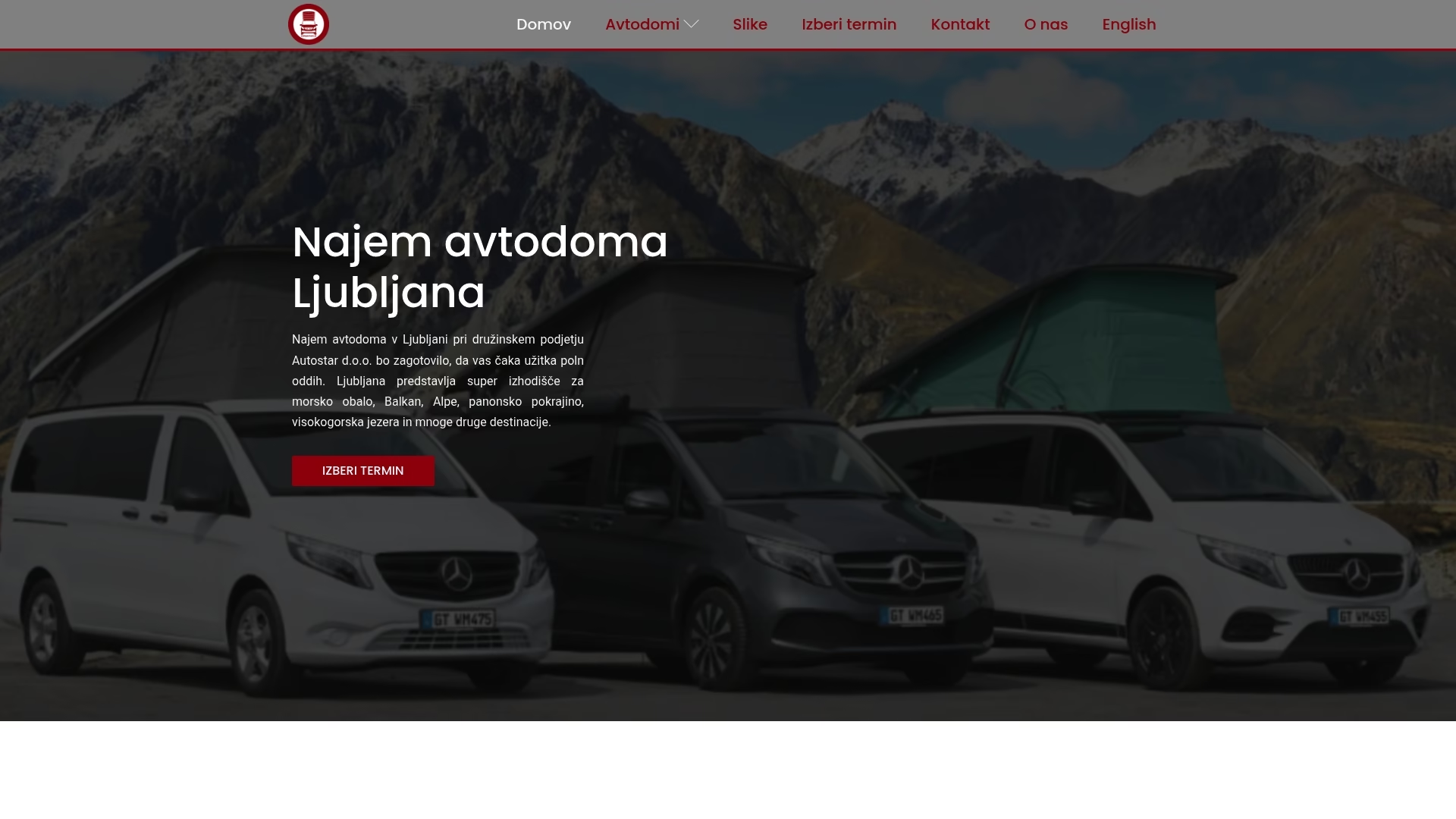
Pickup takes place in Ljubljana at a pre-arranged time. During pickup, you receive a demonstration of all the vehicle’s systems, sign the inventory list and leave with a clear understanding of what is included and what to expect. Additional equipment, such as a bike rack, is available for active travellers. Campervan covers destinations throughout Slovenia, the Balkans, the Alps and neighbouring countries.
For bookings and availability, visit
campervan.si or get in touch for an individual offer.
Useful resources for campervan renters in Slovenia
Before signing a rental agreement, it is worth checking independent sources:
- Slovenian Consumers’ Association (ZPS): An independent overview of differences in included equipment between rental providers and warnings about additional charges.
- Avtokampi.si: Practical advice on campervan pickup, system demonstrations and stress-free travel.
- Vinyetci: Information on purchasing a Slovenian e-vignette and tolls in neighbouring countries.
- Campervan.si camping equipment guide: Recommended extras and equipment packages for renters in Slovenia.
- Campervan.si motorhome service area guide: Where to stay overnight and which service areas provide suitable connections and sanitary facilities.
None of these sources replaces a written inventory list from your rental provider. General advice is a starting point; your rental agreement and inventory list are what ultimately apply.
Recommended