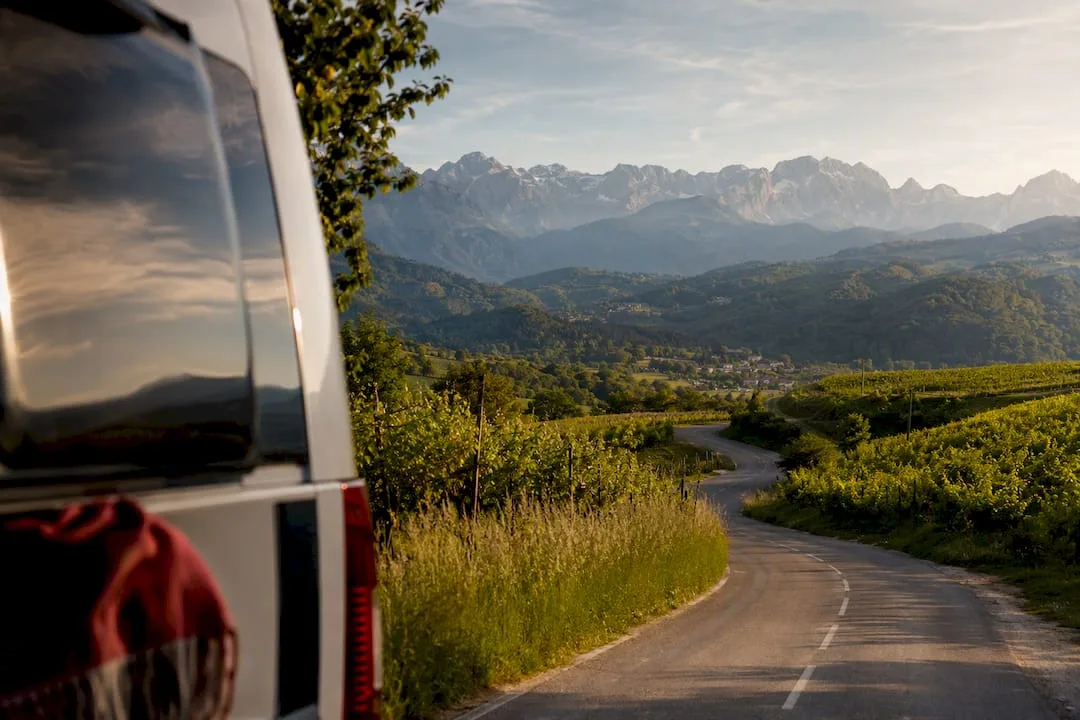
Yes, Slovenia is an excellent destination for a road trip by campervan: short distances, surprisingly diverse landscapes and a well-developed network of campervan stops make it possible to experience the Alps, the coast and wine-growing hills in just one week. Overnight stays are permitted only at official campervan stops and campsites, not just anywhere along the road. To drive on Slovenian motorways, you need a vignette for vehicles up to 3.5 tonnes, while heavier vehicles use the DarsGo toll system. For finding overnight parking and campsites, download Park4Night and CamperContact before your trip.
In brief:
- Campervan travellers should use official overnight stops and campsites where they can refill fresh water, dispose of wastewater and access sanitary facilities.
- When planning your route, pay attention to road conditions and difficulty, especially narrow mountain roads without guardrails, and always check the current weather conditions.
- A motorway vignette is mandatory for vehicles up to 3.5 tonnes, while campervans over this weight require the DarsGo electronic toll system, which must be arranged in advance.
- Use apps such as Park4Night and CamperContact to find overnight stops, but always check availability, current prices and recent reviews and use designated campervan parking areas.
- Plan your trip at a slower pace and keep daily distances reasonable. Travelling more slowly generally leads to a better and more enjoyable campervan road trip experience.
Table of Contents
Why choose Slovenia for a campervan road trip
Few European countries can offer you an Alpine mountain pass, vineyards and the Adriatic coast all within the same day. Slovenia is small, which is not a limitation for campervan travellers but a major advantage: from Ljubljana to Lake Bled takes just over an hour, Piran is less than two hours away, and the Soča Valley can be reached in around two and a half hours. A
campervan road trip through Slovenia is therefore not a motorway marathon, but a relaxed journey between remarkably different landscapes.
This density of different experiences is what surprises many visitors. You can swim in a thermal pool in Rimske Toplice in the morning and walk beside the emerald-green Soča River in the afternoon. Along the way, you can stop at a local winemaker in Goriška Brda or visit a cheesemaker near Lake Bohinj without covering more than a hundred kilometres.
Campervan stops are often located close to attractions and outdoor activities rather than on the outskirts of industrial areas. This means your campervan can become a base for hiking, cycling or swimming, rather than simply a place to sleep.
Slovenia’s tourism industry is also increasingly focused on sustainable travel, which works particularly well for campervan travellers: fewer day trips by car, longer stays in individual locations and more opportunities to support local farms, restaurants and small businesses.
The main advantages of a campervan road trip through Slovenia in a nutshell:
- Short distances between completely different landscapes, including the Alps, the coast, plains and wine-growing hills.
- A dense network of organised campervan stops that can be found through apps such as Park4Night.
- Easy access to thermal spas, lakes, hiking trails and wineries directly along your route.
- A growing selection of local and seasonal food at farms and small family-run restaurants.
- Moderate driving distances mean less time behind the wheel and more time enjoying the destination.
Where to stay overnight with a campervan: stops and campsites
Slovenia has
more than 150 designated campervan stops, ranging from basic overnight parking areas to fully equipped campsites. The facilities, services and prices can vary considerably.
The first category consists of basic parking areas without additional services. You may be able to stay overnight, but there is no access to electricity, fresh water or wastewater disposal. The second category includes partially serviced campervan stops, which usually provide at least an electrical hookup and fresh water, and often a chemical toilet disposal point. The third category consists of fully equipped campsites offering all of the above plus sanitary facilities, showers and sometimes laundry facilities or swimming pools.
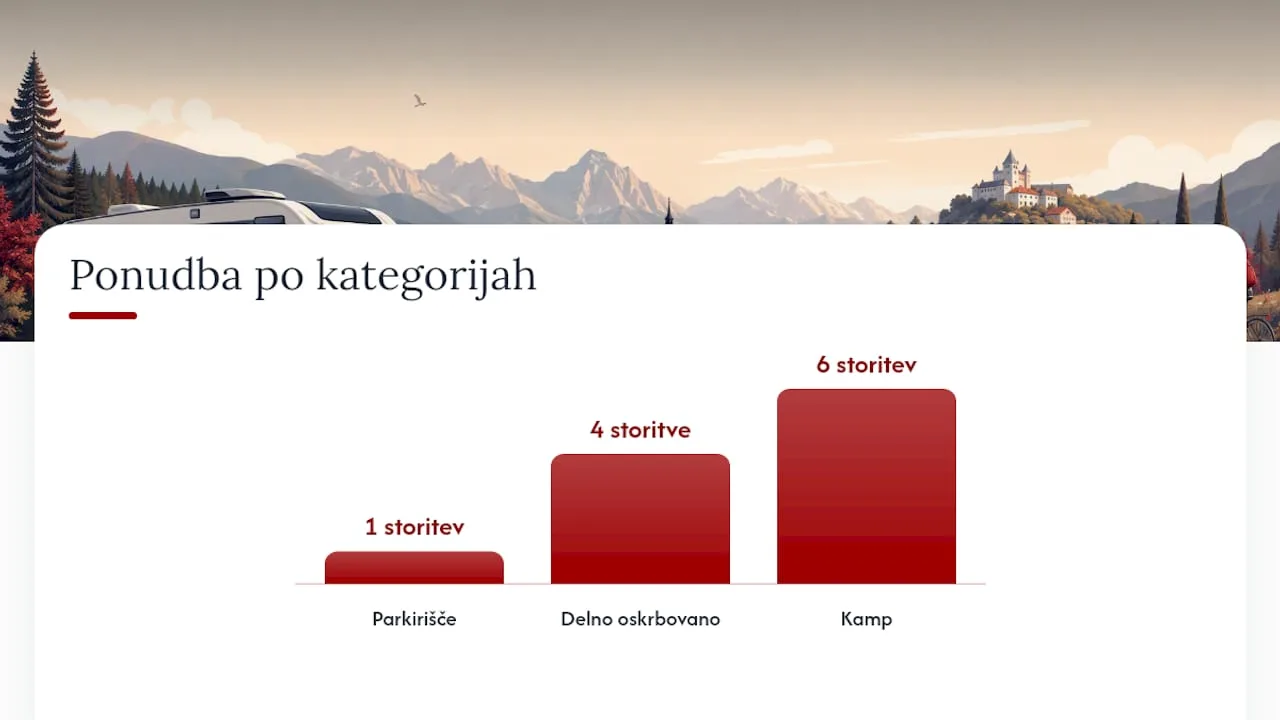
For travellers, the rule is simple: if you only need somewhere to park and sleep for one night, a basic overnight stop may be sufficient. If you are travelling for more than three days without staying at a campsite, you will eventually need a serviced stop where you can refill your fresh-water tank and dispose of wastewater.
Two apps are particularly useful for checking overnight locations and current conditions.
Park4Night is a community-based platform where users add locations, photos and reviews, making it useful for discovering lesser-known places.
CamperContact works in a similar way but provides more structured information about facilities, prices, dimensions and connection types, making it useful when you need to filter locations according to your exact requirements.
Before driving to an unfamiliar location, quickly check:
- Whether the location is suitable for the size of your campervan. Some parking areas have low barriers or narrow entrances.
- The overnight price and whether electricity or water is included.
- The date of the latest reviews, as availability, opening hours and local rules can change quickly.
Expert tip: Before relying on an app review that is several months old, call the campsite or check its website. Slovenian campsites often change their opening hours according to the season, while app information is not always updated immediately.
Route ideas: itineraries for short and longer road trips
A few tried-and-tested routes show how you can distribute driving distances and stops depending on how many days you have available.
- Weekend getaway (3 to 4 days). Spend the first day exploring Ljubljana, Lake Bled and Lake Bohinj, with an overnight stay near Lake Bohinj. On day two, drive over the Vršič Pass (in summer) into the Soča Valley and stay overnight near Bovec or Kobarid. On day three, relax by the river, perhaps go rafting or walk to Boka Waterfall, then return towards Ljubljana in the evening or extend the trip to one of Slovenia’s thermal spas. The total driving distance is relatively short, leaving plenty of time for stops.
- One-week Alps, coast and wine-country loop (7 days). Travel from Ljubljana to Bled and Bohinj (days 1 and 2), continue through the Soča Valley to Kobarid (day 3), then head towards the coast and Piran (day 4). From there, continue to Goriška Brda for a wine tasting and overnight stay at a tourist farm (day 5), followed by a slower return through the Vipava Valley (day 6) and back to Ljubljana (day 7). This route is often recommended as a basic framework for travellers who want to experience three completely different Slovenian landscapes in one week.
- Active nature itinerary: the Soča Valley. Focus exclusively on one region, with stops around Kobarid, Bovec and Trenta. This is ideal for travellers who prefer cycling, hiking and rafting rather than changing location every day.
- Culinary road trip: Goriška Brda and the Vipava Valley. Enjoy a slow journey between wineries, olive groves and small family-run restaurants. Ideal for couples who prefer leisurely travel and food and wine experiences over covering long distances.
- Peaceful regional route: Koroška and Solčavsko. Explore the less crowded northern part of Slovenia, including the panoramic road through the Logar Valley. This is a good choice for travellers looking to avoid the summer crowds around Bled or Piran.
Each of these itineraries can also be used as a building block: combine two or three routes if you have ten days or more available.
Vignette, DarsGo and documents: what to arrange before driving
Before getting behind the wheel, there are two things that first-time visitors most commonly confuse: the Slovenian motorway vignette and DarsGo.
A vignette is mandatory for driving on Slovenian motorways with vehicles up to 3.5 tonnes. It can be purchased at selected petrol stations, retail outlets or through the official DARS website, with weekly, monthly and annual options available. For campervans and motorhomes weighing more than 3.5 tonnes, a vignette does not apply. Instead, they must
use the electronic DarsGo toll system, which calculates the toll according to the distance travelled using a device installed in the vehicle.
When renting a campervan, always ask whether the motorway vignette or DarsGo device is already included in the rental price. Policies vary between rental providers, while larger operators often have the necessary arrangements in place before vehicle pickup.
In addition to motorway tolls, check the following documents and requirements:
- A valid category B driving licence for vehicles up to 3.5 tonnes, or C1 for heavier vehicles where applicable.
- The vehicle’s insurance policy and whether it covers driving abroad if you are planning to cross the Slovenian border.
- The service documentation and information about whom to contact in case of a breakdown.
- The rental provider’s minimum driver age requirements, as some companies impose a minimum age.
Vehicles over 3.5 tonnes require the DarsGo system, while smaller campervans use the motorway vignette system in the same way as passenger cars.
This distinction is important. A fine for driving on a motorway without the appropriate toll payment can quickly put a damper on the beginning of your holiday, so check this before your trip rather than leaving it until the last minute.
Where can you stay overnight with a campervan and how to travel responsibly
Wild camping, meaning staying overnight anywhere along the road, on a beach or in a forest without the landowner’s permission, is not generally permitted in Slovenia. This is particularly strictly enforced around popular lakes and protected natural areas, where parked campervans and motorhomes may be checked.
The solution is simple: use designated
campervan overnight stops and campsites, which you can find through Park4Night or CamperContact. There are enough organised locations across the country that there is little reason to risk a fine or create problems with local residents.
Choosing the right overnight location is only part of responsible campervan travel. Waste disposal is equally important. Empty your chemical toilet only at designated disposal points, such as campsite sanitary stations or authorised campervan service areas, never into natural waterways or ordinary drains. The same applies to grey water from the sink and kitchen. Separate your rubbish according to the Slovenian recycling system, which is clearly marked at most campsites.
Some principles of responsible campervan travel to follow throughout your trip:
- Stay overnight only at official campervan stops or campsites, never on private or protected land without permission.
- Dispose of wastewater and chemical toilet contents only at designated service points.
- Separate your waste according to the local recycling system, which is clearly marked at campsites.
- Buy food and local produce from farmers, local shops and small businesses rather than relying exclusively on large supermarket chains.
Expert tip: If you are tempted to stay overnight in a “nearly legal” lakeside parking area because you have seen foreign-registered vehicles there, do not take the risk. Local authorities may check popular locations, and a fine can quickly cost more than a night at a campsite.
What to pack: equipment for travelling in Slovenia
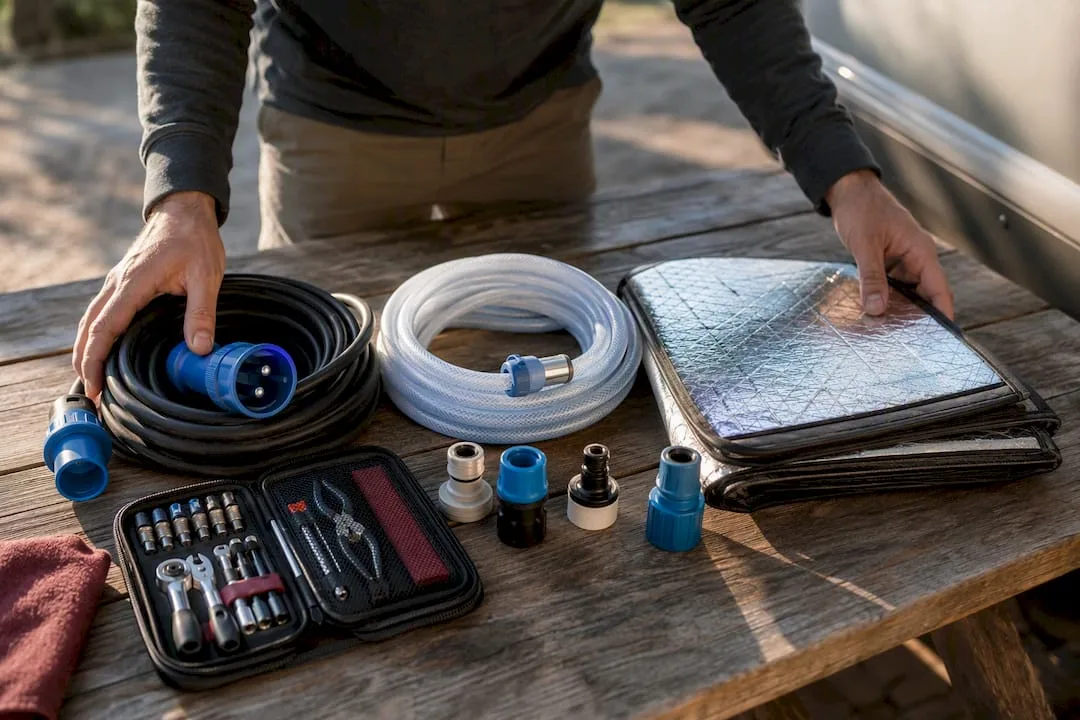
The basic equipment is similar regardless of the season: an electrical hookup cable (at least 15 metres, because campsite and service-area sockets are not always right next to the vehicle), a fresh-water hose, a set of adapters for different connection types and a basic toolkit for minor repairs.
In summer, useful additional equipment includes a windscreen sunshade, window fly screens and an extra cool box, as temperatures in the Vipava Valley or along the coast can easily exceed 30°C. Winter is a different story:
winter tyres are required in Slovenia from mid-November to the end of March, and you also need a reliable heating system and well-insulated sleeping areas. Otherwise, a night in the mountains can quickly become an uncomfortable experience.
When parking overnight, especially at quieter or less populated stops, it is sensible to lock the vehicle and keep valuable equipment such as bicycles and electronics out of sight. Slovenia is generally considered a safe country, but a campervan loaded with expensive outdoor equipment is still more visible than an ordinary passenger car.
A short checklist to go through before every departure:
- Electrical hookup cable, fresh-water hose and connection adapters.
- Winter tyres and snow chains if travelling between November and March.
- Sunshades and fly screens for hot summer days.
- Basic toolkit and spare keys for your equipment.
Which roads are challenging and when to avoid them
Some of Slovenia’s most beautiful roads are also among the most challenging for campervan travellers. The Vršič Pass, Mangart Road and Solčava Panoramic Road are narrow, winding and
often without protective guardrails. Driving them in a larger vehicle requires a steady hand and a good understanding of your campervan’s dimensions.
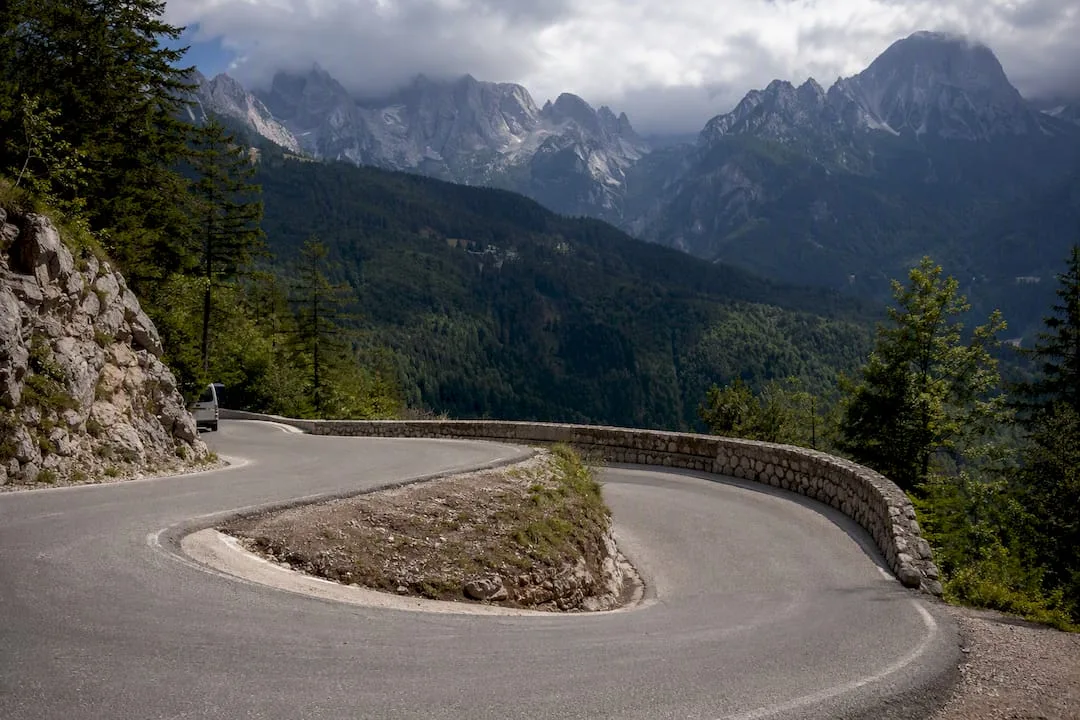
The Vršič Pass is generally closed in winter because of snow and icy conditions and normally reopens in spring when conditions allow. Before choosing any of these mountain roads, check your vehicle’s width against the road conditions. Some sections of the Vršič route are particularly narrow, which can make passing an oncoming bus or truck challenging in a longer campervan.
Weather information is essential here.
ARSO provides local forecasts and warnings for storms and snow in the mountains, while the Norwegian Yr service often provides detailed short-term forecasts for smaller and less well-known locations. Before setting off on a panoramic mountain road, check the latest forecast, as conditions in the Julian Alps can change in less than an hour.
Roads such as the Vršič Pass and Mangart Road are narrow and may have limited protection, so always check your vehicle’s dimensions and the current weather conditions before driving.
A practical tip for driving a campervan in the mountains: use a lower gear when descending to reduce brake load, and avoid meeting other vehicles on the narrowest sections whenever you can anticipate the situation in advance.
How to plan your campervan road trip in five steps
Planning does not have to be complicated if you work through the basics in order rather than trying to organise everything during the final week before departure.
- Choose a region or combination of regions. Combining the Alps and the coast requires at least five days, while one region, such as the Soča Valley, can easily fill a weekend.
- Decide how long you want to travel. For first-time campervan travellers, a slower pace with several quality stops each week is generally more enjoyable than moving to a new location every day.
- Book key overnight stops in advance. During the high season, especially July and August, popular campsites around Lake Bled and the coast can fill up quickly, so booking one or two weeks ahead is worthwhile.
- Check the vehicle and documents. The motorway vignette, DarsGo device if required, insurance and service documentation should all be arranged before pickup.
- Download useful travel apps. Google Maps for basic navigation, Park4Night and CamperContact for overnight stops, and Komoot for hiking and cycling routes along your journey.
Expert tip: If you are new to driving a campervan, spend an hour taking a test drive around town before setting off on a longer journey. Parking, turning and judging the vehicle’s height (tunnels, low branches and car parks) are things you would rather learn on familiar roads than on a narrow mountain route.
What to do in case of a breakdown or emergency on the road
Even a well-prepared campervan can occasionally develop a problem, so it is useful to know in advance who to contact. Most campervan rental providers in Slovenia, including Campervan.si, offer 24-hour roadside assistance. If something goes wrong, your first call should normally be the assistance number provided at vehicle pickup rather than randomly looking for the nearest mechanic.
For minor repairs such as a tyre change or battery problem, larger cities including Ljubljana, Maribor and Celje have vehicle and campervan service centres. You can find them through online searches or via your rental provider’s emergency contact number. For more serious breakdowns on the road, it is sensible to use a professional roadside recovery service. In Slovenia, AMZS and other roadside assistance providers operate 24/7.
Before setting off, save your rental provider’s roadside assistance number and, where possible, identify a suitable service centre near the main stops on your route. On longer itineraries, for example towards Koroška or Bela Krajina, service centres are less densely distributed than in central Slovenia, so this small amount of preparation can save considerable stress.
What every first-time campervan traveller in Slovenia should know
The biggest mistake I notice among first-time campervan travellers is not choosing the wrong route, but choosing the wrong pace. People arrive with the mindset of a traditional car holiday, where you might drive 300 kilometres every day and visit three different places. With a campervan, this simply does not work as well because every stop requires time for parking, setting up and getting oriented.
Slovenia rewards slow travel. A day when you stay in one place for longer will usually create better memories than a day when you cover the most kilometres. I have seen this repeatedly with guests who rented a campervan from us in Ljubljana for the first time: those who spent an extra day beside the Soča instead of rushing towards the next destination were visibly more satisfied when they returned the vehicle.
Another factor that travellers often underestimate is choosing a vehicle based on the roads you plan to drive, not simply the number of beds. A more compact model such as the Ford Transit Nugget Plus can feel more relaxed on narrow mountain roads than a larger Mercedes V Marco Polo, even though both offer a comfortable interior. When does it make sense to rent from a local provider rather than plan everything independently? When you want specific, experience-based advice about which roads are suitable for your vehicle, rather than only general information from an online article.
— Rok
Campervan.si: campervan rental for your Slovenia road trip
Instead of taking a chance on an unfamiliar vehicle or an uncertain rental arrangement, you can start your entire Slovenia, Alps and Balkans road trip from a trusted campervan rental provider in Ljubljana. Campervan.si offers two proven models: the
Mercedes V Marco Polo for travellers who value space and comfort, and the
Ford Transit Nugget Plus for those looking for a more compact campervan that is easier to handle on narrow mountain roads.
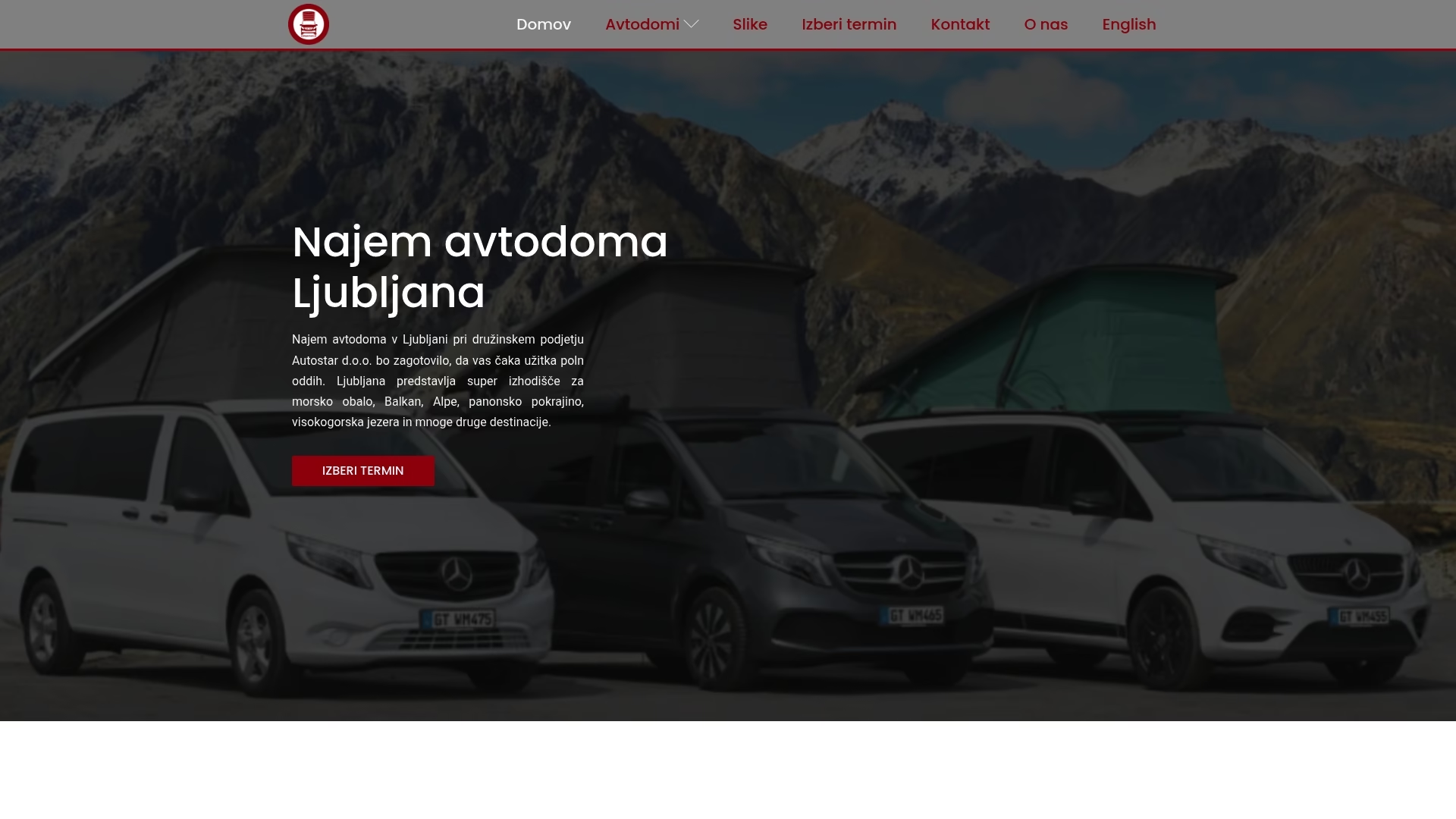
Both models feature a kitchen, fixed toilet and sleeping space for several people, meaning you do not necessarily have to rely on additional accommodation if the weather changes. Basic insurance and 24/7 roadside assistance are included, while pickup takes place in Ljubljana, conveniently located just over an hour from Bled and around two hours from the Slovenian coast or the Soča Valley. In addition to the vehicle, you receive practical route advice tailored to the season and your interests rather than generic recommendations from a brochure.
Because summer dates can fill quickly during the high season, it is worth booking several weeks in advance. Check available dates and campervan models on
Campervan.si and secure your vehicle for your next
Slovenia campervan road trip.
Sources
For planning your own campervan road trip, prepare the following tools in addition to the advice above: Google Maps for basic navigation, Park4Night and CamperContact for finding overnight stops, Komoot for hiking and cycling routes, and PlugShare if you are travelling with an electric vehicle and need charging stations. For mountain weather conditions, check ARSO, while for motorway tolls and road charges, use the official DARS information on the vignette and DarsGo system.
Additional planning information can also be found in the Campervan.si guides, including
overnight stays with a campervan in Slovenia,
campervan camping equipment and
planning a campervan road trip. Because campsite prices, opening hours and road-toll regulations can change, always check the latest information with official sources before departure rather than relying solely on older online articles.
Recommended