Yes — exploring the Dolomites with campervan is not only possible, but it is one of the best ways to experience this Alpine region. The reason is simple: the
UNESCO World Heritage Site with highlights such as Tre Cime, Marmolada and the Sella mountain range offers excellent campervan infrastructure, well-organised campsites and motorhome parking areas, short distances between attractions, and mountain roads that are — with the right vehicle — completely manageable. From Ljubljana to the heart of the Dolomites takes less than three hours, meaning you can already be parked next to your first spectacular viewpoint on Friday afternoon.
Three steps to get started:
- Choose your vehicle according to your group size: for couples or smaller groups, a campervan (such as the Mercedes V Marco Polo or Ford Transit Nugget Plus) is ideal; for families with children, a larger motorhome with separate sleeping areas may be more suitable.
- Book your first night in advance: campsites and campervan parking areas (PZA) near popular locations such as Lago di Braies fill up quickly. Online reservations are mandatory at some locations.
- Download Park4Night and Campercontact before departure and save maps for offline use, as mobile signal on mountain passes is not always reliable.
Table of Contents
Which Dolomites itinerary suits your travel style?
The Dolomites are perfect for
5–7 day campervan trips, but they can also be explored efficiently in just three days. Below are three suggested itineraries, each designed for a different travel pace.
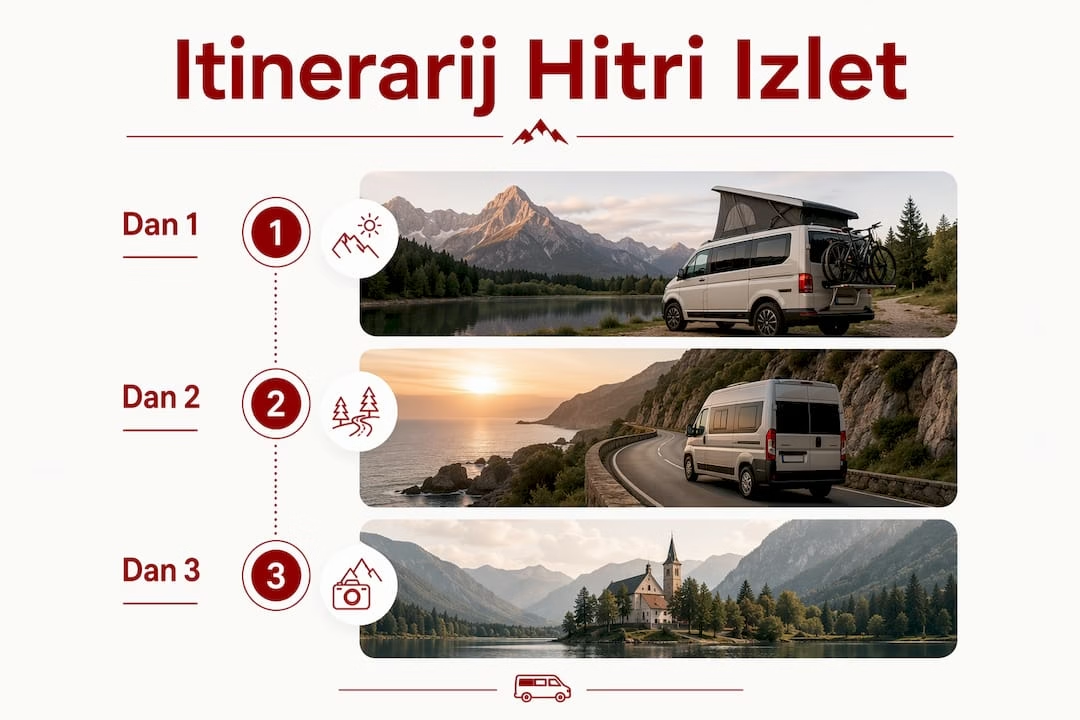
Quick trip: 3 days
| Day |
Stops |
Driving time |
Suggested overnight stay |
| 1 |
Ljubljana → Cortina d’Ampezzo → Lago di Braies |
~3 hours |
Camping Olympia, Braies |
| 2 |
Tre Cime di Lavaredo (circular hike, 2.5 hours) → Misurina |
— |
Campervan parking area at Lake Misurina |
| 3 |
Passo Tre Cime → Dobbiaco → Ljubljana |
~3 hours |
— |
Note: Parking at Lago di Braies requires an online reservation and entrance fee payment — without it, security staff will turn you away at the entrance.
Classic one-week itinerary: 7 days
| Day |
Stops |
Driving time |
Suggested overnight stay |
| 1 |
Ljubljana → Bovec → Predil Pass → Cortina |
less than 3 hours |
Camping Cortina, Fiames |
| 2 |
Passo Falzarego → Cinque Torri → Passo Pordoi |
— |
PZA Passo Pordoi |
| 3 |
Sella Ronda (cycling or driving route) → Ortisei |
~2 hours |
Camping Seiser Alm |
| 4 |
Val Gardena → Seceda cable car → Bressanone |
~1 hour |
Camping Löwenhof |
| 5 |
Lago di Braies → Tre Cime |
~1 hour |
Camping Olympia |
| 6 |
Misurina → Lago di Sorapis (3-hour hike) |
~30 min |
PZA Misurina |
| 7 |
Dobbiaco → Ljubljana |
~2.5 hours |
— |
Slow-paced family week
Families travelling with children need a different rhythm: fewer mountain passes, more time by the water and shorter hikes.
- Days 1–2: Use Cortina d’Ampezzo as your base. Take a short trip to Lago di Ghedina (suitable for swimming), then enjoy an evening at a campsite with a playground.
- Days 3–4: Dobbiaco and Lago di Dobbiaco. The cycling path along the Drava River is flat, 10 km long and suitable for children from around 5 years old.
- Days 5–6: Ortisei and Val Gardena. Take the cable car to Seceda, enjoy a short mountain trail to a viewpoint (around 1 hour walking), then spend the afternoon exploring the village.
- Day 7: Slow return via Predil Pass or Vršič Pass.
Expert tip: Experienced campervan travellers recommend planning no more than one “major” attraction per day and keeping the afternoon flexible. Spontaneous stops along the route are often the best part of the journey.
Where to stay overnight: campsites, parking areas and wild camping rules
The Dolomites have a well-developed network of campsites and campervan parking areas (PZA), but capacity is limited at the most popular locations. Wild camping is strictly controlled and fined in many areas —
official parking areas and campsites are the only reliable and responsible choice.
Recommended campsites and campervan parking areas:
- Camping Olympia (Braies/Niederdorf): accepts campervans up to 8 m, with electricity connections, sanitary facilities and a location close to Lago di Braies. Reservation recommended from June to August.
- Camping Cortina Fiames (Cortina d’Ampezzo): a larger campsite with full services, suitable for longer stays and an excellent base for Cinque Torri and Falzarego.
- PZA Passo Pordoi (2,239 m): a smaller campervan parking area directly at the mountain pass, without hookups, but offering views that few campsites can match. Suitable for vehicles up to 7 m.
- Camping Seiser Alm (Ortisei/Kastelruth): one of the larger campsites in the region, suitable for families and with easy access to cable cars.
- PZA Misurina: a small parking area by the lake, without reservations, but with limited spaces — arrive before 09:00.
About wild camping: In the Dolomites, Italian legislation prohibits camping outside designated areas within protected zones. A fine is a realistic possibility, not just a theoretical one. In addition, some local farmers near popular viewpoints charge access fees — a response to overtourism, which has become a serious issue in recent years.
Expert tip: Campercontact provides more detailed technical information about PZA locations (height restrictions, vehicle length, available services), while Park4Night offers better user reviews and real-life photos. Use both.
How to safely drive mountain passes and roads in the Dolomites
Mountain roads in the Dolomites are both spectacular and challenging. Most mountain passes are paved and well maintained, but narrow hairpin bends require an adapted driving style and — most importantly — correctly configured navigation.
Most important mountain passes:
- Passo Pordoi (2,239 m): one of the most important passes in the Dolomites, suitable for campervans up to 7.5 m. Open from May to November depending on snow conditions.
- Passo Falzarego (2,105 m): access point for Cinque Torri and Lagazuoi, with a generally good road but narrower sections near the summit.
- Sella Ronda (circular route across four passes: Gardena, Campolongo, Pordoi and Sella): suitable for campervans up to 6.5 m; more demanding for larger motorhomes — check vehicle dimensions before departure.
- Access to Tre Cime (Passo Tre Cime, 2,333 m): the road requires payment of a toll (for cars and campervans) and has height restrictions on some sections. Check current restrictions before visiting.
Navigation without your vehicle dimensions entered may take you onto roads that are physically unsuitable for campervans.
Set your vehicle height, width and length in Google Maps or Sygic before each driving day — this is not optional, it is a safety measure.
Parking near attractions: Most popular locations have paid parking areas with height restrictions (often 2.0–2.5 m). Campervans higher than 2.8 m may need to use alternative parking areas or nearby PZA locations and continue by foot or bicycle.
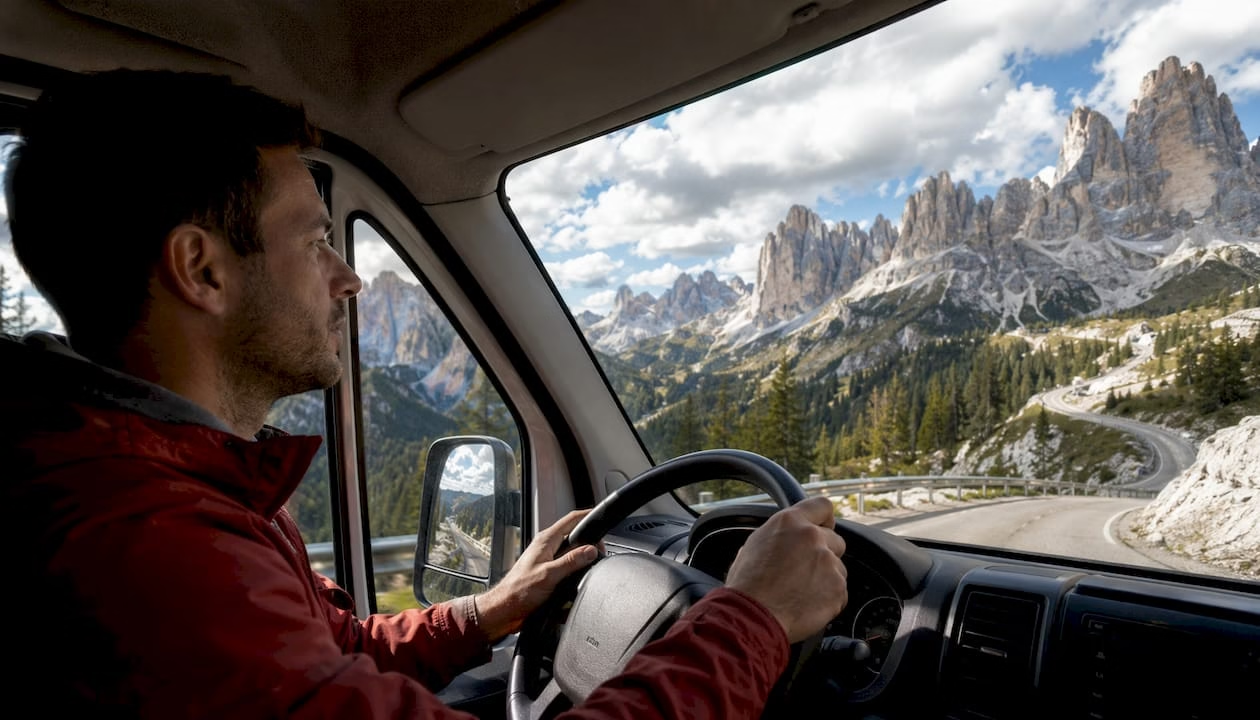 Expert tip: On narrow hairpin bends, the vehicle travelling uphill has priority. Move into a passing area early — do not wait until another vehicle forces you into a difficult manoeuvre.
Where to service your campervan: water, sanitation, electricity and fuel
Managing supplies is part of everyday campervan travel. In the Dolomites, service points are spread out well enough that, with a little planning, you will rarely run out of fresh water or end up with a full waste water tank.
| Service |
Where to find it |
Notes |
| Fresh water |
Campsites, PZA locations marked with “acqua”, some petrol stations |
Fill the tank only halfway if possible — every litre adds weight |
| Grey water disposal |
Campsites, PZA locations marked with “scarico acque grigie” |
Always dispose of waste water at designated locations, never in nature |
| Black water (chemical toilet) |
Campsites marked with “scarico WC chimico” or “cassette WC” |
Less common at basic PZA locations without services |
| Electricity connection |
Campsites marked with “EHU” or “corrente elettrica” |
Most campsites provide 6 A connections |
| LPG (liquefied petroleum gas) |
Agip and Eni petrol stations, some IP stations |
Check connector compatibility for Italy |

Park4Night and Campercontact offer filters for all these services — before leaving a campsite, find your next service point and save it for offline access. Opening hours at PZA service points are often limited (08:00–20:00), although some paid facilities operate 24 hours a day.
Which vehicle to choose and how to pack it efficiently?
Mercedes V Marco Polo or Ford Transit Nugget Plus?
For the mountain roads of the Dolomites, both models are excellent choices precisely because they remain below critical size limits. The
Mercedes V Marco Polo is compact, with a height below 2.0 m in its standard version, which means access to many underground parking areas and easier passage through lower tunnels. It is equipped with a compact kitchen area, sleeping space for two people and everything needed for short to medium-length trips.
The
Ford Transit Nugget Plus offers slightly more space, a fixed bed and a toilet — which makes a significant difference in comfort during a week-long trip for two adults or a couple with a child. Its height is slightly greater than the Marco Polo, but it remains below 2.5 m, making it suitable for most mountain pass roads.
A larger motorhome (over 7 m long and over 3 m high) is possible in the Dolomites, but requires more planning: some mountain passes and parking areas are inaccessible, and manoeuvring on hairpin bends becomes more demanding.
Essential packing checklist
- Documents: driving licence, passport or ID card, insurance documents, rental agreement, European Health Insurance Card.
- Safety equipment: warning triangle, reflective vests (for all passengers), fire extinguisher, first aid kit, spare bulb.
- Navigation: smartphone with Google Maps or Sygic installed (vehicle dimensions entered), plus a physical Dolomites map as a backup.
- Water and food: supplies for at least 2 days, lightweight hiking food, thermos for coffee at mountain passes.
- Clothing (summer): lightweight hiking gear, rain jacket, warmer layer for evenings (at 2,000 m it can be cold even in July).
- Clothing (autumn/spring): warm jacket, gloves, cycling helmet.
- Activities: hiking boots, cycling helmet, swimwear for lakes, day-hiking backpack.
- Campervan equipment: electricity adapter (Type L for Italy), toilet chemicals, rubbish bags, cleaning supplies.
Expert tip: Store heavy items (tools, food supplies, drinks) as low as possible and between the axles — your campervan will handle mountain bends much more safely and comfortably.
Which apps and maps are essential for a Dolomites campervan trip?
Two apps cover most practical needs on the road.
Park4Night is one of the best tools for finding campsites, campervan parking areas and service points, including user reviews and real-life photos. Campercontact is better for technical details: vehicle size restrictions, available services and prices. Both apps support offline use, which is essential in the mountains — mobile signal is often weak or unavailable at Passo Pordoi and Tre Cime.
For navigation, use Google Maps with your vehicle dimensions entered or Sygic Truck/Camper. Sygic offers better support for vehicle dimensions, while Google Maps is generally more updated regarding road closures.
Useful online resources before departure:
- Viamichelin.com: check toll costs and estimated travel times for campervans.
- Provincia di Bolzano / Alto Adige (provincia.bz.it): official information about road closures and seasonal restrictions.
- Dolomiti.it: tourism portal with current information about accessibility and attractions.
Expert tip: Before every driving day, download offline maps of the area in Park4Night and Sygic. Above 2,000 m altitude, do not rely on mobile internet for real-time navigation.
How much does one week in the Dolomites by campervan cost?
A realistic estimate for one week of travel (excluding vehicle rental):
- Campsites/PZA: €15–35 per night, depending on location and services. A fully equipped campsite in Cortina will cost more than a basic parking area at a mountain pass.
- Fuel: a campervan typically consumes 10–14 l/100 km. For 800–1,000 km total distance, expect around €120–180.
- LPG: around €15–25 for one week of cooking and hot water usage.
- Tolls: Italy has motorway tolls. For the Ljubljana–Cortina route and return, expect approximately €20–35 depending on the chosen route.
- Parking fees and entrance charges: Lago di Braies requires a parking fee (advance reservation required), and Tre Cime has an access toll. Expect around €20–40 per week.
- Food and drinks: cooking in your campervan significantly reduces costs compared with hotels — €30–50 per person per day is a realistic budget combining self-catering and occasional restaurant meals.
To reduce costs, visit in June or September, when campsites are less crowded and prices are usually lower than in July and August. Evening stays at PZA locations are often cheaper than campsites with full services.
Warning: The parking area at Lago di Braies is one of the most expensive and fastest-filling locations in the region. Without an online reservation, you risk being refused entry.
When is the best time to visit and how to stay safe in the mountains?
Seasonal overview:
- July–August: the greatest accessibility (all roads open, all campsites operating), but also the highest number of visitors. Lago di Braies and Tre Cime can become extremely crowded during this period.
- June and September: the ideal balance between accessibility and tranquillity. Most mountain passes are open, campsites are operating and crowds are significantly smaller.
- October–May: many roads and campsites are closed. Passo Pordoi and access to Tre Cime are often closed from November until May, depending on snow conditions. Winter campervan travel in the Dolomites requires winter tyres, experience with snowy conditions and daily road condition checks.
Mountain weather changes quickly. A sunny morning followed by an afternoon thunderstorm is a typical summer pattern. Check the weather forecast every evening for the following day and plan hikes for the morning hours.
Temperature differences can be significant: 28 °C in the valley, 12 °C at a mountain pass. A warm layer of clothing is essential, not optional.
Expert tip: The Meteo.it app or yr.no (Norwegian weather service) often provide more accurate mountain forecasts than general weather applications. Enable thunderstorm alerts.
Printable packing checklist before departure
Essentials (always):
- Documents: driving licence, passport, insurance policy, rental agreement
- Equipment: spare bulb, warning triangle, reflective vests, fire extinguisher
- First aid: first aid kit, prescription medication, sunscreen
- Campervan equipment: Type L electricity adapter, toilet chemicals, rubbish bags
Summer additions:
- Light hiking clothes, sandals, swimwear
- Rain jacket and warmer evening layer
- Hiking boots with ankle support
- Backpack (20–30 l) for day hikes
Winter/autumn additions:
- Winter jacket, gloves, hat
- Winter tyres (mandatory in snowy conditions)
- Snow shovel, traction sand
For activities:
- Cycling helmet and bike lock
- Trekking poles for hikes
- Swimwear and towel for lakes
- Camera or tripod for sunrise viewpoints
Which places are absolute must-sees?
| Location |
Why it is a must-see |
Campervan note |
| Lago di Braies |
The most famous Alpine lake in the Dolomites, with unforgettable morning reflections |
Advance parking reservation required |
| Tre Cime di Lavaredo |
Iconic mountain silhouette, circular hike around 2.5 hours |
Access toll required, campervan parking available near the starting point |
| Passo Pordoi |
Panoramic views across the Dolomites, cable car to Sass Pordoi |
PZA directly at the mountain pass |
| Val Gardena |
Ladin culture, Seceda cable car, cycling routes |
Large campsites available around Ortisei |
| Lago di Sorapis |
Famous turquoise water, approximately 3-hour hike |
Limited parking, arrive early |
| Cinque Torri |
Short hike with spectacular views towards Marmolada |
Accessible for campervans up to 7 m |
| Lago di Misurina |
Peaceful mountain lake with cycling route around the shore |
PZA available near the lake |
| Seceda viewpoint |
One of the most photographed views over Val Gardena and the Geisler peaks |
Cable car access from Ortisei |
| Passo Falzarego |
Historic World War I battlefield area and Lagazuoi museum |
Good road access, PZA near the summit |
| Dobbiaco |
Excellent starting point for cycling along the Drava River |
Campsite with full facilities |
For fewer crowds: arrive before 08:00 or after 17:00 at Lago di Braies and Tre Cime. Tourist pressure at these two locations is highest between 10:00 and 15:00.
Campervan: pick-up in Ljubljana and what you get with the vehicle
Campervan offers campervan rentals with
pick-up in Ljubljana — meaning Slovenian travellers can reach the Dolomites without flying or travelling to a foreign rental company. The distance between Ljubljana and Cortina d’Ampezzo is less than 3 hours.
Two models are available. The Mercedes V Marco Polo is a compact campervan, ideal for couples or two adults travelling with an older child: a kitchen area, sleeping space and essential camping equipment. Its height below 2.0 m provides access to parking areas that are unavailable to taller motorhomes. The Ford Transit Nugget Plus is slightly larger, with a fixed bed and toilet — for a week-long Dolomites adventure, this can be the difference between comfort and compromise.
Every Campervan rental includes basic insurance and 24/7 assistance. For first-time renters this is essential: if a technical problem occurs on Passo Pordoi, you are not left on your own.
During pick-up, check the vehicle dimensions together with the team and enter them into your navigation immediately. Required documents: a valid driving licence (category B is sufficient for both models), passport or ID card and a payment card for the security deposit. Read the rental conditions in advance on the
terms and conditions page.
For mountain roads, the recommendation is clear: a smaller campervan is the better choice for beginners and for exploring the Dolomites. Easier manoeuvring, fewer restrictions on mountain passes and lower parking costs are advantages you will notice every day on the road.
Key takeaways
With the right vehicle, an advance reservation for your first night and downloaded offline maps, exploring the Dolomites by campervan is not only possible but an incredibly rewarding experience — whether you have a weekend or a full week.
| Topic |
Details |
| First-night reservation |
Lago di Braies and Tre Cime require advance online parking reservations. |
| Vehicle dimensions |
Enter your vehicle height, width and length into your navigation system before every mountain driving day. |
| Best season |
June and September offer the best balance between accessible roads and fewer crowds. |
| Essential apps |
Park4Night for campsite reviews, Campercontact for technical PZA information — both available offline. |
| Campervan rental |
Pick-up in Ljubljana, Mercedes V Marco Polo and Ford Transit Nugget Plus models, with 24/7 assistance. |
Why a slower pace makes the difference
Travelling through the Dolomites by campervan may look like a logistical challenge on paper: mountain passes, vehicle dimensions, reservations and fuel planning. In reality, however, the campervan is exactly what encourages a slower pace — and that is its greatest advantage.
When there is no hotel waiting for you, you can stop at a viewpoint that is not listed in any guidebook. When you make coffee at a 2,200 m mountain pass and do not have to rush anywhere, you experience the Dolomites differently than during a one-day bus excursion. This freedom is real, not just a marketing phrase.
What many travellers underestimate is that a campervan requires adapting your pace from the very first day. Those who try to fit ten mountain passes and six lakes into one week often return exhausted. Those who focus on one major highlight per day and leave the afternoon flexible return with unforgettable memories.
Experienced travellers understand this and recommend limiting daily objectives — not as a compromise, but as the key to a better experience.
The Dolomites are large enough to come back again. You do not need to see everything in one trip.
Campervan: book your Ljubljana pick-up and drive to the Dolomites
Local pick-up in Ljubljana means you can reach the Dolomites without flights or foreign rental companies. Campervan offers two models that are ideally suited for mountain roads: the Mercedes V Marco Polo for couples and smaller groups, and the Ford Transit Nugget Plus for travellers who need a fixed bed and toilet for longer trips. Both include basic insurance and 24/7 assistance — an important advantage when taking your first Alpine campervan journey.
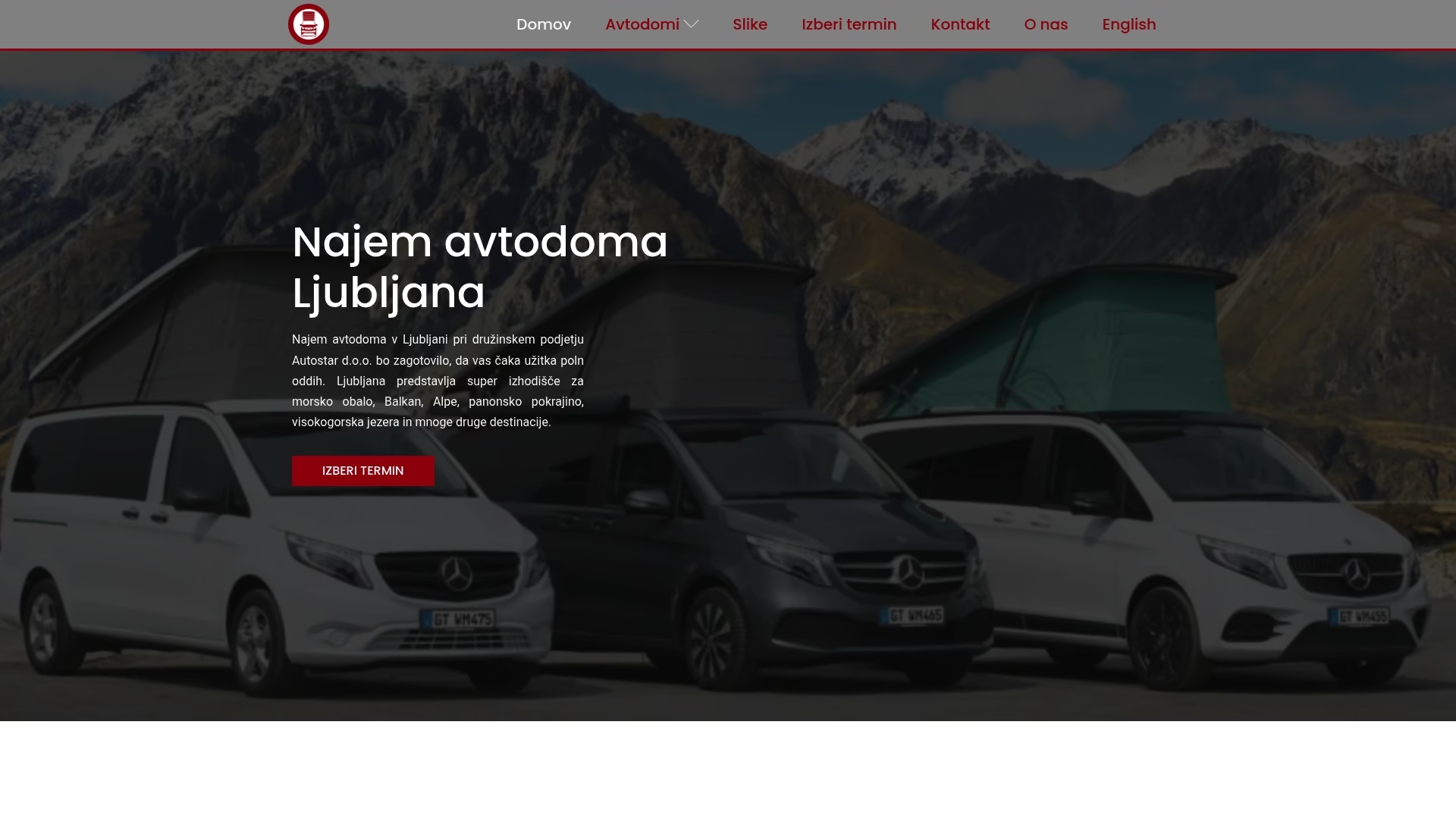
Reservations are completed online, and pick-up in Ljubljana is available at an agreed time. For questions about models, vehicle dimensions or suggested routes, contact the team via the
contact page. Check availability for your travel dates on the
main Campervan website and start planning your Dolomites adventure.
Useful resources for planning and checking information on the road
Before departure and during your journey, these resources are reliable for checking current information:
- Park4Night: finding campsites, campervan parking areas and service points with reviews and real-life photos; works offline.
- Campercontact (campercontact.com): technical information about PZA locations (dimensions, services and prices); recommended for checking height restrictions.
- Provincia di Bolzano (provincia.bz.it): official information about road closures, seasonal restrictions and traffic conditions in South Tyrol.
- Dolomiti.it: tourism portal with current information about accessibility, events and weather conditions.
- Meteo.it or yr.no: mountain weather forecasts for planning hikes and mountain pass crossings.
- Viamichelin.com: calculation of toll costs and estimated travel times for larger vehicles.
- Campervan news: latest information about vehicles, offers and travel tips from Ljubljana.
Before every visit, check the current access restrictions for Lago di Braies and Tre Cime — reservation systems, access rules and fees can change seasonally. Respecting local regulations and using designated parking areas is essential to ensure that these beautiful locations remain accessible for future visitors.
Recommended