20% off rentals until the end of March 2027 with code SNOW20•20% off rentals until the end of March 2027 with code SNOW20•20% off rentals until the end of March 2027 with code SNOW20•20% off rentals until the end of March 2027 with code SNOW20•
20% off rentals until the end of March 2027 with code SNOW20•20% off rentals until the end of March 2027 with code SNOW20•20% off rentals until the end of March 2027 with code SNOW20•20% off rentals until the end of March 2027 with code SNOW20•
Campervan travel with a dog: a guide to a carefree trip around Slovenia
October 22, 2026
“`html
Yes, with the right preparation, you can enjoy a worry-free campervan trip with your dog in Slovenia. The three most important steps are to ensure your dog is microchipped and vaccinated against rabies, check the rules and any extra charges for dogs at your chosen campsite, and start preparing at least 2 to 3 months before departure. Once the paperwork is in order and your accommodation is confirmed, you are ready to go.
In brief:
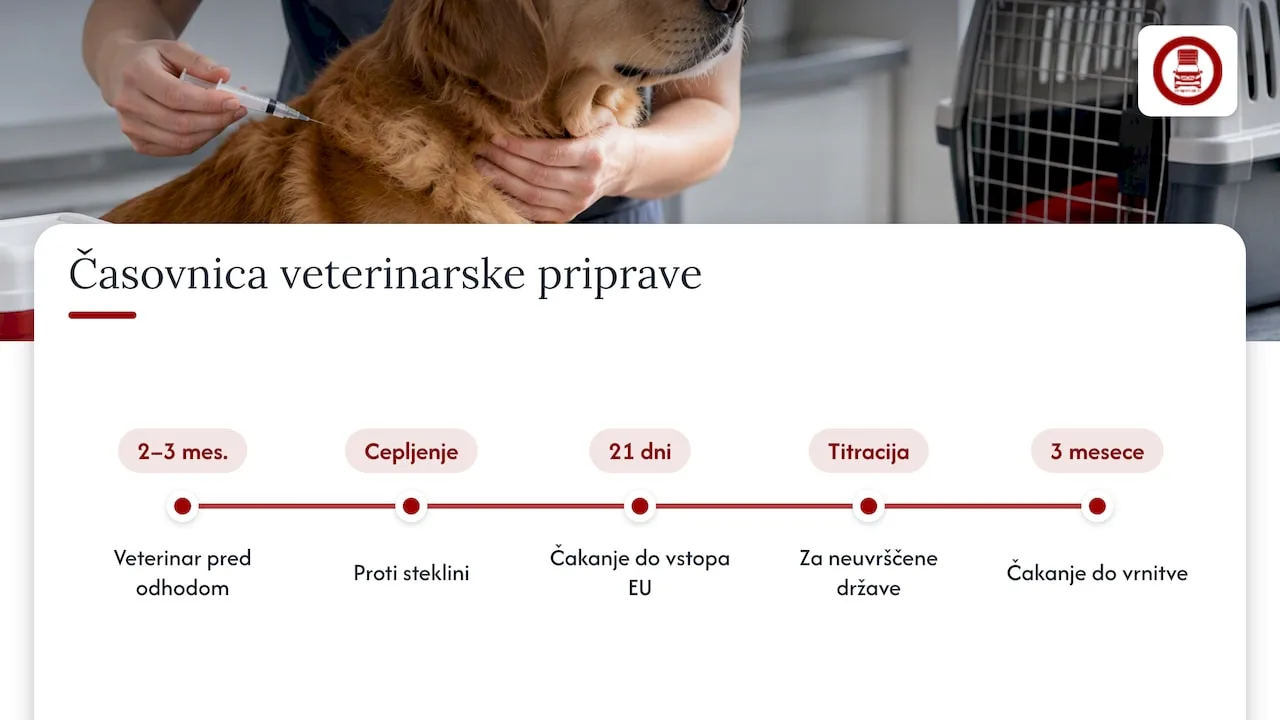
After rabies vaccination, wait at least 21 days before entering the EU. If you have visited a country outside Annex II, an antibody test and a three-month waiting period are required.
More than 150 Slovenian motorhome stopovers offer water, electricity and sanitary facilities, but always confirm in writing which pitches allow dogs and whether an extra charge applies before booking a campsite.
Secure your dog in a travel crate or with a safety harness while driving. Never leave your dog inside a closed motorhome in the sun during stops.
Plan breaks every two to three hours, attach your dog’s lead before opening the door, and feed your dog at least two hours before travelling.
Rental rates for both models start at €125 per night for daily rentals or €110 per night for weekly rentals. Final cleaning costs €80.
Campervan
Plan your trip in a rented campervan
Check availability and explore campervan rental options in Ljubljana to plan your trip around Slovenia.
Where to stay overnight with a dog in Slovenia: campsites, organised stopovers and mobile homes
Your choice of accommodation plays a major role in how relaxed your trip with your four-legged companion will be. Slovenia offers three main options, each providing a different level of comfort for dogs and their owners.
Traditional campsites have designated pitches with electricity connections, sanitary facilities and, often, showers for dogs. Most Slovenian campsites welcome pets, but this should never be taken for granted. Organised motorhome stopovers are a simpler alternative, without entertainment facilities or swimming pools, so they are often quieter and better suited to walks in nature. Mobile homes are not intended for motorhomes, but they can be a useful alternative if you are travelling without your own vehicle and need dog-friendly accommodation nearby.
Slovenia has an extensive network of motorhome stopovers. More than 150 locations offer basic services such as water, electricity and sanitary facilities, making it easier to plan longer stops. At many stopovers, you can also stay overnight without booking in advance, which is convenient if you prefer to adapt your itinerary as you go.
Before booking, check a few specific details:
Whether dogs are allowed on all pitches or only in a designated area.
How much extra you will pay for your dog and whether the fee is charged per day or per stay.
The size of the pitch and whether there is enough space to walk your dog safely around the campervan.
Whether there are restrictions on dog breeds or the number of dogs allowed per pitch.
To find suitable places, you can use official tourism directories and motorhome-stopover maps, which often indicate facilities for dog owners, such as dog-friendly beaches or enclosed exercise areas. If you book by phone or email, keep a written confirmation of the campsite’s response, as rules can differ between the high season and the rest of the year.
For a more detailed overview of stopovers and routes around Slovenia, see our guide to planning a motorhome trip, covering popular destinations from Bled to the coast.
Documents and veterinary requirements for travelling with a dog in Europe
The legal side of travelling is just as important as choosing a campsite. Without the correct documents, your dog may not be allowed to cross the border. The basic requirements are a microchip and a European pet passport, in which your vet records all vaccination details.
Your dog must be vaccinated against rabies, and at least 21 days must pass between the vaccination and entry into an EU country. This waiting period is strict, so vaccination should not be left until the last minute.
21 days is the minimum waiting period between rabies vaccination and entry into the EU, as stated in official guidance on travelling with pets. If your trip is planned too late, this waiting period may force you to postpone your departure.
Things become more complicated if your route also takes you outside the European Union, to a country that is not listed in Annex II of Regulation (EU) No 577/2013. In that case, your dog needs a rabies antibody titration test, followed by a waiting period of at least three months before entering the EU. This is why you should plan your vet visit and paperwork at least 2 to 3 months before departure, especially if your route includes the Balkans or other destinations outside the EU.
Before setting off, it is also worth checking whether your dog has suitable health insurance or cover under your travel insurance policy, as veterinary care abroad can be expensive. Keep the documents somewhere accessible in the campervan, as they may be requested during a border check or at a campsite without prior notice.
Dog safety and comfort while travelling in a campervan
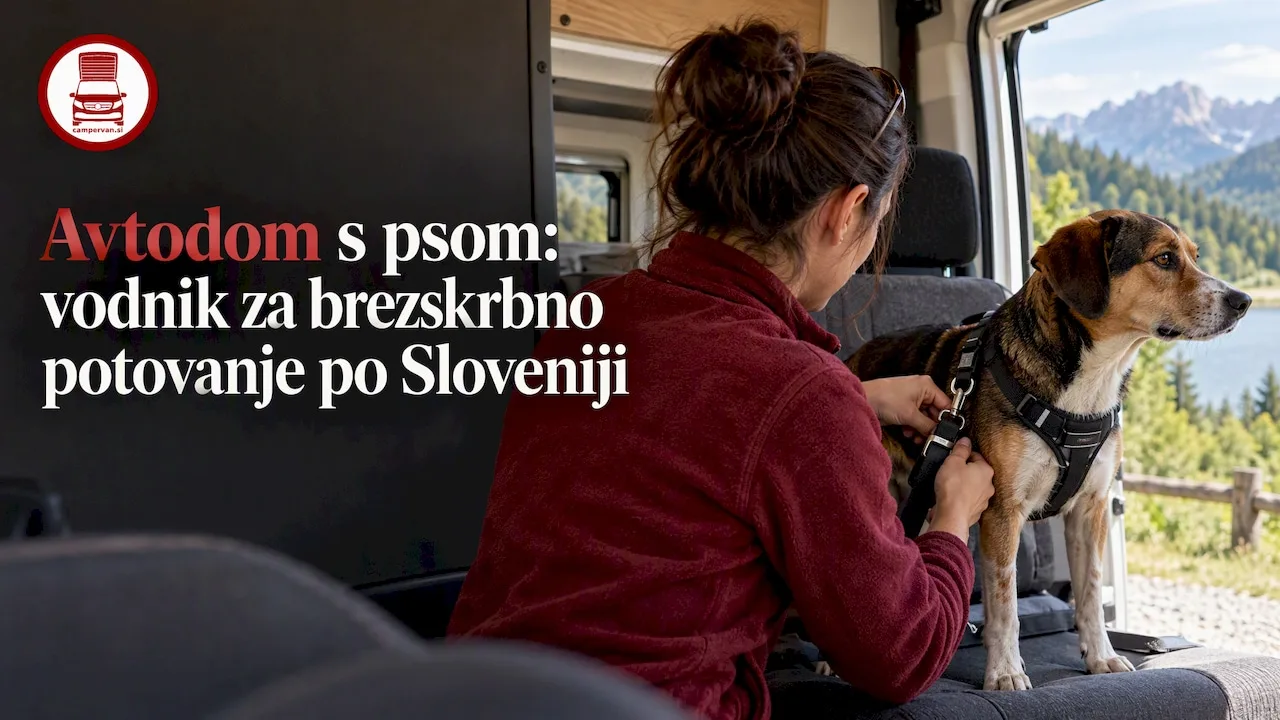
A dog in a campervan needs the same attention to safety as any other passenger. An unsecured animal can become a dangerous projectile during sudden braking. The safest practice is to use a travel crate secured to a stable surface or a safety harness attached to a seat-belt anchor. Generali recommends keeping your dog properly secured while driving, regardless of the size of the vehicle.
In summer, heat inside a closed vehicle is the greatest risk. The interior of a campervan can reach temperatures that are life-threatening to a dog within minutes. Never leave your dog alone in a closed vehicle in direct sunlight, even for a short time. When stopping, provide shade, ventilation through windows fitted with insect screens, or a working air-conditioning system.
Before every longer drive, check three things:
Whether the crate or safety harness is properly secured and cannot move during the journey.
Whether there is adequate airflow inside the vehicle, especially when stopped with the engine switched off.
Whether you have enough water and an absorbent mat in case your dog feels travel sick.
Expert tip:Place the travel crate as close to the floor as possible and away from direct sunlight through the windows, as temperatures rise fastest in those areas.
Essential equipment includes washable dog bedding, collapsible food and water bowls, a dog-specific first-aid kit, and cloths and cleaner for quick tidying after walks. These items take up little space but can prevent many inconveniences along the way.
Booking a campsite with a dog: house rules, extra charges and dog-friendly beaches
Before confirming a reservation, take a few minutes to call or email the campsite, as rules vary considerably between providers. Some allow dogs without restrictions, while others accept them only on designated pitches or impose size limits.
When booking, ask about the following:
Whether dogs are allowed on all pitches or only in a designated area.
How much extra you will pay for your dog and whether this includes access to a dog-washing shower.
Whether there are restrictions on the dog’s breed or weight.
Where the campsite has designated walking areas or off-leash exercise areas.
House rules at Slovenian campsites generally require dogs to be kept on a lead in shared areas, owners to clean up after them, and pets not to disturb other guests by barking. These rules are more than a formality: respecting them helps ensure campsites remain welcoming to dog owners in the future.
Dog-friendly beaches along the Slovenian coast are rare, but they do exist. Some lakes also allow dogs to swim in designated areas. You can find information about these locations and any seasonal restrictions through local tourism organisations or directly from the campsite, as rules often become stricter during the summer season. More campsites are also introducing designated walking routes and dog exercise areas, reflecting growing demand.
For more ideas on routes with dog-friendly stops, see our guide to a week-long motorhome trip around Slovenia.
Local experience with Campervan.si: how renting in Ljubljana makes travelling with a dog easier
When you rent a campervan in Ljubljana, we can recommend stopovers and campsites suitable for travelling with a dog and explain which questions to ask before booking accommodation. Our experience driving around Slovenia, the Balkans and the Alps can shorten your preparation time: instead of searching through forums, you get practical advice tailored to your route.
The Mercedes V Marco Polo and Ford Transit Nugget Plus both have sleeping berths for several people, a kitchen and a fixed toilet, making longer trips with a dog easier, even when you are not near public sanitary facilities. Basic insurance and 24-hour assistance are included with every rental, helping you travel with greater peace of mind if something unexpected happens on the road.
When you collect your vehicle in Ljubljana, we explain the basic equipment and answer questions about travelling with a dog, from securing a travel crate to identifying dog-friendly stopovers along your route. For readers who want a more detailed overview of the timeline and paperwork, our comprehensive guide to preparing for a trip with a dog provides additional advice to complement this article.
This combination of local knowledge and a suitably equipped vehicle allows you to focus on the journey itself, rather than on logistics that can be sorted out in advance.
Cleaning your campervan after travelling with a dog
Dog hair and lingering odours are the most common problems after spending several days in a campervan with a dog. It is best to prepare your cleaning supplies before departure rather than waiting until you return. A lint roller or pet-hair removal glove works much better than an ordinary brush, as it pulls hair directly out of the fibres of seats and bedding.
Enzyme cleaners designed specifically for pet stains and odours are effective against smells that settle into cushions and curtains. They break down organic matter rather than simply masking the odour with fragrance. Washable dog-bed covers make daily upkeep easier: you can shake them out and wash them regularly instead of cleaning the entire sleeping area.
For campervan rentals, final cleaning costs €80. You therefore do not need to worry about carrying out a full deep clean during your trip; regular tidying and removing dog hair after each stop are enough.
Walking your dog during a road trip: breaks and roadside safety
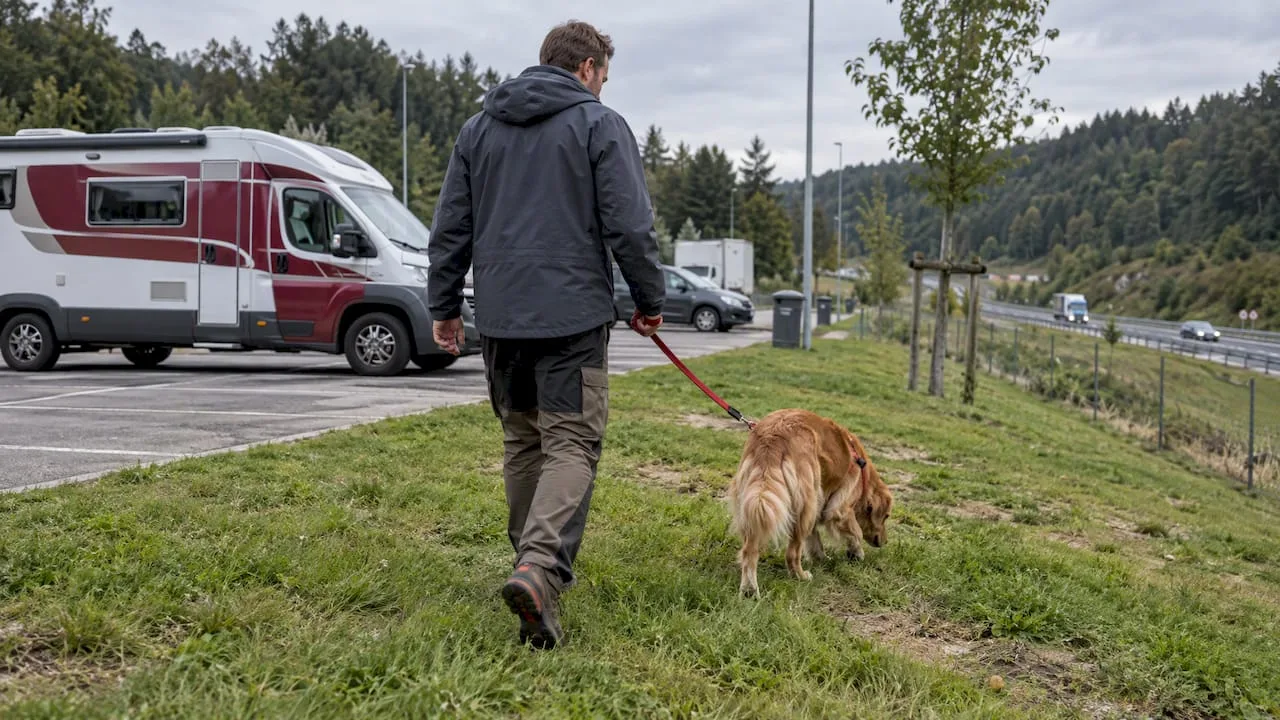
Long drives require regular breaks, as dogs, like children, need to move around and relieve themselves at least every two to three hours. Mark suitable stops on your map in advance, choosing larger rest areas or petrol stations where there is usually a grassy area away from traffic.
Whenever you get out of the campervan near a road, make sure your dog is on a lead before you open the door. Lorries and cars can move faster through rest areas than you might expect. Avoid walking right next to the road and look for the edge of the parking area or a nearby patch of grass instead.
During hot weather, plan walks for early morning or late evening, when the asphalt is cooler and less likely to burn your dog’s paw pads. Before each longer stretch of driving, check your map for the next suitable rest areas. This reduces the risk of having to look for a stop at the last minute in an unsuitable motorway location.
Campervan
Explore rental options in Ljubljana
Explore campervan rental options in Ljubljana and choose a vehicle for your planned trip around Slovenia.
A regular feeding routine helps your dog stay settled during the journey, so try to serve meals at roughly the same times as at home, even while travelling. Before a long drive, reduce the meal size or feed your dog at least two hours before departure, as a full stomach increases the risk of travel sickness.
Fresh water should always be available, especially in summer when dogs tend to drink more due to heat and stress. A collapsible water bowl that you can reach easily at every stop is more practical than a glass or rigid bowl: it takes up little space and is quick to clean.
For longer trips, bring the food your dog is used to, as sudden dietary changes during travel can cause digestive problems. If your journey lasts several days, pack a little more food than you expect to need, as smaller towns may not always stock the same dog food you buy at home.
Preparing your dog for the trip: getting used to the vehicle and practising driving
A dog that is not used to longer journeys may become restless or struggle with the movement of the vehicle. Start getting your dog accustomed to travelling a few weeks before departure, beginning with short drives around town and gradually increasing their length until your dog is comfortable with journeys of an hour or more.
Before your first long drive, check how your dog reacts to the campervan itself. The interior is different from a regular car, with more room to move around but also more objects that may shift while driving. A short visit to the vehicle before departure, with a familiar toy or blanket, can help your dog feel secure.
Physical preparation matters too, as a relaxed, pleasantly tired dog will usually cope better with several hours on the road. A longer walk or some gentle play before departure can reduce restlessness during the first few hours of the journey.
Emergency veterinary care on the road
Even with thorough preparation, unexpected health problems can occur. Before leaving, check where veterinary clinics are located along your planned route. Most larger Slovenian towns have at least one veterinary clinic with an emergency service. You can find the nearest option through local directories or by searching on a map.
In an emergency, such as heatstroke, poisoning or an injury, acting quickly is essential. Keep the contact details of emergency veterinary clinics along your route in the campervan. A basic dog first-aid kit containing antiseptic, bandages and a protective blanket can help until you reach a vet.
If you are travelling outside Slovenia, you may also find these international tips on transporting animals useful. They provide experiences from other countries to complement local advice, although official national and EU guidance remains the authoritative source for travel within Slovenia and the EU.
What to know before setting off
The biggest pitfall when travelling in a campervan with a dog is not missing equipment or paperwork, but leaving the planning too late. Many dog owners discover only a week before departure that their dog’s rabies vaccination is too recent or that their chosen campsite does not accept dogs at all.
Conventional advice often focuses on equipment and fun destinations, but pays too little attention to timing. In my view, preparing the paperwork is more important than choosing a campsite: an incorrect vaccination date can mean cancelling the entire trip, whereas an unsuitable campsite can simply be replaced with another one.
I would advise readers to check the vaccination date first and only then start looking for accommodation. It is also worth letting go of the search for the perfect campsite and choosing one that clearly confirms its dog policy in writing. Uncertainty on arrival can be more stressful than having fewer facilities.
— Rok
Book a campervan for travelling with your dog
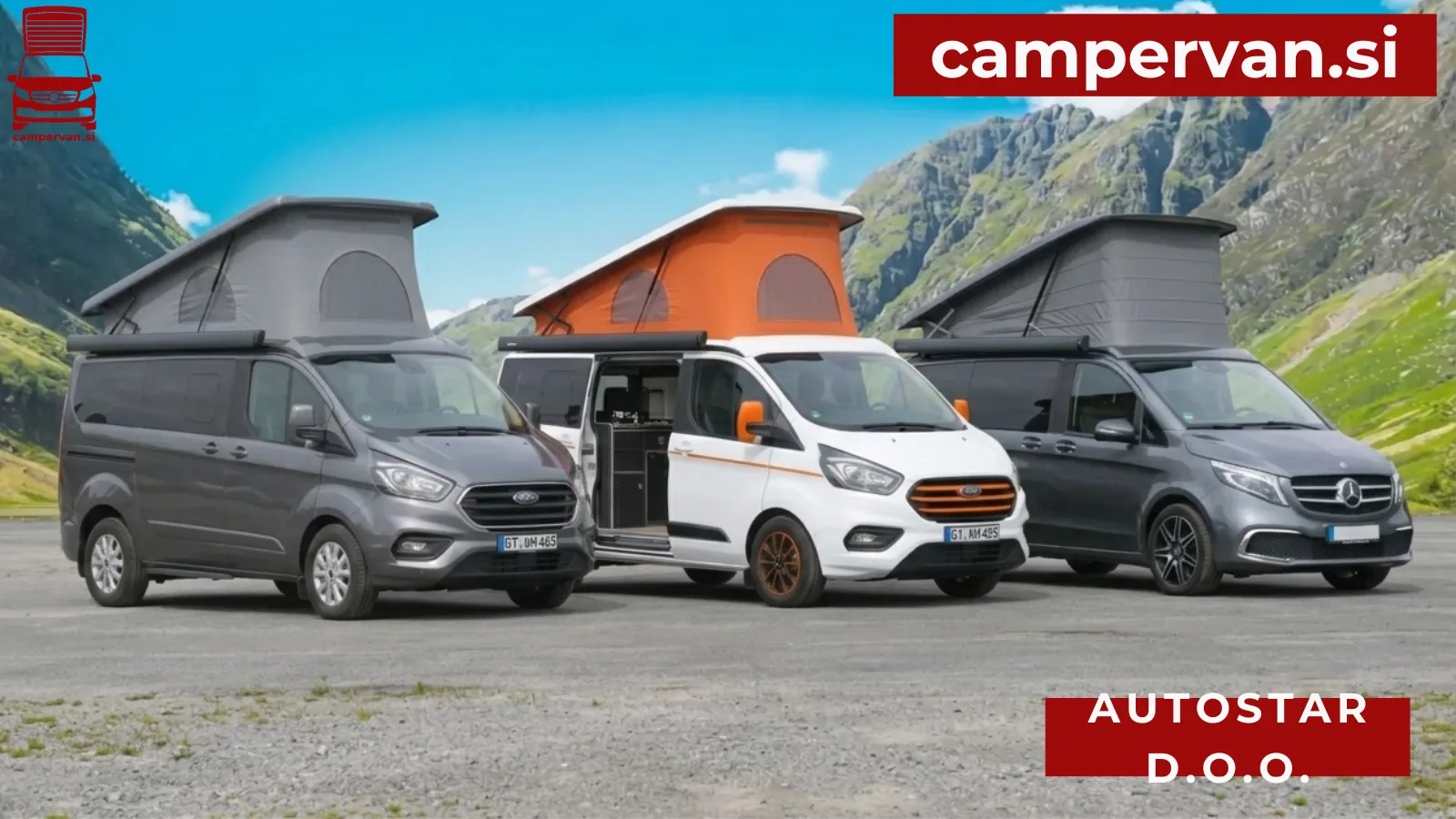
Once your documents are in order and your campsite is chosen, one final step remains: securing a vehicle with enough space for you and your dog. In Ljubljana, we offer two models for rent, the Mercedes V Marco Polo and Ford Transit Nugget Plus. Both have sleeping berths for several people, a kitchen and a fixed toilet, meaning fewer stops along the way and more comfort for the whole family.
You can choose between daily and weekly rental options.
When you collect your vehicle in Ljubljana, we can advise you on dog-friendly stopovers along your route. Basic insurance and 24-hour assistance are included with every rental. Check availability and book your campervan in good time, as summer dates are often fully booked months in advance.
Frequently asked questions
Can I take my dog in a campervan without special permission?
Yes, your dog can travel in a campervan, but it must be microchipped and have a European pet passport and a valid rabies vaccination, as required by official guidance on travelling with pets. At least 21 days must pass between vaccination and entry into the EU.
Which campsites in Slovenia accept dogs?
Most Slovenian campsites accept dogs, but restrictions may apply to pitches, breeds or extra charges. Always check the campsite’s rules directly before booking, as policies vary between providers.
How far in advance do I need to prepare my dog’s documents?
Start preparing at least 2 to 3 months before departure, especially if your route includes destinations outside the European Union. For countries outside Annex II, you must wait at least three months after the rabies antibody titration test before entering the EU.
How can I transport my dog safely while driving a campervan?
The safest option is a travel crate secured to a stable surface or a safety harness attached to a seat-belt anchor, as recommended by Generali. Never leave your dog alone inside a closed vehicle in direct sunlight.
How much does it cost to rent a campervan suitable for travelling with a dog?
Our Mercedes V Marco Polo and Ford Nugget Plus are available from €125 per night for daily rentals or €110 per night for weekly rentals. An €80 final-cleaning fee is added at the end of the rental.
 Before setting off, it is also worth checking whether your dog has suitable health insurance or cover under your travel insurance policy, as veterinary care abroad can be expensive. Keep the documents somewhere accessible in the campervan, as they may be requested during a border check or at a campsite without prior notice.
 During hot weather, plan walks for early morning or late evening, when the asphalt is cooler and less likely to burn your dog’s paw pads. Before each longer stretch of driving, check your map for the next suitable rest areas. This reduces the risk of having to look for a stop at the last minute in an unsuitable motorway location.
 You can choose between daily and weekly rental options.