How much fuel campervan consumes: real-world ranges and tips for fuel-efficient driving
October 8, 2026
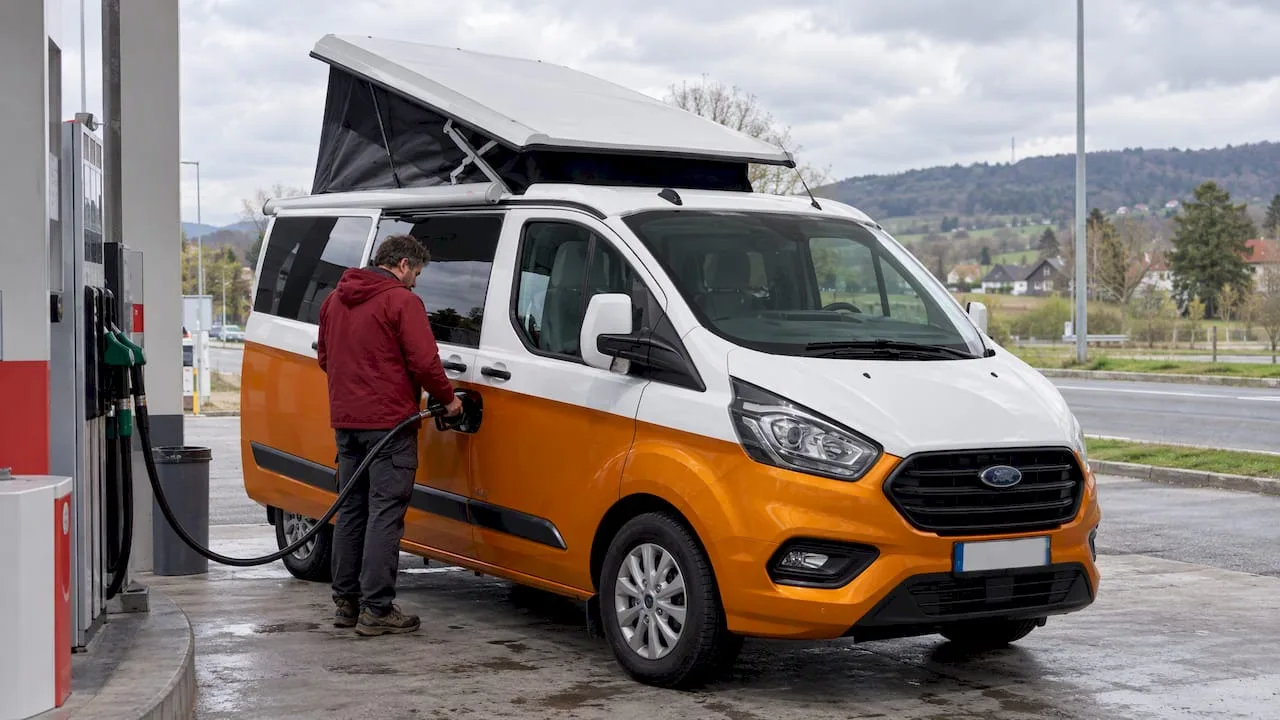
A campervan typically uses more fuel than a passenger car, mainly because of its weight and poorer aerodynamics. Differences between individual models and driving styles can be significant, so the way you drive is one of the most important factors. Below you will find realistic fuel consumption ranges, an explanation of the main causes, a practical checklist and a fuel cost calculation for travelling around Slovenia.
In brief:
Fuel consumption is significantly affected by speeds between 55 and 80 km/h and by smooth driving without sudden acceleration or braking.
Additional weight, roof boxes and underinflated tyres can increase fuel costs by as much as 10 to 25 percent.
Before your trip, it is advisable to check tyre pressure, remove unnecessary equipment and record fuel consumption to make cost planning easier.
To calculate fuel costs for a planned distance, multiply the distance by fuel consumption and the price per litre, and check current fuel prices before departure.
Campervan
Plan your trip with less uncertainty
Check available dates for campervan rental in Ljubljana and plan your trip around Slovenia with greater confidence.
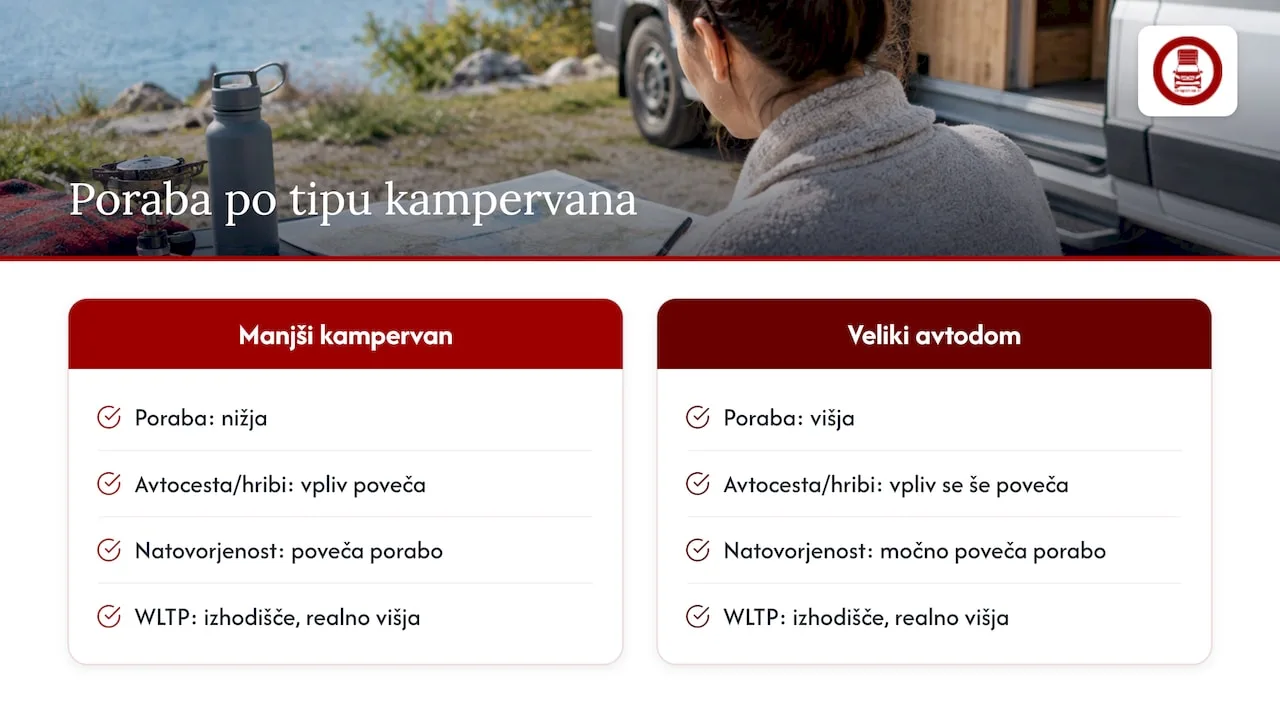
Exact fuel consumption figures vary between models, so it makes more sense to look at a range rather than a single value. Smaller campervans based on vans generally use less fuel than large motorhomes with wider bodies and greater weight, and the difference becomes even more noticeable when driving on motorways or hilly terrain.
Official fuel consumption figures for individual models can be found in the manufacturer’s WLTP specifications, which are published in Slovenia by authorised representatives and vehicle importers. These figures are measured under standardised conditions, so real-world fuel consumption will often differ somewhat, especially when the vehicle is fully loaded and equipped with additional equipment.
It is important to treat the manufacturer’s figure as a reference point, not a guarantee. We recommend recording your own fuel consumption while driving, as the final figure is affected by terrain, weather conditions and your driving style. This will help you estimate how much fuel you will actually need on your next trip and avoid unpleasant surprises when stopping at a fuel station.
Which factors have the greatest impact on fuel consumption
Your driving style has the greatest impact on fuel consumption. Sudden acceleration and late braking use significantly more fuel than smooth, predictable driving, where the engine operates within its optimal rev range.
Speed is the next key factor. Official guidelines from Gov state that vehicles use the least fuel at speeds between 55 km/h and 80 km/h, while consumption at 120 km/h can increase by up to 20% compared with 100 km/h. In a campervan, which is heavier and less aerodynamic than a passenger car, this difference can be even more noticeable.
Weight and luggage: every additional kilogram requires more energy to accelerate, so it is better to leave unnecessary equipment at home.
Aerodynamics: roof boxes, bike racks and open windows increase aerodynamic drag at higher speeds.
Tyre pressure: underinflated tyres can slightly increase fuel consumption, according to Gov.
Air conditioning: increases fuel consumption, by as much as 5 to 10% in urban driving.
Expert tip:Before a longer drive, check your tyre pressure when the tyres are cold, as this gives you the most reliable reading.
Checklist for lower fuel consumption during your trip
A few simple steps before and during your trip can noticeably reduce fuel consumption throughout the journey.
Before departure, check the tyre pressure and remove the roof box or bike rack if you do not need them.
Carry out a basic vehicle check: oil level, filter condition and general engine operation.
Drive smoothly, shift gears at the appropriate time and, where possible, use cruise control on motorways.
Maintain a safe distance from the vehicle in front of you to avoid constant acceleration and braking.
During longer stops, switch off the engine and turn off the air conditioning.
Record the kilometres driven and fuel used as you go, so you get a realistic picture for the rest of the trip.
In winter, winter tyres are mandatory for safety, and their composition can slightly affect fuel consumption compared with summer tyres. You can find more information about adjustments for the colder season in our guide to winter camping in Slovenia.
Expert tip:Keeping a simple fuel consumption log on your phone will show you after a few days which parts of your driving have the greatest impact on fuel costs.
How to calculate fuel costs for a trip
To estimate fuel costs, you need three figures: the distance in kilometres, the vehicle’s fuel consumption per 100 kilometres and the current fuel price per litre. The formula is simple: (distance ÷ 100) × fuel consumption per 100 km × fuel price per litre.
For example, suppose you are planning a 400-kilometre trip and your campervan uses 11 litres per 100 kilometres. That means 44 litres of fuel for the entire journey. Multiply this amount by the current price per litre, which you should check shortly before your trip, to estimate the total cost for that route.
Check current fuel prices in Slovenia directly at fuel stations or through price aggregators before departure.
For longer journeys, repeat the calculation for each major section of the route, as prices vary between regions and countries.
When collecting the vehicle, check the odometer reading and fuel level so you have a clear starting point for comparison.
Maintenance and equipment that affect fuel consumption in the long term
Regular maintenance directly affects how much fuel a vehicle uses throughout the season. Gov points out that the correct oil level, a clean air filter and regular engine servicing help reduce fuel consumption and emissions.
Check tyre pressure at least once a month, as recommended by official guidelines.
Additional equipment such as roof boxes can increase motorway fuel consumption by as much as 10 to 25%, so pack carefully.
When deciding how much luggage and equipment to take with you, you can also use our overview of campervan dimensions, which explains how vehicle size affects interior space and payload.
What to check at campervan handover regarding fuel consumption
When collecting the vehicle, it is worth asking about the condition of the tyres, real-world fuel consumption during normal driving and the fuel tank capacity. This information helps you plan your costs and fuel stops more accurately.
When choosing between comfort and lower fuel consumption, additional sleeping berths or equipment often mean greater weight. Our overview of sleeping arrangements in a campervan and our guide to campervan electricity can help you make this decision before booking.
Realistic expectations and responsible travel
Fuel consumption varies from one trip to another, so every rental provides new information that is worth learning from. Recording your fuel consumption and driving smoothly help reduce costs and minimise your environmental impact.
— Rok
How Campervan.si helps reduce uncertainty about fuel consumption
When choosing a campervan for a trip around Slovenia, we are happy to advise you on which model best suits your route, number of passengers and expected fuel consumption. As a family-run business from Ljubljana, we know our fleet inside out, so during handover we explain the real-world fuel consumption, fuel tank capacity and tyre condition of your chosen model.
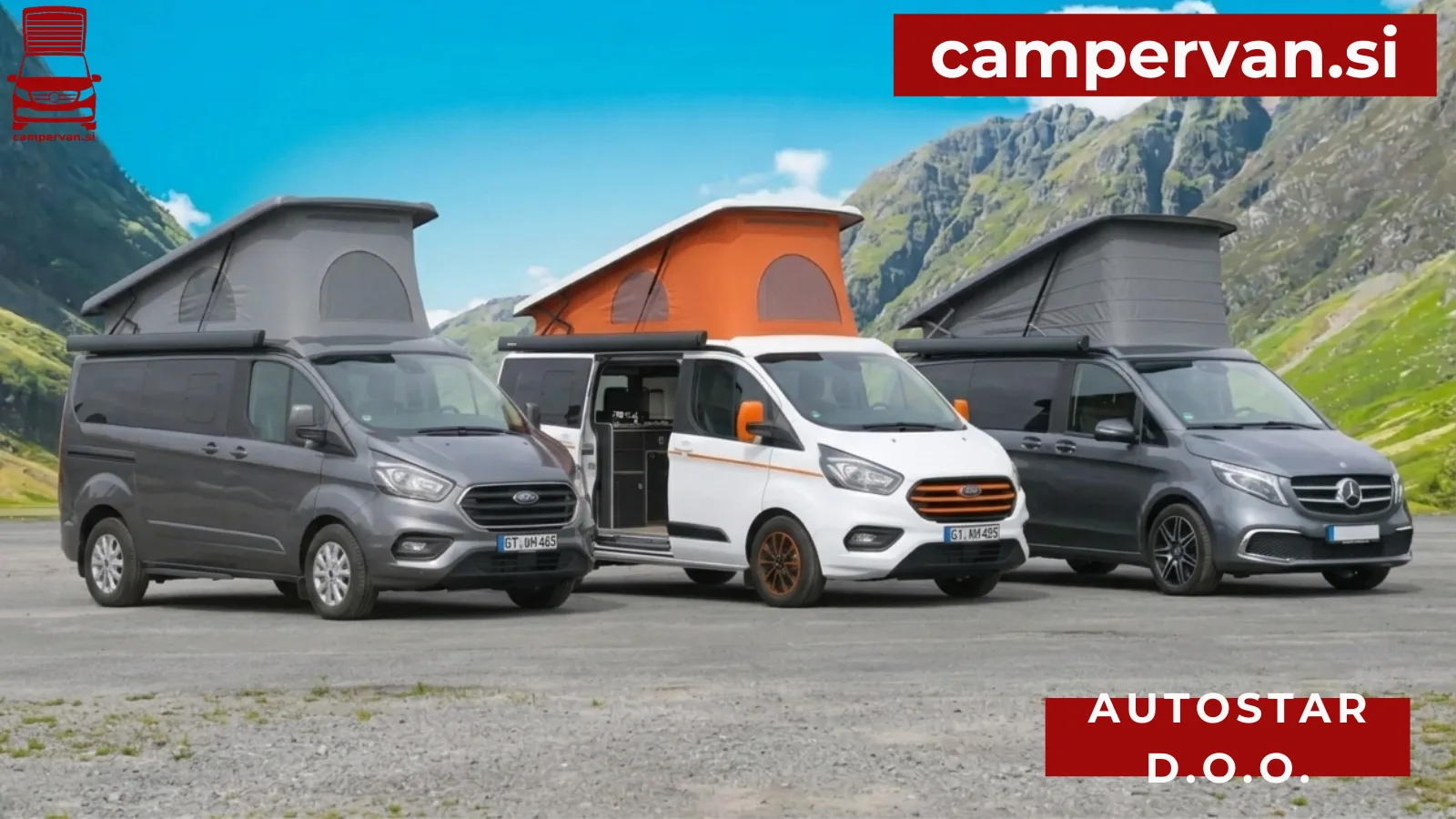
Mercedes V Marco Polo offers a compact design suitable for more economical driving in urban areas and on motorways.
Ford Nugget Plus is a good choice when you need more space for equipment and longer trips.
We also advise you on routes through Slovenia, the Balkans and the Alps, taking into account how your chosen destination and terrain may affect fuel consumption during your trip. If you are planning to cross the border, it is also worth checking local camping regulations, such as the rules on wild camping in Italy, before setting off. Check availability and booking dates on our homepage.
Frequently asked questions
How much fuel does a campervan use on average?
Fuel consumption varies between models depending on weight, aerodynamics and driving style, so the best way to check the exact figure is to look at the manufacturer’s WLTP data for the model you choose. Smaller campervans generally use less fuel than large motorhomes, and the difference increases when driving on motorways.
How can I reduce fuel consumption most effectively while driving?
The greatest effect comes from smooth driving without sudden acceleration and braking, as combining economical driving with basic maintenance can reduce fuel consumption by approximately 15 to 20%. Removing the roof box and regularly checking tyre pressure can help further.
Does a roof box really increase fuel consumption?
Yes. Roof boxes and bike racks can increase fuel consumption by as much as 10 to 25% at motorway speeds, so it is advisable to remove them when they are not needed. The effect is even more pronounced at higher speeds because of increased aerodynamic drag.
How do I calculate the fuel cost of a trip by campervan?
Multiply the distance in kilometres, divided by 100, by the vehicle’s fuel consumption per 100 kilometres and the current fuel price per litre. For a more accurate estimate, check current fuel prices shortly before departure, as they vary between regions.
What should I check at campervan handover regarding fuel consumption?
Ask about the condition of the tyres, fuel tank capacity and the vehicle’s real-world fuel consumption during normal driving, as this will help you plan your travel costs more accurately. With a rental from us, we explain these details during the vehicle handover.