Children travelling in a campervan should always sit in an appropriate child car seat that is correctly secured to an approved seating position. In Slovenia, the rules are the same as for passenger cars: the seat must comply with the R129 standard, be suitable for the child’s height and weight, and be installed so that it does not move more than two centimetres in any direction. In a campervan, it is also important to check the construction of the seating bench and deactivate the passenger airbag if the child seat is installed in the front passenger seat.
In brief:
- A child car seat in a campervan must be installed on an approved anchorage point, with no more than two centimetres of free movement.
- Children up to 15 months must travel rear-facing under the R129 standard, while AMZS recommends keeping children rear-facing for longer where possible.
- When choosing a child seat, check whether the campervan has ISOFIX or other approved anchorage points suitable for the seat.
- Wooden seating benches in campervans may not provide sufficient crash protection, while properly engineered metal frames can withstand significantly greater loads.
- Before every journey, quickly check the seat installation, seat-belt routing and passenger-airbag status if the seat is installed in the front passenger position.
Campervan
Check your campervan for a family trip
Choose a campervan for your trip around Slovenia and check available rental dates in Ljubljana.
Check availability
Table of Contents
Slovenian rules and standards for child car seats
Slovenian legislation follows European guidelines for transporting children in vehicles. A
child shorter than 140 centimetres or weighing less than 36 kilograms must travel in an appropriate child restraint suitable for their height, weight and age. Once a child exceeds these limits, they can transition to the vehicle’s seat belt, although many children do not reach the required size until around ten or eleven years of age.
R129 approval, also known as i-Size, is not the only factor to consider when choosing a safe child car seat. AMZS points out that
homologation alone does not guarantee good results in independent tests: some seats with valid approval have received poor ratings in independent testing. Before buying or renting a child seat, it is therefore worth checking independent test results rather than relying only on the approval label.
When choosing the direction of travel, there are several important recommendations:
- R129 requires children to travel rear-facing until at least 15 months of age.
- AMZS recommends keeping children rear-facing for as long as possible, ideally until the age of two or longer.
- Children under 13 should preferably sit in the rear seats, with NIJZ recommending the centre rear seat when it has a three-point seat belt.
Where and how to install a child car seat in a campervan: ISOFIX or seat belt
Campervans vary considerably in their seating layouts and restraint systems, so it is important to check the available child-seat mounting options. Some models have factory-fitted ISOFIX points on the front seats, while living-area benches often do not have approved anchorage points for child seats.
- Check the vehicle documentation or ask the rental company whether the seating position has ISOFIX or an approved seat-belt anchorage.
- Install the child seat only in a seating position with approved anchorage points, never on a bench without documented approval for child-seat use.
- Secure the child seat with a three-point seat belt according to the manufacturer’s instructions and check that it does not move more than two centimetres in any direction.
- Make sure the seat belt follows the correct guides and is not twisted or trapped.
- If the child seat is installed in the front passenger seat, deactivate the passenger airbag, as deployment in a crash can cause severe injury to a child.
Professional tip: Before a longer journey, gently accelerate and brake in a safe location to check that the child seat remains properly secured.
When renting a vehicle, it is also worth asking for confirmation that the relevant anchorage points are approved. This makes it easier to assess whether the seating position is suitable for your child seat.
Special risks in a campervan: which seating benches are safe
Campervans often have seating benches designed primarily for living and dining rather than for protecting passengers during high-speed travel. Independent AMZS testing has shown that wooden bench structures may fail under crash loads, while properly engineered metal frames can provide significantly better protection for occupants.
Crash tests have shown that wooden seating benches in campervans can fail under crash loads, while metal structures generally withstand these forces better. (AMZS) This means that choosing a child-seat position in a campervan is not simply a matter of comfort, but a matter of actual occupant safety.
Before buying or renting a campervan, check the following:
- Ask for confirmation that the anchorage points on the living-area bench are approved for child-seat use if you intend to install a seat there.
- Check whether the bench has a metal or wooden structure, as this can affect its resistance in a crash.
- Ask whether the vehicle has been tested or verified for transporting children in the specific seating positions.
If you encounter a bench without documented approval for a child seat, do not install the seat there. Instead, use a front seating position with a verified ISOFIX connection or approved seat-belt anchorage.
Practical steps for correctly securing your child in a car seat
Correct installation of the child seat is only half the equation. The other half is how securely the child is
secured during a journey with children.
- Install the child seat according to the manufacturer’s instructions and check its stability before every journey.
- Adjust the harness straps to the child’s shoulder height, ensuring they are neither too high nor too low.
- Tighten the harness so that only enough space for one finger remains between the harness and the child’s body.
- For newborns travelling in infant carriers, limit uninterrupted time in the seat and regularly check the position of the baby’s head.
- If the seat squeaks or moves during the journey, stop and check the installation, as this may indicate that it is not sufficiently secure.
Babies travelling in infant carriers should not spend several hours in the seat without a break, as prolonged periods in a semi-reclined position are not recommended for infants.
Pre-drive child seat safety checklist
Before leaving a campsite or stopover, take a minute to carry out a quick safety check.
- Check that the child seat does not move more than two centimetres in any direction.
- Check that the seat belt follows the correct guides and is not twisted.
- Deactivate the passenger airbag if the child seat is installed in the front passenger position.
- Secure luggage and loose objects, as they can move towards the child seat during hard braking.
- Check the age and history of the child seat. A seat that has been involved in a crash or has exceeded the manufacturer’s recommended service life should no longer be used.
Professional tip: If you have any doubt about the installation, ask the rental company or a qualified professional for advice before setting off.
Campervan.si tips and experience with renting a campervan with children
For families, models with a spacious front cabin are often the most practical because it is easier to check the ISOFIX connections and install a child seat in a verified seating position. During vehicle handover, it is advisable to check the anchorage points together with the customer, explain the most suitable seating position and, where necessary, recommend additional equipment for securing the seat.
If you are travelling with a child, mention this when making your reservation. We can check in advance which vehicle in our fleet has the most suitable seating position for your child seat. We also recommend bringing the approval documentation for your child seat, as this can make the handover process easier.
Which child seat is suitable for your child’s age and size
Child car seats need to change as a child grows, so it is useful to understand the basic categories before travelling in a campervan. Newborns and infants travel in infant carriers or i-Size seats installed rear-facing. Under the R129 standard, rear-facing travel is mandatory until at least 15 months of age, while AMZS recommends extending this stage until the age of two or longer.
Once a child outgrows an infant carrier, the next step is often a convertible seat that can continue to be used rear-facing and later forward-facing with its own harness. When transitioning to a child seat that uses the vehicle’s seat belt, the child’s height is more important than age alone. The transition should only take place when the child is tall enough for the vehicle seat belt to run correctly across the shoulder and hips.

In a campervan, seat selection also depends on the amount of space available at the seating position. Wider convertible seats may not fit comfortably on the narrow front seats of smaller campervans, so it is worth checking the dimensions of the seating position in advance when renting. For longer trips around Slovenia or abroad, a child seat with an adjustable recline can also make resting more comfortable during the journey.
How to make campervan travel easier for your child
Travelling in a campervan can involve longer periods on the road than travelling by passenger car, so comfort is not just about keeping children happy. A restless child may be more likely to interfere with their harness or ask to be unbuckled. Plan regular breaks every 90 minutes to two hours so that the child can get out of the seat and move around.
Children should wear thin clothing without bulky jackets underneath the harness, as thick clothing can reduce how effectively the harness restrains the child in a crash. Sunlight through campervan windows can also be stronger than in a passenger car because of the larger glass surfaces, so a suitable sunshade beside the child seat can make sleeping during the journey more comfortable.
Toys and books should be lightweight and secured so that they cannot become dangerous projectiles during sudden braking. Snacks and drinks should be within reach of the adult passenger rather than the child, reducing the temptation to unbuckle the child while the vehicle is moving.
Where to install a child car seat in a campervan
A campervan’s interior layout differs considerably from that of a passenger car, so choosing the right child-seat position requires additional care. Front seating positions generally have factory-tested restraint systems and are therefore often the first option to consider, provided the passenger airbag is deactivated when a child seat is installed in the front passenger position.
Living-area benches can look suitable because they are wide and padded, but this does not mean they are safe for transporting a child while the vehicle is moving. As independent AMZS testing has demonstrated, wooden bench structures may perform poorly in a crash. The seating position should therefore be selected based on documented structural strength and approved restraint systems rather than appearance alone.
Avoid installing the child seat close to cupboards, shelves containing dishes or other loose objects that could fall towards the child during braking. It is also sensible to avoid a position directly underneath a roof window or opening where objects or glass could potentially fall during a crash.
Maintaining and cleaning a child car seat on the road
A child car seat can collect dust, crumbs and moisture during a trip around Slovenia or abroad, so regular cleaning is more than just a cosmetic issue. Remove and wash the cover according to the manufacturer’s instructions, usually at a low temperature and without aggressive cleaning products, as chemicals can damage the properties of the fabric and other materials.
Never put the child-seat harness straps in a washing machine. Wipe them with a damp cloth and mild soap, then allow them to dry completely before using the seat again. Regularly inspect the plastic shell for cracks or signs of wear, particularly after longer trips on gravel roads or mountain roads.

After any particularly rough or jolting journey, such as driving over a badly maintained road or after sudden braking, check that all parts of the seat are still securely attached. If a child seat has experienced a significant impact or has been involved in a crash, replace it regardless of its visible condition, as internal damage may not be apparent from the outside.
What is most often overlooked when travelling with children
The biggest mistake we see is not a lack of care from parents, but the assumption that a living-area bench in a campervan is just as safe as a passenger-car seat. Families often choose the nearest available seating position without checking whether it actually has an approved anchorage system for a child seat.
Another common mistake is paying too little attention to vehicle selection. A campervan with well-documented seating arrangements and verified anchorage points can eliminate a great deal of uncertainty during the trip. I recommend that parents ask about this already when making the reservation rather than waiting until vehicle handover.
— Rok
How Campervan.si supports safe travel with children
When renting a campervan for a family trip around Slovenia or neighbouring countries, it is important to check whether the vehicle is suitable for your child seat. During handover, we recommend checking the anchorage points together, discussing the most suitable seating position and, where necessary, arranging additional equipment for securing the seat.
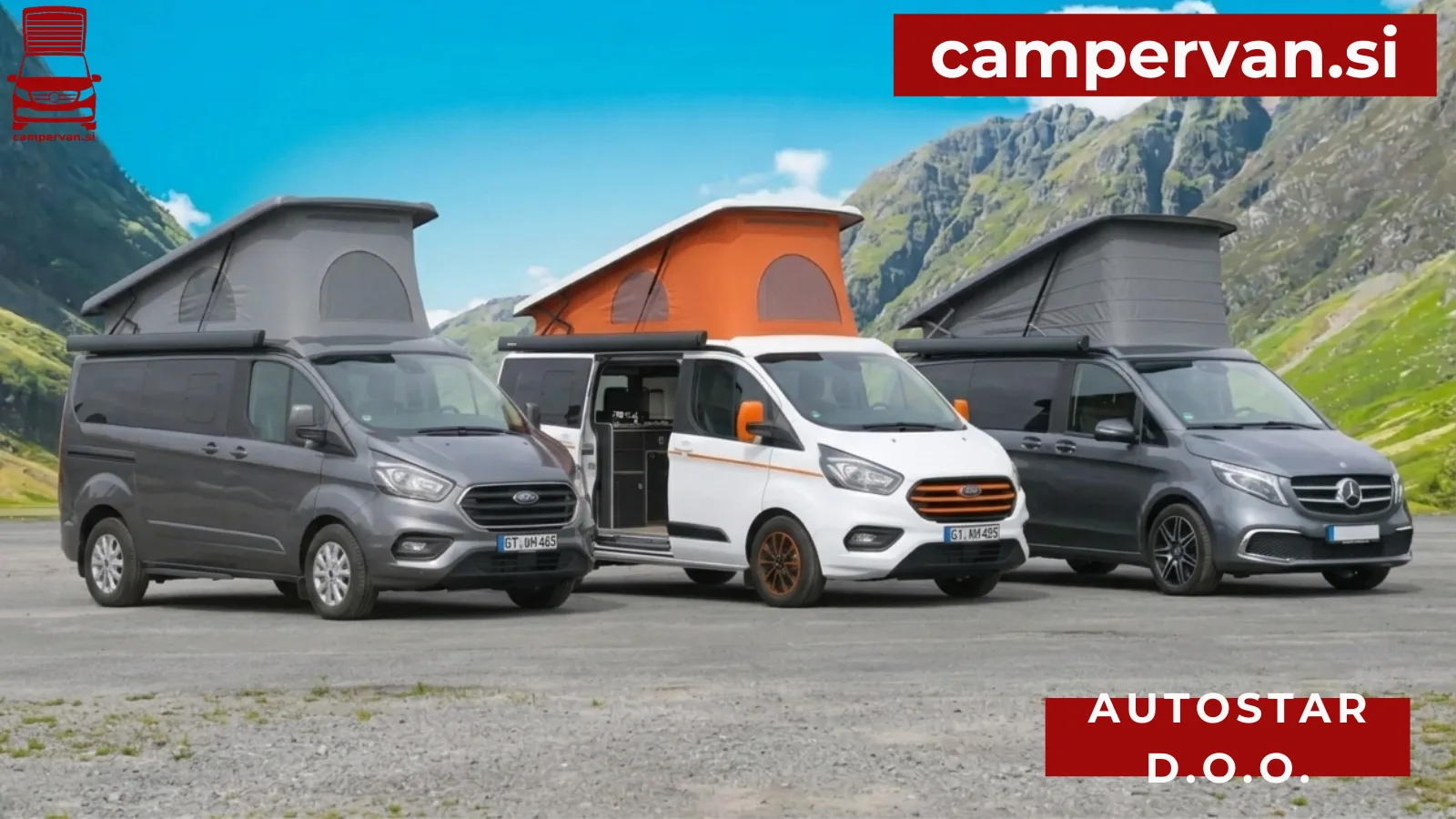
For families, we recommend
renting a Mercedes V Marco Polo or a
Ford Nugget Plus, as both models provide clearly identifiable front seating positions suitable for checking child-seat installation. Before handing over the vehicle, we recommend:
- stating clearly when booking that you are travelling with a child seat or require an approved anchorage point,
- checking the dimensions of your child seat against the available front seating positions before pickup,
- for longer trips around Slovenia or the Alps, also checking our guide to travelling with children in a campervan.
You can make a reservation through
Campervan and tell us the child’s age when enquiring, so that we can suggest the most suitable vehicle.
Sources
For more detailed information about child-seat rules and testing, we recommend the NIJZ guidance on transporting children, which covers legal requirements and recommendations regarding seating positions. The AMZS child car seat test provides independent ratings of individual models, while AMZS testing of campervan seating benches highlights the risks associated with wooden structures in a crash.
Frequently Asked Questions
Do children in a campervan have to use a child car seat the same way as in a car?
Yes. The rules are the same as for passenger cars. A child shorter than 140 centimetres or weighing less than 36 kilograms must travel in an appropriate child restraint, regardless of whether they are travelling in a passenger car or a campervan.
How long should a child travel rear-facing?
The R129 standard requires rear-facing travel until at least 15 months of age, while AMZS recommends extending this stage until the age of two or longer. Keeping younger children rear-facing for longer is generally considered the safer approach.
Is a living-area bench in a campervan safe for a child car seat?
Not necessarily. Independent AMZS testing has shown that some wooden bench structures may fail under crash loads. It is therefore preferable to install the child seat on a front seating position with a verified anchorage system.
What should I do if my campervan does not have ISOFIX?
A child seat can be secured using a three-point seat belt if the seating position has an approved anchorage system and the seat is installed according to the manufacturer’s instructions. Always check that the seat does not move more than two centimetres in any direction after installation.
How much does campervan rental suitable for families with children cost?
At Campervan.si, daily rental of a Mercedes V Marco Polo or Ford Nugget Plus starts from €125 per night, while weekly rental starts from €110 per night. When booking, we recommend clearly stating that you are travelling with a child seat so that we can suggest the most suitable seating position.
CCampervan
Ask about travelling with children
Contact us about campervan or motorhome rental in Ljubljana for your trip around Slovenia.