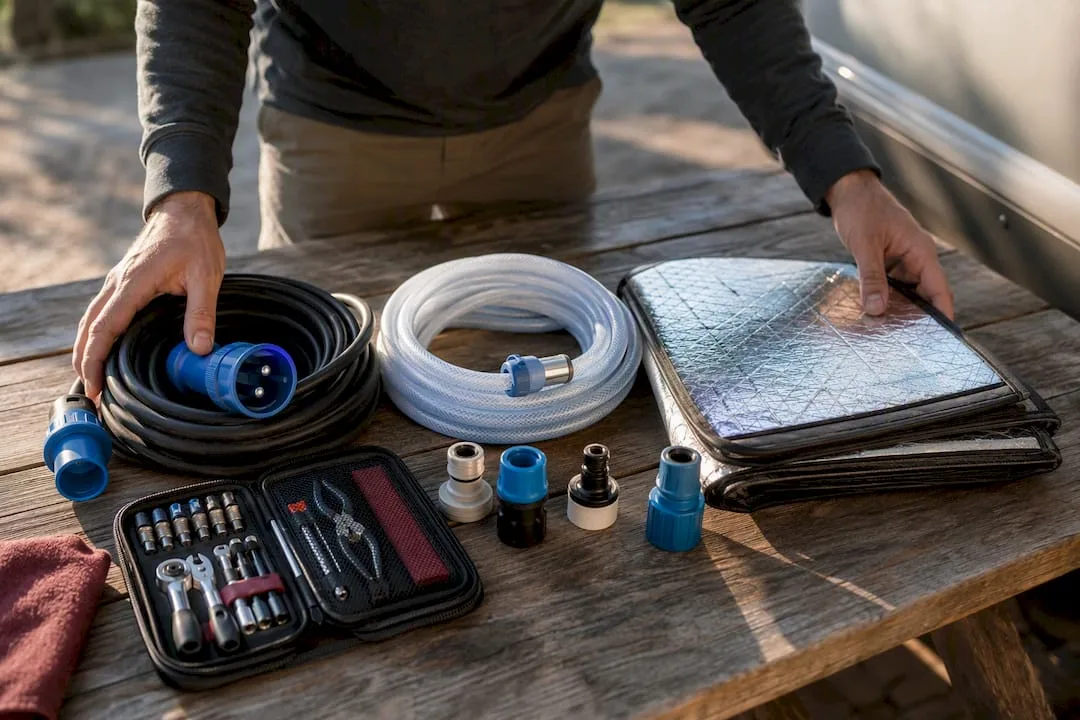
Electricity in a campervan is a combination of a 12V leisure electrical system, a leisure battery and, when needed, 230V power supplied through a campsite hookup or an inverter. Simply put: small appliances such as lights, the refrigerator and water pump run on 12V from the leisure battery, while larger household appliances require 230V, which the vehicle gets from an external hookup or, in some vehicles, through an inverter. At pickup, always ask for a demonstration of the control panel, the location of the fuses and the campsite hookup cable. The golden rule: use hair dryers, electric heaters and similar high-power appliances only when the campervan is connected to a 230V external power supply.
In short:
- At campervan pickup, renters should be shown the control panel, fuse locations and hookup cable so they can operate the electrical system safely.
- The system generally works on two separate levels: 12V for interior lighting and other low-power equipment, and 230V for household appliances, available through a campsite hookup or an inverter where fitted.
- Charging the leisure battery is most reliably done through a campsite hookup, while solar panels, portable panels and generators can support occasional or extended off-grid use.
- Incorrect energy use, such as running a hair dryer or electric heater from the battery, can trip fuses or quickly drain the leisure battery, so it is important to manage your energy consumption.
- At Campervan.si, every renter receives a personal explanation of the electrical system at pickup, so you know how to use the campervan safely and efficiently without unnecessary troubleshooting.
Campervan
Start Your Trip with a Clear Understanding of the Electrical System
When you rent a campervan in Ljubljana, we personally explain how the electrical system works so you can use it safely throughout your trip.
Check Availability
Table of Contents
Basic Components of a Campervan Electrical System
Every campervan has two distinct electrical worlds. The first is the 12V system, which powers interior lighting, the water pump and often the refrigerator. This part draws power from the leisure battery and works while you are on the road, without an external electrical hookup. The second is the 230V system, similar to the electricity you use at home. It works when the vehicle is connected to an external power supply or when it has an inverter that converts 12V battery power into 230V AC power.
The starter battery and leisure battery perform completely different jobs, although renters often confuse the two. The starter battery powers the engine and is managed as part of the vehicle’s driving system, while the leisure battery powers equipment in the living area when the engine is not running. Vehicles without an inverter simply do not provide 230V from their household-style sockets when they are not connected to an external power supply, meaning that charging a laptop or using a 230V cooking appliance is not possible without an external power source.
A typical campervan electrical system includes:
- a 12V leisure circuit for lights, the water pump and refrigerator
- a leisure battery, separate from the starter battery
- an inverter, where fitted, to convert 12V battery power to 230V AC
- a solar panel with a charge controller that protects the battery from overcharging
The solar charge controller is a crucial part of the system. Without one, connecting a solar panel directly to a battery could cause overcharging and permanent damage to the battery cells.
Pickup Checklist: What to Check in Five Minutes
Vehicle pickup is the one moment when you have the owner or rental provider available for face-to-face questions. Make the most of it.
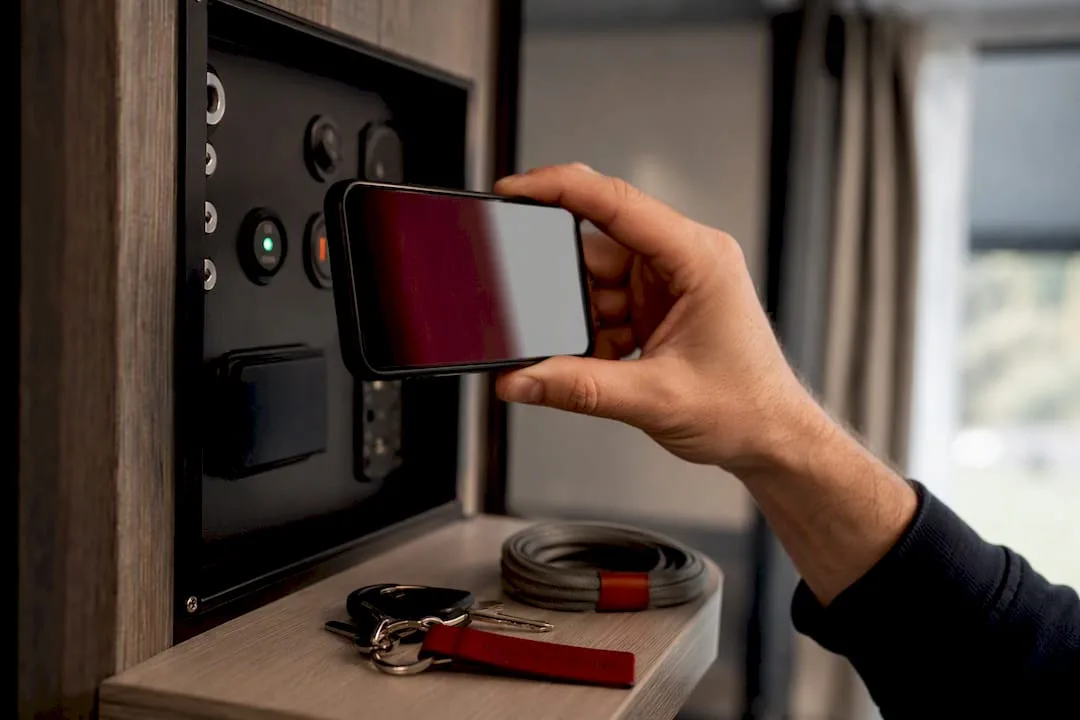
- Ask for a practical demonstration of the control panel: where you can see the leisure battery charge level and the status of the starter battery.
- Locate the main fuses and service panel together with the owner, and ideally take photos for future reference.
- Check where the campsite hookup connection is located and which cable or adapter is supplied with the vehicle.
- Test the 12V interior lighting and, where available, the 230V sockets, and find out which power source the refrigerator uses.
- Ask specific questions: Can you use a hair dryer? How do you reset a tripped fuse? Are spare fuses provided in the vehicle?
Some equipment, as
Akumulator points out, may be connected directly to the leisure battery rather than controlled by the main switch. This means the battery can continue to discharge even when the vehicle is parked and appears to be switched off.
Professional tip: Take a photo of the service panel and control panel immediately at pickup. During your trip, you can quickly forget which button does what, while a photo on your phone can save you from having to call the owner in the middle of the night.
Managing Power Consumption: What to Use and When to Stop
Most campervan electrical problems are not caused by faults, but by unrealistic expectations about power consumption. Hair dryers, electric heaters and 230V cooking appliances are typical causes of sudden power failures because they can drain a leisure battery within minutes or trip the inverter’s protection system.
A simple energy budget starts by separating appliances according to their power source:
- on 12V, you can normally use LED lighting, the water pump and the refrigerator
- on 230V, when connected to a campsite hookup, you can use appliances such as a hair dryer, electric heater and microwave
- for cooking and heating, use gas where the vehicle is equipped for it, as this does not put the same load on the electrical system
AMZS notes that cooling the living area is often not possible without an external 230V connection, which is important to know on hot summer days on the Slovenian coast or inland. Larger air-conditioning systems also require a more substantial power supply than smaller appliances.
Professional tip: If you are unsure whether an appliance uses 12V or 230V, look at the plug. A socket similar to the ones you use at home indicates 230V, while a round or flat connector similar to a car cigarette-lighter socket indicates 12V.
A combination of efficient energy use and solar power can extend your time off-grid. If you switch off unnecessary lights at night and use gas for cooking during the day, a smaller solar panel may be enough to get through a day or two without an external hookup, depending on the vehicle and weather conditions.
How to Charge the Battery: Campsite, Driving, Solar or Generator
A campsite hookup is generally the most reliable way to recharge the leisure battery. At Slovenian campsites and designated campervan stopovers, you simply connect the cable to the electrical hookup, allowing the vehicle to charge the leisure battery while also supplying 230V power to compatible appliances.
Omisli recommends that beginners spend their first night at an organised site so they can familiarise themselves with the vehicle’s systems without unnecessary pressure.
Charging through the alternator while driving works, but its effect is limited. The leisure battery charges while the engine is running, and charging speed is moderate in many vehicles, so you should not necessarily expect a completely full battery after one hour of motorway driving.
Solar systems offer two main options. Permanently roof-mounted panels are more durable and convenient, while portable panels are useful for temporary setups—for example, when the campervan is parked in the shade but the panel can be placed in direct sunlight. Sonet-solar states that a 100 W panel may cost around €120–€200, depending on the technology. Two 100 W panels on a smaller motorhome can, in favourable weather and with efficient energy use, provide a useful degree of energy independence, although actual performance depends on the equipment and weather conditions, as AMZS also points out.
- shore power: the fastest and most reliable charging option, available at organised campervan stopovers
- alternator while driving: a useful additional charging source, but not necessarily the main one
- fixed solar panel: a durable solution for longer periods of off-grid camping
- portable solar panel: convenient for occasional use and shaded parking locations
Use portable generators and power stations with care and always operate fuel-powered generators outdoors because of exhaust gases. For smaller devices and phone charging, an
external charging station or power bank may be perfectly adequate without having to run the entire electrical system.
Fuses, Signs of Failure and When to Call a Professional
The first thing to check when you suspect an electrical fault is the service panel with the fuses. A blown fuse can usually be identified by a broken metal filament inside, and replacing it is straightforward if you have a spare fuse with exactly the same rating.
- Open the service panel and locate the fuse for the appliance that is not working.
- Visually check whether the filament is broken and, if necessary, replace it with a fuse of exactly the same rating.
- If the fuse trips or blows again immediately, stop troubleshooting and contact the vehicle owner or rental provider.
- If the battery is discharging unusually quickly—indicated by flickering lights, weak lighting or a refrigerator that cannot maintain its temperature—reduce power consumption and connect the vehicle to a campsite hookup as soon as possible.
An incorrectly installed battery or undersized wiring can cause overheating, so never attempt to repair these issues yourself. AMZS warns that faults in 230V systems can cause serious injuries, while inadequate protection and poor connections in 12V systems can increase the risk of fire.
Professional tip: If the same fuse blows twice in a row, there is almost certainly an underlying problem rather than just bad luck. Disconnect the appliance and contact an auto electrician or the vehicle owner.
How Campervan.si Makes Electricity One Less Thing to Worry About
At Campervan.si, we personally show every renter the control panel at pickup in Ljubljana, explain the leisure battery indicators and show you where the fuses are located. This
campervan handover takes around 20–45 minutes and is designed to make sure you know exactly what you can use and what limitations may apply.
We recommend taking a photo of the service panel on your phone, just as we advise all our guests, and marking the fuses if the layout is unclear. For unexpected questions during your trip, 24/7 assistance is available. Every renter also receives written pickup instructions covering the basic steps for operating the electrical system. As a family-run company based in Ljubljana, we believe that vehicle handover should be clear and personal—not simply a formality before signing the rental agreement.
Book a Campervan with a Clear Electrical System Handover
Instead of trying to figure out the vehicle’s electrical system from a manual just before departure, it is much easier to learn how everything works on-site, with a personal demonstration of the control panel and fuses during pickup.
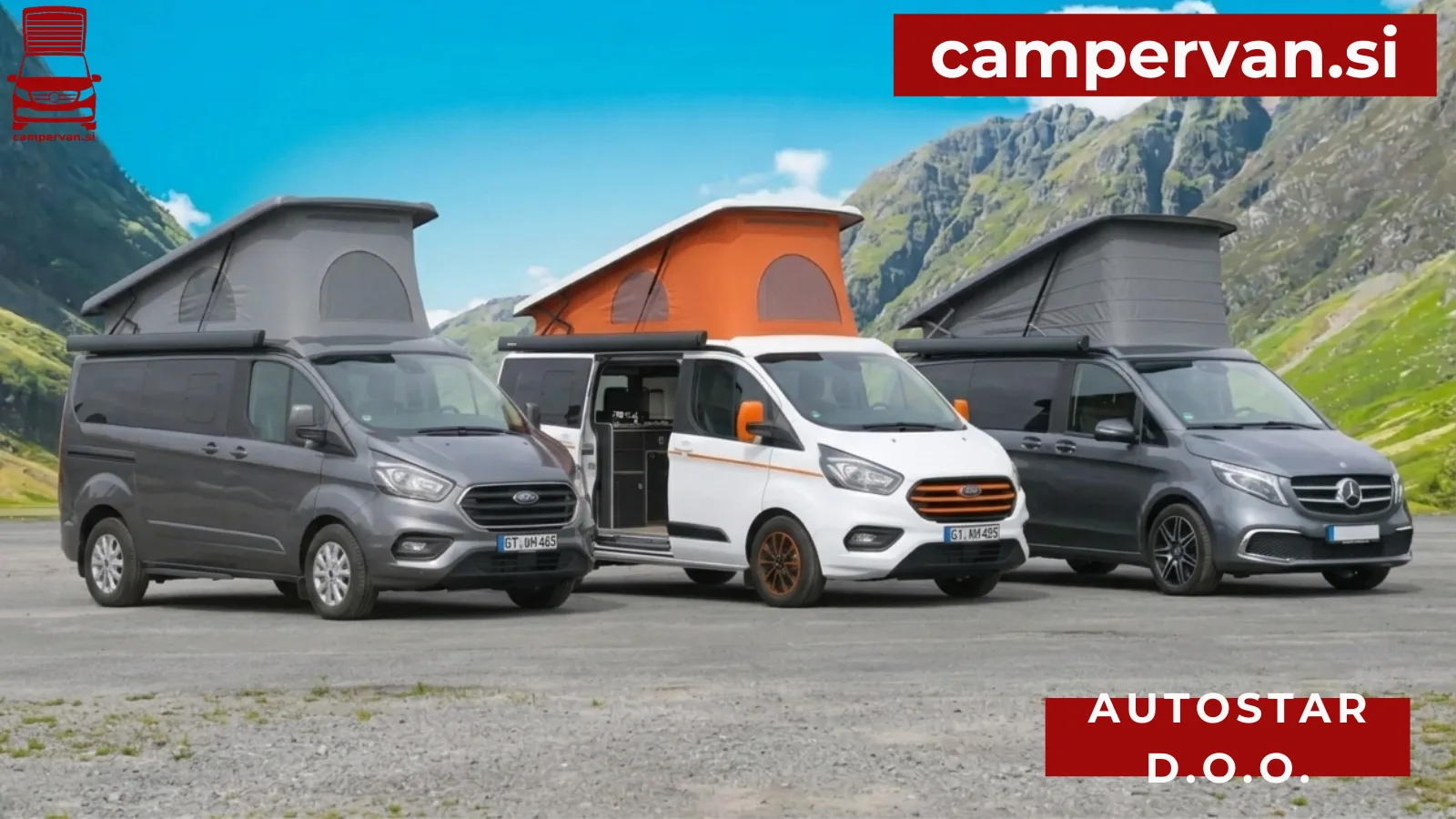
Two models are available: the
Mercedes V Marco Polo from €125 per night for daily rentals or from €110 per night for weekly rentals, and the
Ford Nugget Plus under the same conditions. Both vehicles include basic insurance, 24/7 assistance and a practical demonstration of the electrical system at pickup. Final cleaning is charged separately at €80. Check the available dates and book the campervan you can feel confident using from your very first night on the road.
Sources
For technical information about off-grid power and solar systems, see AMZS and Sonet-solar.
Frequently Asked Questions
What is the difference between a 12V and 230V system in a campervan?
The 12V system powers lights, the water pump and the refrigerator from the leisure battery, while the 230V system is available through a campsite hookup or an inverter where fitted and is used for household-style appliances.
Can I use a hair dryer while driving?
No. Hair dryers and similar high-power appliances require 230V and should only be used when the campervan is connected to an appropriate external power supply. They should not be used while driving.
Where are the main fuses in a campervan?
The main fuses are usually located on a service panel near the entrance or underneath a seat, but the exact location varies by vehicle. The owner or rental provider should always show you where they are during pickup.
How much does an electricity hookup cost at Slovenian campsites?
The price of an electricity hookup depends on the individual campsite or stopover. With a rental vehicle, the hookup cable is often provided, leaving the campsite fee as the main additional cost.
Does Campervan.si explain how the electrical system works at pickup?
Yes. At pickup in Ljubljana, we personally show you the control panel, the location of the fuses and how the 12V and 230V systems work, so you know exactly what you can use during your trip.
CCampervan
Ask About Campervan Electricity
Contact us with questions about campervan rental and using the electrical system during your trip around Slovenia.
Recommended