Picking up a campervan involves presenting your documents, signing the rental agreement, paying the security deposit, thoroughly inspecting the vehicle with photos, and testing all systems before leaving the pickup location. The most important step is simple: photograph every existing item of damage and record the mileage and fuel level before you drive away. This campervan pickup procedure protects you from misunderstandings when returning the vehicle and takes around 20 to 45 minutes when done carefully.
In brief:
- When picking up a campervan, photograph any existing damage, record the mileage and fuel level, and keep the documentation as evidence in case of later disputes.
- All required documents, such as a valid ID card, driving licence, booking confirmation and proof of deposit payment, must be provided for a successful vehicle pickup.
- Before departure, thoroughly inspect the exterior, interior and all vehicle systems, and photograph any imperfections so you have clear evidence of the vehicle’s condition at pickup.
- Systems such as electricity, water, gas and safety alarms should be tested at the pickup location, as a malfunction on the road can lead to additional costs and unnecessary problems.
- Before returning the campervan, make sure the fuel and fresh-water tanks meet the agreed return conditions, the interior is clean and free of personal belongings, and notify the rental provider promptly about delays or any problems.
Table of Contents
What to bring: documents, payments and additional pickup requirements
Without the correct documents, campervan pickup cannot go ahead, regardless of how well organised the rental agreement is. Rental providers in Slovenia carefully verify the renter’s identity and driving licence, as a campervan is a high-value vehicle.
Before heading to the pickup location, check that you have the following:
- A valid identity card or passport matching the name on the booking.
- A valid category B driving licence that meets the provider’s minimum licence requirements. Some rental companies also have minimum driver-age requirements or charge an additional fee for younger drivers, so check the campervan rental age requirements in advance.
- Your booking confirmation and proof of deposit payment, either printed or saved on your phone.
- A credit card or cash for the security deposit, depending on how the rental provider handles it. In many cases, the amount is pre-authorised on a credit card.
- Details of any additional drivers, as they must be included in the rental agreement.
- Information about whether you intend to drive abroad, as some insurance policies may have country-specific restrictions.
Expert tip: Take photos of your identity card and driving licence at home and keep them securely on your phone. If any information needs to be clarified during the pickup process, you will have the relevant details readily available.
If you are preparing for a longer journey, also check our
campervan packing list, which covers equipment that may not be included with the vehicle itself.
Thorough campervan inspection at pickup: checklist and photographs
Many problems during a campervan rental can be avoided simply by carrying out a proper inspection before departure. Consumer advice on the
small print of campervan rentals also recommends thorough photographic documentation at pickup.
Divide the inspection into several areas and use a
complete family road trip vehicle checklist as a reference. A practical inspection sequence is:
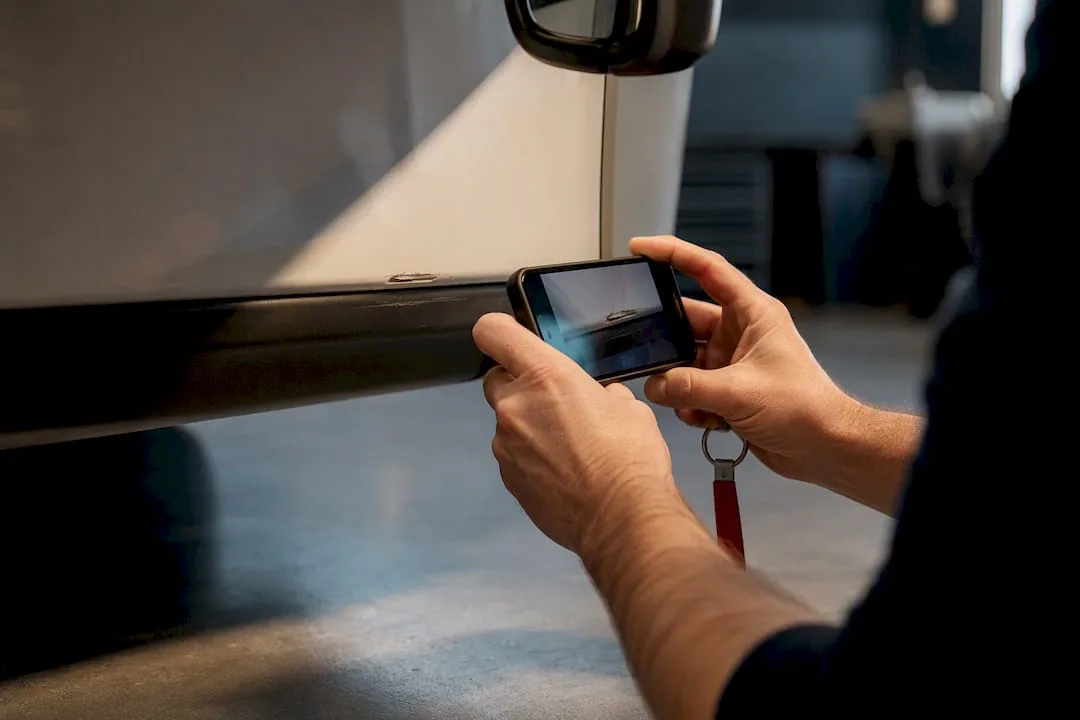
- Exterior. Walk around the entire vehicle and check the bodywork for scratches, dents and bumper damage. Inspect all four tyres, including the spare if one is provided, and check the front, rear and indicator lights. Inspect the mirrors and look for any cracks or chips in the windscreen.
- Roof and vehicle height. If the vehicle has a pop-up roof or roof windows, check that they close and seal properly. Record the stated vehicle height. You will need this information when approaching low bridges, car parks or narrow tunnels. Our guide to campervan dimensions explains why this is important.
- Interior. Check that the refrigerator is working and already cooling, and test the cooker, ventilation and interior lights. Inspect the condition of the beds and cushions and check that all seat belts work correctly.
Photograph every imperfection you find from at least two angles, preferably using a phone that records the date and time of the photo. Make sure all damage is listed on the vehicle inspection report and ask the rental provider to confirm it. A photograph can provide useful evidence, but a written record acknowledged by both parties provides additional protection.
Testing the systems: electricity, water, gas and safety equipment
Campervan systems work differently from those in a standard passenger car, so test them at the pickup location rather than discovering a problem at your first stop.
Before signing the vehicle handover report, check the following:
- Operation of the 12V and 230V sockets, mains hookup and leisure battery condition, including how long the battery is expected to operate without charging.
- Fresh-water tank level, operation of the water pump and whether the waste-water system is empty.
- Toilet operation, including flushing and access to the waste cassette.
- Any smell of gas after opening the gas valve, as well as operation of the cooker and gas heating.
- The location of the fire extinguisher and operation of the smoke and carbon-monoxide alarms.
If any appliance or system does not work properly at pickup, ask the rental provider to repair it or provide a replacement vehicle before you leave. Resolving a technical problem on the road is almost always more complicated than solving it at the pickup location.
Rental agreement, security deposit, insurance and hidden costs
The advertised rental price can be misleading because the actual cost is often determined by the rental conditions rather than the daily rate alone.
Advice on choosing a campervan rental provider recommends looking beyond the headline price, as the rental conditions can have a significant impact on the final cost.
Before signing the rental agreement, pay particular attention to these three areas:
- Security deposit. The deposit is often secured by credit-card pre-authorisation and released after the vehicle is returned, provided there are no new damages, excessive cleaning requirements or outstanding service obligations. The rental provider may retain part or all of the deposit if the pickup and return inspection reports show differences.
- Insurance. Basic insurance generally includes an excess, meaning the amount you are responsible for paying in the event of covered damage. Some providers allow you to reduce the excess for an additional fee, which can be worth considering for longer journeys or trips involving mountain roads.
- Restrictions and additional charges. Check the permitted mileage, charges for additional cleaning, fuel requirements at return and the list of countries where you are permitted to drive the vehicle.
Comparative assessments of campervan rental offers indicate that customers place considerable value on clear rental conditions rather than looking only at the daily price, as shown by this
comparison of campervan rental providers.
Expert tip: Read the section about the insurance excess twice. A lower daily rental price can sometimes come with a higher excess, which only becomes important if the vehicle is damaged.
Pickup and return times: what happens if you are late?
Campervans are generally available for pickup in the afternoon on the first rental day and must be returned by late morning or another agreed time on the final day. Many providers calculate the rental based on full rental days, which directly affects the total price. The
Slovenian Consumers’ Association (ZPS) guide to campervan rental highlights the importance of checking these conditions in advance.
If you are delayed or encounter an unexpected situation, follow these steps:
- Contact the rental provider immediately as soon as you know you will miss the agreed return time, rather than waiting until you arrive.
- Ask whether the rental can be extended if the vehicle is available the following day. This can sometimes be a more practical solution than paying a late-return fee.
- In the event of a breakdown or accident, contact the provider’s roadside assistance service before arranging repairs yourself, and photograph the situation for the damage report.
Responsibility for additional costs caused by a late return or emergency repair should always be defined in the rental agreement, so check this clause at pickup rather than waiting until a problem occurs on the road.
Final checks before departure and your first kilometres by campervan
Before you actually drive away from the pickup location, check a few final practical details that can save you from having to stop again after only a few kilometres.
- The fuel level should match the agreed pickup and return conditions. Otherwise, you may be charged for refuelling on return, potentially at the provider’s service rate.
- The fresh-water tank should be filled according to the agreed pickup conditions, and the waste-water system should be emptied if required.
- Luggage and all loose items inside the campervan should be properly secured, as they can move considerably more during driving than they would in a passenger car.
- Set your navigation system to a truck or campervan profile if available, as standard car navigation may route you through low tunnels or narrow streets unsuitable for your vehicle.
Expert tip: For your first night, consider staying at an organised campsite rather than an unfamiliar parking area. Having access to electricity and water can make the first evening much easier while you are still getting to know the vehicle.
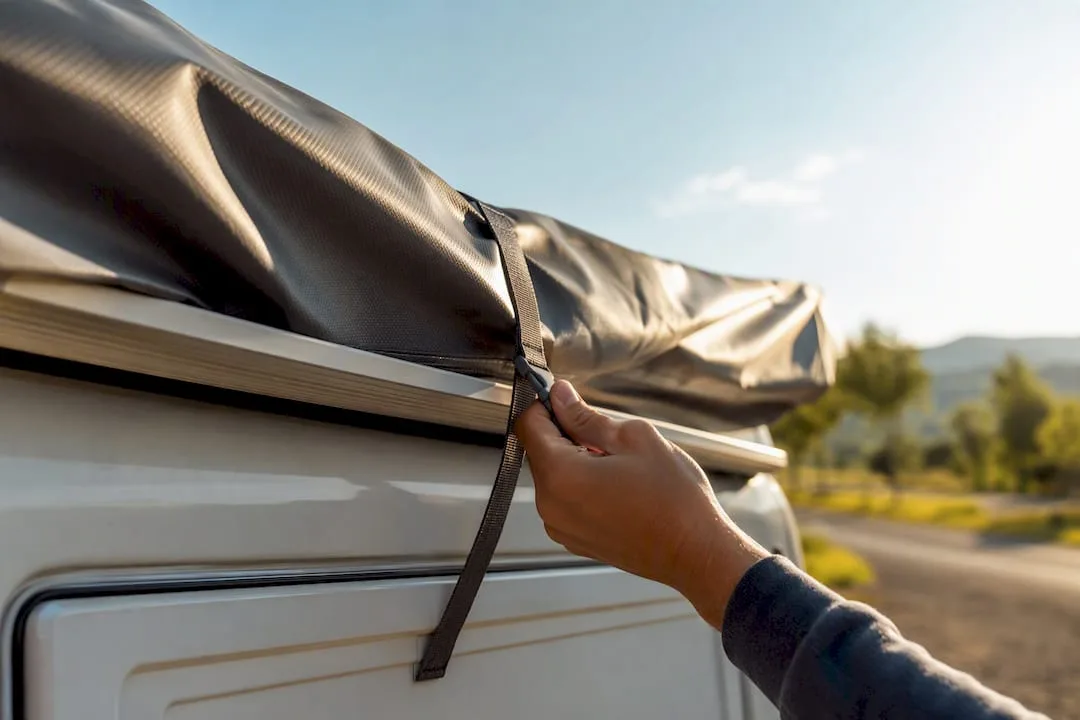
Be particularly careful with the pop-up roof or awning in windy conditions if your campervan is equipped with one, as strong gusts can cause damage. Keep the roadside assistance number and all important documentation somewhere easily accessible, such as the compartment next to the driver’s seat, rather than in the rear storage area.
How Campervan.si makes campervan pickup easier
Every campervan pickup should include a personal handover and explanation of the vehicle rather than simply handing over the keys. Before departure, the team can demonstrate how the toilet, gas system, water pump and heating work instead of relying solely on the written manual.
At pickup, the renter receives a vehicle inspection checklist and a roadside assistance contact number. The same level of attention continues at the end of the rental, as explained in our guide to the
campervan return procedure. A longer handover or additional questions about the vehicle can also be arranged when making the booking.
— Rok
Booking with Campervan.si: what you get besides the vehicle
The vehicle handover includes a detailed introduction designed to reduce uncertainty at the beginning of your journey. Campervan.si offers several campervan models with essential equipment, while basic insurance and telephone assistance are also included.

Before booking, check which
campervan sleeping arrangements best suit your group and whether you need additional
campervan camping equipment. If you are looking for a convenient starting point for the Alps, the Adriatic coast or the Balkans, Ljubljana is one of the most practical locations in the region. Find out more about
campervan rental in Ljubljana. You can make your reservation through
Campervan.si, where you can check available dates and prices for your chosen model.
Sources
For additional information about campervan rental rules and recommendations, useful resources include the ZPS guide to renting a campervan, consumer advice about rental terms and conditions, and comparisons of criteria for choosing a rental provider.
For the specific return procedure, also see the Campervan.si guide to the
campervan return process, which complements the steps described in this article.
Recommended