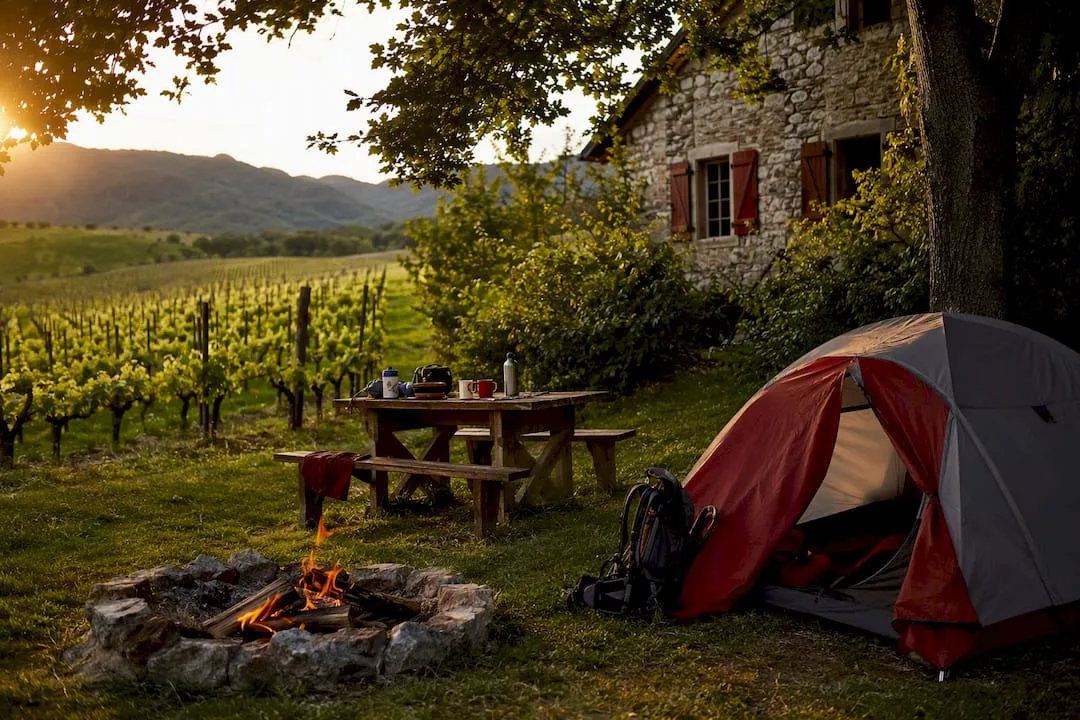
Yes, camping on farms in Slovenia is completely legal and very widespread. Tourist farms throughout the country offer designated areas for tents and campervans, providing a completely different experience from wild camping, which is strictly restricted in nature parks and along rivers. There are around 117 campsites of all kinds in the country, including smaller farm campsites spread across all regions.
Before you set off, keep the following in mind:
- Look for farms through the Association of Tourist Farms of Slovenia or the Avtokampi.si portal.
- Designated camping areas on farms have a capacity limit, usually up to 30 people.
- Book in advance, especially in summer, and specify whether you are arriving by campervan.
Key Takeaways
Camping on farms in Slovenia combines basic infrastructure with an authentic rural experience, but requires advance booking due to the legal capacity limit.
| Point |
Details |
| Legality and regulation |
Camping on farms is permitted in designated areas, while wild camping is restricted and regulated. |
| Capacity limit |
Designated camping areas on farms may accommodate up to 30 people, so book in advance. |
| Regional choice |
Styria offers wine, Upper Carniola offers mountains, and Lower Carniola offers rivers; choose according to the experience you want. |
| Check the facilities |
Electricity, sanitary facilities and campervan access vary between farms, so ask before arriving. |
| Campervan as a complement |
Campervan offers rentals in Ljubljana with models that compensate for limited facilities at smaller farms. |
Table of Contents
Where to Camp on Farms in Slovenia: Regions and Examples
Camping on farms in Slovenia is most developed where the countryside meets natural attractions, rivers, vineyards or mountain valleys. Each region offers a different pace of holiday, so choosing a destination often means choosing between mountains, wine or the tranquillity of the plains.
In
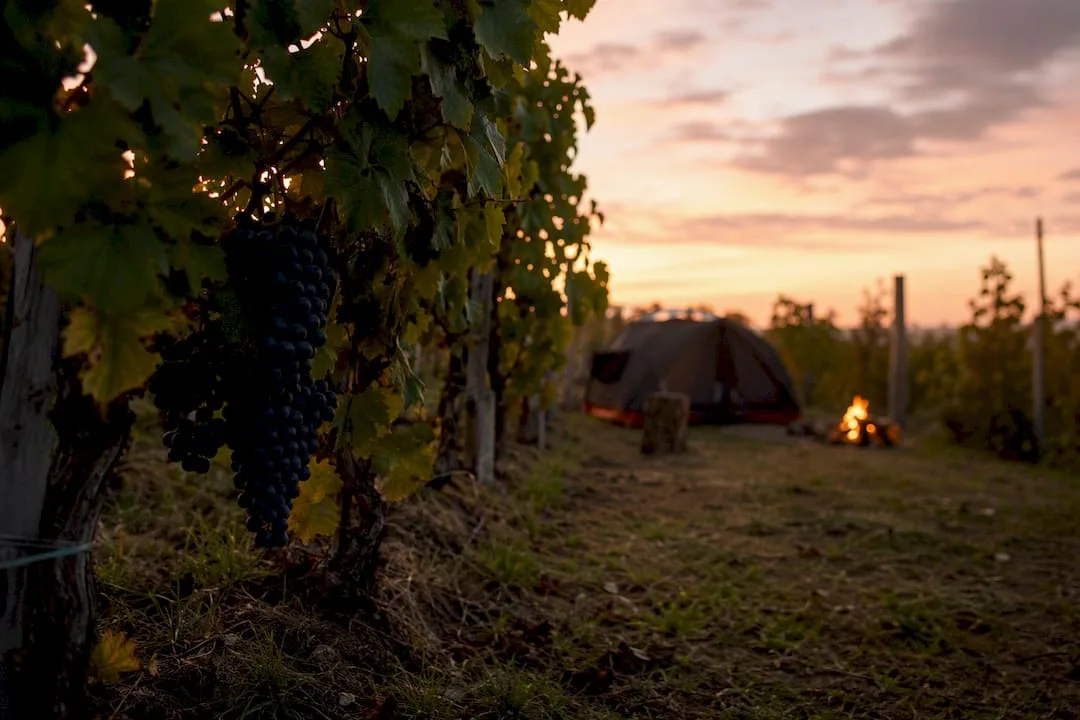
Styria, vineyard farms with smaller, more intimate camping areas are particularly common.
Vinski kamp Hažić is a good example of this type of accommodation, where guests can enjoy views of the vineyards right from their tent.
In
Upper Carniola, near Lake Bled and Triglav National Park, you can find
Kamp Rančkamp Paloma, popular with hikers and cyclists because of its proximity to mountain trails.
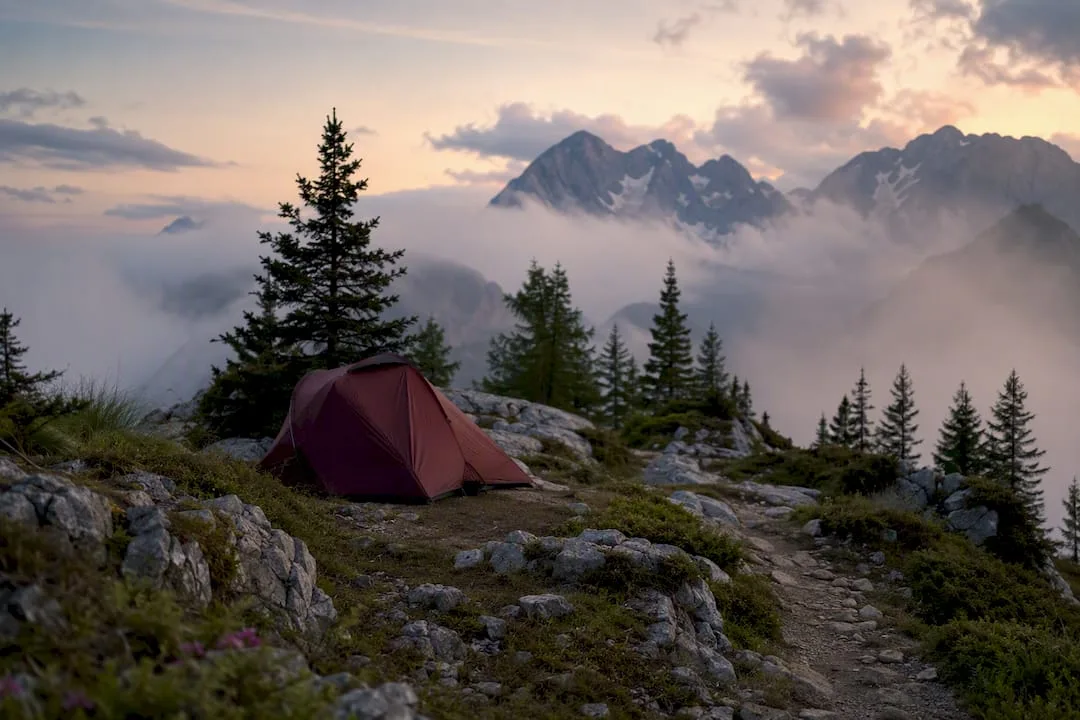
The Goriška and Littoral regions combine rolling wine country with proximity to the sea. This is where
Eco Camp Supot operates, focusing on a natural setting and a low environmental impact, making it suitable for those looking for peace away from the crowds of the coast.
Lower Carniola and White Carniola are known for their forests and rivers.
Kamp Loka offers access to the river and a relaxed atmosphere for families, while
Kmetija Jakomin in the same region offers camping accompanied by authentic farm-produced food.
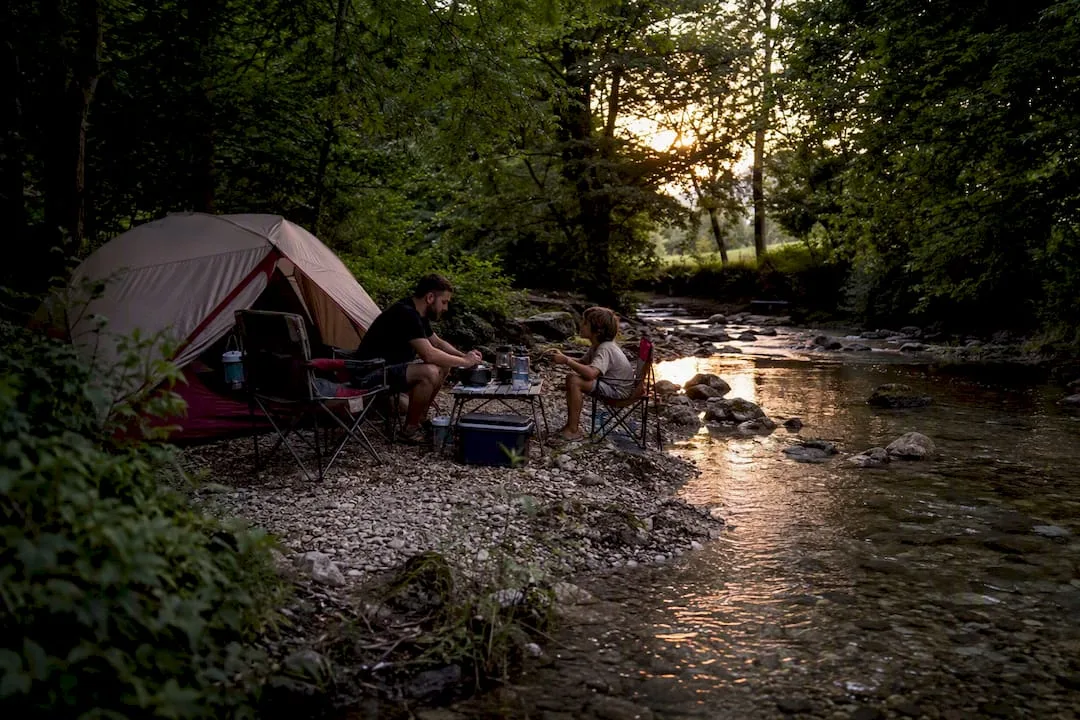
In central Slovenia, near Ljubljana,
Kamp Štrk is a practical choice, offering easy access to the capital while retaining a rural character.
Pomurje, with its thermal springs and flat cycling routes, mainly attracts those looking for a slower pace of holiday. For the exact location and current availability, the most reliable option is to check directly with the farm or use the map on the
Avtokampi portal.
What to Expect When Camping on a Farm
Tourist farms vary considerably, as they are not classified by stars like traditional campsites. Some offer almost hotel-like comfort, while others deliberately remain simple and authentic.
The typical offering includes:
- a space for a tent or caravan on a meadow or in an orchard,
- a designated parking space for a campervan, often with an electricity connection,
- shared sanitary facilities, sometimes separate for men and women,
- the option to order homemade meals from the farm kitchen,
- access to drinking water and, less frequently, Wi-Fi.
Statistical fact: Supplementary activities on farms, which include designated camping areas, are subject to a maximum limit of 30 people per farm. This legal limit is why booking in high season is almost essential rather than merely recommended.
Prices vary depending on the region and facilities, but camping on a farm is generally cheaper than staying in an apartment at the same farm. Electricity, use of laundry facilities or bicycle rental are often additional costs worth checking before arrival. As highlighted by the
Association of Tourist Farms, the real value of this experience lies not in luxury but in authenticity and direct contact with the hosts.
How to Book a Farm Stay and Prepare for Your Stay
Booking is straightforward if you follow the right order. First, check whether the farm is registered with the Association of Tourist Farms or listed on a platform such as
Book, which indicates that the host follows basic standards.
- Send an enquiry by phone or email and state the exact number of people.
- Clearly mention whether you are arriving by campervan, as this affects the allocated parking space.
- Ask about electricity, sanitary facilities and any restrictions regarding pets.
- Confirm the dates and pay a deposit if required.
- The day before arrival, check road accessibility, especially after rainfall.
Expert tip: If you are travelling by campervan, always provide the vehicle’s length and width when making your enquiry. Some rural access roads are narrow and pass through villages where turning around a larger vehicle is impossible.
Also add the following to your travel checklist:
- an extension cable for electricity,
- an awning or sunshade for days without shade,
- basic tools for minor repairs,
- clear information about pets if you are travelling with them.
What to Do on the Farm and in the Surrounding Area
Camping on a farm rarely means simply spending the night. Most hosts offer activities that make the day more enjoyable for both children and adults without requiring additional driving.
- helping with farm work, feeding animals or picking fruit,
- bread-baking or cheese-making workshops,
- horse riding or guided horseback walks,
- hiking and cycling trails that often start right at the farm,
- fishing in nearby rivers and visiting wine roads.
A family can spend the morning with the animals and cycle to a nearby village in the afternoon. A couple may prefer an evening wine tasting, while a campervan traveller can combine a short stop with a full-day mountain excursion. In spring and autumn, during the grape harvest, the range of activities is at its richest, while summer remains the busiest period and requires early booking.
Campervan and Farm Stays: How to Combine Both Without Hassle
The combination of a rented campervan and camping on a farm works best when you plan the logistics in advance. Rural access roads are often narrower than paved roads in towns, so the dimensions of your vehicle are not a detail you can overlook.
- Before picking up your campervan in Ljubljana, check whether the selected farm actually allows you to empty a chemical toilet and refill your water.
- Ask the host whether the road is suitable for a vehicle of your size.
- During high season, book the campervan rental and farm stay at the same time, as the availability of one is often dependent on the other.
Expert tip: On narrow rural roads, drive more slowly than you might expect on a motorway. Farm vehicles and tractors often appear around bends where overtaking is impossible.
Weather conditions in rural areas can be more unpredictable than in towns, especially in the mountainous parts of Upper Carniola, so check the forecast immediately before departure rather than relying only on a forecast from a week earlier.
Perspective
Camping on a farm is not a substitute for a large campsite with a swimming pool, and that is precisely its advantage. It is a choice for those who value a conversation with the host more than an entertainment programme. My recommendation is simple: book at least a week in advance and choose the region based on whether you are looking for mountains, wine or rivers, rather than the other way around.
Campervan.si Helps You Combine a Campervan with a Farm Stay
Campervan is an alternative to finding separate solutions for transport and accommodation. Instead of first booking a farm and then wondering what kind of vehicle you will be able to take along its narrow access road, with Campervan.si you can pick up a campervan in Ljubljana and receive advice about your route in advance.
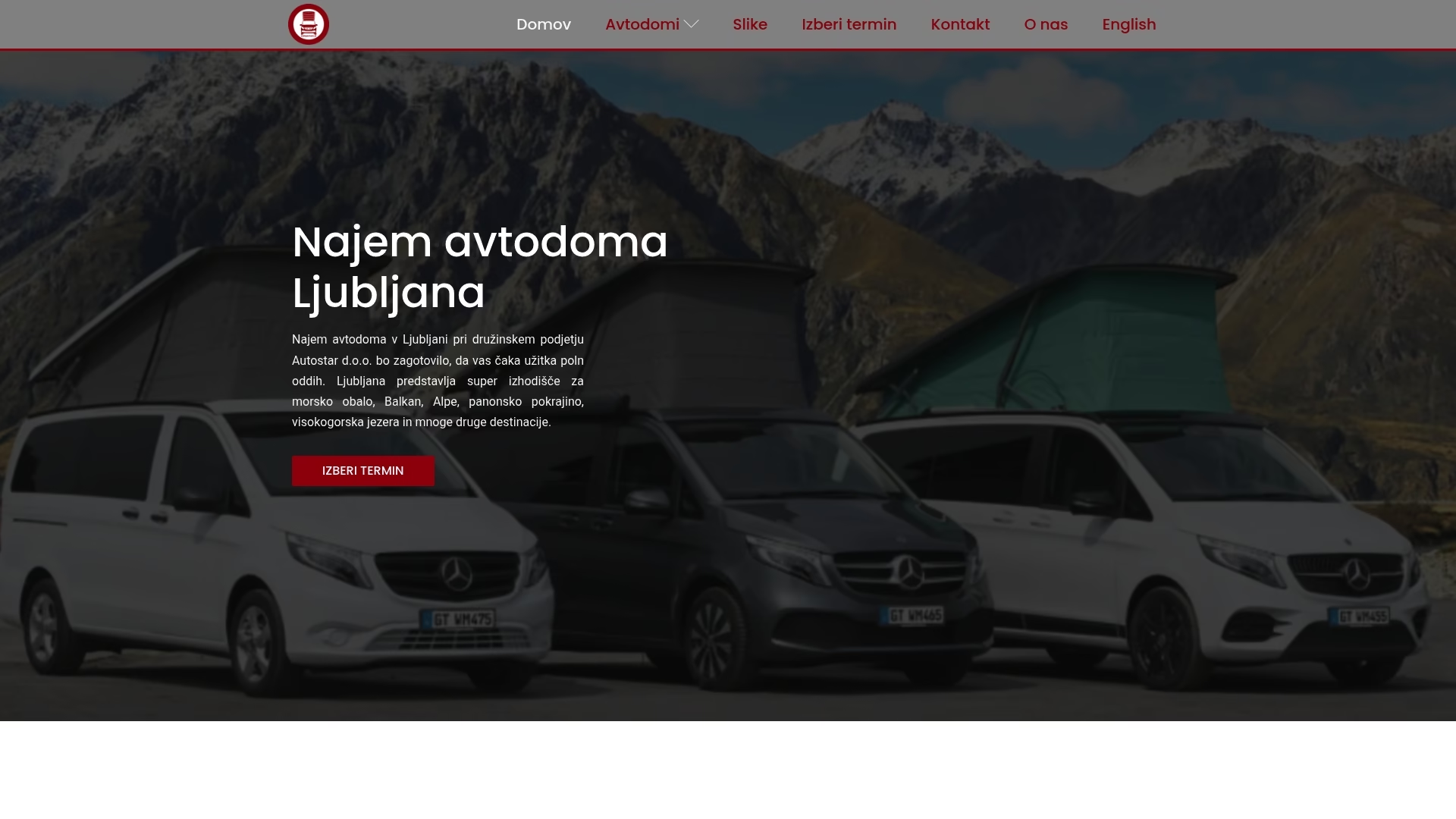
The available models include the
Mercedes V Marco Polo and
Ford Transit Nugget Plus, both equipped with a kitchen, fixed toilet and sleeping berths for several people. This means less dependence on farm sanitary facilities if the farm does not have them. Basic insurance and 24/7 roadside assistance provide peace of mind on rural roads, where help is not always nearby. As farms differ in their facilities, always check the maximum number of guests, access to electricity and the width of the access road before booking.
If you are planning a trip around Slovenia, take a look at the
campervan rental options in Ljubljana and check the available dates for your chosen season. To compare models based on your type of trip, also read about
which campervan to choose for your trip around Slovenia.
Frequently Asked Questions About Camping on Farms
Can I camp on any meadow belonging to a farm?
No. You may only camp on designated areas intended for camping, which the farm has specifically designated and registered as a supplementary activity.
How many people can one farm accommodate?
The legal limit for designated camping areas is up to 30 people, so reservations are essential for larger groups.
Is camping on a farm suitable for children?
Yes, most farms are family-friendly and allow children to interact with animals, but pay attention to fences and the host’s safety instructions.
Can I bring my pet?
Often yes, but always check in advance, as some farms have special rules because of their own animals.
What if the farm does not have electricity for campervans?
Ask whether they have at least one pitch with an electrical connection; otherwise, it makes sense to choose a campervan with its own power system and greater autonomy.
Sources
Check the season and the specific conditions of the selected farm before confirming your booking.
Recommended