Discover Italy with a campervan! Plan your trip with helpful tips, documentation and choosing the right vehicle for a unique experience. Travelling through Italy by campervan is an excellent choice for Slovenian travellers, provided you choose the right vehicle size, plan overnight stays at camper stops or campsites, and check your documents before departure. The border is close, the motorways are good, and there are plenty of places to stop, allowing you to adjust your trip spontaneously along the way. The key sources to rely on while preparing are the
Slovenian Traffic Safety Agency (AVP),
AMZS and the
Park4Night app.
Before heading onto the motorway towards Udine or Trieste, check the following:
- Driving licence category – a category B licence is sufficient for a campervan up to 3,500 kg.
- Insurance and roadside assistance – check that you have a Green Card or European insurance certificate and 24-hour roadside assistance.
- Vehicle size – for your first trip, choose a smaller or medium-sized campervan that you can park without stress in historic city centres.
- Overnight stays – check at least three to four camper stops or campsites along your route in advance, especially during the high season.
Expert advice: For your first trip, choose one region rather than trying to cover the entire country. Northern Italy, with its lakes, Friuli and perhaps a small part of Veneto, is more relaxed for beginners than travelling all the way to Sicily.
Key Takeaways
A successful trip through Italy by campervan rests on three pillars: choosing the right vehicle size, checking overnight accommodation in advance, and knowing the road rules, such as ZTL zones.
| Point |
Details |
| Choose a smaller campervan |
For beginners, a compact vehicle is easier to park in the historic centres of Tuscany and Liguria. |
| Check your driving licence category |
A category B licence is sufficient for campervans up to 3,500 kg; heavier vehicles require C1 or C. |
| Combine camper stops and campsites |
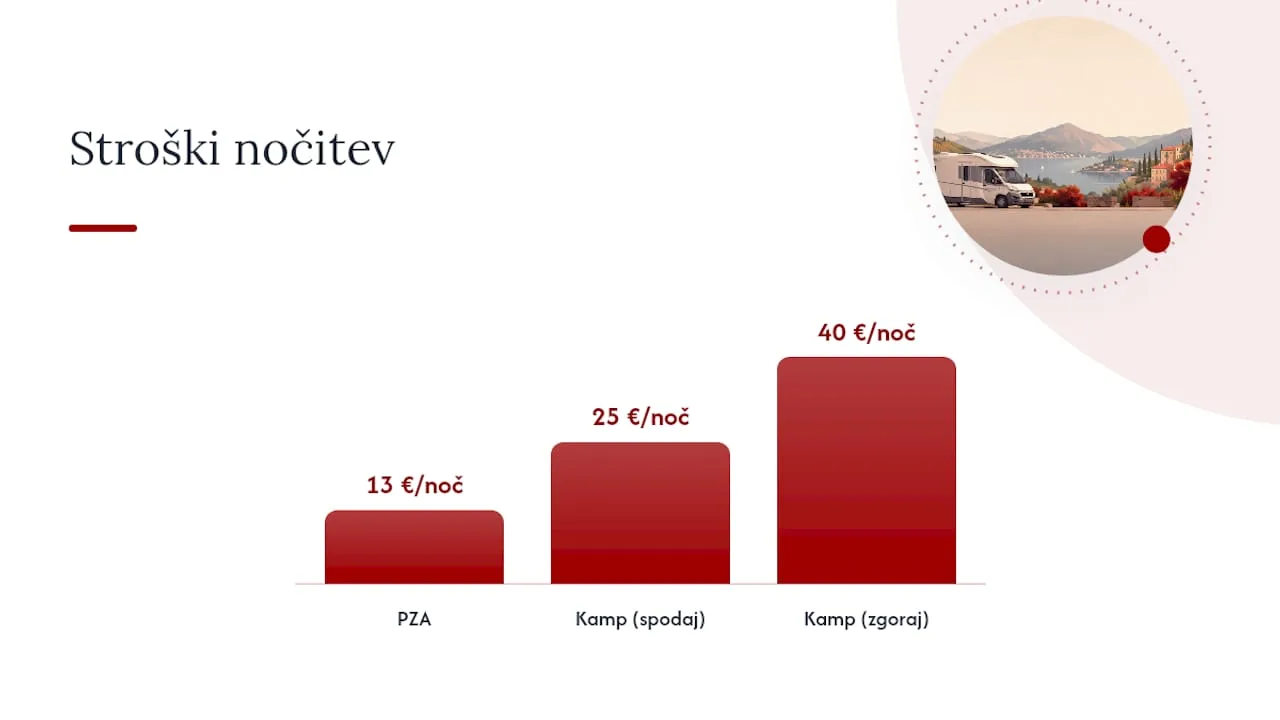
A camper stop costs €10 to €16 per night, while a well-equipped campsite often costs €25 to €40 or more. |
| Avoid ZTL zones |
Check the boundary of the restricted traffic zone before driving into the city centre to avoid a fine. |
| Book in Ljubljana |
Campervan offers pickup in Ljubljana with Mercedes V Marco Polo and Ford Nugget Plus models, basic insurance and roadside assistance. |
Contents
Four sample itineraries for Italy by campervan: from a short getaway to a grand tour
There is no single “right” route through Italy by campervan. It depends on how many days you have available and how much driving you want to do each day. The following four plans are based on recommendations to adapt your trip to the length of your holiday:
one week is enough for northern or central destinations, ten to fourteen days for a combination of the north and Tuscany, while two weeks or more are suitable for Amalfi or Sicily.
1. Northern Italy and the lakes (5 to 7 days)
From Ljubljana, you can reach Lake Garda in three to four hours of driving. This itinerary is ideal for a first trip because the distances are short, the roads are wide and there are plenty of stopping places around the lakes.
- Days 1–2: Lake Garda (around Sirmione or Malcesine), with short daily distances of up to 100 km.
- Days 3–4: Verona and Lake Iseo, around 120 km of driving.
- Days 5–7: return via Friuli or extend the trip to Venice (park on the outskirts and visit the city on foot or by boat).
Example of one day: drive to Sirmione in the morning (60 km, around an hour and a half), take an afternoon walk through the historic centre, and spend the evening at a lakeside campsite with direct access to the water.
Expert advice: Book campsites around Lake Garda at least a month in advance in July and August, as they are among the most popular in the country.
2. Liguria and Tuscany (10 days)
The combination of Cinque Terre, the coast and the Tuscan hills is one of the most popular Italian campervan routes among Slovenian travellers, and for good reason.
- Days 1–2: Ligurian coast, staying around La Spezia (visit Cinque Terre by train, not by campervan).
- Days 3–5: Tuscany, Pisa and Lucca, with daily distances of 80 to 150 km.
- Days 6–8: around Siena and Val d’Orcia, with a slower pace and many short drives between villages.
- Days 9–10: return via Florence (park outside the ZTL zone) and head home.
Tuscany is considered a region with very good infrastructure for campervans, but during the summer months it is wise to book at least the main stopping places in advance.
Example of one day: morning drive through the Chianti vineyards (40 km, but along a slow, winding road), a stop for a tasting, followed by a short drive to an agriturismo with space for campervans.
Expert advice: Do not drive your campervan into the centres of Florence or Siena. Park on the outskirts with a bus connection and avoid the ZTL zone and a possible fine.
3. Inland Tuscany and Umbria (7 to 10 days)
This route is a slower alternative to the coastal itinerary, suitable for those who prefer hilly villages and fewer crowds than by the sea.
- Days 1–3: Val d’Orcia, Pienza and Montepulciano, with short distances of 50 to 80 km per day.
- Days 4–6: Umbria, Assisi and Orvieto, driving on narrow but less busy roads.
- Days 7–10: return via Perugia towards the north.
Example of one day: morning visit to Pienza, lunch at a campsite overlooking the hills, a 45-minute afternoon drive to the next village, and an evening setup at an organised campsite with a shower and electricity.
Expert advice: In smaller Tuscan villages, the streets are often narrower than they appear on standard navigation apps. Use an app designed for the dimensions of your campervan rather than a standard phone map.

4. Amalfi and Sicily for a longer trip (14 days or more)
For experienced drivers looking for a real challenge and longer distances. The Amalfi Coast has narrow hairpin roads where large vehicles can struggle to manoeuvre, so this itinerary is better suited to medium-sized campervans.
- Days 1–4: drive south, stopping near Rome or Naples, around 300 km per day.
- Days 5–7: Amalfi Coast, with short but challenging distances (40 km can take two hours).
- Days 8–11: ferry to Sicily, visiting Taormina and Mount Etna.
- Days 12–14: return north with an intermediate stop in Calabria or Abruzzo.
Example of one day: early departure from Sorrento, slow drive to Positano (25 km, but almost two hours because of bends and traffic), afternoon parking at an organised car park outside the village and a walk into the centre.
Expert advice: Book the ferry to Sicily at least three weeks in advance during the summer season, as ferry capacity for campervans is limited.
Where to stay overnight: campsites, camper stops and wild camping rules in Italy
Italy has a dense network of organised campsites and an increasing number of so-called area sosta, or camper stops without the full range of campsite facilities. The difference between them can have a significant impact on your budget and comfort.
Organised campsites offer electricity, showers and often a swimming pool and shop, but they are more expensive and fill up quickly during the season. A camper stop is a simpler parking area with basic facilities, usually water and a wastewater disposal point, without entertainment or a swimming pool. Some camper stops offer almost the same range of services as smaller campsites, so it is worth checking the location description before booking rather than looking only at the price.
Wild camping, meaning staying overnight outside designated areas, is generally prohibited or heavily restricted in Italy, and the rules vary from municipality to municipality. Parking areas near beaches often explicitly prohibit overnight campervan parking with traffic signs, and fines can be substantial. The safest option is to stick to camper stops and campsites where overnight stays are clearly permitted.
In numbers: prices for overnight stays at camper stops in Italy are reported in travel guides to be around €10 to €16, while organised campsites with more facilities often cost considerably more, depending on location and season.
For finding a suitable place to stay, the Park4Night app has become a standard tool among campervan travellers, as it provides location ratings, photos and information about facilities left by other travellers. Nevertheless, it is wise to verify the rating on the campsite’s website or in traveller groups as well, since conditions on the ground can change faster than app reviews.
- Before staying overnight, check the lighting of the parking area and its proximity to an inhabited area.
- Keep valuable items out of sight, rather than simply placing them in a drawer.
- Lock the vehicle even if you are only taking a short walk to a shop.
- Avoid completely isolated parking areas along major roads overnight.
Expert advice: Combine different types of overnight stays. Spend one night at a camper stop to save money, then the next at a campsite where you can enjoy a shower and recharge your batteries. This keeps the budget balanced without sacrificing comfort.
Choosing a campervan and preparing the vehicle before departure
The size of the vehicle determines how relaxed your trip will be. AMZS advises beginners to choose a smaller campervan according to the principle that less is more, as larger vehicles can quickly become a burden rather than a source of freedom in the narrow streets of Tuscan or Ligurian villages. For two to four travellers, a compact model such as the Ford Nugget Plus is often a better choice than a large motorhome that will be difficult to park in city centres.
In Slovenia, a category B driving licence is sufficient to drive a campervan with a maximum authorised mass of up to 3,500 kilograms; heavier vehicles require a C1 or C licence. When renting, check the vehicle’s maximum authorised mass and make sure it matches your licence category before signing the contract.
Check the following list before departure, even if you are renting rather than buying the vehicle:
- Technical inspection and validity of the vehicle documents.
- Tyre condition and pressure, as campervan tyres are subject to greater loads than those of a passenger car.
- Fire extinguisher, first-aid kit and reflective vests for all passengers.
- Contact number for 24-hour roadside assistance.
Expert advice: Before renting, take a look at a model such as the Mercedes V Marco Polo and compare its dimensions with the historic centres you plan to visit. A smaller campervan means less stress when parking in Siena or Lucca.
Driving in Italy: motorways, ZTL zones and restrictions you need to know
Italian motorways, known as autostrade, are not covered by a motorway vignette. Instead, you take a ticket when entering and pay when exiting based on the distance travelled. Campervans above certain height or weight thresholds may fall into a higher toll class than passenger cars, so when planning your budget, check the vehicle category shown at the toll stations.
ZTL zones, or restricted traffic areas in city centres, are a common trap for foreign drivers. Cameras automatically record vehicles entering the zone and a fine can arrive by post months later. Before driving towards the centre of Florence, Siena, Lucca or Rome, check the ZTL boundary on the city’s official website or in navigation designed for campervans, and leave the vehicle at a car park on the outskirts.
The height and width of your vehicle are crucial figures that you should have written down and visible in the cab, as standard phone navigation does not warn you about low bridges or narrow tunnels. On mountain and coastal roads, such as the route to Amalfi, also pay attention to traffic restrictions at certain times, which apply to some sections during the summer.
- Pay the toll in cash or by card at the exit station and keep the ticket until you have completed your motorway journey.
- Enter the exact height, width and weight of the vehicle into your navigation system rather than relying on the default settings for a passenger car.
- Before driving through a historic city centre, check the ZTL zone online rather than relying on guesswork.
- On winding roads, such as those between Bled and the Italian border or in the Dolomites, drive more slowly and check the brakes regularly. If you are looking for similar experiences closer to home, also see the advice on travelling through the Dolomites by campervan.
Expert advice: If you are not sure whether a road passes through a ZTL zone, stop earlier and check on foot or using an app. A ZTL fine can cost more than an additional night at a campsite.
How much does a trip through Italy by campervan actually cost?
The budget for an Italian campervan trip consists of accommodation, fuel, tolls and occasional ferry crossings. Prices vary depending on the season and region, but the table below provides a realistic starting point for planning.
| Expense |
Approximate cost |
| Overnight stay at a camper stop |
€10–16 per night |
| Overnight stay at an organised campsite |
€25–40 or more per night |
| Fuel (diesel, campervan consumption) |
approximately €10 per 100 km |
| Motorway tolls |
depends on distance and vehicle category |
| Ferry (e.g. to Sicily) |
depends on vehicle length and season |
For a seven-day trip through northern Italy combining camper stops and campsites, you can plan for a modest but comfortable budget for accommodation and fuel. For ten to fourteen days in Tuscany and Liguria, the cost increases mainly because of more expensive campsites in tourist destinations and longer distances. For a two-week trip to Amalfi or Sicily, also add the ferry fare and higher motorway tolls resulting from the longer journey.
- During the high season (July and August), campsite prices are higher and reservations are almost essential.
- Parking fees in city centres can be surprisingly high, especially near major attractions.
- A possible fine for driving through a ZTL zone can instantly derail even the most carefully planned budget.
Smart packing for a campervan trip through Italy
Space in a campervan is limited, so pack thoughtfully rather than by quantity. The basic kit should include personal documents, basic tools, a medical kit, an extension cable and an adapter for campsite electrical outlets, spare bulbs and an additional security lock for the doors.
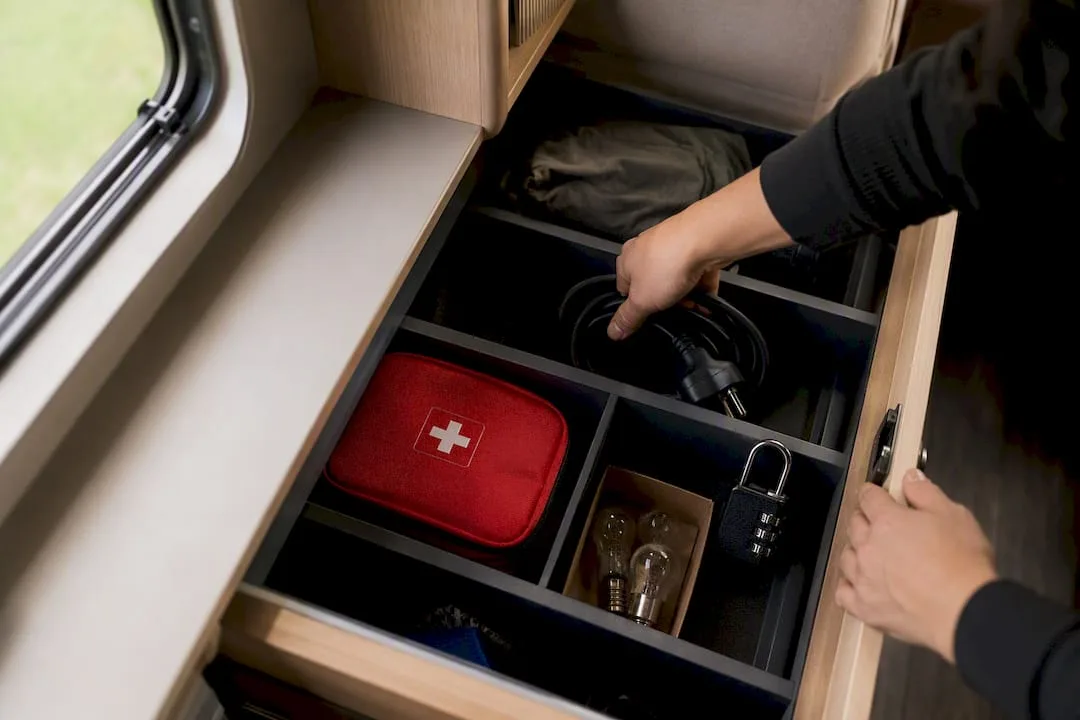
Keep laundry and wet items, such as swimsuits or umbrellas, in a separate waterproof bag so that moisture does not reach your dry clothes. Prepare two smaller bins for waste, one for general rubbish and one for recycling, as many campsites in Italy also expect guests to separate waste.
In spring and autumn, add warm sleeping equipment and a small additional heater, as nights in the hilly areas of Tuscany or Umbria can be surprisingly cold even outside winter.
- Personal documents, driving licence and insurance policy in a waterproof folder.
- Basic tools, spare fuses and bulbs.
- Extension cable and adapter for Italian campsite electrical outlets.
- Additional locks for doors and windows.
How to realistically plan daily distances and driving pace
For beginners, it is recommended to drive between 150 and 200 kilometres per day; experienced drivers can manage up to 300 kilometres on flat motorway sections without excessive fatigue. On mountain or coastal roads, such as the route to Amalfi, this figure is effectively halved because bends and traffic reduce the average speed.
A typical day might look like this: depart around 9 a.m., drive for two to three hours with breaks, arrive at your destination in the early afternoon, and have enough time to explore the area before settling in for the evening at a camper stop or campsite.
- Include at least one day without driving every week, dedicated solely to rest and sightseeing.
- Do not plan more than one vehicle move per day, except on longer transfer days.
- A spare day towards the end of the trip can save you from many delays caused by traffic or bad weather.
Documents, licence and insurance before crossing the border
For a Slovenian driver travelling to Italy by campervan, the administrative side is straightforward if you check the right things in advance. For campervans with a maximum authorised mass of up to 3,500 kilograms, a category B driving licence is sufficient, which applies to most models you will rent or purchase for a family trip.
You should carry the vehicle registration certificate, a Green Card or proof of valid European insurance, proof of roadside assistance and the personal documents of all passengers. When renting a vehicle, the rental company should provide you with a copy of the vehicle registration certificate and the insurer’s contact details.
Check before signing: AMZS warns that you should carefully check the rental company’s terms before renting, including mileage restrictions, the excess and exactly what is covered by the basic insurance.
- Vehicle registration certificate and category B driving licence.
- Green Card or proof of European insurance.
- Proof of 24-hour roadside assistance.
- Personal documents for all passengers, preferably also as digital copies.
How to choose and book a campervan in Ljubljana
For Slovenian travellers, picking up the vehicle at home in Ljubljana is much more convenient than flying or driving to a distant rental location abroad. When collecting the vehicle, take your time to inspect it rather than looking only at the exterior.
Check the following before signing the handover report:
- Condition and tyre pressure, including the spare tyre.
- Operation of all lights, indicators and brake lights.
- Operation of the kitchen, refrigerator and fixed toilet.
- Insurance documentation and the 24-hour roadside assistance contact.
Campervan offers pickup in Ljubljana with the Mercedes V Marco Polo and
Ford Transit Nugget Plus, both equipped with a kitchen, fixed toilet and sleeping arrangements for several people, basic insurance and continuous roadside assistance. For couples or small families planning their first trip to Tuscany or northern Italy, this is a practical starting point without the additional logistics of collecting a vehicle abroad.
When making your reservation, also discuss additional equipment such as bicycles or a child seat, and check exactly what is covered by the basic insurance compared with the extended package.
The most common beginner mistakes when travelling through Italy by campervan
The biggest mistake I see on first trips is overestimating daily distances. People imagine driving 400 kilometres a day through Tuscany, only to get stuck in a narrow street in Siena because they failed to check the height of an underpass. A campervan needs a longer braking distance and a wider turning radius, which becomes particularly noticeable in historic city centres where every metre matters.
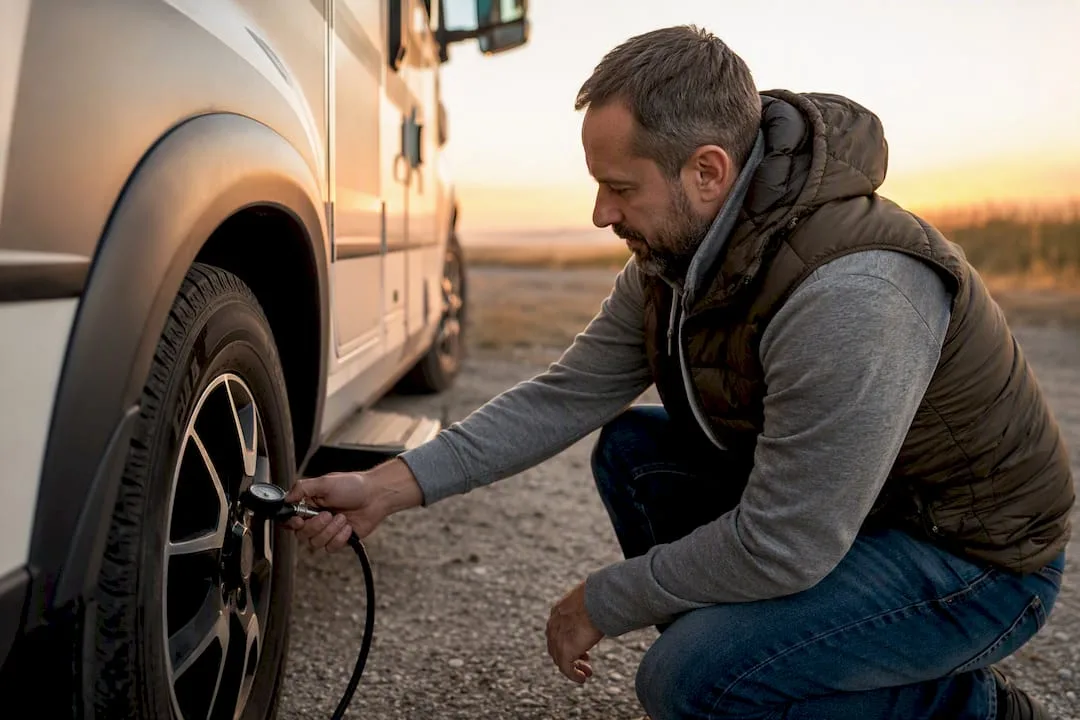
Another common mistake is that people only become familiar with their new vehicle for the first time at the border. A test weekend close to Ljubljana can reveal all the practical aspects of the vehicle before they become a problem in the middle of Tuscany.
As a rental operator, I notice that customers value a well-maintained vehicle, clear instructions at pickup and flexibility with the pickup time more than luxurious extras.
Why renting in Ljubljana is a smart choice for a trip to Italy
Instead of driving a campervan from far away or buying one for a single summer, you can simply pick it up in Ljubljana and be at Lake Garda within three hours. Campervan is the right solution for Slovenian travellers who do not want to lose days transporting a vehicle from abroad or make a large upfront investment in their own equipment.
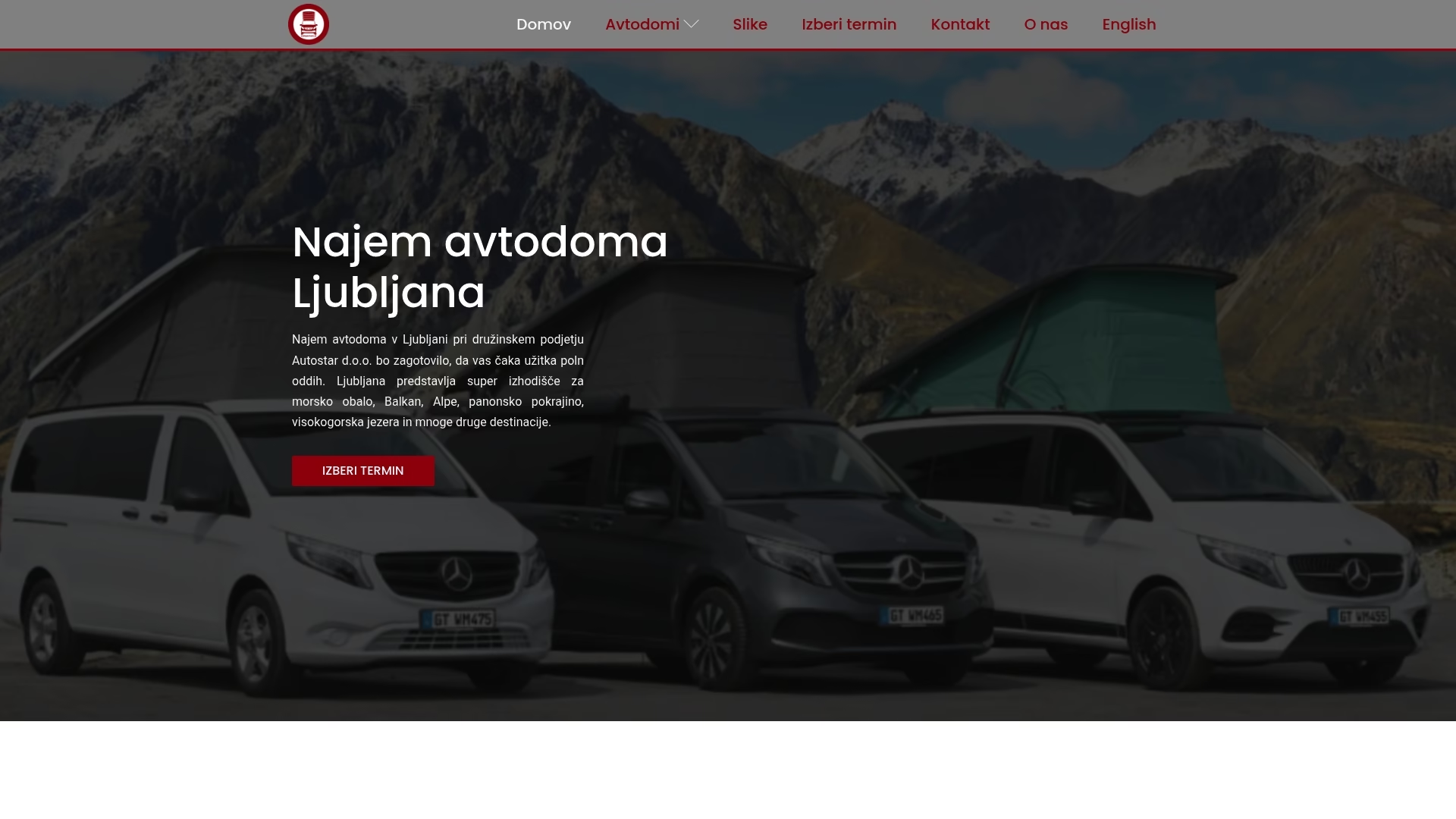
Pickup takes place in Ljubljana, with the Mercedes V Marco Polo available for couples and smaller families and the Ford Transit Nugget Plus offering somewhat more space. Both come with basic insurance and continuous roadside assistance. Before booking, make sure your driving licence category is suitable for the vehicle’s weight and read the cancellation policy so you know where you stand if your plans change. For trips towards Tuscany or northern Italy, check the summer
2026 model and pricing offer and book your dates before availability becomes limited during the high season.
Sources
Recommended