Discover how campervan dimensions affect parking, campsite access and driving on Slovenian roads, and choose the right vehicle for your adventure. Most campervans are between 5.0 and 6.4 metres long, 1.95 to 2.05 metres wide and 2.6 to 2.9 metres high. These three measurements determine whether you will find a parking space in Ljubljana, pass through a tunnel without worry, or reach your chosen campsite in the Gorenjska region. Campervans are commonly divided by length into the practical L1, L2 and L3 classes, representing shorter, medium and longer vehicles and providing a quick reference for size and usability.
For Slovenian roads, three things matter most:
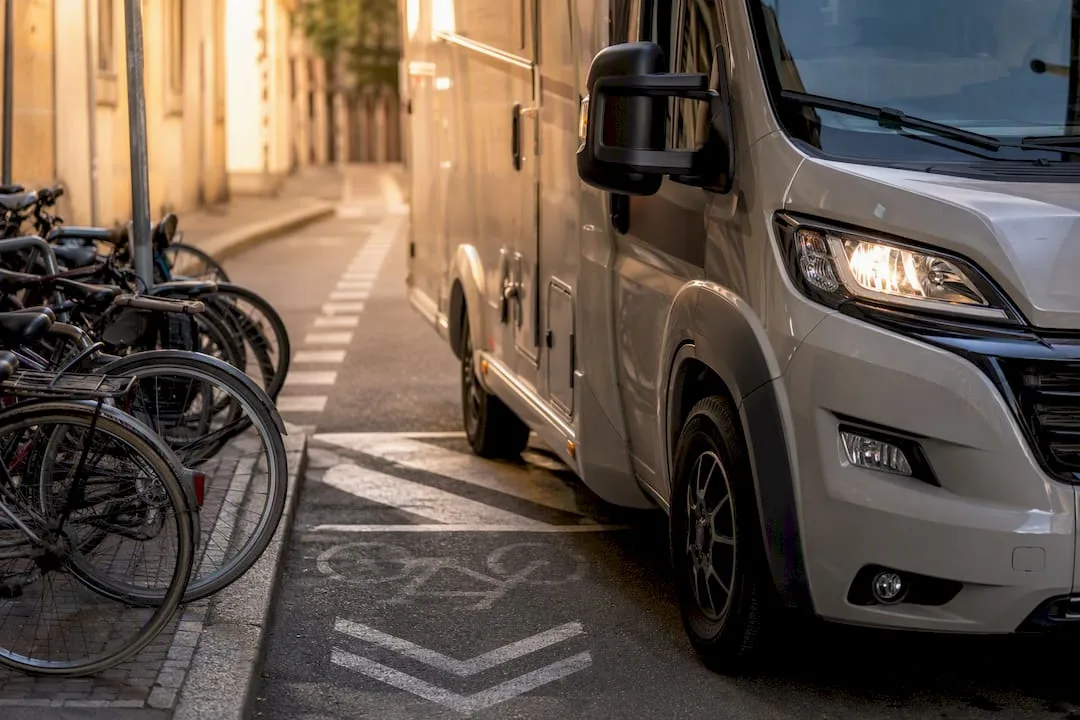
- Parking in cities – narrow parking spaces in historic city centres such as Ljubljana, Piran and Škofja Loka mainly limit vehicles by length and width, particularly with the mirrors extended.
- Tunnels and bridges – some tunnels on Alpine routes and older bridges have height restrictions, so the vehicle’s total height, including the roof, antenna and solar panel, is critical.
- Access to campsites and mountain roads – narrow switchbacks towards Bohinj or Triglav National Park are easier to navigate with a shorter vehicle.
For most routes in Slovenia, L1 or L2 models are the most practical, such as the
Mercedes V Marco Polo and
Ford Transit Nugget Plus, both offered by
Campervan in Ljubljana.
Expert tip: Before you rent or buy a vehicle, write down three numbers: its length, width with the mirrors folded and total height. You will need these three measurements literally every day of your trip.
Key Takeaways
Choosing the right campervan size for Slovenia is always a compromise between manoeuvrability in cities and comfort on longer journeys.
| Point |
Details |
| L1/L2 class for cities |
A length of up to 5.5 m and width of up to 2.05 m make parking in Ljubljana and other cities easier. |
| Total height is critical |
The roof, antenna and solar panel add height that can determine whether you can pass through tunnels and enter garages. |
| Interior height above 190 cm |
Allows you to stand inside the cabin comfortably without having to bend throughout the vehicle. |
| GVW up to 3,500 kg |
Compatible with a category B driving licence; above this limit, check the additional requirements. |
| Campervan.si offers test models |
The Mercedes V Marco Polo and Ford Transit Nugget Plus cover urban and family travel needs in Ljubljana. |
Table of Contents
Campervan dimensions by class: a quick overview
The L1, L2 and L3 classes are not an official classification, but rather a commonly used practical division that helps with quick vehicle comparisons. The differences are not limited to length; they also affect weight, interior layout and driving characteristics on narrow roads.
| Measurement |
L1 (compact) |
L2 (medium) |
L3 (long) |
| Overall length |
compact to medium length |
medium to longer length |
longer length |
| Width (without mirrors) |
~1.95–2.05 m |
~1.95–2.05 m |
~1.95–2.05 m |
| Overall height (roof/pop-top) |
standard height range |
standard height range |
slightly taller vehicles |
| Usable interior height |
typical interior height, allowing comfortable use |
slightly greater interior height |
maximum interior height for greater spaciousness |
| Bed (length × width) |
smaller sleeping area for one person or children |
standard sleeping area for couples |
largest sleeping area, suitable for families |
| Permitted mass (GVW) |
lower permitted mass, suitable for lighter vehicle categories |
medium permitted mass |
higher permitted mass, which may affect licence requirements |
| Best suited for |
cities, narrow roads |
mixed routes, couples |
long journeys, families |

A specific example from the L2 class is the
CV540, which measures 5.41 m in length, approximately 2.05 m in width, around 190 cm in interior height and has a permitted gross weight of 3,500 kg. Similar dimensions, including lengths of 5.99 m and 6.36 m at a width of 2.05 m, can also be found in Laika ECOVIP models, which fall into the L2 to L3 range.
Smaller models such as the Mooveo CV vehicles, with a length of around 508 cm and width of 195 cm, are typical examples of the L1 class. According to
Triglav, a length of around 5 metres makes parking in standard parking spaces easier, while L3 vehicles often require you to plan ahead and find a suitable parking area.
Expert tip: If you will spend most of your time in city centres, stick to a length below 5.5 metres and a width of up to 2.05 metres without mirrors. These are two numbers that can determine whether you can enter a multi-storey car park in Ljubljana or Piran.
How to choose the right size for your trip through Slovenia
The right campervan size depends primarily on where you are travelling and how many people are travelling with you. In its motorhome selection guide, Triglav recommends adapting the vehicle size to your planned route, rather than the other way around.
- For city trips such as Ljubljana, Bled and Piran, choose an L1 or smaller L2, as it will be easier to find parking and navigate the narrow streets of historic city centres.
- For longer stays with a family or when you need to carry additional equipment, consider an L2 or L3, where a fixed bed and larger storage space can justify the reduced manoeuvrability.
- For mountain routes, for example towards Bohinj or the Triglav valleys, a shorter vehicle means less stress on switchbacks and easier turning at junctions.
When choosing between travelling as a couple or as a family, a simple rule applies: couples are often happiest with an L2 van-based model, which offers a good balance between manoeuvrability and a comfortable fixed bed, while families with children are more likely to need additional sleeping areas found in L3 models.
Expert tip: Before buying, rent a vehicle in the class you are considering for a weekend. A practical test of parking in Ljubljana or driving towards Bled will tell you more than any technical specification table.
Which interior dimensions have the biggest impact on comfort
Usable interior height, bed length and width, and storage capacity are dimensions that buyers often overlook, even though they have a greater impact on everyday comfort than the vehicle’s exterior length.
- Interior height: at 190 centimetres or more, an adult can stand without bending throughout the cabin, which is important when cooking or getting dressed.
- Bed length: for people over 180 centimetres tall, a bed at least 200 centimetres long is advisable; otherwise, sleeping can become uncomfortable on longer trips.
- Bed width: 130 centimetres is suitable for one person or children, while couples generally need at least 140 to 150 centimetres for comfortable sleeping.
- Cabinet depth and refrigerator: for longer trips of more than a week, a refrigerator with a capacity above 40 litres is almost essential for a family.
Measuring the bed and interior height is straightforward: measure the bed from one end of the mattress to the other, and measure interior height from the floor to the lowest point of the ceiling, not the highest point. In vans with a cushioned sleeping area above the cabin, also check whether access to the upper bed is practical for everyday use. You can find additional advice on equipment and storage space in the
camping equipment guide.
What vehicle height is critical for tunnels and bridges in Slovenia
The vehicle’s overall height, not its interior height, is the number that determines whether you can safely pass through a tunnel or under a low bridge. The difference between the two can be as much as 70 centimetres, as the roof, pop-top roof, antenna and solar panel all add height and may be listed separately in technical specifications.
- Multi-storey car parks in Ljubljana and other major cities often have height restrictions of around 2.0 to 2.2 metres, which is lower than the height of an average campervan with a fixed roof.
- Alpine tunnels and some older bridges on regional roads may have stricter height restrictions than major motorways, so it is worth checking your route in advance rather than relying solely on navigation.
- Access to campsites in Gorenjska and the Soča Valley is often easier with vehicles equipped with a pop-top roof because their travelling height is lower than that of vehicles with a fixed high roof.
According to Triglav, the approximately 5-metre length of an L1 vehicle also makes manoeuvring easier on narrow mountain sections, where a low overall height is equally important. Before setting off, check the requirements of the specific campsite and any municipal restrictions for city parking.
What does GVW mean and which driving licence do you need
The gross vehicle weight, known as GVW (gross vehicle weight), is the maximum permitted total weight of the vehicle, including the vehicle itself, fuel, water, equipment and passengers. This figure, rather than length, determines which driving licence you need and can also affect costs at toll stations or on ferries.
- A standard category B driving licence in Slovenia allows you to drive vehicles with a permitted gross weight of up to 3,500 kilograms, which covers most L1 and L2 models.
- L3 vehicles with a GVW above 3,500 kilograms (up to 4,250 kg for some models) may require an additional licence category or have additional restrictions, so check the actual weight of the specific vehicle before renting or buying.
- Some toll stations and ferry services calculate prices based on vehicle weight or length rather than simply vehicle type, meaning that a heavier van may cost more than a lighter vehicle with similar exterior dimensions.
Legal note: if your vehicle has a GVW above 3,500 kilograms, check the exact driving licence and registration requirements with the relevant Slovenian authority or your rental provider before travelling.
Checklist for inspecting a vehicle before renting or buying
Before signing a rental or purchase agreement, take ten minutes to physically check the vehicle. The figures in the technical specifications and the actual dimensions may differ, especially on used vehicles with additional equipment.
- Measure the overall length from the front bumper to the rear, including any bicycle rack.
- Check the width with the mirrors both extended and folded, as the difference can be as much as 40 centimetres.
- Check the overall height with all roof-mounted equipment, such as the antenna, air-conditioning unit and solar panel, in its travelling position.
- Measure the interior height at the lowest point and the length and width of the bed with the mattress unfolded.
- Test how much the rear of the vehicle moves when getting in, as this can tell you a lot about the suspension under full load.
Ask the rental company whether the stated vehicle weight includes additional equipment and how much payload remains available for passengers and luggage. As
Red Bull recommends in its guide to converting vans, it is best to test the size in practice before deciding to buy.
Expert tip: Take photos of all the measurements with your phone and compare them with the requirements of the campsites you plan to visit during your trip. This can save you an unpleasant surprise at the campsite reception.
What I learned about campervan size firsthand
Once, on a narrow street in the old town of Piran, I narrowly avoided damaging the mirror because I had underestimated the vehicle’s width with the mirrors extended. Since then, I have always checked this measurement before looking at the length. On the road towards Bohinj, I also found that the manoeuvrability of a compact van was worth more than the fixed bed I had previously wanted. Before making a decision, rent the vehicle you are considering and measure for yourself what works for you in practice.
How Campervan.si helps you choose the right vehicle size
Instead of guessing between manufacturers’ technical specifications, you can test an actual vehicle in Ljubljana and make your decision based on real-world experience rather than numbers on paper.
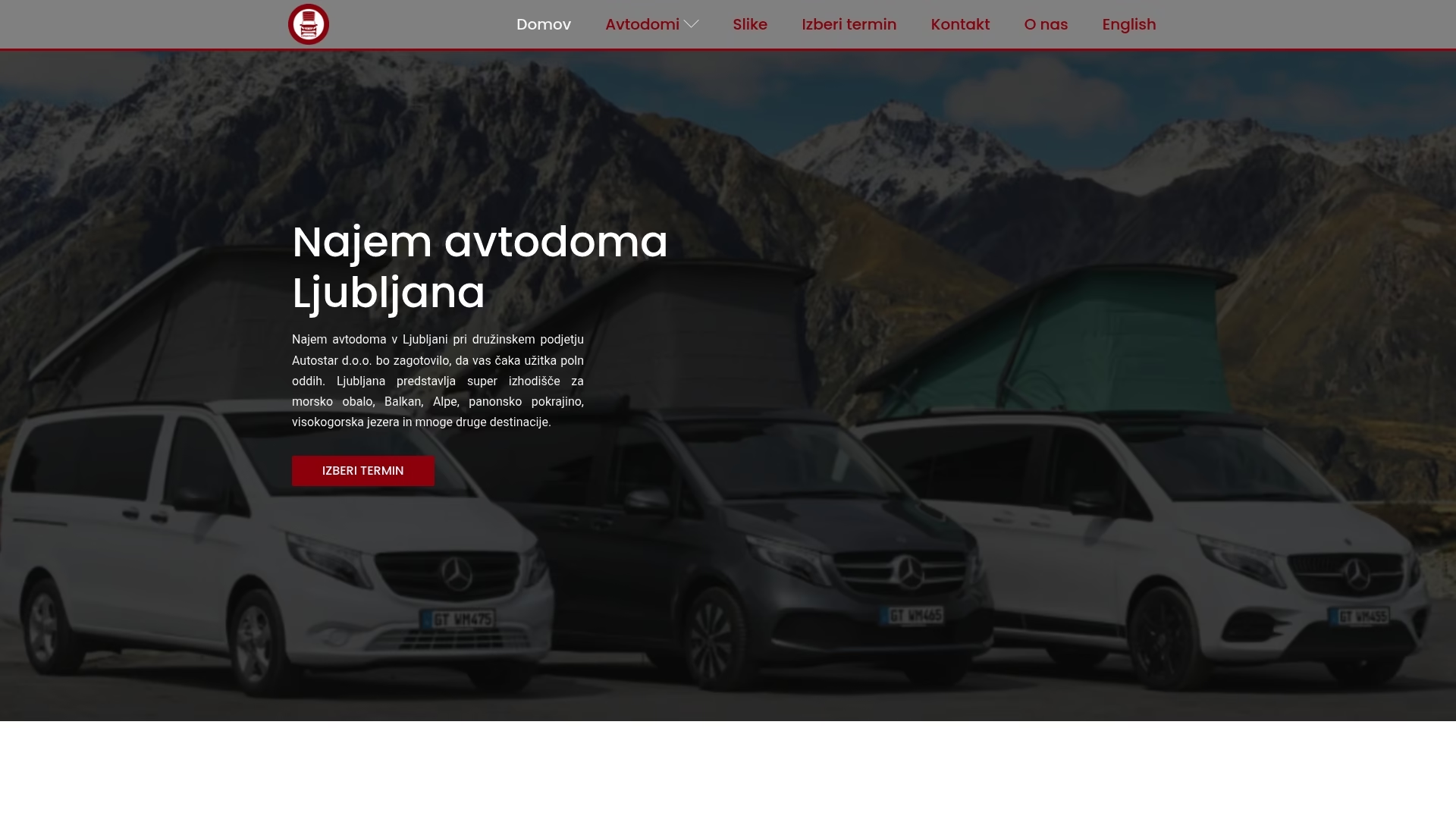
Campervan.si in Ljubljana offers two models that cover different needs of Slovenian travellers: the Mercedes V Marco Polo, which is more compact and well suited to urban parking, and the Ford Transit Nugget Plus, which offers more space for families and longer stays. If you will spend most of your time in Ljubljana, Bled or other urban centres, the shorter model is simply the more practical choice. If you are planning a longer journey through Slovenia, the Alps or towards the Balkans with several passengers, the larger model is worth considering for its additional space and sleeping capacity.
Vehicle collection is available in Ljubljana, and when booking you can also receive advice on choosing a suitable route based on the vehicle size you select. Check the available dates and models on the main rental page and choose the size that actually fits your journey, not just your preferences.
Sources
For accurate information on restrictions and technical specifications, consult the following sources:
Manufacturer specifications are useful as a guide, but always check the final dimensions on the actual vehicle before renting or buying.
Recommended