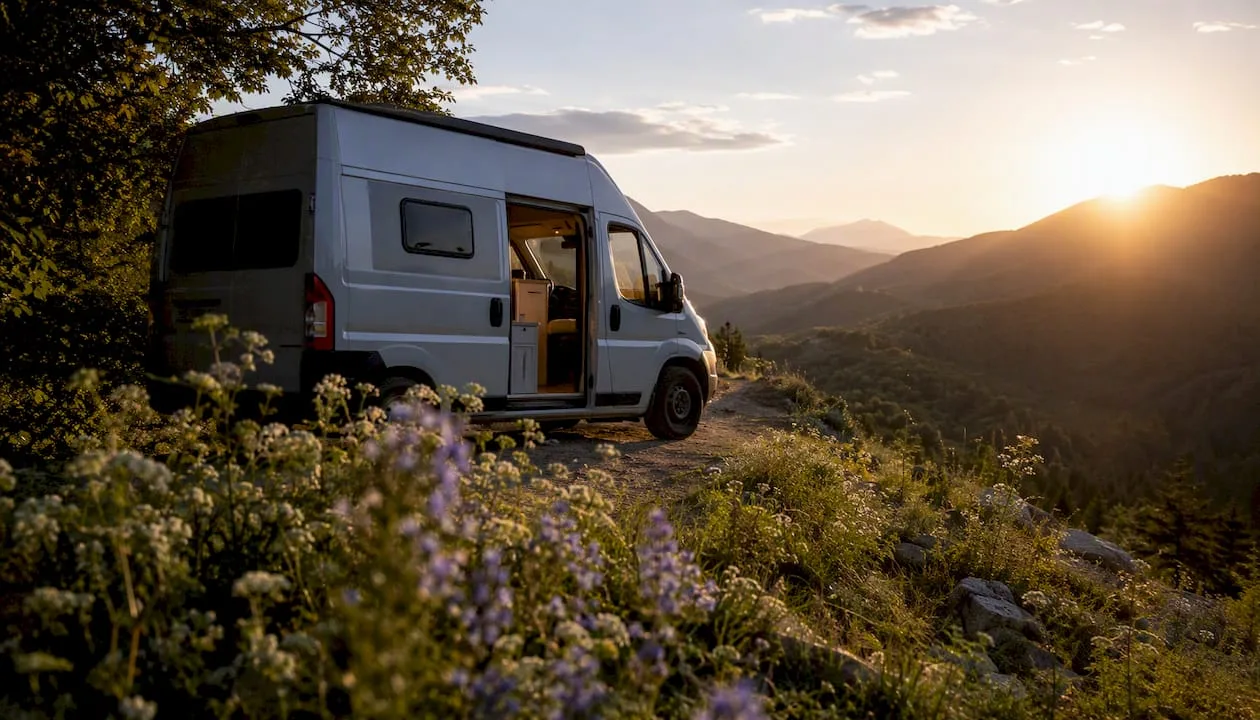
Wild camping in Slovenia is largely prohibited. Setting up a tent in a forest, meadow or by a river without permission is regulated by three laws: the Forest Act, the Nature Conservation Act and the Protection of Public Order and Peace Act. Municipalities in the Julian Alps have introduced a uniform fine of
€500 per person, while the general legal range is €100 to €500, with a 50% reduction if the fine is paid within the prescribed period.
Before heading into nature, keep the following in mind:
- Slovenia has around 117 organised campsites and more than 160 motorhome stopovers, so there is no shortage of legal alternatives.
- Bivouacking (one night, without a tent and away from established paths) is sometimes tolerated in practice, but setting up a tent is not.
- Municipal wardens regularly patrol popular areas during the tourist season, and fines are actually issued.
Key Takeaways
Legal overnight stays in nature are accessible to everyone in Slovenia who chooses organised campsites or motorhome stopovers instead of taking the risk of wild camping.
| Point |
Details |
| Legal status |
Wild camping is prohibited under three laws: the Forest Act, the Nature Conservation Act and the Public Order Act. |
| Fines in 2026 |
The Julian Alps have a uniform €500 fine per person, while the general range is €100 to €500. |
| Alternatives |
Slovenia has around 117 organised campsites and more than 160 motorhome stopovers. |
| Leave No Trace |
Responsible behaviour regarding waste, fire and noise helps protect nature regardless of where you stay overnight. |
| Legal solution |
Campervan.si offers motorhome rentals with access to authorised stopovers throughout Slovenia. |
Table of Contents
How to Get the “Wild” Camping Experience Without Breaking the Law
The solution is not to risk a fine, but to find places where nature feels just as wild while overnight stays are legal. Motorhome stopovers are often located on the edge of forests, beside rivers or beneath mountains, giving you the same scenery without the risk.
The
Leave No Trace principle is an essential guideline here, not just a nice phrase. It means leaving behind no traces of fire, waste or damaged vegetation. In practice, this means:
- Set up your camp on already used, hardened surfaces rather than on grass or moss.
- Take all waste with you, including organic waste. It does not decompose in nature as quickly as you might think.
- Use water for washing dishes or yourself at least 60 metres away from a stream or river.
- Keep noise to a minimum, especially in the evening. Wildlife and other visitors will appreciate it.
Expert tip: If you are looking for a feeling of solitude, choose a stopover outside the main season or during weekdays. The same locations that are packed in July can be almost empty in May or September.
The difference between “wild” and “legal” camping is often not the beauty of the location, but whether the landowner or municipality has given permission. That permission is what separates you from a potential fine.
Motorhome Tips: Parking, Gas Canisters, Water and Sanitation
When travelling by motorhome or campervan, the question of “where to sleep” is different from traditional tent camping. You can park at organised motorhome stopovers, where you will generally have access to electricity, fresh water and wastewater disposal. The
list of motorhome stopovers in Slovenia is a good starting point when planning your route, as facilities and prices vary between locations.
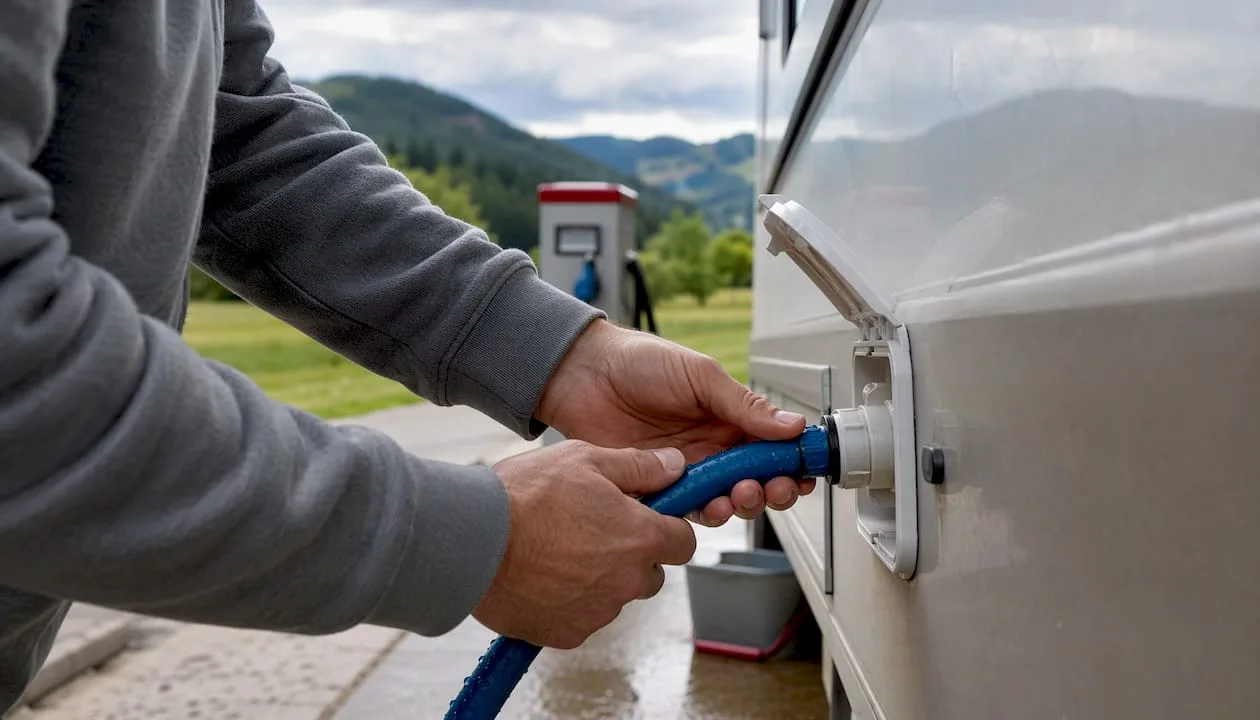
Overnight parking beside a road or at a viewpoint is permitted for short stops in many municipalities, but not necessarily for overnight stays. The distinction between the two can sometimes be unclear, so when in doubt, choose an official stopover.
When travelling with gas canisters, make sure they are compatible with your cooker and carry a spare, as replacements can be difficult to find in remote areas. Refill your fresh-water tank at designated stopovers or petrol stations rather than from streams or rivers, even if the water looks clean. A built-in toilet in a campervan also solves one of the biggest sanitation issues associated with wild camping, as improper disposal of wastewater can contaminate soil and groundwater.
Expert tip: Before every longer stop, also check your battery level and gas supply, as some stopovers in mountainous areas do not have electrical hookups.
Where to Experience the Best of Slovenia’s Nature Outdoors
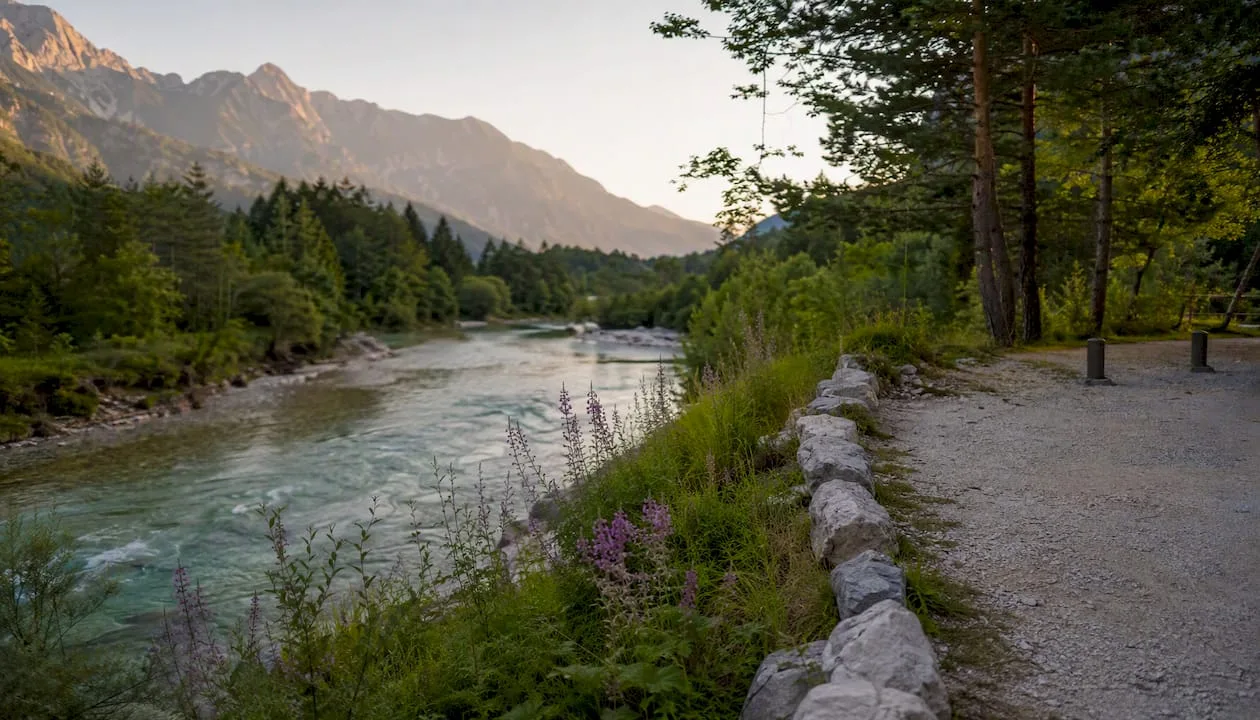
Some areas are popular precisely because they offer a wilderness experience without requiring you to risk an illegal overnight stay. The Soča Valley is considered one of Slovenia’s most beautiful valleys, with its emerald-green river and dramatic mountain backdrop. Instead of pitching a tent along the Soča, where camping is prohibited and monitored, consider the
organised motorhome stopovers in the valley, many of which are only a few minutes’ walk from the river.
Lake Bohinj and the surrounding Triglav National Park are among the most strictly regulated areas in the country because they are protected natural areas. Fines can be particularly high here and enforcement is more intensive. Bled offers similar scenery with fewer restrictions on movement, while
organised parking areas and stopovers nearby allow you to enjoy views of the lake without risking a fine.
The Karst region and Vipava Valley are less crowded, with dry karst landscapes and vineyards where renting a private camping spot from a local provider is often easy and affordable. Pohorje and Kozjansko offer forested landscapes with fewer tourists, which may also mean less enforcement, but the same rules apply everywhere.
How to Prepare for Weather, Wildlife and Poor Mobile Coverage
Mountain weather in Slovenia can change within hours rather than days. Check the forecast immediately before setting off, not just the day before, as thunderstorms are common in the Alps during summer afternoons. Temperatures at an altitude of 1,500 metres can be 10°C lower than in the valley, even in July.
Bears are a genuine consideration in some parts of Slovenia, particularly in the Kočevje region and parts of Inner Carniola. Always store food securely away from your sleeping area and never leave food scraps around your campsite.
Mobile coverage can be weak or completely unavailable in deep valleys and forests. Before setting off, tell someone your approximate location and expected return time. Travelling in a campervan makes this easier because you generally have emergency power sources and can check connectivity at a stopover before heading further into remote areas.
Basic emergency equipment should include a first-aid kit, extra water, a warm blanket and a flashlight with spare batteries. This is useful even on short trips, as mountain conditions can change faster than expected.
Why Following the Rules Helps Preserve Nature for Everyone
Wild camping is not only a legal risk; it can also put pressure on soil, water sources and the animals that actually live in these areas. Erosion along riverbanks, damaged tree roots and wastewater are not abstract problems. They are consequences that can already be seen in popular locations after only a few seasons.
Sustainable camping means something simple: leave a place as you would want to find it. This does not mean giving up the wilderness experience; it means choosing the right place for it.
Why Camping Rules Benefit Everyone
At Campervan.si, we advise customers every day on where they can legally stay overnight while travelling through Slovenia, the Alps or the Balkans. The Leave No Trace principle is not an administrative obstacle; it is the only way to preserve the nature that attracts people in the first place. Legal alternatives, organised campsites and
motorhome stopovers are not a compromise — they are the smarter way to achieve the same goal.
How Campervan.si Makes It Possible to Stay in Nature Legally
Renting a campervan is one of the easiest ways to enjoy a feeling of wilderness without risking a fine. Instead of searching for a hidden spot in the forest where a municipal warden could arrive at any time, you can pick up your vehicle in Ljubljana and have access to sanitation, a kitchen and sleeping facilities throughout your trip, wherever you legally park.
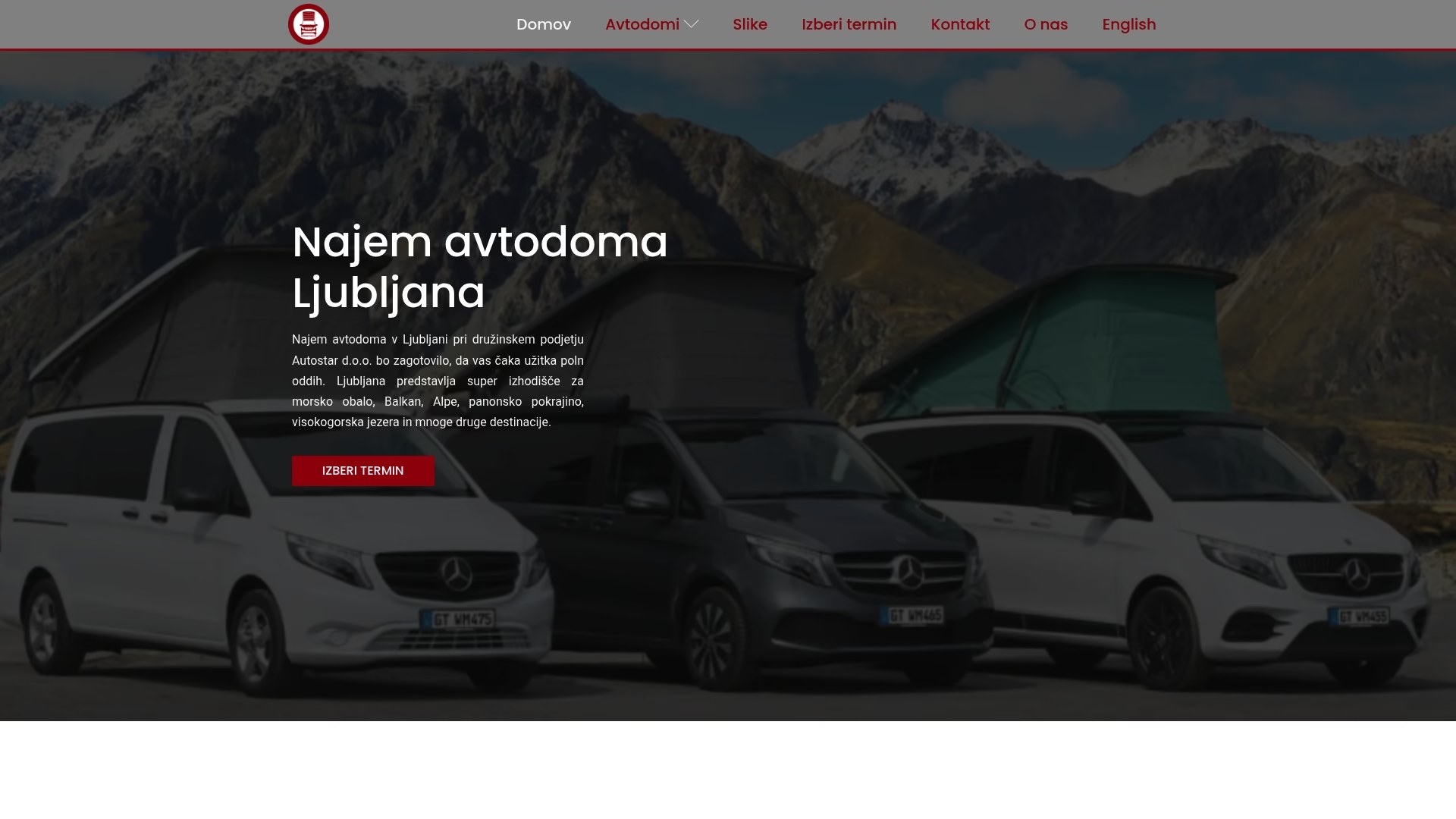
Campervan.si offers Mercedes V Marco Polo and Ford Transit Nugget Plus rentals, both equipped for several days of independent travel. The service includes:
- Vehicle pickup in Ljubljana with multiple pickup times available.
- Advice on motorhome stopovers and parking areas throughout Slovenia, the Alps and the Balkans.
- Basic insurance and 24/7 roadside assistance during your trip.
- Practical travel advice based on your preferences for nature, activities and remote locations.
If you are considering which model best suits your type of trip, take a look at the comparison of the Ford Nugget and VW California or check the
2026 summer campervan rental offer and reserve your dates before the most popular periods fill up.
Sources
Before staying overnight, check local regulations, the current legal framework governing wild camping, and contact the relevant municipal authorities or national park administration where necessary.
This article is general information, not a substitute for advice from a qualified lawyer. Consult a qualified legal professional about your own circumstances before acting on anything here.
Frequently Asked Questions
Is bivouacking allowed in Slovenia?
Bivouacking without a tent for one night and away from established paths may be tolerated in some circumstances, while pitching a tent or staying for several days constitutes a violation of the rules.
How much is the fine for wild camping in Slovenia?
In municipalities in the Julian Alps, a uniform fine of €500 per person applies. Elsewhere, the law provides for fines ranging from €100 to €500, with a 50% reduction for timely payment.
Where can I legally stay overnight with a motorhome in Slovenia?
At organised motorhome stopovers, campsites or on private land with the landowner’s permission. Slovenia has around 117 campsites and more than 160 motorhome stopovers.
What should I do if I receive a fine for wild camping?
You can pay the fine within the prescribed period to receive the reduced amount, or challenge it with the competent authority if you believe it was issued incorrectly. In either case, contact the relevant municipal authority to clarify the circumstances.
When is the best season for camping in Slovenia?
The main camping season runs from May to September, when most campsites and motorhome stopovers are open and mountain weather is generally more stable.
Recommended