Bikes can be transported when renting a campervan, and yes, bike racks are available as a paid extra from many rental providers. At Campervan.si, this applies to both models in our fleet:
Ford Nugget Plus and
Mercedes V Marco Polo. The key is to reserve the bike rack in advance, check its maximum load capacity against the weight of your bikes, and read the rental terms regarding liability for potential damage. The Slovenian Traffic Safety Agency (AVP) emphasises that correct attachment and respecting the rack’s maximum load are among the most important safety requirements, particularly when transporting e-bikes.
Quick checklist before booking:
- Check the maximum load capacity of the bike rack, which depends on the rack type.
- Reserve the bike rack together with the campervan rather than adding it later.
- Ask whether the insurance covers damage to the bike rack and bicycles.
- Planning to bring an e-bike? Check its weight both with and without the battery.
Table of Contents
What bike transport options will you find when renting a campervan?
Bike transport systems vary considerably in terms of how they are mounted, their maximum load capacity and their suitability for different campervan models.
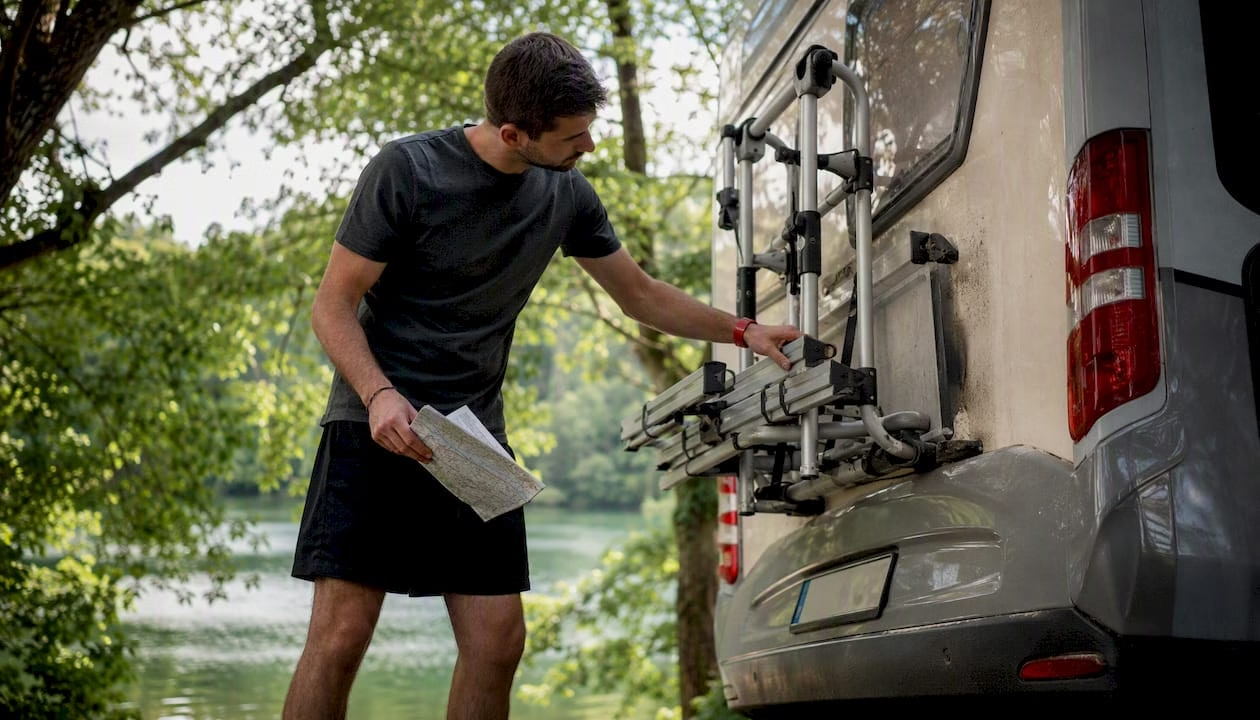
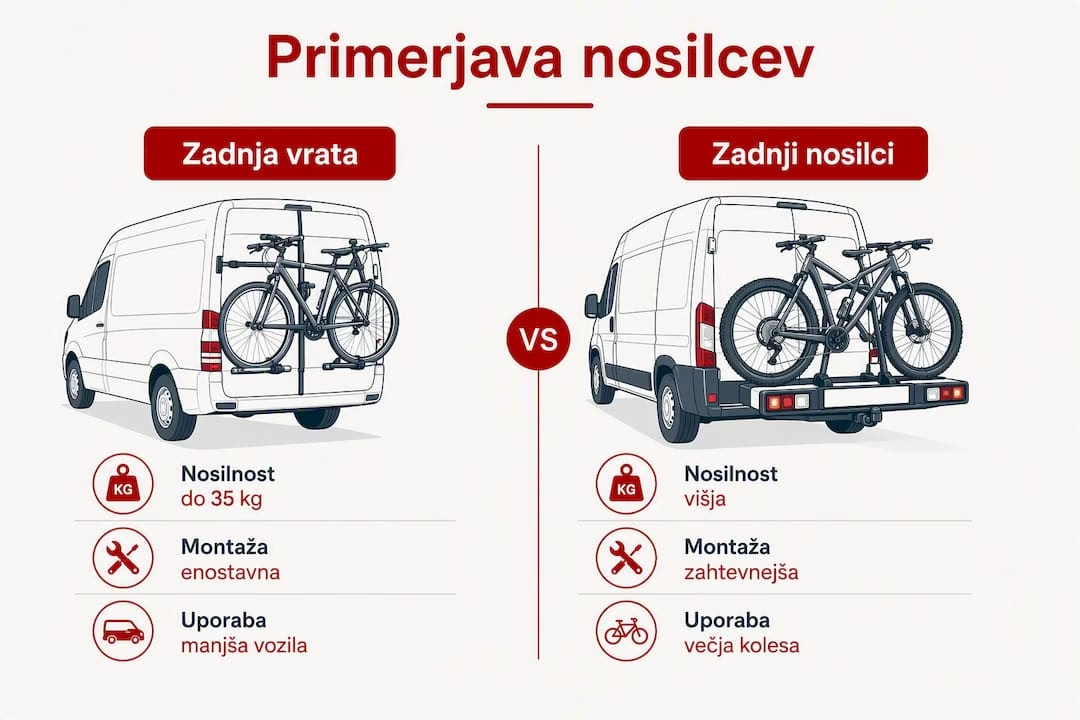
Rear-door or rear-wall bike racks are among the most common options for compact campervans. They can carry a weight that is usually sufficient for lighter bicycles, and installation is relatively quick, although some systems can restrict access to the rear of the vehicle.
Chassis-mounted or bolted rear-wall bike racks are more robust and can support heavier loads, but professional installation may be required.
Tow-bar bike racks are popular with renters because they are easy to install and remove. Their actual load capacity depends on the tow bar’s homologation and its permitted vertical load.
Internal bike storage is an option in larger motorhomes and campervans with a dedicated garage compartment underneath the bed or at the rear. Bikes are protected from weather and theft, but they take up valuable luggage space. Roof-mounted bike racks are less common on campervans and are rarely used for transporting bicycles.
For the models available from Campervan.si, two vehicles are particularly relevant. The Ford Nugget Plus is a compact campervan with limited interior space for bicycles, making an external bike rack a common solution. The Mercedes V Marco Polo offers somewhat more interior space, but an external bike rack is still the practical choice when transporting two bicycles.
Questions to ask your campervan rental provider before booking:
- Is the bike rack included in the rental price or available as a paid extra?
- What is its maximum load capacity, and is it suitable for your bicycles?
- Does installation require homologation or professional fitting?
- Will the bike rack cover the registration plate, and is a replacement plate available?
| Bike rack type |
Load capacity |
Installation |
Notes |
| Rear door/rear wall |
Up to 35 kg |
Simple |
Common on compact campervans |
| Chassis/rear wall (bolted) |
Up to 60 kg |
Professional |
Suitable for heavier e-bikes |
| Tow-bar mounted |
Depends on tow-bar homologation |
Simple |
Check the tow bar’s approved load |
| Internal garage |
Depends on available space |
Not required |
Provides additional protection against theft |
How much do e-bikes weigh and why does it matter?
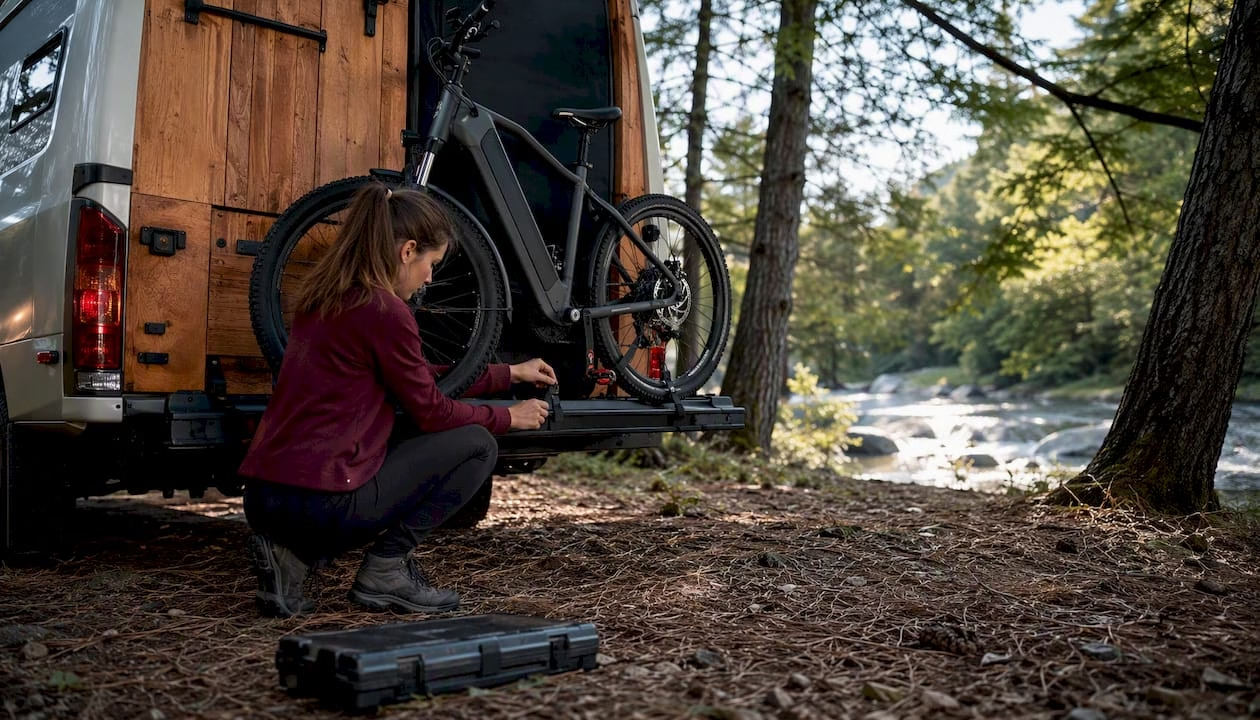
Campervan bike racks typically have a load capacity that is sufficient for a range of bicycles. That sounds straightforward until you consider that e-bikes are significantly heavier than conventional bicycles, largely because of their batteries. Two e-bikes together can easily reach a weight that is close to or above the capacity of many rear-door bike racks.
 AVP and equipment manufacturers
 warn that overloading a bike rack is one of the most common mistakes when transporting e-bikes. The solution is straightforward: choose a bike rack with a higher load capacity, such as a chassis-mounted or tow-bar-mounted system, or remove the batteries before loading the bicycles.
Expert tip: Whenever possible, remove e-bike batteries during transport. This can reduce the load on the bike rack by approximately 3–5 kg per bicycle while also protecting the batteries from vibration and exposure to the elements.
For example, two e-bikes without their batteries (2 × 22 kg = 44 kg) are within the capacity of a 60 kg bike rack. With the batteries installed, however, the total weight may exceed the limit. Also remember that the combined weight of the bicycles and bike rack contributes to the vehicle’s overall payload, which can be an important consideration in compact campervans.
- Check the weight of each bicycle individually, both with and without the battery.
- Add the weight of the bike rack and all bicycles together.
- Make sure the total load does not exceed the vehicle’s permitted axle load or overall payload.
How does a bike rack affect driving and which rules should you check in Slovenia?
An external bike rack increases aerodynamic drag and therefore fuel consumption.
According to AVP estimates, fuel consumption can increase by
25–35% at speeds between 100 and 130 km/h. This alone is a good reason to drive more conservatively on motorways when bicycles are mounted on the rear of your campervan.
In addition to fuel consumption, you should also consider the following:
- Registration plate and rear lights: If the bike rack or bicycles cover the registration plate or rear lights, an appropriate replacement plate and additional lighting may be required. Always make sure the vehicle remains legally compliant.
- Vehicle dimensions: Bicycles mounted on the rear increase the overall length and potentially the width of the vehicle. Make sure you remain within the permitted dimensions.
- Tow-bar homologation: The tow bar must be approved for the vertical load created by the bike rack and the bicycles it carries.
- Speed and following distance: AVP recommends adapting your speed and increasing the safety distance from the vehicle in front when travelling with bicycles mounted on a rear rack.
Checklist before every journey:
- Check that the rear lights are visible and working correctly.
- Make sure the registration plate remains clearly visible.
- Tighten and check all bike rack and bicycle mounting points.
- Make sure the bicycles do not exceed the permitted vehicle width.
When planning a campervan road trip through Europe, increased fuel consumption can become particularly noticeable on longer motorway journeys. Practical information about European motorway tolls and road charges can also help you budget your trip more accurately:
practical guide to motorway tolls in Europe.
What should you check in your rental contract regarding insurance and liability?
Insurance included with a campervan rental does not necessarily automatically cover damage to the bike rack or bicycles. Before signing your rental agreement, check the following:
- Is the bike rack listed as part of the vehicle equipment or as a separate rental extra?
- Does the standard insurance cover damage to the bike rack and bicycles during driving?
- What excess or deductible applies in the event of damage?
- Who is responsible if the bike rack becomes detached or causes damage to another vehicle?
Incorrectly secured cargo is ultimately the driver’s responsibility, not the responsibility of the rental provider. This means that correctly securing your bicycles is your task and your responsibility.
Expert tip: When collecting your campervan, photograph the bike rack and bicycles from all sides. Do the same when returning the vehicle. These photos can provide useful evidence in the event of a dispute about pre-existing or newly caused damage.
Read the full
Campervan.si rental terms and conditions for further information about liability, insurance and additional equipment.
How do you reserve a bike rack with Campervan.si?
Many campervan rental companies have only a limited number of bike racks available, which makes early reservation particularly important. At Campervan.si, the process is simple:
- Choose your campervan model (Ford Nugget Plus or Mercedes V Marco Polo) and rental dates.
- When booking, let us know that you need a bike rack.
- Tell us how many bicycles you are bringing and their total weight, both with and without batteries where applicable.
- Ask which bike rack solution is available for your selected campervan, such as a tow-bar or rear-mounted system.
- Confirm any additional equipment costs and relevant insurance conditions.
Expert tip: When contacting us about your booking, specify exactly how many bicycles you are bringing, what type they are (conventional bicycles or e-bikes), and their total weight. This makes it much easier for the Campervan.si team to recommend a suitable bike rack and identify any limitations for your chosen campervan.
You can add equipment and extras to your booking through our
camping equipment page or directly during the booking process on
Campervan.si.
How do you load and secure bikes safely?
- Inspect the bike rack before loading: check that all bolts are tight and that there is no visible damage.
- Place heavier bicycles closer to the vehicle and lighter bicycles further out.
- Secure each bicycle according to the rack manufacturer’s instructions, using the designated frame and wheel restraints.
- Remove e-bike batteries whenever possible and store them safely inside the campervan.
- If necessary, turn wide handlebars by 90 degrees to reduce the overall width and prevent damage.
- Take a short test drive in a safe parking area and check whether anything vibrates, moves or feels loose.
- After the first 20–50 km, stop and check all bicycle and rack attachment points again.
Expert tip: Be particularly careful when reversing and when driving over speed bumps or other raised obstacles. The additional rear overhang means that the bike rack and bicycles can extend lower and further behind the vehicle than you may be used to.
- Check the rear lights and registration plate before every departure.
- Check the bike rack again during stops on longer journeys.
- Never load bicycles asymmetrically, as uneven weight distribution can affect vehicle handling.
What should you do if a bike rack is unavailable or your e-bikes are too heavy?
Sometimes a suitable bike rack simply isn’t available, or your e-bikes exceed the permitted load capacity. In that situation, there are several alternatives:
- Folding bikes or lightweight camping bikes: These typically weigh around 10–15 kg and can often be stored inside a compact campervan without an external bike rack.
- Rent bicycles at your destination: This can make sense for shorter trips where you do not need bicycles every day. The Soča Valley, Kranjska Gora and many other tourist destinations in Slovenia have local bicycle rental services.
- Internal storage: If your campervan has a garage compartment, check its dimensions. A smaller or folding bicycle may fit inside.
- Bike shipping or courier transport: For longer trips with expensive e-bikes, shipping the bicycles can sometimes be a safer and more cost-effective solution than transporting them externally.
A simple rule of thumb: if you are planning a longer cycling holiday with your own e-bikes, reserve the bike rack in advance. For a one-day cycling trip at your destination, renting bicycles locally is often simpler and more affordable.
Key takeaways
You can easily combine a campervan holiday with cycling, but safe and hassle-free bike transport depends on reserving the right bike rack in advance, checking its load capacity and documenting the equipment when you collect the vehicle.
| Key point |
Details |
| Reserve your bike rack in advance |
Bike racks are available in limited quantities, so add one when booking your campervan. |
| Check the load capacity for e-bikes |
Bike rack capacities commonly range from around 35–60 kg; two heavier e-bikes may require a higher-capacity rack. |
| Remove e-bike batteries |
This reduces the load on the rack and helps protect the battery from vibration and weather exposure. |
| Photograph the equipment at pickup |
Photos of the bike rack and bicycles can provide useful evidence in the event of a damage dispute. |
| Campervan.si offers both models |
The Ford Nugget Plus and Mercedes V Marco Polo can be equipped for external bicycle transport; check availability and specifications when booking. |
What we recommend to Campervan.si customers
Many renters underestimate how much e-bikes weigh. Two pedelecs without batteries can easily weigh around 44 kg in total; with batteries, their combined weight can exceed 50 kg and surpass the capacity of some rear-mounted bike racks. For this reason, Campervan.si recommends that customers provide the exact weight of their bicycles before booking and specify whether they are conventional bicycles or e-bikes.
For campervans such as the Ford Nugget Plus and Mercedes V Marco Polo, an external bike rack is a practical solution for transporting two bicycles. When you collect the vehicle, the Campervan.si team can point out the key safety considerations, including checking the attachment points, explaining the use of the replacement registration plate where applicable, and highlighting any recommended speed limitations when travelling with a loaded bike rack.
Photographing the equipment at pickup is more than just a formality. It is a simple habit that can help prevent unpleasant discussions when you return the campervan.
Campervan.si: add bikes to your booking today
Planning a
summer campervan rental with your own bicycles? Campervan.si allows you to reserve a bike rack together with your campervan, without having to search for suitable equipment from third-party providers. When booking, simply tell us how many bicycles you are bringing and their weight, and our team can advise you on the most suitable solution for your chosen campervan.
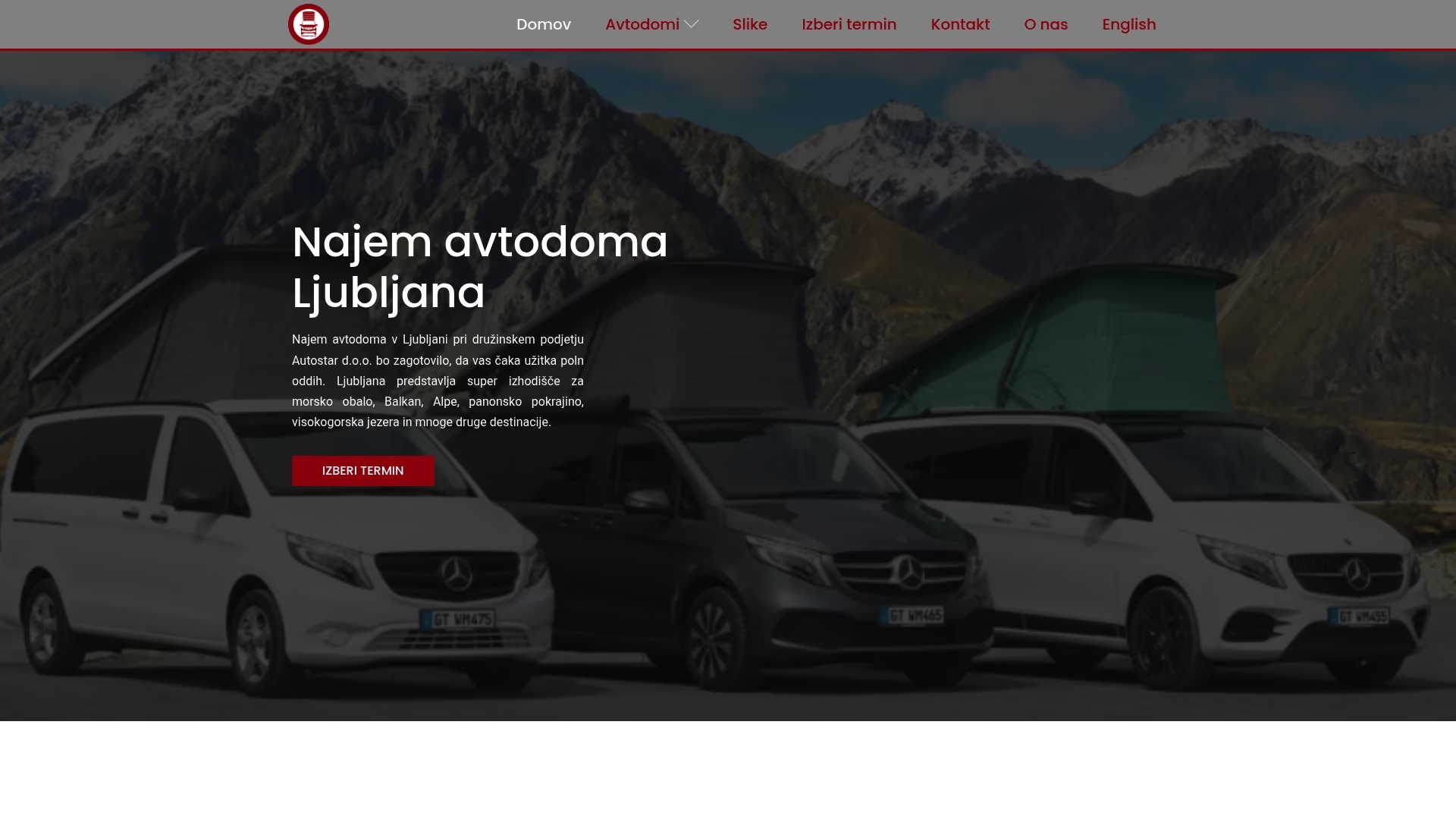
Both the Ford Nugget Plus and Mercedes V Marco Polo are suitable for transporting bicycles with an external bike rack. If you are travelling with heavier e-bikes, several bicycles or have other specific requirements, contact the Campervan.si team directly. Book your campervan and additional equipment at
Campervan.si and check the latest seasonal availability and rental dates.
For technical information about bike rack systems and bicycle transport safety:
- Agencija za varnost prometa (AVP): how to safely transport a bicycle — legal requirements and safety recommendations for Slovenia.
- Ahorn Camp: choosing the right bike rack system for your motorhome — technical comparison of different systems and installation recommendations.
- Ahorn Camp: six tips for travelling with a bike rack on a motorhome — practical advice for safe driving with bicycles mounted on the rear.
- Campervan.si: Ford Nugget Plus and Mercedes V Marco Polo — vehicle specifications and available equipment.
- Campervan.si: rental terms and conditions — information about liability, insurance and additional rental equipment.
Recommended