Austria with a motorhome is the best destination in Europe. A dense network of campsites and glamping sites covers everything from alpine valleys to lake shores, the rules on vignettes and tolls are clear and predictable, and spectacular routes such as the Grossglockner Hochalpenstrasse are accessible by motorhome. This is particularly convenient for a Slovenian traveler: the border is only an hour’s drive away, which means that you can reach Salzburg or Zell am See on the first day.
Three things to arrange before you leave: buy a vignette or install a Go Box, book accommodation for at least the first three nights, and check the height and weight restrictions on the planned passes. Everything else can be arranged on the fly.
Quick action list for the first 48 hours before departure:
- Buy a vignette for vehicles up to 3.5 t (online or at the border) or check if your motorhome exceeds this limit and requires a Go Box.
- Book at least the first three nights at the campsite or on a Stellplatz, especially during the summer season.
- Check the height and weight restrictions on the planned passes (Grossglockner, Timmelsjoch, Brenner).
- Check the weather forecast for mountain roads and adjust your departure date.
- Check if your camper has winter tires if you are traveling outside of the summer.
Expert tip: Buy your Austrian vignette online before you leave via ASFINAG or at border gas stations. Buying at the border is possible, but can cause delays during peak times.
Table of contents
- Which regions and attractions are best for a motorhome trip around Austria?
- Where to sleep with a campervan in Austria and how to book?
- What rules about vignettes, tolls and parking apply to motorhomes?
- How to drive a motorhome safely on Alpine roads and prepare it properly?
- Which itineraries are suitable for a motorhome trip around Austria?
- How much does it cost to travel by campervan around Austria?
- When is the best time to travel by motorhome in Austria?
- What apps and websites help you plan your trip around Austria?
- How does Campervan prepare vehicles for a trip around Austria?
- Key findings
- A campervan changes the pace of travel
- Campervan: motorhome for Austria, pick-up in Ljubljana
- Useful resources for planning your trip around Austria
Which regions and attractions are best for a motorhome trip around Austria?
Austria is divided into regions that offer very different experiences. The choice of region determines the pace, distances and type of roads you will drive.
- Salzburgerland is the ideal starting point for the Slovenian traveler. Salzburg itself is RV-friendly, and the surrounding area offers Wolfgangsee, Mondsee and access to the Grossglockner. For a 3-4 day trip, this is the most suitable region.
- The Salzkammergut is a region of lakes between Salzburg and Linz. Hallstatt, Traunsee and Attersee are here. The roads are narrow and crowded in the summer season, so arriving at the parking lot early is essential.
- Tyrol is for those looking for high passes and alpine panoramas. Innsbruck is a good starting point, from here you can reach Timmelsjoch, Brenner and Arlberg. Suitable for a 7-day or longer trip.
- Carinthia (Kärnten) is closer to the Slovenian border crossings and offers Wörthersee, Millstätter See and access to the Grossglockner from the south. Less visited than Salzburgerland, but just as beautiful.
- Upper Austria is suitable for cultural stops: Linz, Kremsmünster and Wachau. The roads are flat and friendly for larger campers.
- Hallstatt is one of the most photographed spots in Austria. Parking for campers is limited, so staying overnight at a nearby campsite and visiting in the morning is a smarter strategy.
- Vienna is more challenging with a campervan: parking is expensive and limited, and city traffic is not friendly to larger vehicles. It is recommended to park on the outskirts and take public transport to the centre.
Natural attractions that the motorhome makes possible: Grossglockner Hochalpenstrasse with entrance fee and restrictions for certain types of vehicles, Grüner See at Tragöß (Green Lake), Krimml Wasserfälle as the highest waterfalls in Austria, and the Alpine lakes Zell am See, Wolfgangsee and Millstätter See.
Expert tip: For shorter trips, the Salzburgerland or Carinthia regions are suitable. Longer trips can include Grossglockner, Salzkammergut, Tyrol, Vienna or southern Austria.
Where to sleep with a campervan in Austria and how to book?
Camping in Austria is well organized and offers several types of accommodation, which vary in price, equipment and atmosphere.
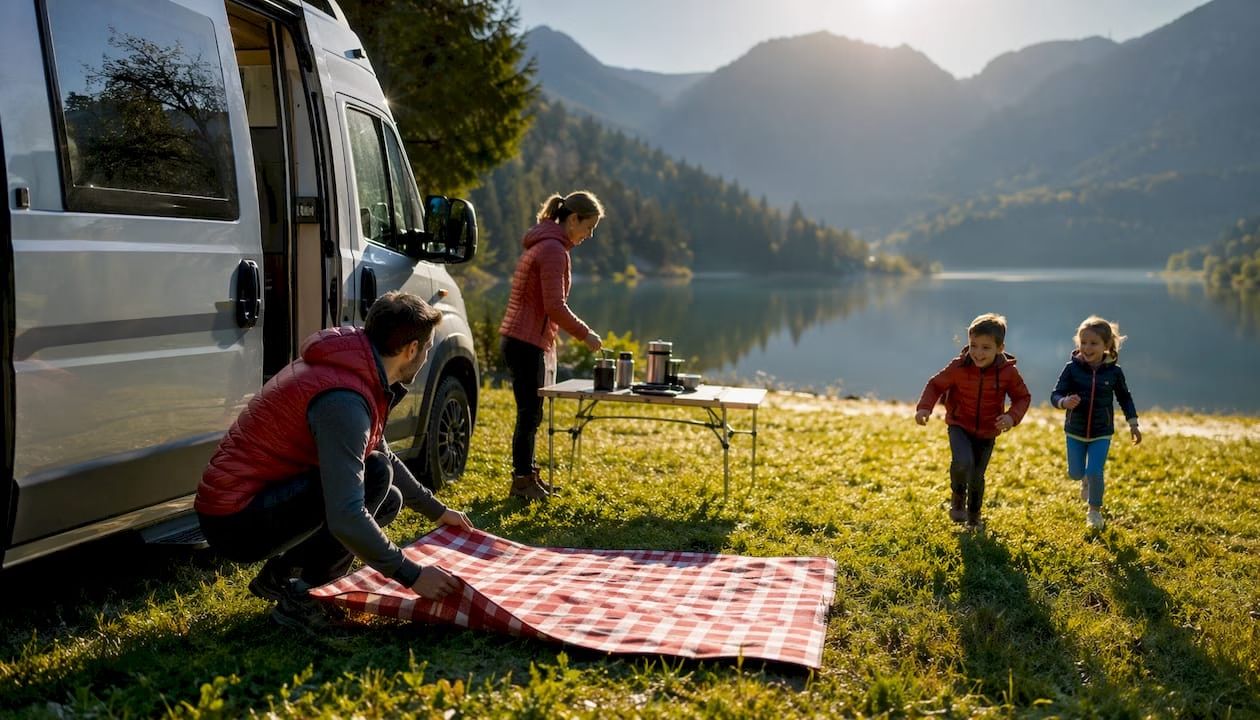
| Type of accommodation | Typical price per night | What does it include? | Reservation |
|---|---|---|---|
| Campsite with all services | 30–70+ € per night | mostly includes electricity, water, toilets, wifi and reception | Recommended in advance |
| Stellplatz (motorhome parking lot) | 0–25 € per night | Basic infrastructure or none; often without sanitation | Rarely needed |
| Farm stops (Bauernhof) | 0–40+ € per night | Water, electricity, often domestic products | Recommended to call |
| Glamping | often includes comfortable accommodation with premium services | Required in advance |
The differences between the types are practically significant. A full-service campsite is best for longer stays or with children, as it has toilets, laundry facilities and often a swimming pool. A Stellplatz is cheaper and more spontaneous, but without toilets, which means your camper must be self-sufficient. Farm stays are often the most atmospheric and cheapest, but require a call in advance because not everyone is registered on the apps.
- During the summer season (July, August), book campsites in advance, especially in popular places such as Hallstatt, Zell am See and along Wolfgangsee.
- For larger campers, check if the campsite accepts vehicles of the desired length, as some have restrictions.
- Parking spaces at popular spots are often occupied by noon, so arrive in the morning.
- Check campsite reviews and descriptions on platforms such as ACSI or Park4Night.
Pro tip: Farm stays (Bauernhof) are often unlisted on apps. Find them through local tourist offices or the Austrian Agricultural Federation — the price is low, and the atmosphere is unforgettable.
What rules about vignettes, tolls and parking apply to motorhomes?
Austria has a clearly regulated toll system that varies depending on the weight of the vehicle.
- Vignette for vehicles up to 3.5 t: Mandatory for driving on motorways and expressways. Buy it online via ASFINAG, at border petrol stations or in some shops. Available for 10 days, 2 months or a whole year. The vignette is digital (e-vignette) or a sticker; the digital one is recommended because you cannot apply it incorrectly.
- Go Box for vehicles over 3.5 t: An electronic toll collection device that is mounted on the windshield. The toll is calculated based on the kilometers driven and the vehicle category. The Go Box is mandatory for all motorhomes with a total technically permissible mass exceeding 3.5 t.
- Special tolls on sections: Some sections have an additional toll regardless of the vignette. This applies to the Arlberg Tunnel (A14), the Brenner Motorway (A13), the Tauern Motorway (A10) and the Karavanke Tunnel (A11). The Grossglockner Hochalpenstrasse has its own entrance fee, which is not part of the vignette.
- Parking and overnight stays: Many parking lots near natural attractions are designated for day parking only. Overnight stays are not permitted in most such places, and fines are realistic. Always check the signs on site.
- Low emission urban areas: Vienna and Graz have restrictions for older vehicles with higher emissions. Check your motorhome category before entering the city.
Expert tip: The Karavanke Tunnel (A11) is often the first toll point for Slovenian travelers. The toll is paid separately from the vignette, so have cash or a card ready.

How to drive a motorhome safely on Alpine roads and prepare it properly?
Alpine roads require a different approach than flat driving. The altitude differences, tight bends and long descents are a combination that requires preparation from both the driver and the vehicle.
Basic equipment:
- Winter tires are mandatory from November 1 to April 15, and in practice recommended any time you go to the mountains outside of summer.
- Insulating water tanks prevents pipes from freezing at nighttime temperatures below zero.
- Working heating (diesel or gas stove) is essential for winter camping.
- Spare fuses, basic tools and a first aid kit are standard.
Maintenance and care on the way:
- You can fill up on fresh water at campsites, parking spaces or special supply points (Versorgungsstationen). Most campsites have this service included in the price.
- Empty the chemical toilet only at designated disposal points (Entsorgungsstation). Never into nature or the sewer.
- Also, empty gray water (from the sink and shower) in designated places, not into nature.
- For electricity on a parking space without a connection, additional batteries or a solar panel are useful.
- Plan your fuel in advance: there are no gas stations on the high passes, the last service before the Grossglockner is in Heiligenblut or Bruck an der Glocknerstraße.
Driving tips for the passes:
- Check the height, weight and length restrictions for each pass. The Grossglockner is passable for most campers, but the Timmelsjoch has stricter restrictions.
- On long descents, combine engine braking and low gears. Excessive braking heats the brakes and reduces safety.
- Plan shorter daily stages in the mountains: 150–200 km per day is realistic, but 300 km is too much if you visit attractions in between.
- On narrow roads, a vehicle going uphill has priority over one going downhill.
Which itineraries are suitable for a motorhome trip around Austria?
The plans below are designed with a starting point in Ljubljana and take into account realistic daily distances by motorhome.
4-day quick trip: Salzburg and Salzkammergut
| Day | Route | Recommended stop |
|---|---|---|
| 1 | Ljubljana → Salzburg | Camping near Salzburg (e.g. Camping Kasern) |
| 2 | Salzburg (mesto) | Same campsite, full day tour |
| 3 | Salzburg → Hallstatt → Wolfgangsee | Camping at Wolfgangsee |
| 4 | Wolfgangsee → Ljubljana | Return |
- Visit Hallstatt in the morning before 9:00 AM, when the parking lot is not yet occupied.
- Wolfgangsee offers swimming and evening walks by the lake.
7-day classic circuit: Grossglockner and lakes
| Day | Route | Recommended stop |
|---|---|---|
| 1 | Ljubljana → Zell am See | Campsite by the lake |
| 2 | Zell am See → Grossglockner → Heiligenblut | Campsite in Heiligenblut |
| 3 | Heiligenblut → Salzburg | Campsite near Salzburg |
| 4 | Salzburg (mesto) | Same camp |
| 5 | Salzburg → Hallstatt → Gmunden | Camping at Traunsee |
| 6 | Gmunden → Linz ali Wachau | Camp near Linz |
| 7 | Linz → Ljubljana | Return |
10-14-day extended itinerary: Tyrol, Salzkammergut and Vienna
- Days 1–3: Carinthia (Wörthersee, Millstätter See)
- Days 4–5: Grossglockner and Zell am See
- Days 6–7: Salzburgerland and Hallstatt
- Days 8-9: Tyrol (Innsbruck, Arlberg)
- Days 10–11: Vienna (parking on the outskirts, public transport to the center)
- Days 12–14: Wachau, Kremsmünster, return
Pro tip: Add at least one spare day for weather. The Grossglockner is often closed or cloudy, and if you have a spare day, simply move it to the next day.
For inspiration when planning daily distances and cultural stops, examples of itineraries from practice, which include realistic estimates of kilometers and driving time, are useful.
How much does it cost to travel by campervan around Austria?
A realistic budget for traveling around Austria with a camper depends on the type of accommodation, season, and distance.
- Accommodation: Campsites cost €30–70+ per night, Stellplatzi €0–25, farms €0–40+. For 7 days with a mix of campsites and Stellplatzi, expect to pay €150–300.
- Fuel: Austria has slightly more expensive gasoline and diesel than Slovenia. For 1,000 km with a camper that consumes 10–12 l/100 km, expect to pay €120–180.
- Vignette: A 10-day vignette costs around €9.90 (price is updated from time to time; check the current price on ASFINAG). An annual vignette only makes sense for frequent visits.
- Special tolls: Grossglockner entrance fee, Arlberg Tunnel, Karavanke Tunnel and Brenner Pass together can add €30–60 to your trip.
- Food and activities: With your own kitchen in your camper, you can save significantly compared to restaurants. Count on €20–40 per day for food for two people.
Saving tips:
- Travel in May, June or September: campsites are cheaper, less busy and the weather is often great.
- Parking spaces at smaller lakes are often free or almost free.
- Tourist cards (Salzburg Card, Innsbruck Card) only make sense if you visit 3+ paid attractions in one city.
- Keep cash on hand for smaller towns and farms where cards are not always accepted.
Unexpected costs: Fines for incorrect parking or missing vignette are high (from €120). Vehicle maintenance on the road (tyres, battery) is rare but expensive. Some campsites charge a tourist tax separately from the pitch price.
Austria is a financially predictable destination for campers: most costs are known in advance, there are few surprises if you are prepared.
When is the best time to travel by motorhome in Austria?
The season significantly affects the experience, prices, and accessibility of roads.
Summer (June–August):
- The Grossglockner, Timmelsjoch and most high passes are open.
- Campsites are busy, reservations are essential, prices are at their highest.
- Hallstatt and Zell am See are extremely crowded in July and August.
- The heat in the valleys can be uncomfortable; higher elevations are more pleasant.
Spring and autumn (April–May, September–October):
- Less crowds, lower campsite prices, better lighting conditions for photography.
- Some high passes only open in late May or June.
- Autumn brings colorful forests and calmer lakes.
Winter (November–March):
- Winter camping requires special equipment: winter tires, tank insulation, and efficient heating.
- High passes are closed; Grossglockner is only accessible in summer.
- Heated campsites next to ski slopes are an excellent base for skiing.
- Nekateri kampi so pozimi zaprti; preverite vnaprej.
Seasonal checklist:
- Summer: campsite reservations, sunscreen, cooler bag, early arrivals at parking lots.
- Autumn/Spring: check the opening of the passes, have rain gear, make reservations for at least the first few nights.
- Winter: winter tires (mandatory), tank insulation, heating, snow chains, check if campsites are closed.
Expert tip: June and September are the optimal months for most travelers: the passes are open, there are fewer crowds than in August, and campsite prices are lower.
What apps and websites help you plan your trip around Austria?
A good combination of apps reduces stress on the road and helps you find the right place to stay even at the last minute.
- Park4Night: The largest database of parking spaces and wild stops in Europe. Contains ratings, photos and coordinates. It is not always complete, so always check the signs on site.
- ACSI Camping: Campsite database with ratings and booking options. Especially useful for full-service campsites.
- Camperstop: Specializes in Stellplatzen and farm stops; a good complement to Park4Night.
- Waze or Google Maps: For navigation taking into account vehicle dimensions; enter the height and weight of the camper to avoid low bridges.
- ASFINAG app: The official Austrian app for tolls, road conditions and restrictions. Shows pass closures and road works.
- austria.info: Official tourist portal with information on campsites, attractions and special tolls.
- Yr.no or MeteoBlue: Accurate weather forecasts for mountain areas; more reliable for alpine conditions than general apps.
No app is a substitute for checking on the spot. Before you park overnight, check the signs and local markings — the rules often differ from what the app says.
For current information on vignettes and tolls, austria.info is a reliable, regularly updated official source.
How does Campervan prepare vehicles for a trip around Austria?
Campervan from Ljubljana offers two models for rent that are suitable for Austrian roads and Alpine conditions.
- Ford Transit Nugget Plus: A compact campervan, suitable for couples or small families. The smaller dimensions mean easier driving on narrow Alpine roads and easier parking in cities.
- Mercedes V Marco Polo: A more spacious model for up to 4 people, with a higher level of comfort. Suitable for longer journeys and for those who do not want to compromise on space.
Both models include a kitchen, fixed toilet, beds, basic insurance and 24/7 assistance. This means you are self-sufficient for pitches without toilets and for stops on farms.
Campervan provides route advice and helps plan itineraries for Austria, the Alps and neighboring destinations. Pick-up is in Ljubljana, which is an ideal starting point for the Slovenian traveler: it is less than an hour’s drive to the Austrian border.
- The Ford Nugget Plus is recommended for couples looking for maneuverability on mountain roads.
- Mercedes V Marco Polo je boljša izbira za štiri osebe ali za tiste, ki cenijo večji prostor.
For details on pickup and logistics, the campervan rental page in Ljubljana is useful, which explains what is included and how pickup is done.
Key findings
Traveling by motorhome through Austria is accessible, predictable and extremely rewarding for a Slovenian traveler if you arrange the vignette, reservations and seasonal equipment before departure.
| Finding | Details |
|---|---|
| Vignette or Go Box | Vehicles up to 3.5 t require a vignette; above 3.5 t, a Go Box for electronic toll collection is mandatory. |
| Accommodation prices | Campsites €30–70+ per night, parking spaces €0–25 per night, farms €0–40+ per night. |
| The best season | June and September offer open passes, fewer crowds, and lower campsite prices. |
| Seasonal equipment | Winter tires are mandatory from November to April; tank insulation is essential for winter camping. |
| Campervan | Rent a Ford Nugget Plus or Mercedes V Marco Polo in Ljubljana with assistance and a consulting approach for your trip around Austria. |
A motorhome changes the pace of travel
What most travelers underestimate on their first RV trip is the change of pace. It’s not just about sleeping in the vehicle. It’s about stopping because you saw a nice view, not because the hotel was there. Making your morning coffee by the lake, not in the hotel dining room. Choosing a different pass because the weather is better on the other side.
Austria rewards this flexibility. The network of parking spaces and campsites is dense enough that spontaneous decisions work. The Grossglockner is one of those places where this difference is most clearly seen: those who come with a camper and spend the night in Heiligenblut see the sunset and sunrise over the Glockner. Those who come on a trip see the parking lot and the clouds.
One practical tip from experience: don’t plan the Grossglockner for your first day. It takes a day or two to acclimatize to the altitude and the pace of driving on mountain roads. Start with the lake, continue with a smaller pass and only then go to the Grossglockner. The difference in the experience is noticeable.
Campervan: motorhome for Austria, pick-up in Ljubljana
For a Slovenian traveler planning a trip to Austria, Campervan is a logical choice: pick-up in Ljubljana means you’re at the Austrian border in less than an hour, no flights, no transportation to a distant rental location.
Both the Ford Nugget Plus and the Mercedes V Marco Polo are equipped for self-sufficient travel: a kitchen, fixed toilet, sleeping berths and 24/7 assistance are included. The campervan also helps with route planning, which is especially useful for first-time travelers on Alpine roads.
Check availability and make a reservation at campervan.si.
Useful resources for planning your trip around Austria
Before you go, check the following official and reliable sources:
- austria.info: Official tourist portal with information on vignettes, Go Box, special tolls and camping.
- ASFINAG (asfinag.at): The official operator of Austrian motorways. Buy an e-vignette here, check road conditions and pass closures.
- Park4Night (park4night.com): Database of parking spaces and stops with ratings and coordinates.
- ACSI Camping (eurocampings.eu): Campsite database with booking options and ratings.
- Yr.no or MeteoBlue: Accurate weather forecasts for mountainous areas.
- Campervan.si news: Current tips and updates for travelers planning a trip with a campervan.
Before each departure, check:
- Passes open (ASFINAG or austria.info)
- Current vignette price (prices change from time to time)
- Condition of campsites and parking spaces on the planned route
- Weather forecast for mountainous areas at least 48 hours in advance
Austria is one of the few Alpine destinations where official information about roads, campsites and tolls is truly reliable and up-to-date. Check it before you leave and during your trip without worry.